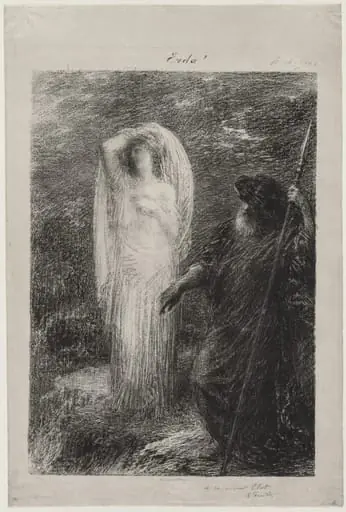
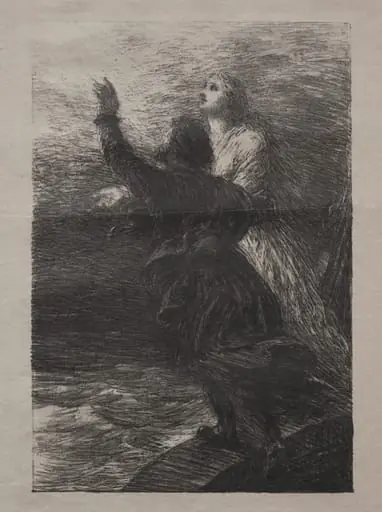
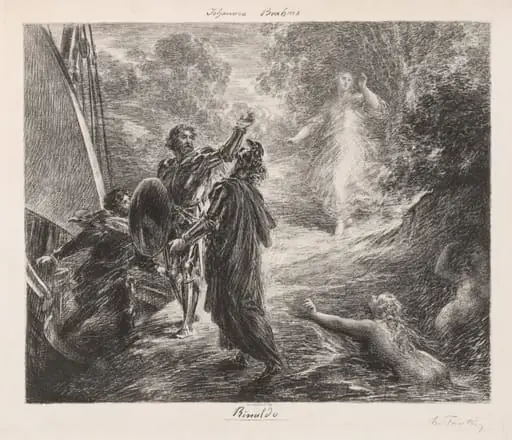
Artwork
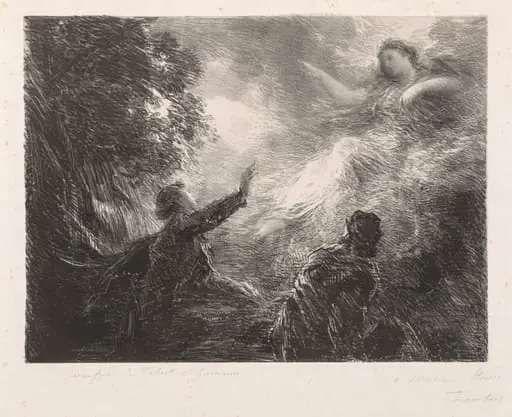
Manfred and Astarte (1st plate)
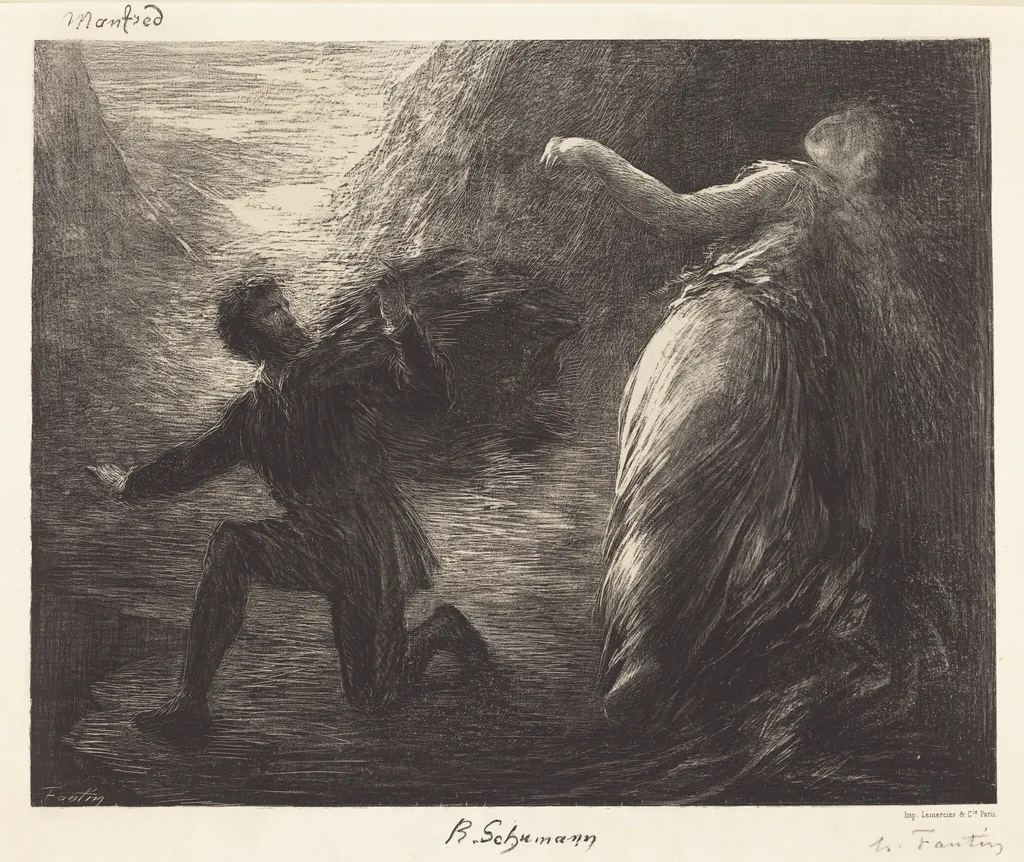
Manfred and Astarte (1st plate) is an ink print by the Impressionist artist Henri Fantin-Latour. It dates from 1879 and is held in the collection of the National Gallery of Art.
About this work
Overview
The lithograph is part of a series inspired by literary themes, reflecting his interest in narrative beyond the domestic or social scenes he typically depicted.
Henri Fantin-Latour created the first plate of *Manfred and Astarte* in 1879 as a lithograph, marking a departure from his more familiar still lifes and group portraits. Though best known for his painted compositions of flowers and literary circles in Paris, this work reveals his engagement with printmaking as a distinct artistic pursuit. The lithograph is part of a series inspired by literary themes, reflecting his interest in narrative beyond the domestic or social scenes he typically depicted.
Subject & Meaning
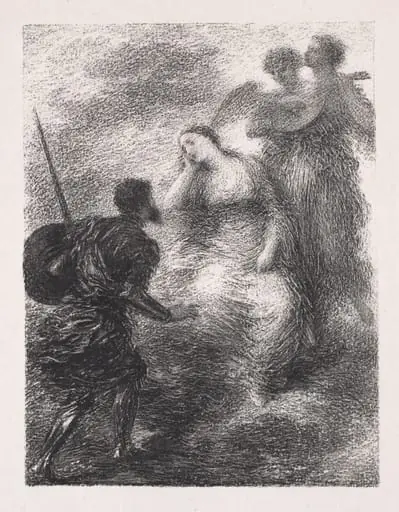
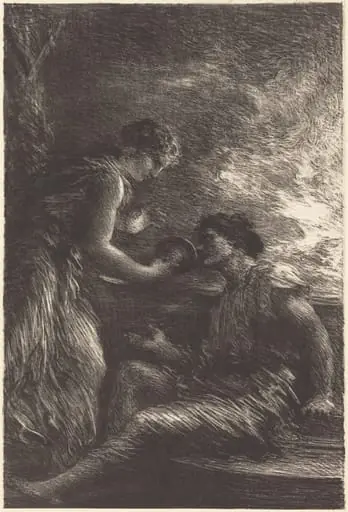
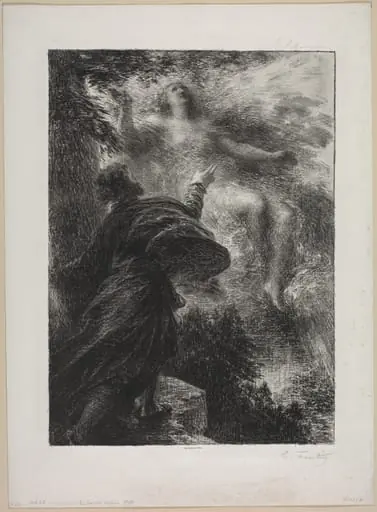
The image depicts two figures—a man and a woman—seated in close proximity on a bench within a dim interior. The scene draws from Lord Byron’s dramatic poem *Manfred*, in which the titular character encounters the spectral Astarte, a figure of guilt and longing. Fantin-Latour captures their quiet, introspective moment, emphasizing emotional tension rather than theatricality. The intimacy of their posture suggests a psychological encounter, not a literal reenactment.
Technique & Style
Using lithography, Fantin-Latour drew directly onto a limestone surface with greasy crayon, exploiting the medium’s capacity for subtle tonal gradations. The soft, diffused lighting and hazy contours create a contemplative atmosphere, distinguishing the work from sharper, more linear prints of the period. His handling of shadow and light conveys mood through restraint, favoring atmospheric suggestion over detailed definition, a hallmark of his printmaking approach.
History & Provenance
This lithograph was produced in 1879 as the initial plate of a series based on Byron’s *Manfred*. It was likely issued in a limited edition, typical of artists’ prints at the time. While the exact early ownership history is not fully documented, the work entered institutional collections in the 20th century, reflecting its recognition within the context of French printmaking. Its survival in museum holdings underscores its role as a significant, if lesser-known, facet of Fantin-Latour’s oeuvre.
Context
In late 19th-century France, printmaking offered artists a space for personal exploration outside the constraints of the Salon system. Fantin-Latour, though associated with Realism and Impressionist circles, turned to lithography to engage with literary subjects that painting did not easily accommodate. His choice to illustrate Byron’s melancholic drama aligns with broader Romantic influences still present in French art, even as modernism began to emerge.
Legacy
Though overshadowed by his paintings, *Manfred and Astarte* remains a key example of Fantin-Latour’s printmaking skill and his engagement with literary themes. It demonstrates how 19th-century artists used lithography to explore psychological depth and mood. The work contributes to the understanding of printmaking not merely as reproduction, but as a vehicle for intimate, narrative expression within a rapidly changing artistic landscape.
Artist & collection
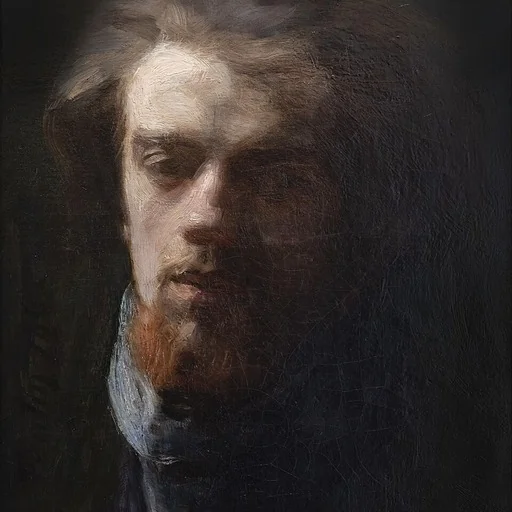
Artist
Ignace Henri Jean Theodore Fantin-Latour (French pronunciation: ; 14 January 1836 – 25 August 1904) was a French painter and lithographer best known for his flower paintings and group portraits of Parisian artists and writers.