Artwork
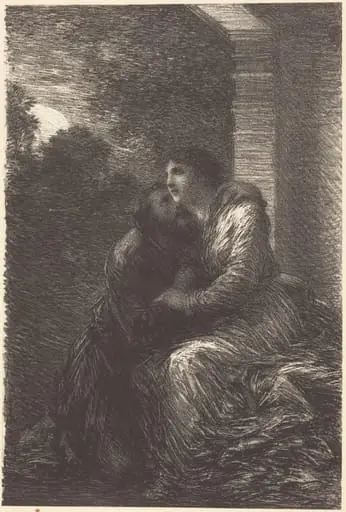
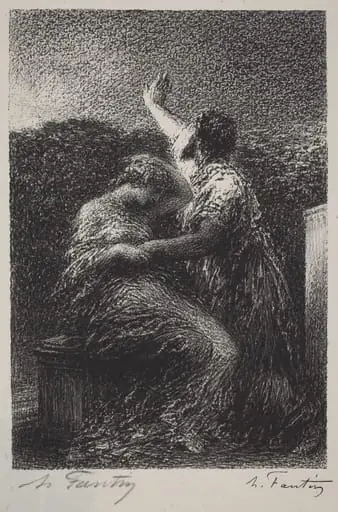
Sieglinde and Siegmund from Act I of "The Valkyrie"
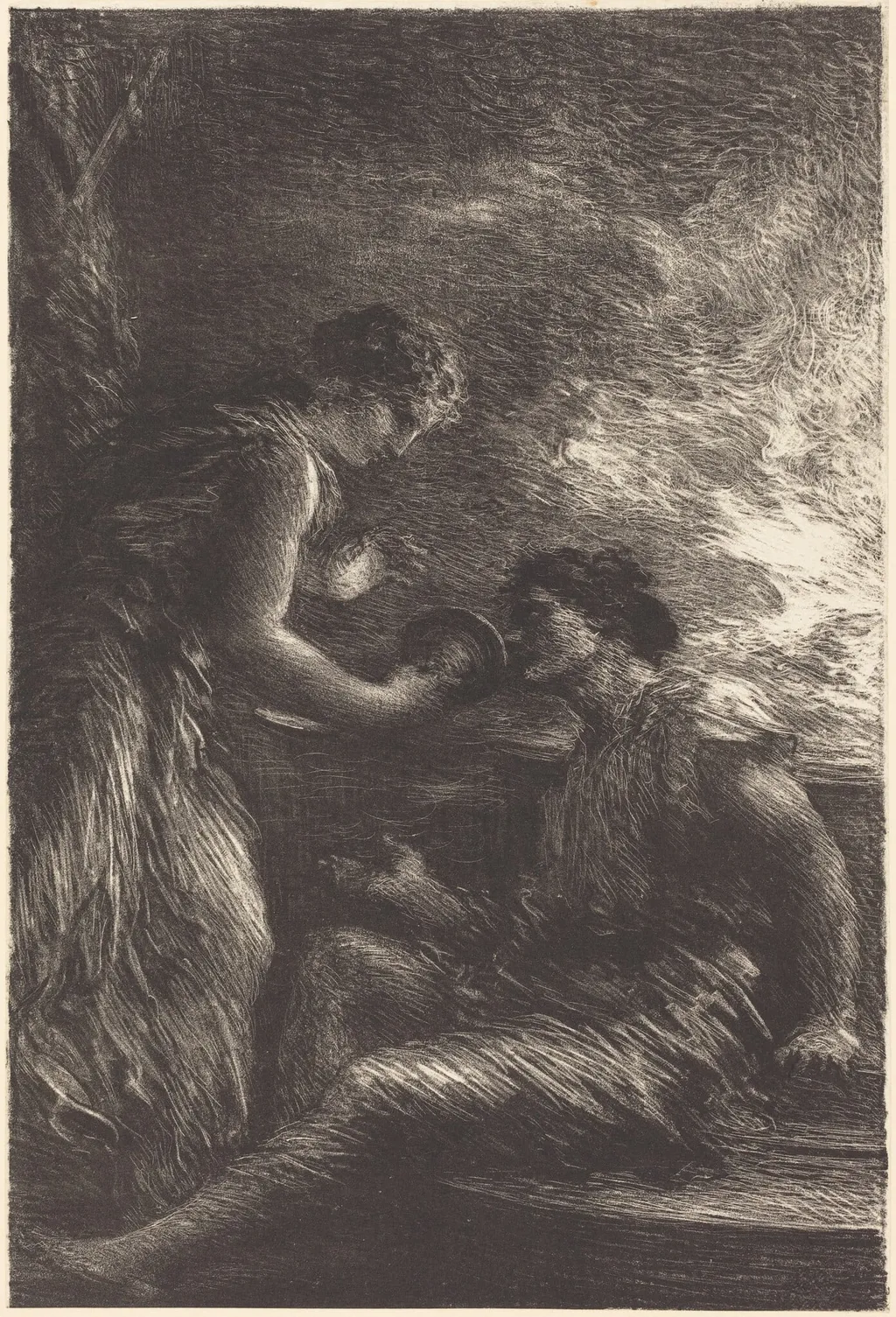
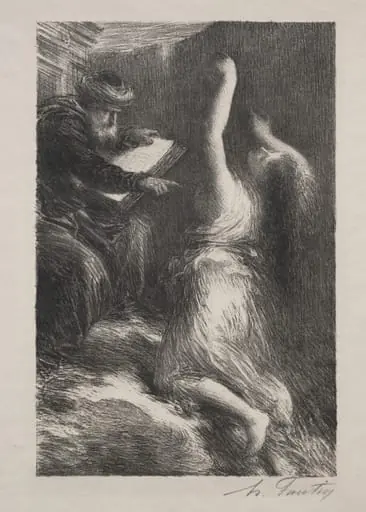
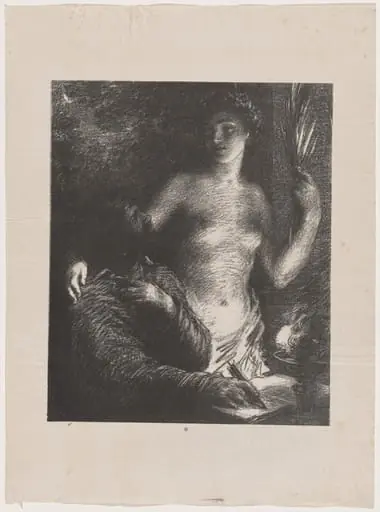
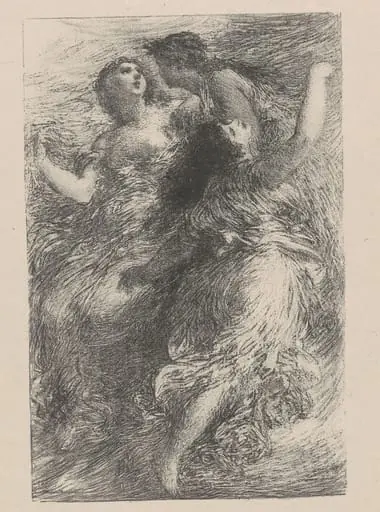
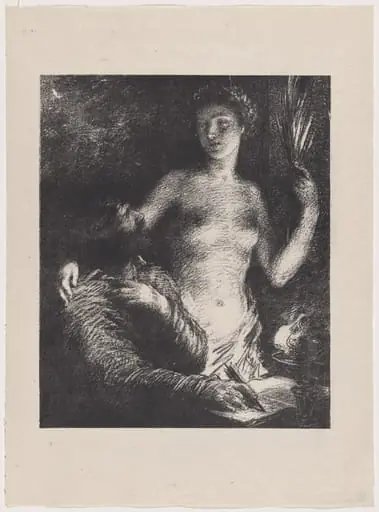
Sieglinde and Siegmund from Act I of "The Valkyrie" is an ink print by the Romanticist artist Henri Fantin-Latour. It dates from 1870 and is held in the collection of the National Gallery of Art.
About this work
Overview
The print belongs to a series of theatrical subjects he explored during a period of expanding artistic horizons beyond Parisian salon culture.
Created in 1870, this lithograph by Henri Fantin-Latour captures a moment from Richard Wagner’s opera *Die Walküre*. Unlike his more familiar floral still lifes and social portraits, this work engages with Germanic myth, reflecting the artist’s interest in contemporary music and literature. The print belongs to a series of theatrical subjects he explored during a period of expanding artistic horizons beyond Parisian salon culture.
Subject & Meaning
The image portrays Sieglinde and Siegmund, twin siblings who reunite in secret during Act I of Wagner’s opera. Their embrace, rendered with blurred contours and overlapping forms, suggests emotional intensity and the blurring of boundaries between identity and fate. Fantin-Latour avoids literal narrative, instead focusing on the psychological convergence of the figures, aligning with the opera’s themes of destiny and forbidden kinship.
Technique & Style
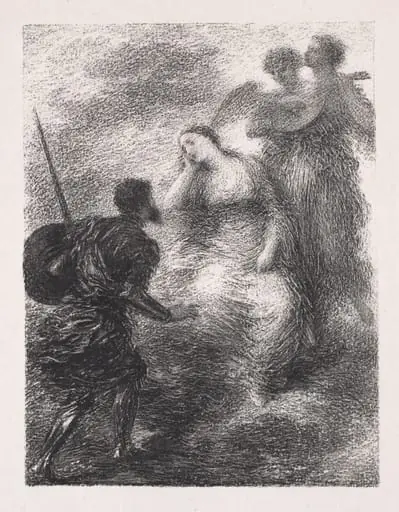
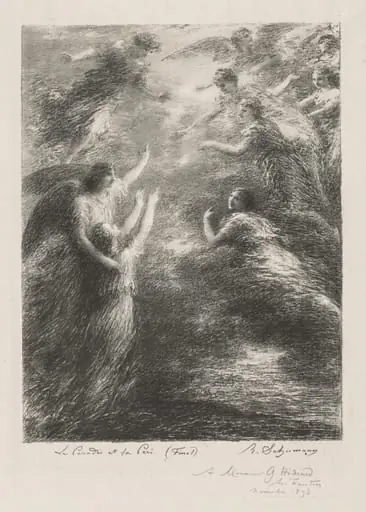
Executed in lithography, the work employs a rapid, gestural line quality that emphasizes texture over polish. The scratchy, uneven strokes reveal the artist’s direct engagement with the stone, leaving visible the physicality of the drawing process. Shadows and forms are suggested through dense, irregular hatching rather than smooth tonal gradations, creating a sense of urgency and intimacy.
History & Provenance
Produced in 1870, the lithograph was likely made for private circulation rather than public sale. It reflects Fantin-Latour’s personal engagement with Wagner’s music, which he encountered during visits to Germany. The print remained largely within artist and collector circles, never widely reproduced, and is now held in a few institutional collections, primarily in France and Germany.
Context
In the late 1860s and early 1870s, French artists increasingly turned to German Romanticism for inspiration, drawn to its mythic themes and emotional depth. Fantin-Latour’s choice to depict Wagner’s characters aligns with a broader cultural fascination, even as he maintained a distinctively French aesthetic. His approach contrasts with the grandeur of Wagnerian stage design, favoring intimate, psychological compression.
Legacy
Though not among Fantin-Latour’s most celebrated works, this lithograph stands as a rare example of his engagement with narrative and music. It reveals a lesser-known facet of his practice—attentive to literary drama and expressive line—and influenced later artists exploring the intersection of printmaking and operatic symbolism in the late 19th century.
Artist & collection
Artist
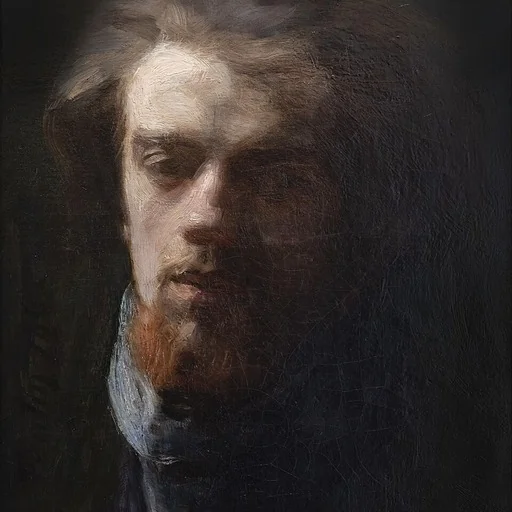
Ignace Henri Jean Theodore Fantin-Latour (French pronunciation: ; 14 January 1836 – 25 August 1904) was a French painter and lithographer best known for his flower paintings and group portraits of Parisian artists and writers.