Artwork
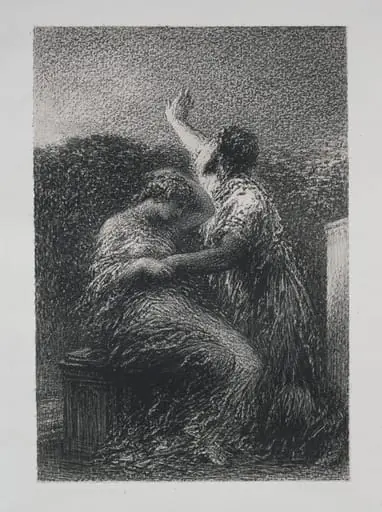
Le Mage Balthazar et Fatime
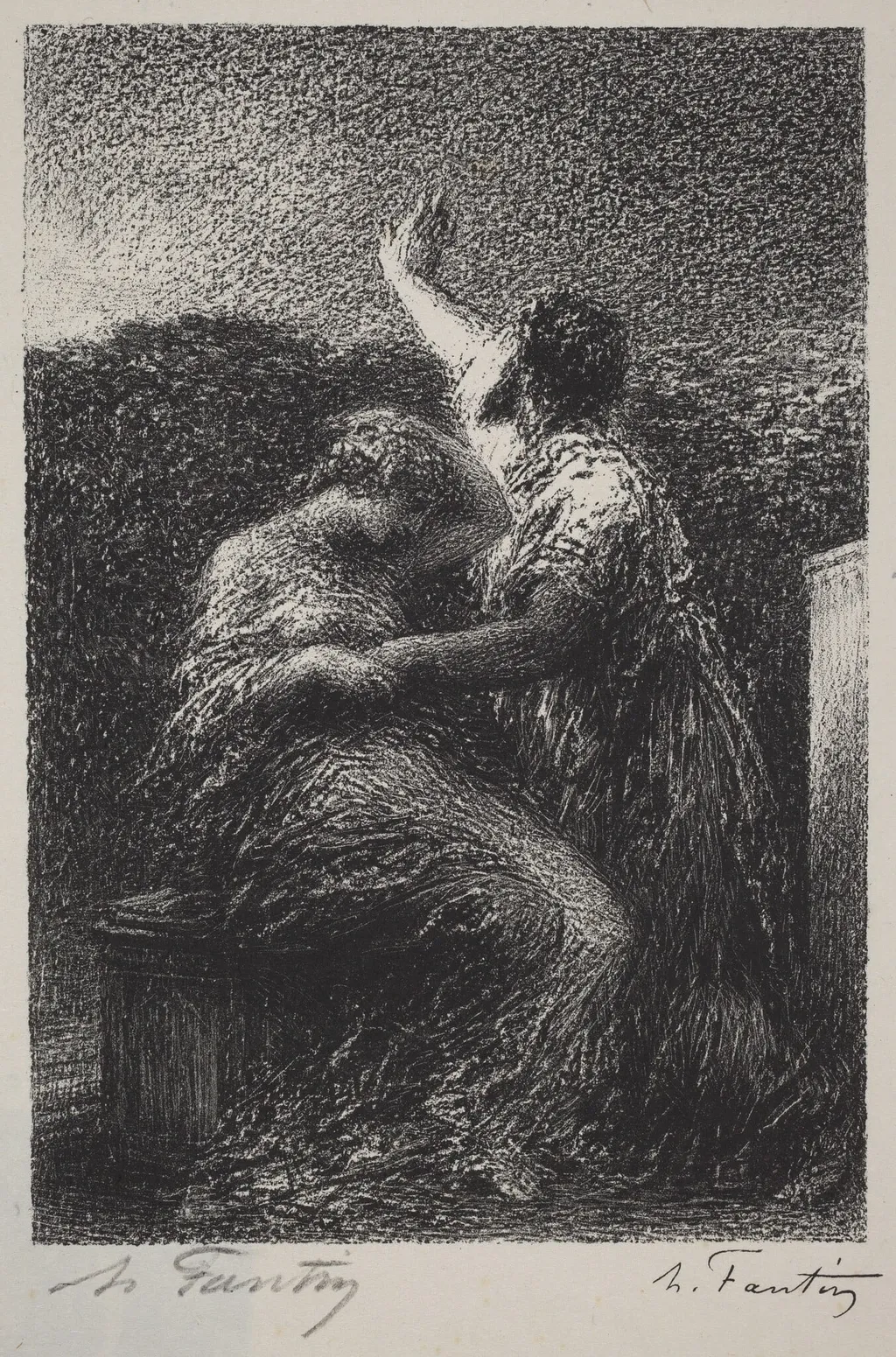
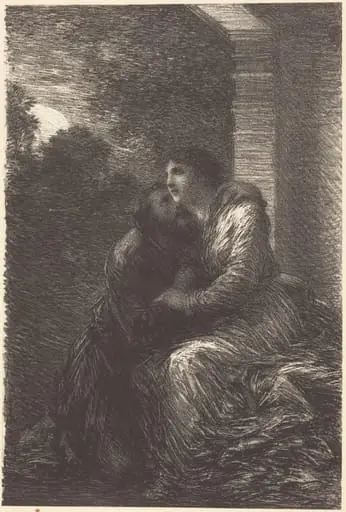
Le Mage Balthazar et Fatime is an ink print by the Romanticist artist Henri Fantin-Latour. It dates from 1870 and is held in the collection of the National Gallery of Art.
About this work
Overview
Henri Fantin‑Latour’s lithograph *Le Mage Balthazar et Fatime* was produced in 1870 in Paris. The work belongs to the artist’s lesser‑known series of prints that explore literary and mythological subjects, complementing his reputation for flower still‑lifes and group portraits of cultural figures.
Subject & Meaning
The image presents two figures in a dim interior: a seated man identified as the mage Balthazar and a standing woman, Fatime, shown in profile with her gaze turned away. She cradles an object close to her chest, suggesting a private or symbolic gesture that invites contemplation of the narrative’s emotional undercurrents.
Technique & Style
Executed in lithography, the print relies on swift, sketch‑like lines that convey movement and atmosphere rather than precise detail. The handling of light and shadow, together with the loose drawing quality, aligns the work with Romantic tendencies toward mood and drama, emphasizing feeling over strict realism.
History & Provenance
Created during the later phase of Fantin‑Latour’s career, the lithograph reflects his expanding interest in mythic themes. While the print was issued in Paris, its subsequent ownership records are sparse, and it remains primarily documented through museum collections and catalogues of the artist’s graphic output.
Artist & collection
Artist
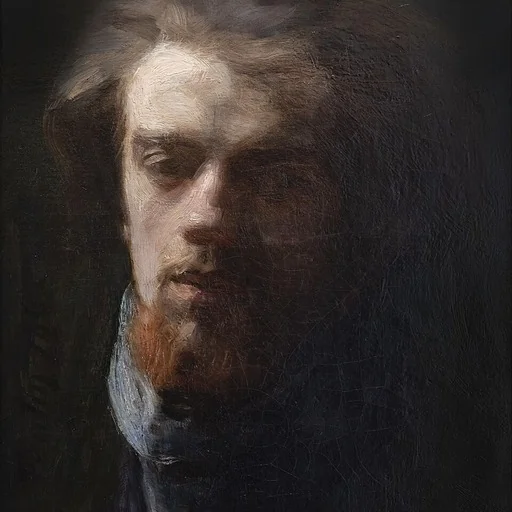
Ignace Henri Jean Theodore Fantin-Latour (French pronunciation: ; 14 January 1836 – 25 August 1904) was a French painter and lithographer best known for his flower paintings and group portraits of Parisian artists and writers.

 Love Scene from Act III of "Lohengrin"
 Debut from "Paradise and the Peri" (3rdplate )
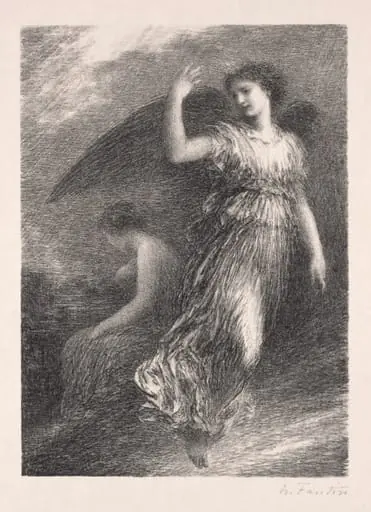 Le Paradis et la Peri - Debut
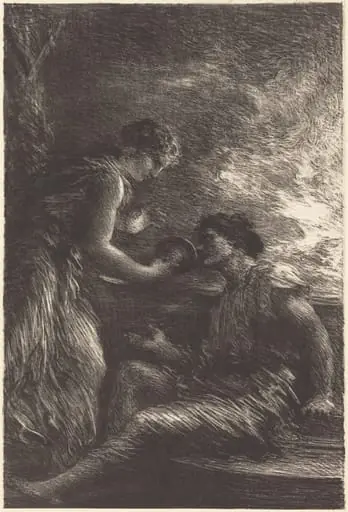 Sieglinde and Siegmund from Act I of "The Valkyrie"
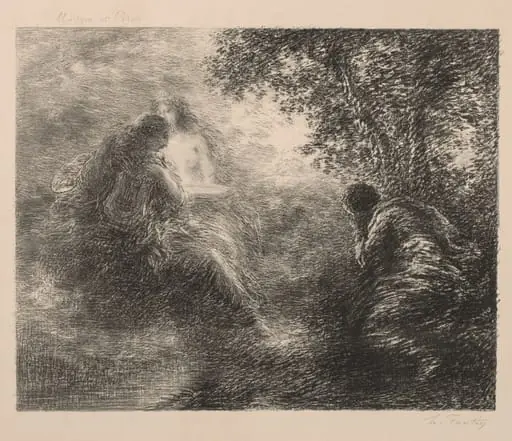 Music and Poetry
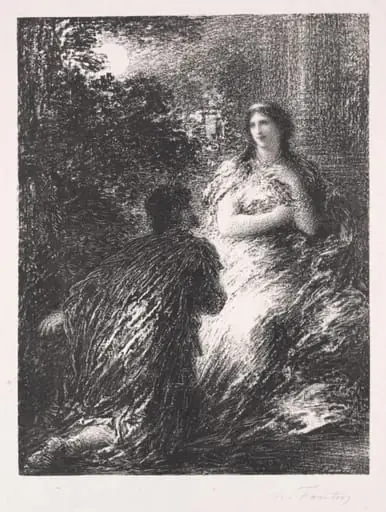 Duo des Troyens
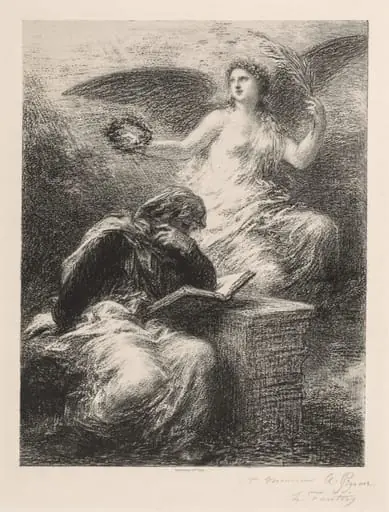 Glory
Glory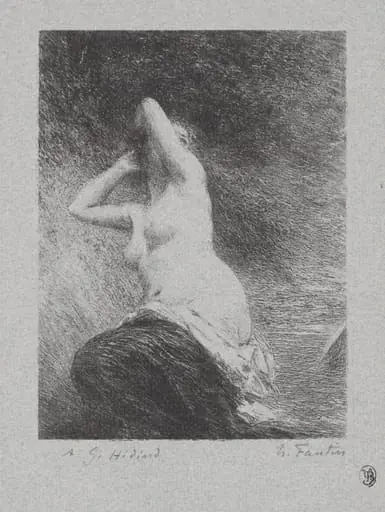 Ariadne
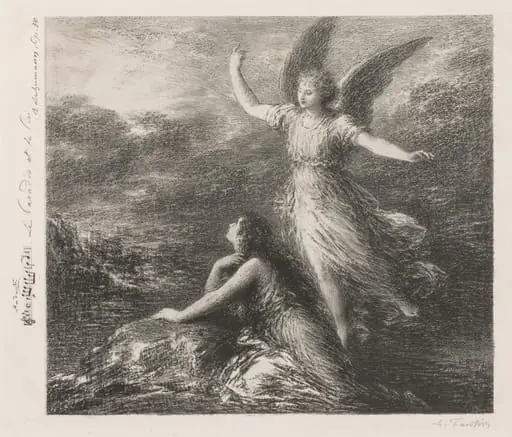 Debut from Paradise and the Peri (Second Plate)
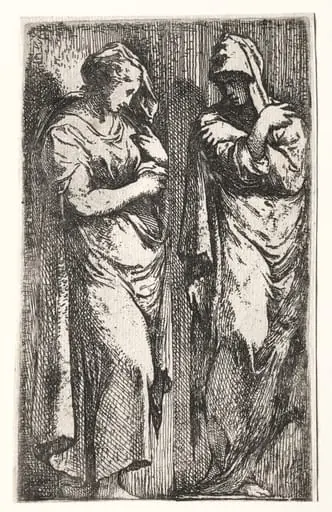 Two Roman Women
 Le mage Baltajar et Fatime
 Parsifal, Act II: Evocation of Kundry