Artwork
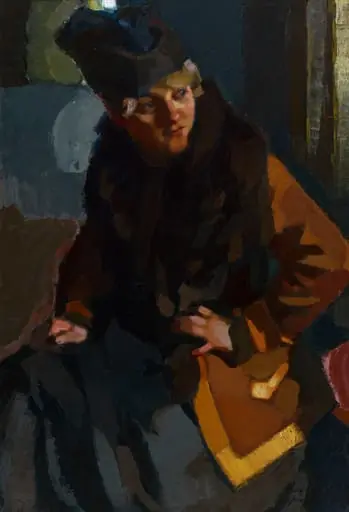
Harjoitelma naisen muotokuvaa varten (tohtorinna Edith von Bonsdorff)
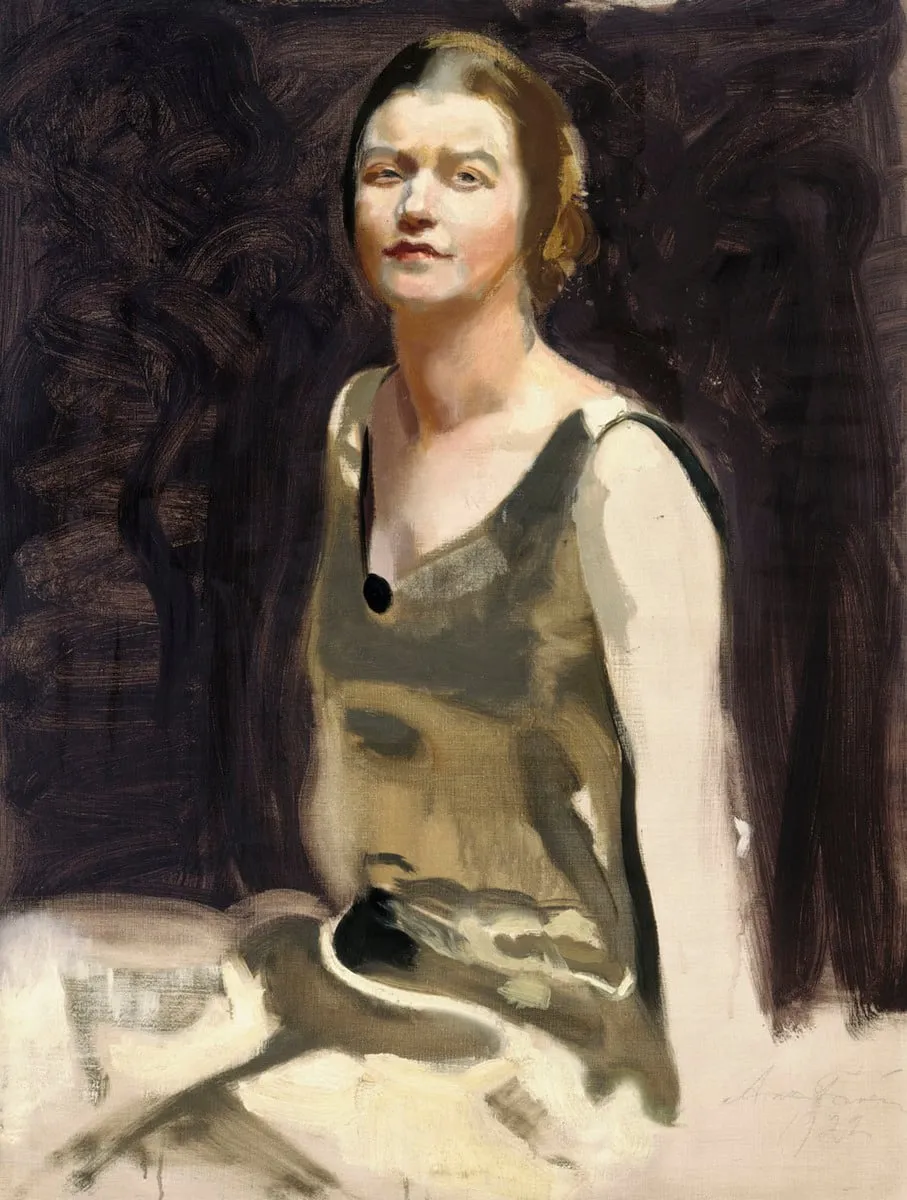
Harjoitelma naisen muotokuvaa varten (tohtorinna Edith von Bonsdorff) is an unspecified painting by Antti Favén. It is held in the collection of the Finnish National Gallery. This portrait depicts Edith von Bonsdorff, a woman of academic standing, seated calmly in a simple sleeveless dress.
About this work
Overview
The brushwork is deliberately loose, particularly in the dress and surroundings, suggesting an intentional avoidance of polished finish.
This portrait depicts Edith von Bonsdorff, a woman of academic standing, seated calmly in a simple sleeveless dress. The composition isolates her figure against a dark, indistinct background, emphasizing her presence through focused lighting. The brushwork is deliberately loose, particularly in the dress and surroundings, suggesting an intentional avoidance of polished finish. The effect is one of quiet immediacy rather than formal grandeur.
Subject & Meaning
Edith von Bonsdorff is portrayed not as a noblewoman or socialite, but as a scholar—her demeanor composed, her attire modest. Her direct gaze conveys quiet confidence, aligning with the intellectual identity implied by her title. The absence of ornamental details or symbolic props shifts focus entirely to her presence, suggesting a preference for authenticity over status display.
Technique & Style
The artist employs loose, fluid brushstrokes to render the dress and background, creating a sense of movement and impermanence. Strong chiaroscuro directs attention to the face and shoulders, while the rest of the form dissolves into shadow. This selective focus, combined with the unfinished texture, reflects a modern approach to portraiture—one that values psychological presence over idealized detail.
History & Provenance
The painting was created as a study for a formal portrait of Edith von Bonsdorff, likely during the late 19th or early 20th century. Its informal quality suggests it was not intended for public display but rather as a preparatory work. The work remained in private hands, with no record of public exhibition during the artist’s lifetime.
Context
In an era when academic portraiture often emphasized elegance and social standing, this work diverges by favoring psychological realism. The artist’s choice to minimize detail and embrace shadow aligns with broader European trends toward expressive, less rigid representation—echoing contemporaries who sought to capture inner life over external ornament.
Legacy
Though not widely exhibited, the painting exemplifies a quiet shift in portraiture toward intimacy and psychological depth. Its unfinished quality and emphasis on light over detail anticipate 20th-century approaches that valued emotional resonance over technical polish. It remains a subtle testament to the evolving definition of dignity in visual representation.
Artist & collection
Artist
Antti Favén kept a tiny studio above a Helsinki bakery, where the smell of fresh rye bread mixed with turpentine.

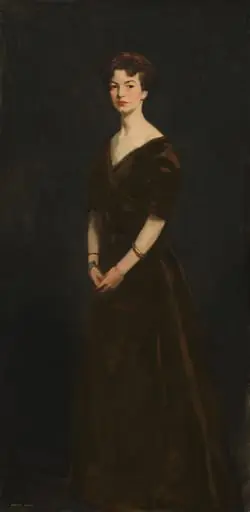 Edith Reynolds
 Spaniolă
 Portret de femeie
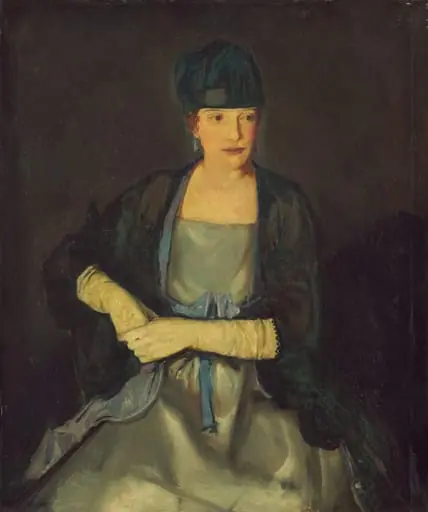 Maud Murray Dale (Mrs. Chester Dale)
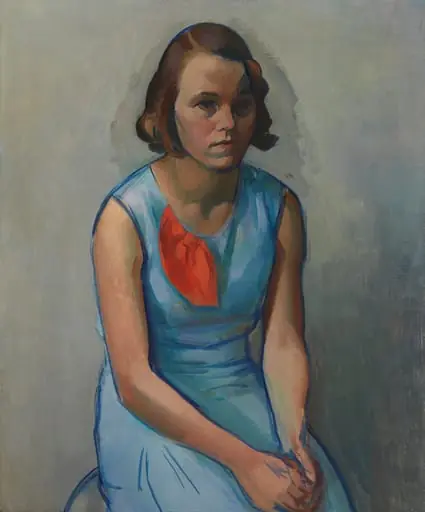 Istuva Tyttö
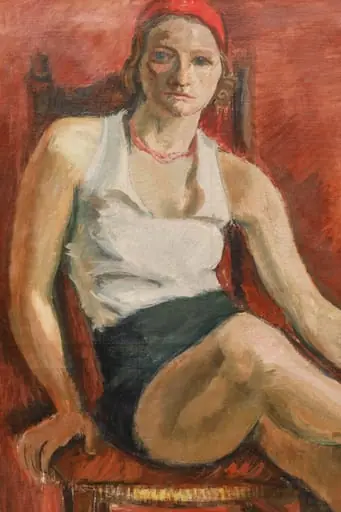 Sportiva
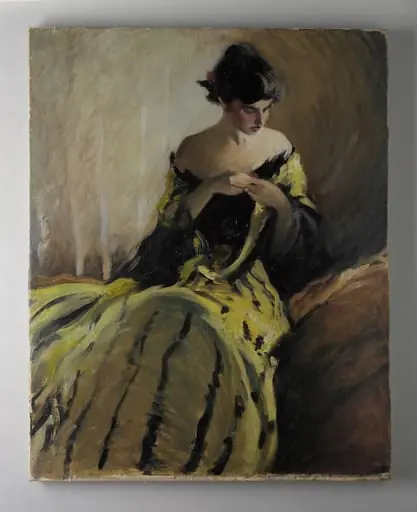 Study in Black and Green (Oil Sketch)
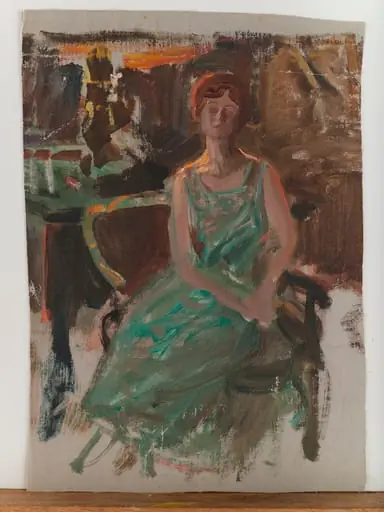 Mrs. Hecht, muotokuvaluonnos
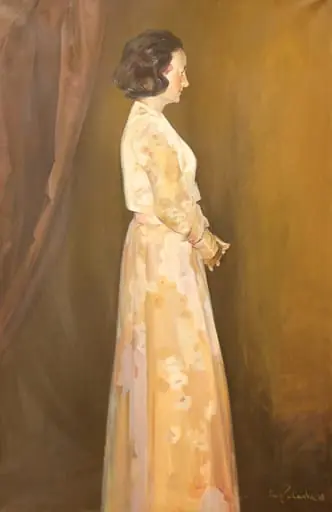 Tablou - portret întreg Elena Ceaușescu din profil, semnat și datat dreapta jos ”Eugen Palade 78”. Tablou comandat de Consiliul Culturii și Educației Socialiste și oferit în dar Elenei Ceaușescu la împlinirea vârstei de 60 de ani (ianuarie 1979).
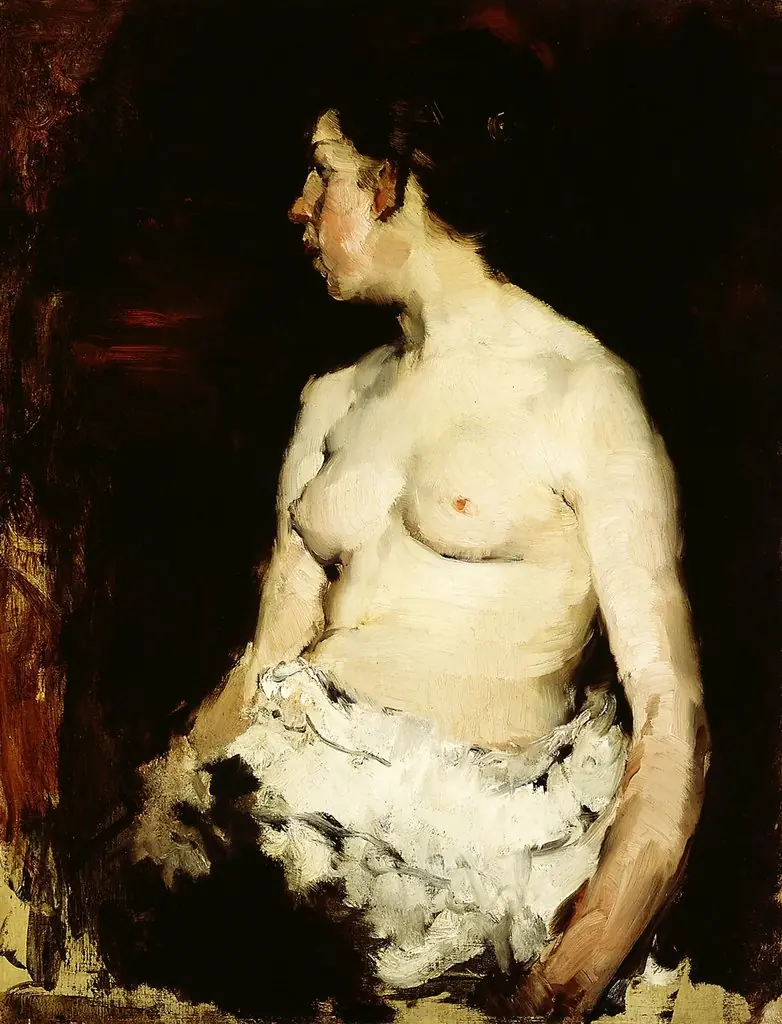 Seated Nude
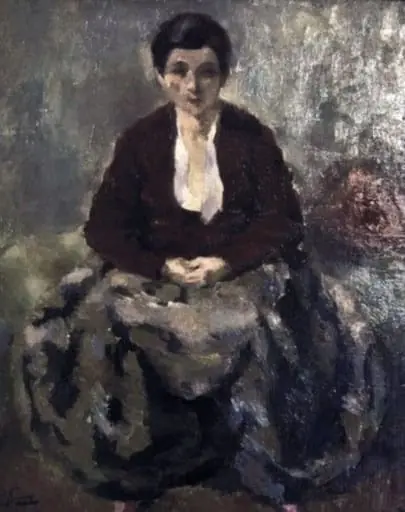 Femeie în bluză roșie
 Naisen muotokuva