Artwork
Biskra
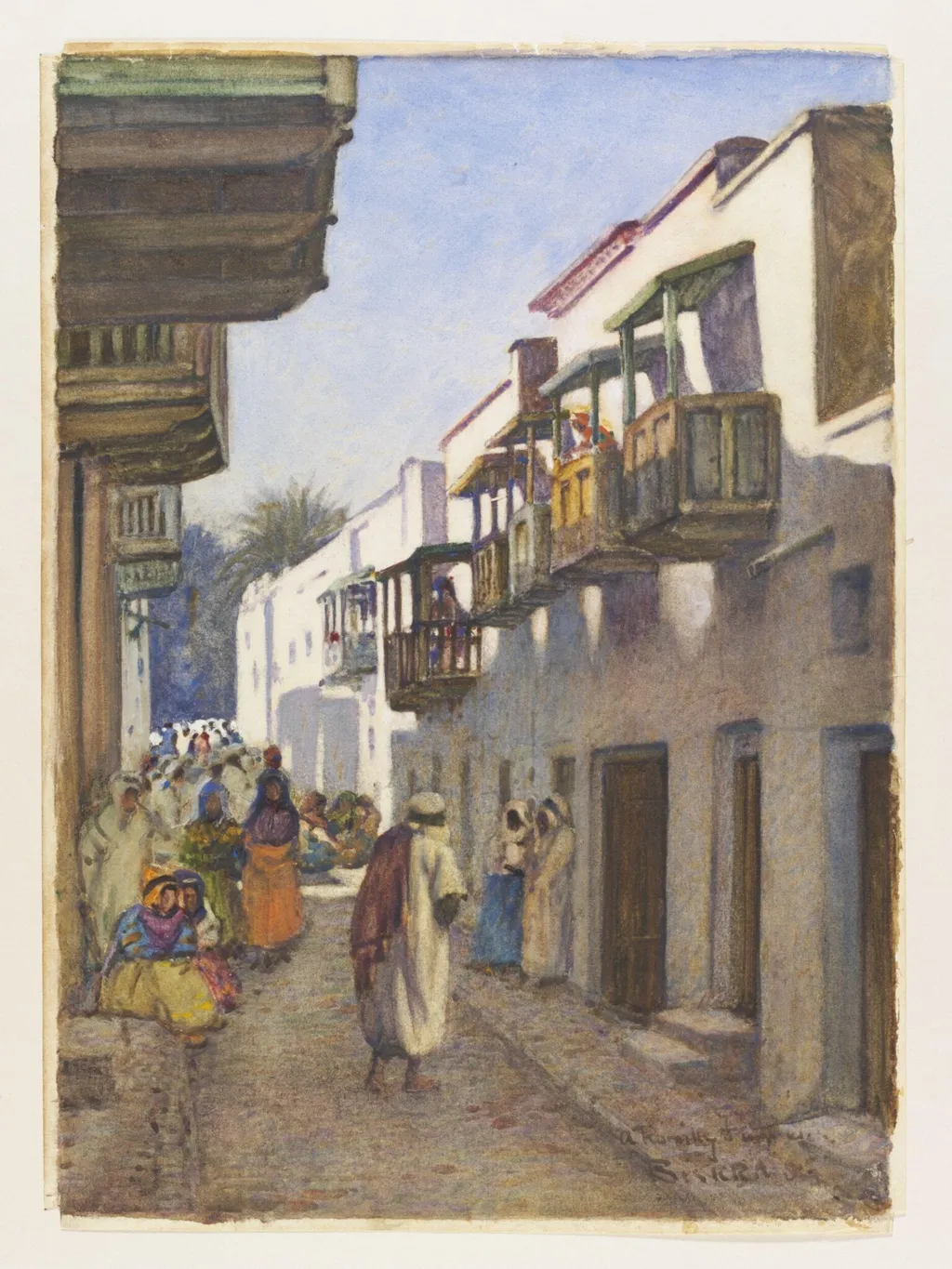
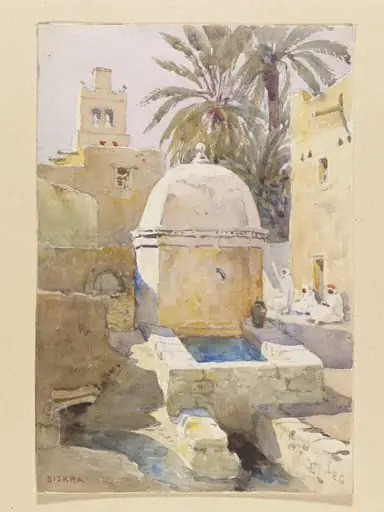
Biskra is a watercolor work on paper by the Post-Impressionist artist Arthur Romilly Fedden. It dates from 1904 and is held in the collection of the Victoria and Albert Museum.
About this work
Overview
Biskra is a watercolour created by Arthur Romilly Fedden in 1904, depicting a scene of everyday life in a narrow street, characterized by warm, muted tones and loose brushstrokes.
Subject & Meaning
The subject of Biskra is daily life in a presumably North African or Middle Eastern setting, as suggested by the attire of the figures and the architectural details. The scene conveys a sense of tranquility, with individuals engaged in leisurely activities amidst simple, traditional architecture.
Technique & Style
Fedden employed loose, expressive brushstrokes in Biskra, imparting a sketchy, spontaneous quality to the work. The interplay of light and shadow adds depth, while the muted color palette contributes to the overall sense of warmth and serenity.
History & Provenance
Biskra was acquired by Bonham through Holder in January 1976 for £15. Its current location is not specified in the provided information, though similar works can be found at the Victoria and Albert Museum.
Context
Given its subject matter, Biskra likely reflects Fedden's interest in capturing the essence of life in colonial or exotic locales, a common theme among early 20th-century European artists.
Legacy
While specific impact or influence of Biskra is not detailed, it contributes to the broader legacy of early 20th-century watercolourists who documented everyday life in diverse, often colonial, contexts.
Artist & collection
Artist
Arthur Romilly Fedden (1875–1939) was an English artist and watercolourist. The son of businessman Henry Fedden, his younger brother was the engineer Roy Fedden. Romilly studied under Hubert von Herkomer at Bushey, at…

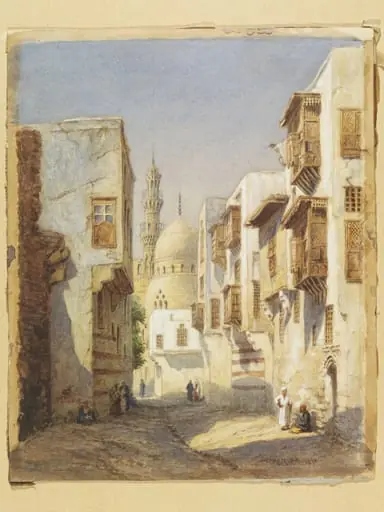 Darb al-Ahmer, Cairo, with the Mosque and Tomb of Amir Khayrbak
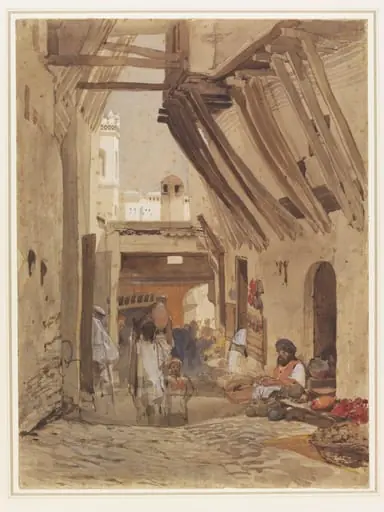 Street Scene
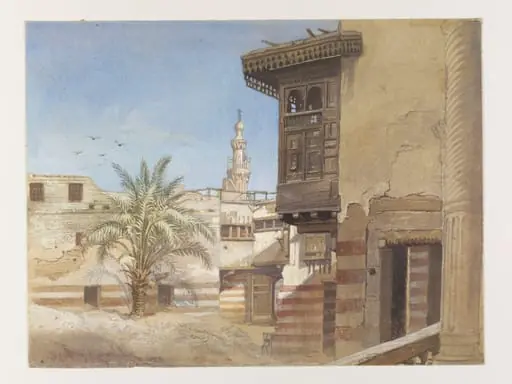 View from the Loggia of the Summer Reception Room (Makad) in the House of the Memluk Raduan Bey, Cairo
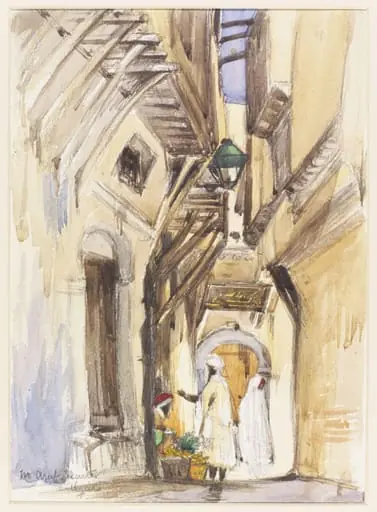 In Arab Quarter Algiers
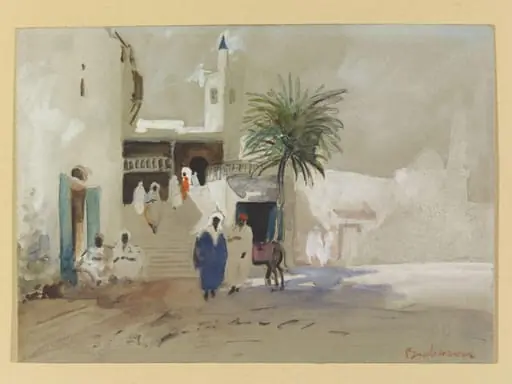 Mosque of Sidi Bou-Said
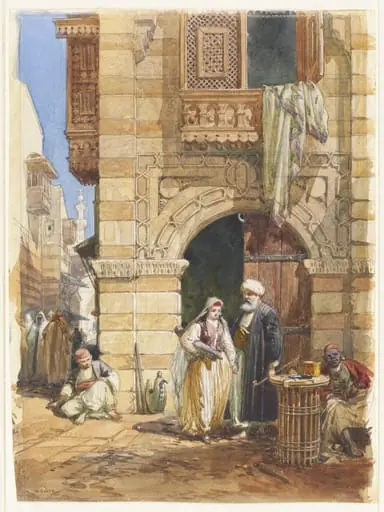 Street Scene in Cairo
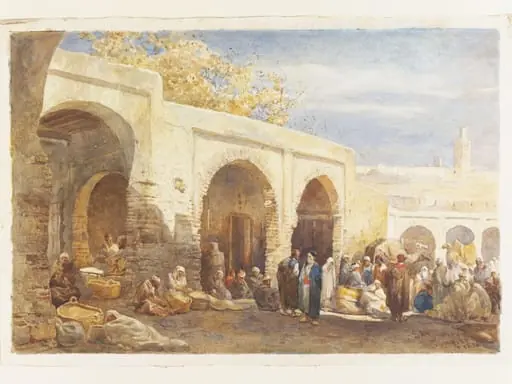 The Corn Market, Tangier
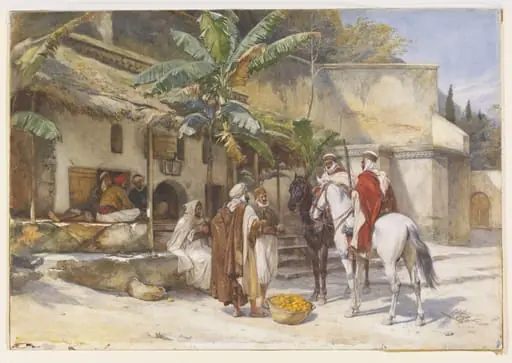 Village men conversing with two armed horsemen, Algiers
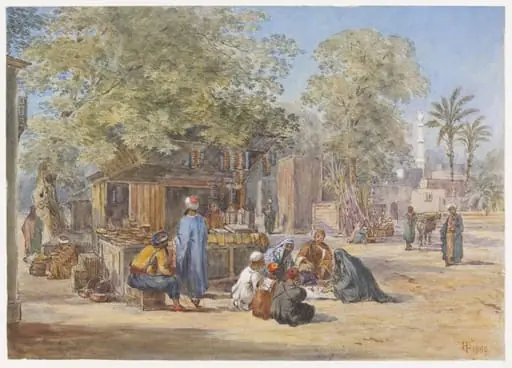 Egyptian Village Scene
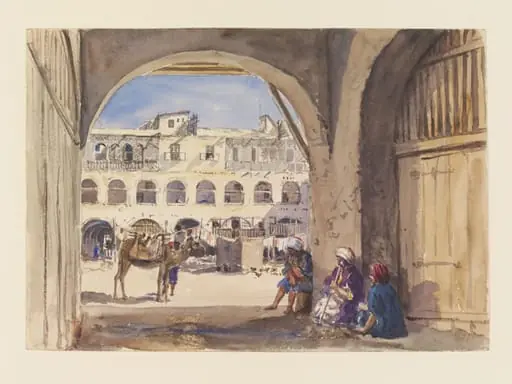 Entrance to the new Ockella Great Square of Alexandria
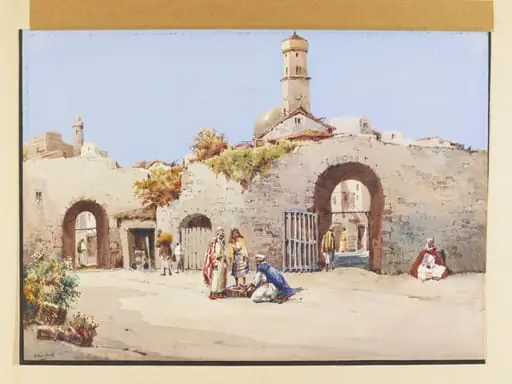 The City Walls, Jaffa, Palestine
 Biskra