Artwork
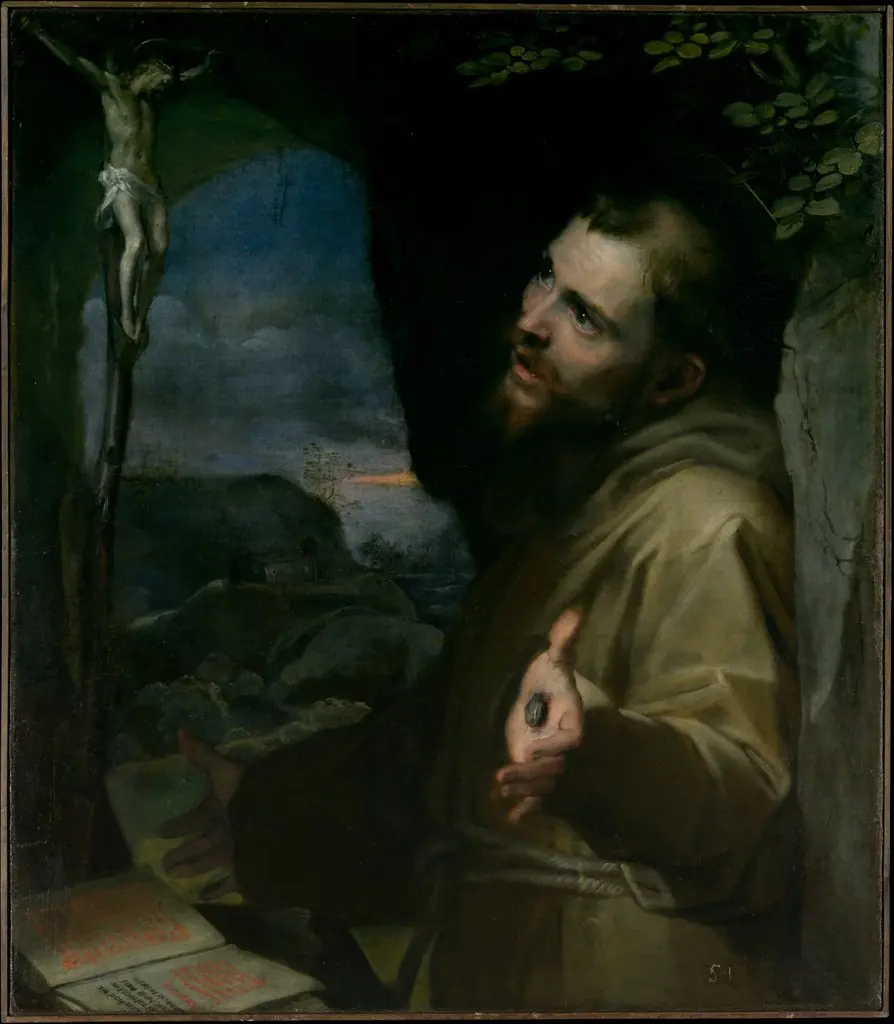
St. Francis Receiving the Stigmata
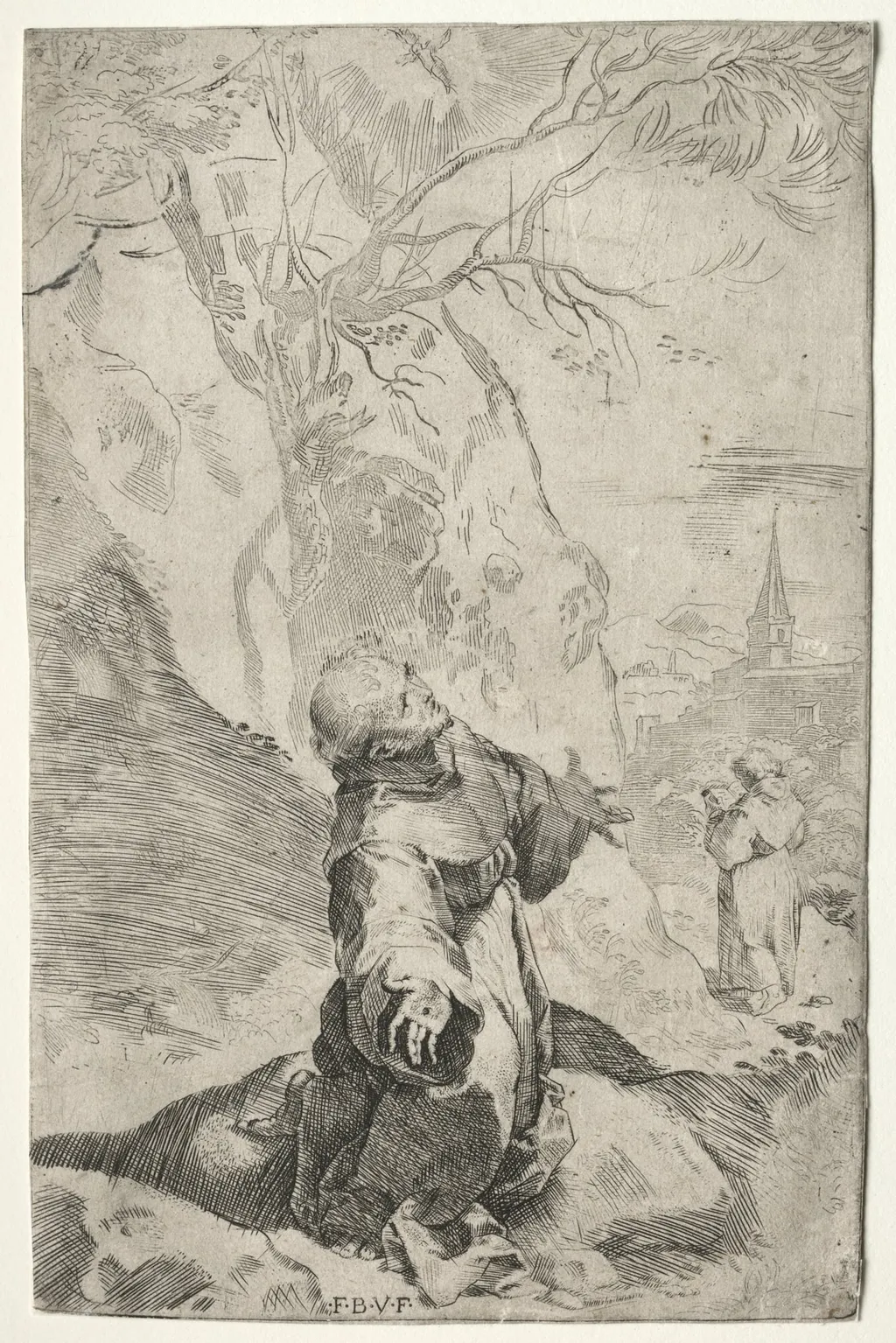
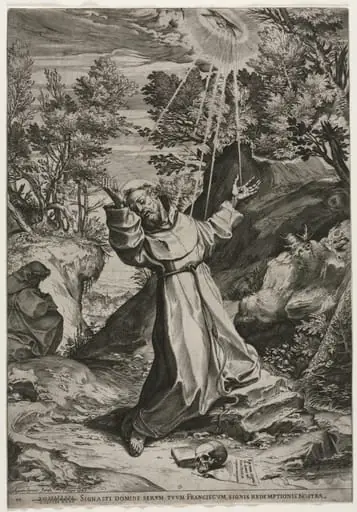
St. Francis Receiving the Stigmata is a print by the Renaissance artist Federico Barocci. It dates from 1581 and is held in the collection of the Cleveland Museum of Art.
About this work
Overview
Created circa 1581 by the Italian artist Federico Barocci, known as Il Baroccio, this print portrays the moment Saint Francis of Assisi receives the stigmata. Executed in fine hatching, the image resides in the collection of the Cleveland Museum of Art and exemplifies Barocci’s role in the transition from Renaissance to early Baroque aesthetics.
Subject & Meaning
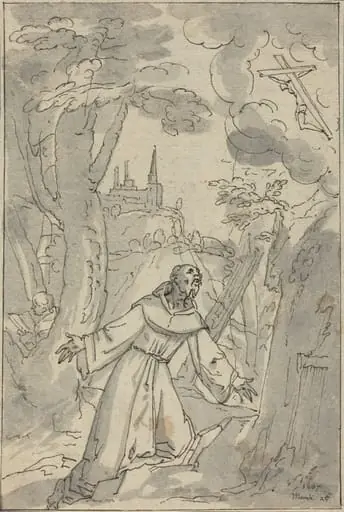
The composition captures the legendary episode in which Saint Francis is marked with the wounds of Christ. The kneeling figure, arms outstretched on a rocky terrain, conveys both devotion and physical suffering, while the distant church spire hints at the saint’s spiritual destination.
Technique & Style
Barocci employs delicate, intersecting hatch lines to model volume, creating a chiaroscuro effect that suggests three‑dimensional form on a flat surface. The contrast of light and shadow defines the musculature of the hands and face, while the twisting bare tree adds a dynamic, almost sculptural line to the background.
History & Provenance
Barocci, a prominent painter and printmaker in central Italy, produced this work during a period when his reputation extended beyond his native Urbino. The print entered the Cleveland Museum of Art’s holdings through acquisition in the 20th century, joining a broader collection of Renaissance and Baroque prints.
Context
The image reflects the Counter‑Reformation’s emphasis on vivid, emotionally resonant depictions of saints. By rendering the stigmata episode with dramatic lighting and expressive line work, Barocci aligns with contemporary efforts to make sacred narratives accessible and moving for viewers.
Artist & collection
Artist
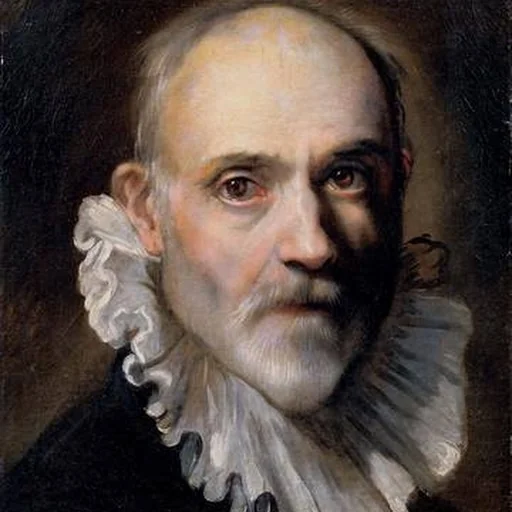
Federico Barocci (also written Barozzi) (c. 1535 – 30 September 1612) was an Italian Renaissance painter and printmaker. His original name was Federico Fiori, and he was nicknamed Il Baroccio. His work was highly…