Artwork
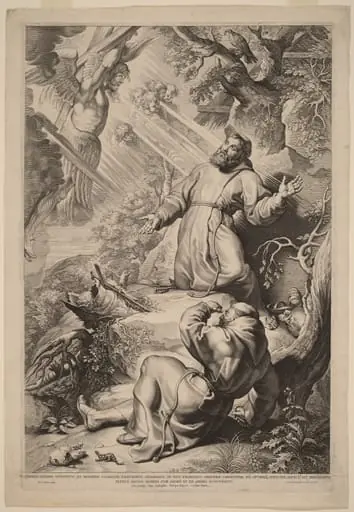
The Stigmatization of Saint Francis
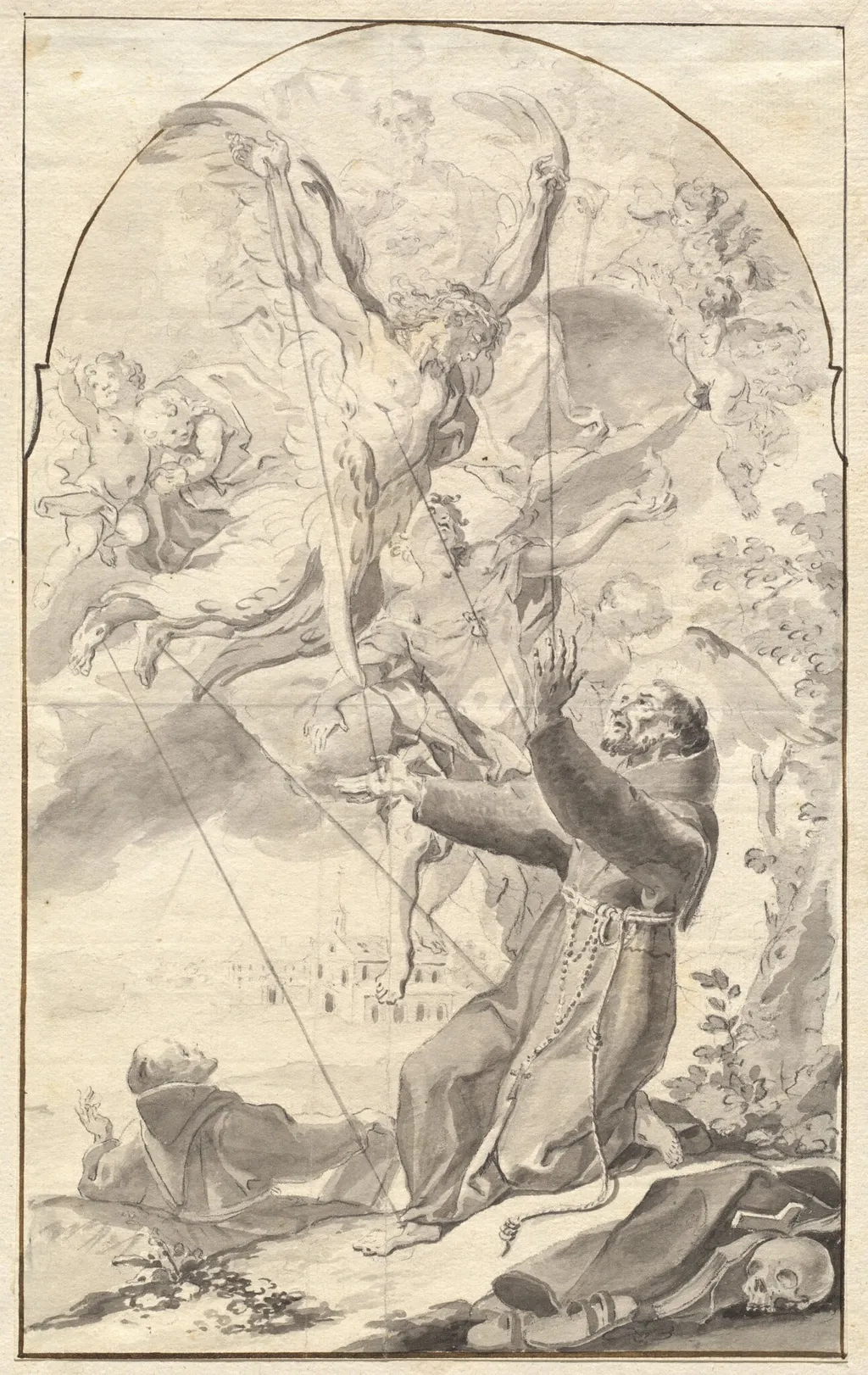
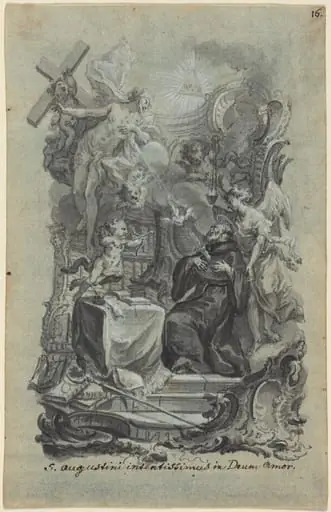
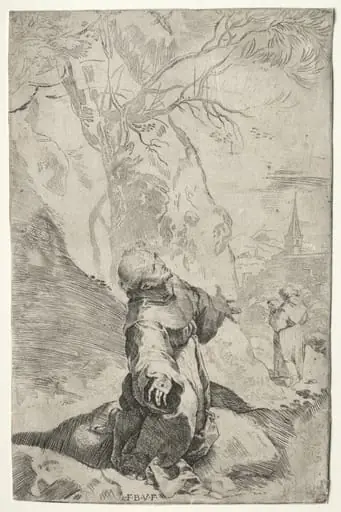
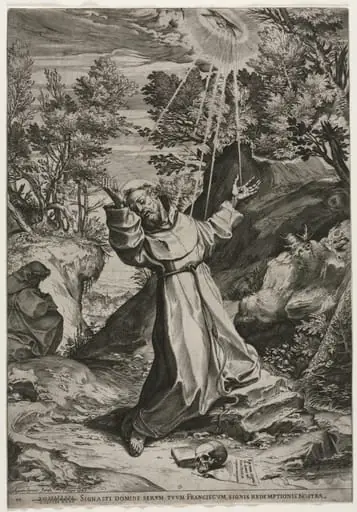
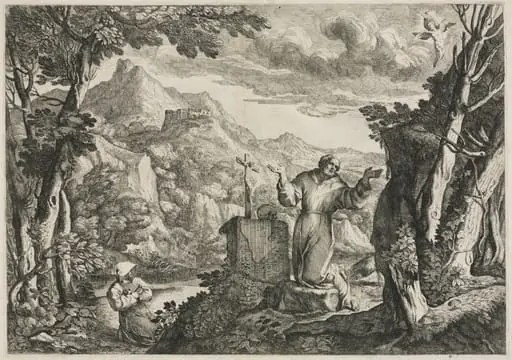
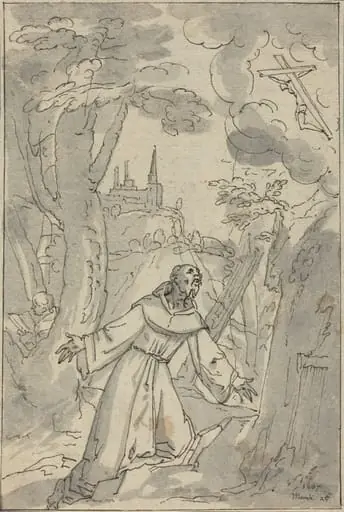
The Stigmatization of Saint Francis is an ink drawing by the Romanticist artist Johan Baptist Enzenberger. It dates from 1764 and is held in the collection of the National Gallery of Art.
About this work
Overview
This drawing, executed around 1764 by Johan Baptist Enzenberger, depicts the moment Saint Francis of Assisi receives the stigmata.
This drawing, executed around 1764 by Johan Baptist Enzenberger, depicts the moment Saint Francis of Assisi receives the stigmata. Rendered in pen and brown ink with gray wash over graphite, it is a delicate yet expressive work on laid paper. The composition centers on the kneeling saint, surrounded by celestial figures, capturing a moment of divine encounter through restrained tonal gradations and precise linear detail.
Subject & Meaning
The scene illustrates Saint Francis’s mystical experience of bearing the wounds of Christ, a pivotal event in Franciscan spirituality. His outstretched arms and humble posture convey surrender to divine will. The cherubs and attendant figures suggest heavenly witnesses, while the rope belt and rosary emphasize his vow of poverty and devotion. The imagery reinforces the saint’s identification with Christ’s suffering, a core theme in Counter-Reformation devotional art.
Technique & Style
Enzenberger employs fine pen lines to define folds in the saint’s robe and the fluttering garments of the angels, while gray wash adds volume and atmospheric depth. Graphite underdrawing guides the composition with subtle precision. The use of wash creates soft transitions between light and shadow, enhancing the ethereal quality of the celestial figures without overwhelming the intimacy of the moment. The medium’s immediacy suits the spiritual intensity of the subject.
History & Provenance
The drawing was likely made during Enzenberger’s time in southern Germany or Austria, where he produced religious works for monastic patrons. Its survival in good condition suggests it was preserved within a religious or aristocratic collection. No documented exhibition history exists prior to the 20th century, but its technical quality indicates it was valued as a preparatory study or devotional object rather than a commercial piece.
Context
Created during the late Baroque period, the work reflects the continued influence of Counter-Reformation piety in Catholic regions. While larger altarpieces dominated public spaces, smaller drawings like this served private devotion or as models for larger commissions. Enzenberger’s style aligns with regional artists who blended emotional expressiveness with meticulous draftsmanship, responding to both spiritual fervor and academic training.
Legacy
Though Enzenberger is not widely known today, this drawing exemplifies the quiet intensity of 18th-century religious draftsmanship. It contributes to the understanding of how devotional imagery was refined in private contexts, away from grand ecclesiastical commissions. The work remains a testament to the enduring appeal of Saint Francis’s mysticism in early modern Catholic visual culture.
Artist & collection