Artwork
Skinned Head of a Young Bull
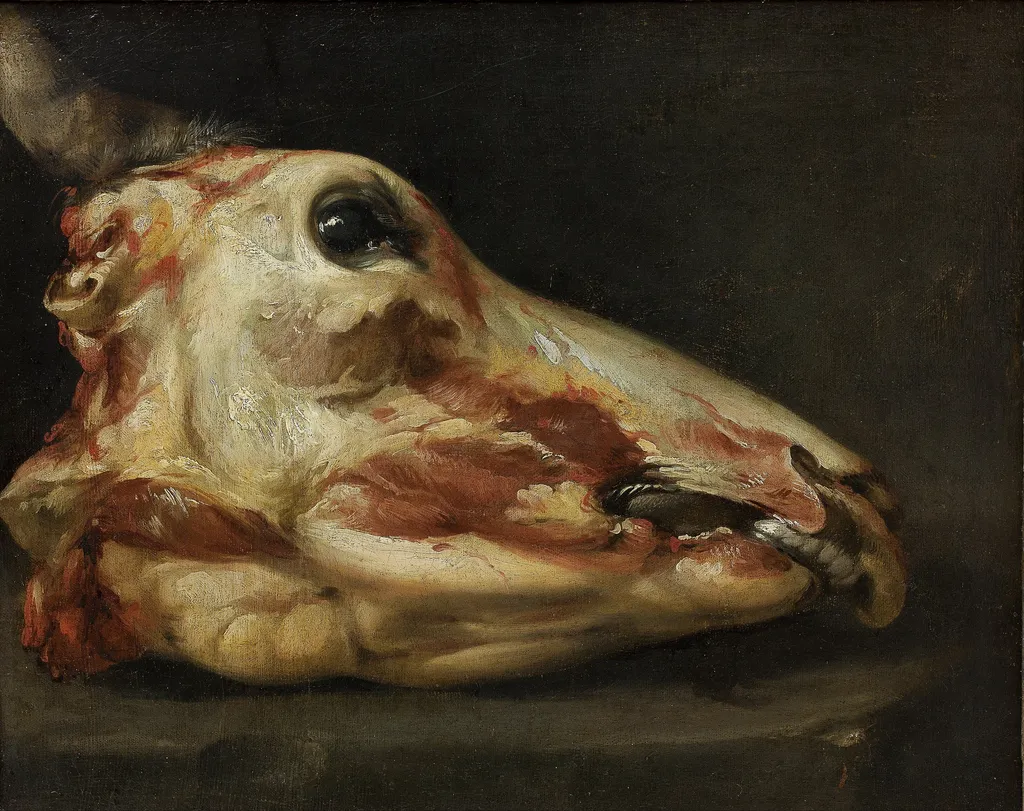
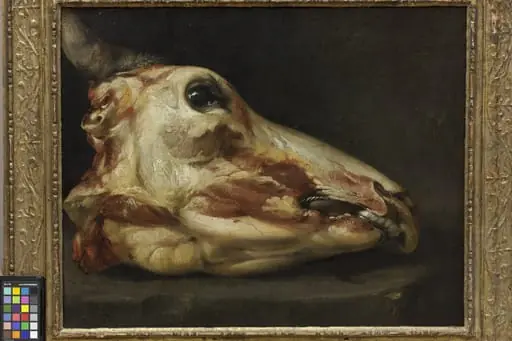
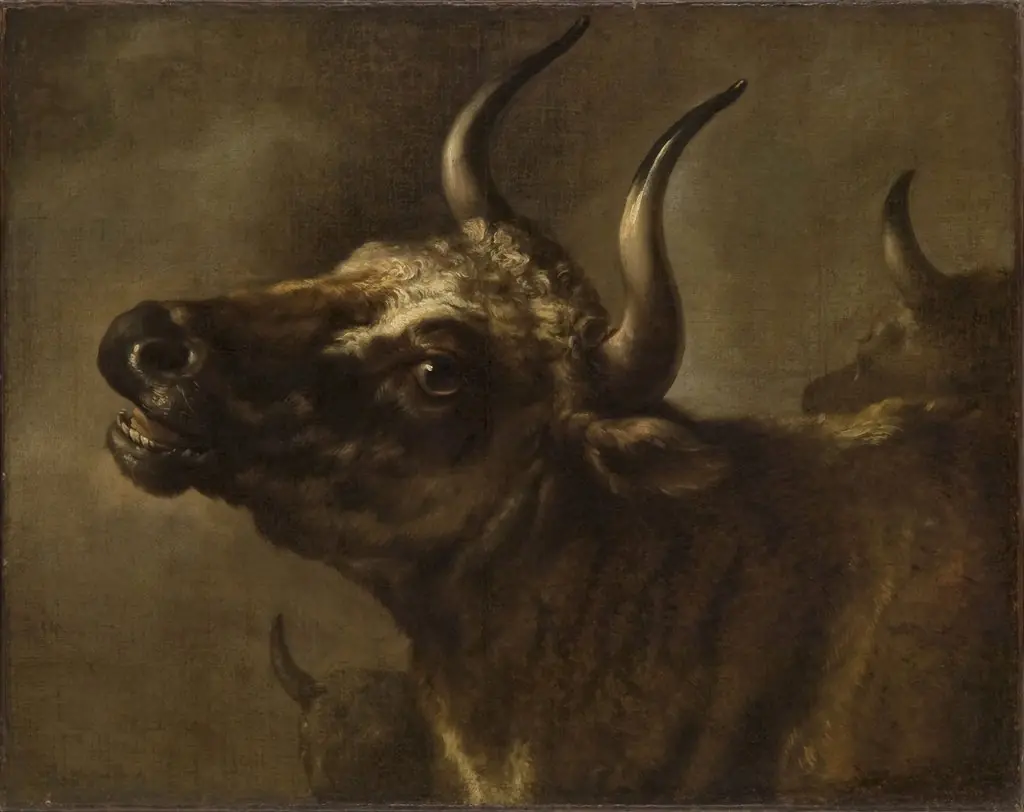
Skinned Head of a Young Bull is an oil painting by the Barbizon school artist Felice Boselli. It dates from 1696 and is held in the collection of the Statens Museum for Kunst.
About this work
Overview
Skinned Head of a Young Bull is a 1696 oil painting by Italian Baroque artist Felice Boselli, characterized by its vivid depiction of a calf's head with skin partially removed.
Subject & Meaning
The painting confronts the viewer with the stark, peeled head of a young bull, emphasizing the contrast between exposed flesh and the remnants of skin, potentially serving as a commentary on mortality or the transience of life.
Technique & Style
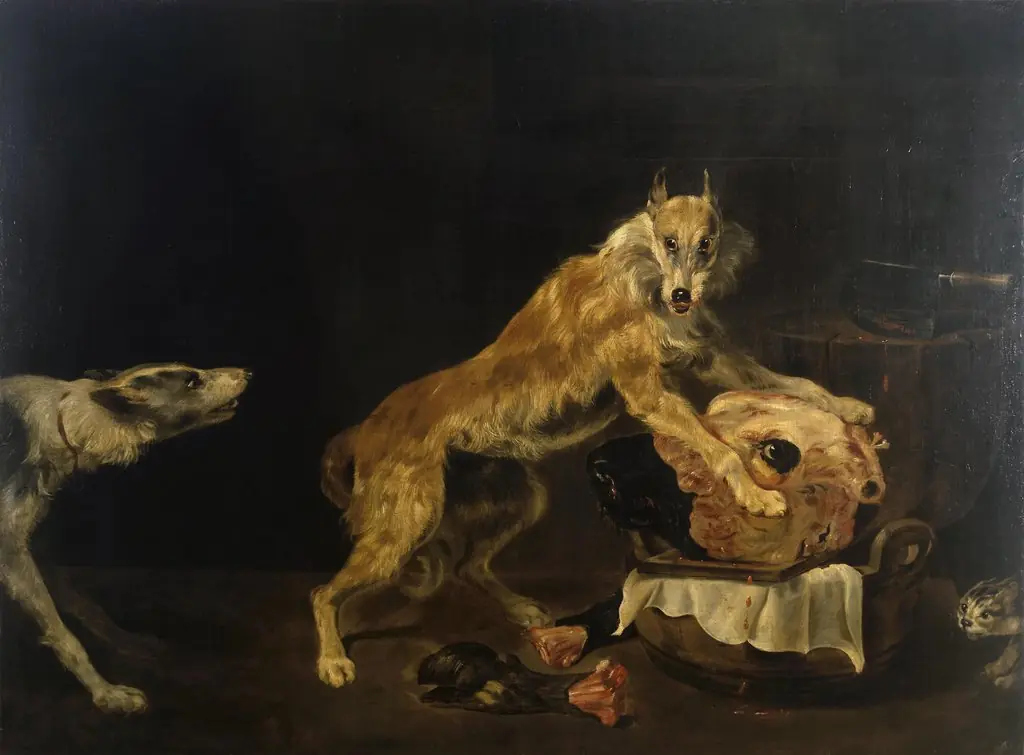
Boselli employed thick, expressive brushstrokes, particularly around the mouth and eyes, against a dark background, leveraging chiaroscuro to accentuate the dramatic interplay of light and shadow on the subject's raw, textured surfaces.
History & Provenance
Created during Boselli's activity in Piacenza, the work is now part of the Statens Museum for Kunst's collection, though its initial classification under the Barbizon School may require reevaluation given Boselli's Baroque training under Michelangelo Nuvolone.
Context
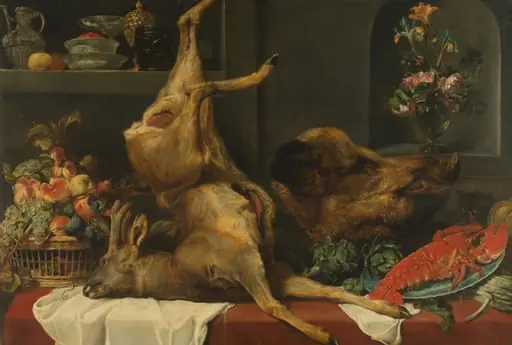
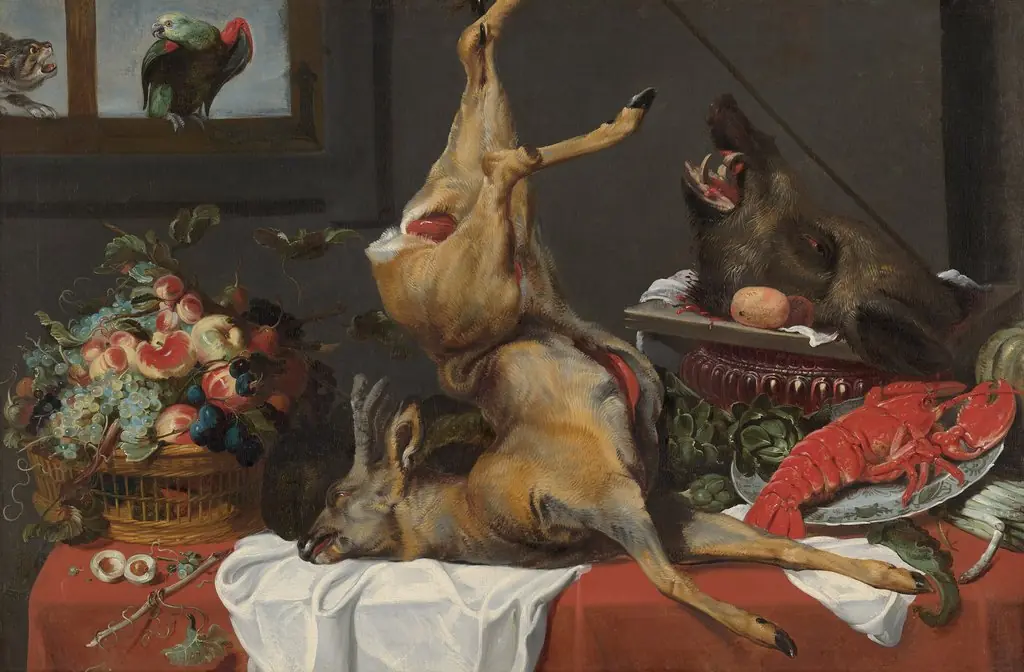
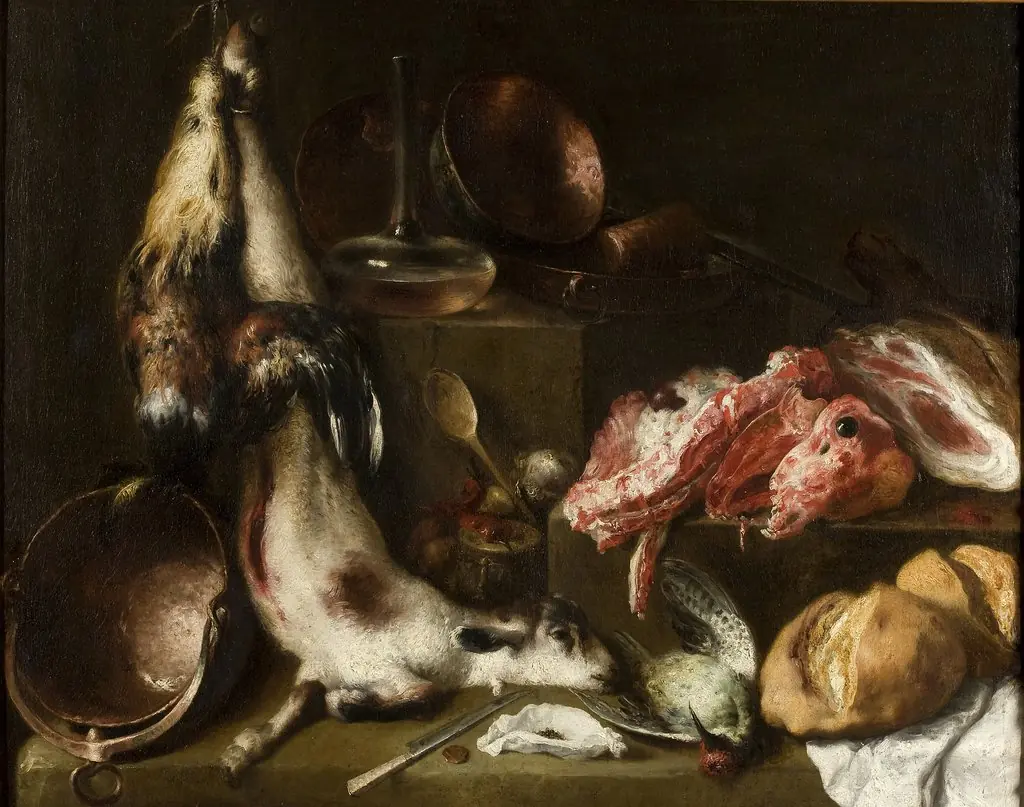
Influenced by still-life painter Angelo Maria Crivelli and trained in the Baroque tradition, Boselli's piece reflects a unique blend of detailed game depiction and dramatic lighting, common in Baroque still-life.
Legacy
While specific lasting impacts of *Skinned Head of a Young Bull* on the broader art historical canon are not well-documented, it remains a striking example of late Baroque still-life painting's ability to evoke powerful emotional responses through vivid, unflinching imagery.
Own this work as a print
Artist & collection
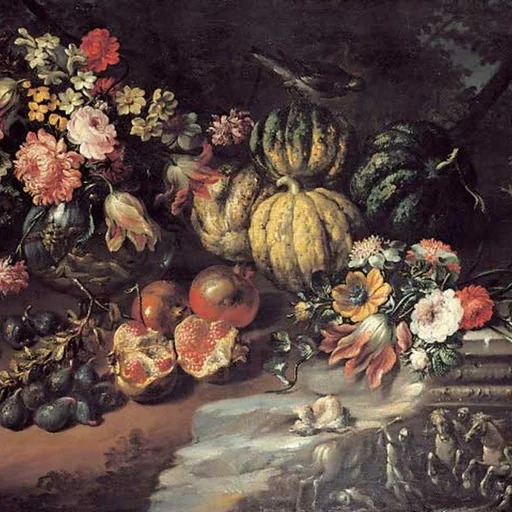
Artist
Felice Boselli (Piacenza, 20 April 1650 – Parma, 23 August 1732) was an Italian painter of the Baroque period, active mainly in Piacenza.