Artwork
Slaughtered Ox
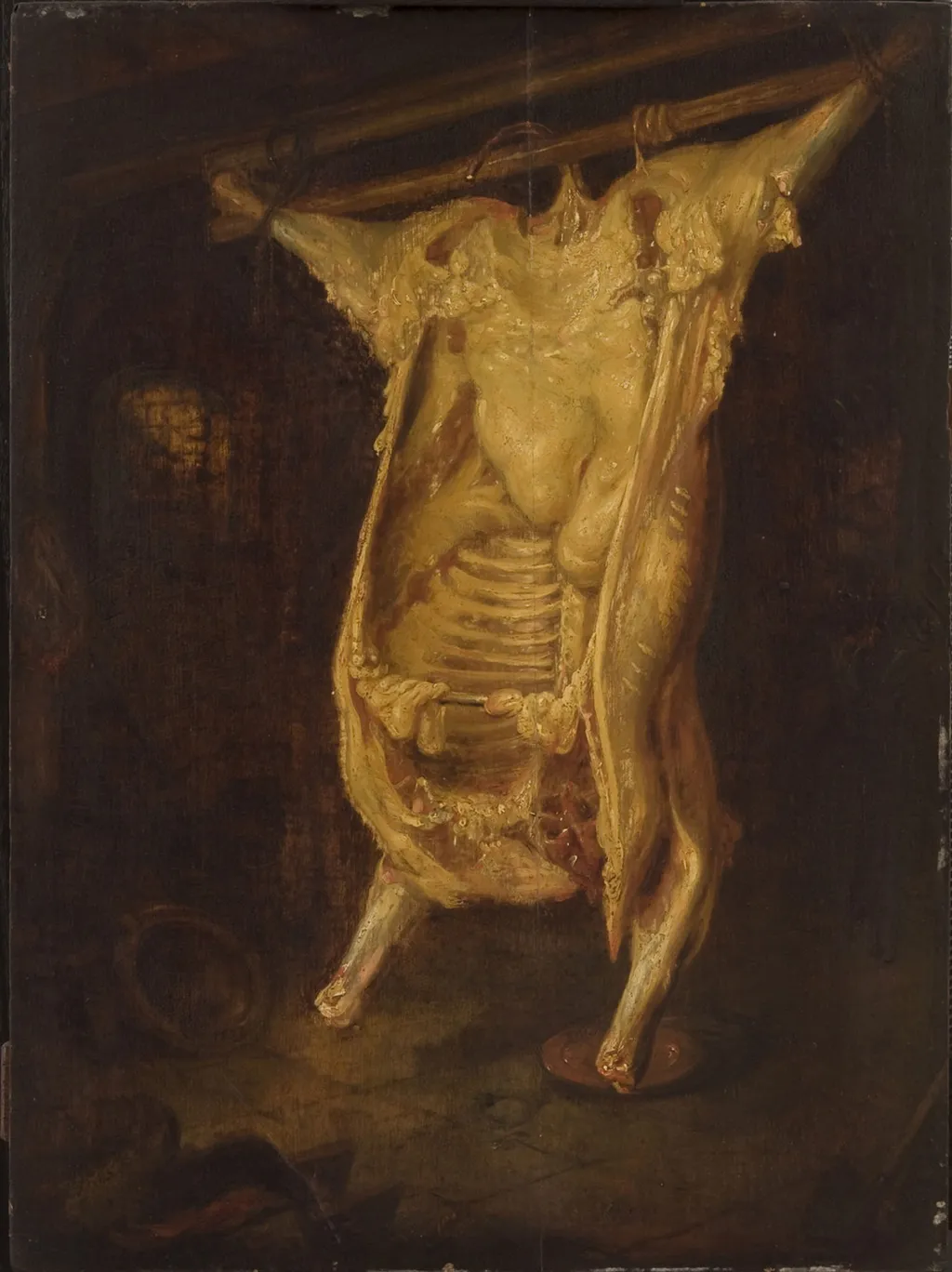
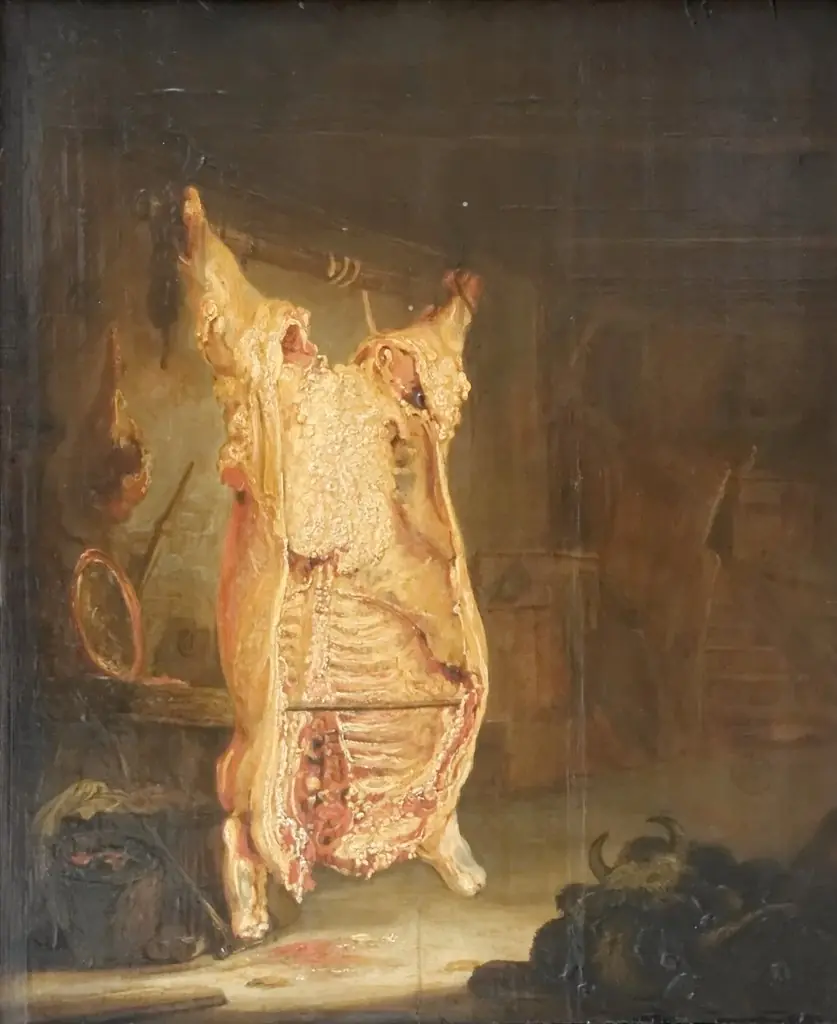
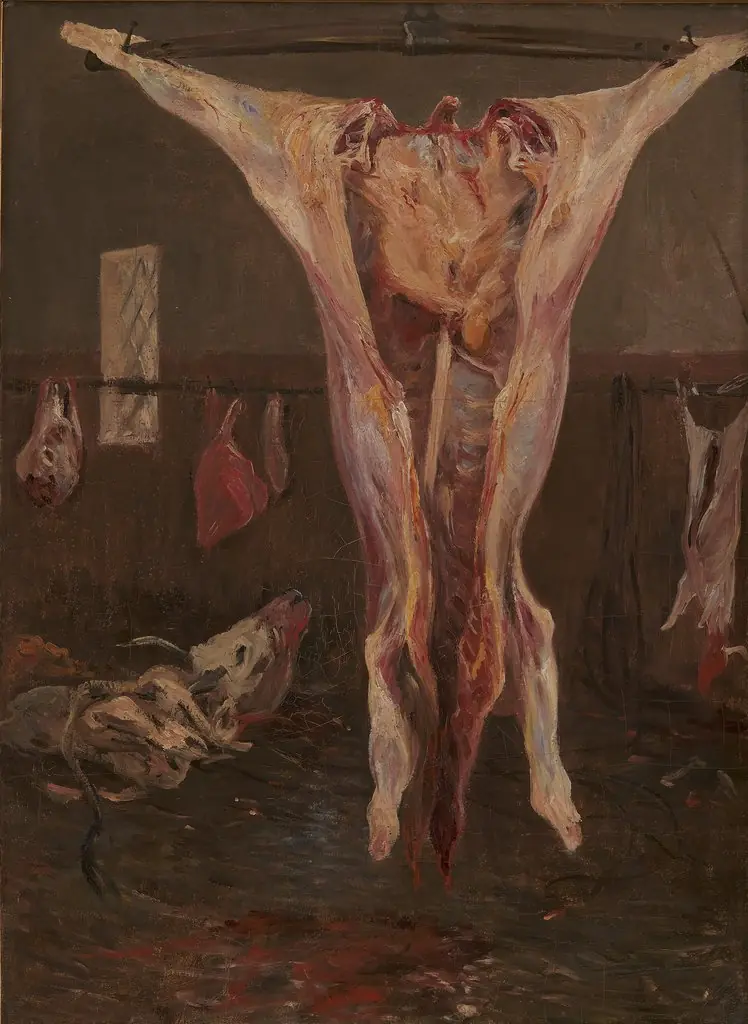
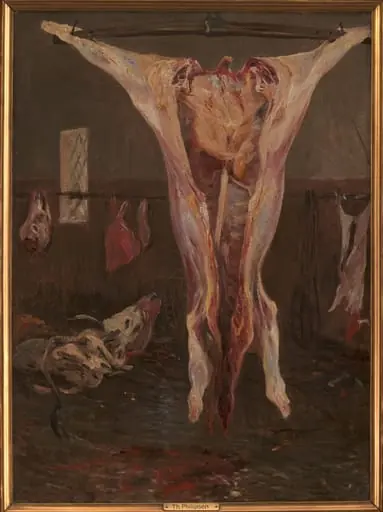
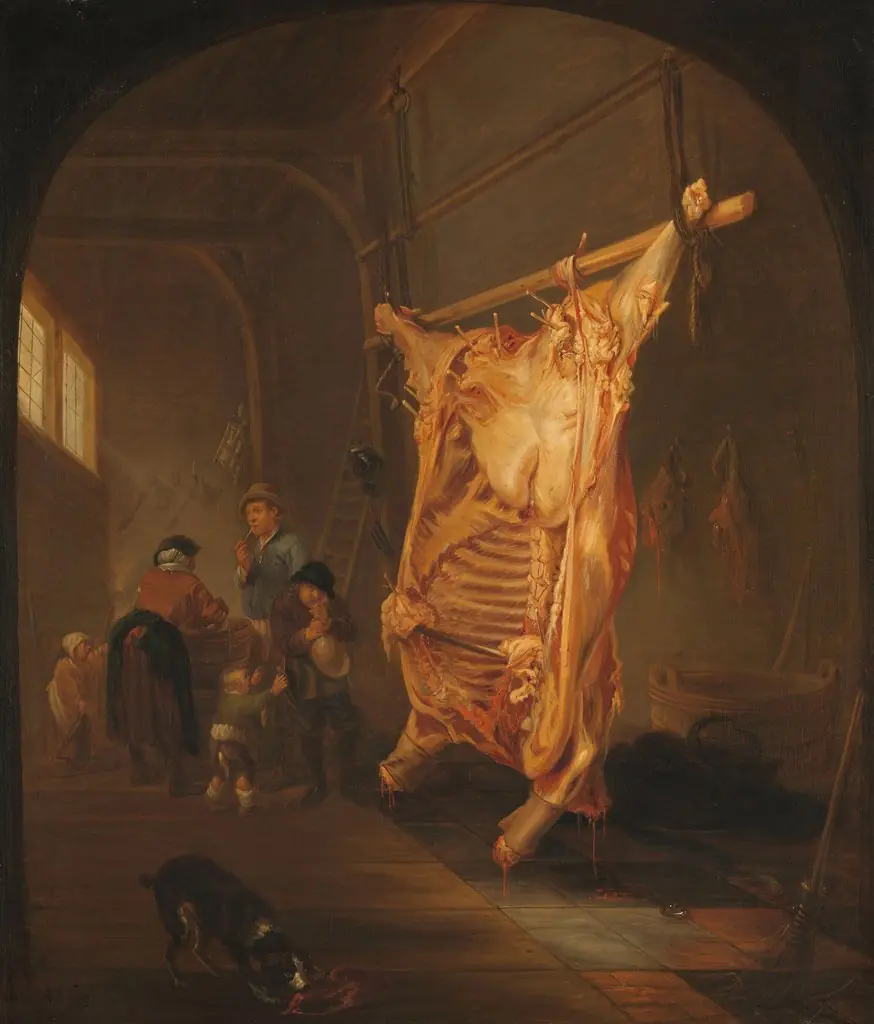
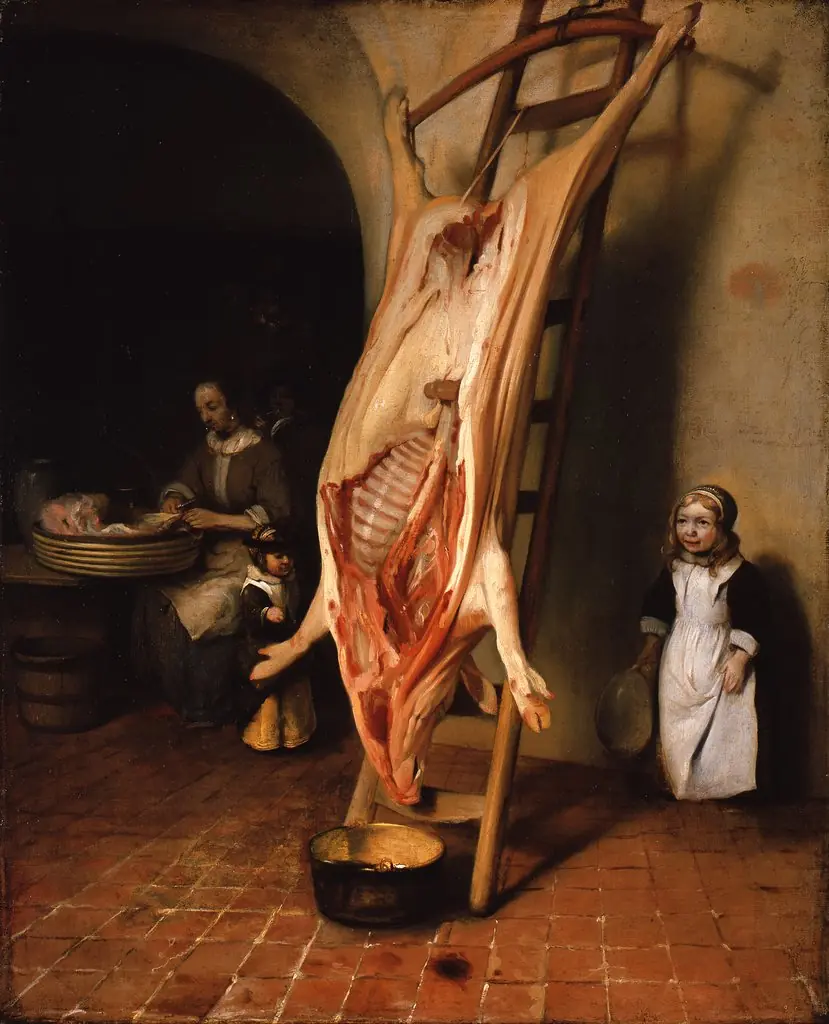
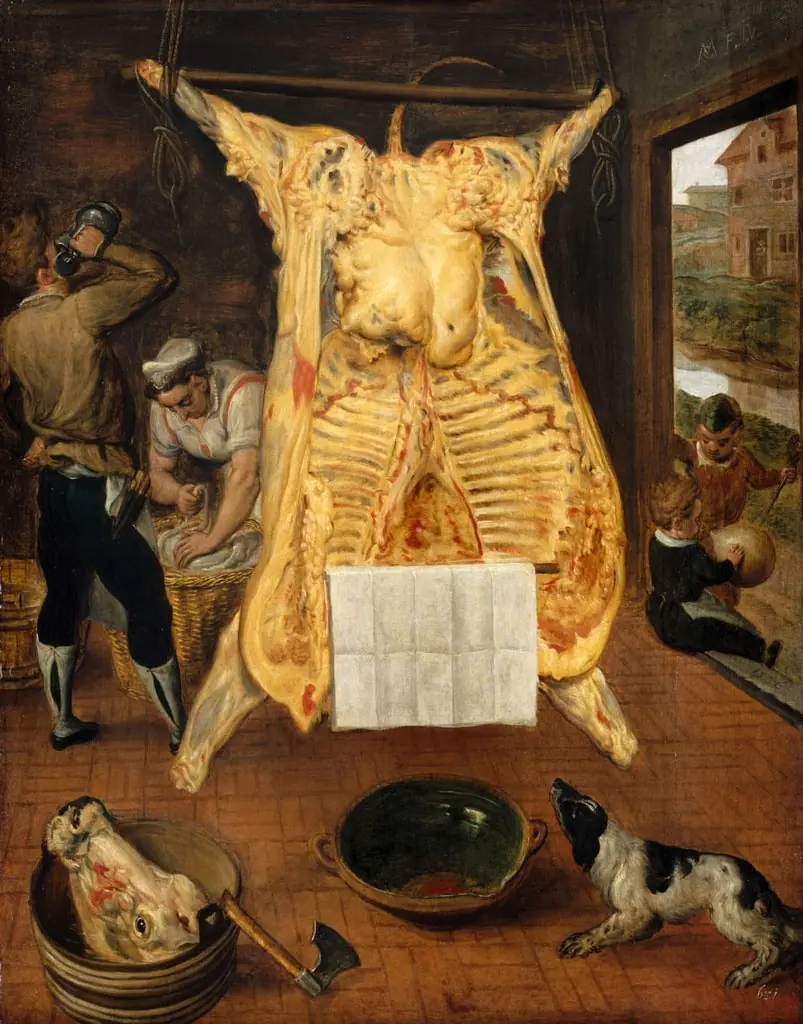
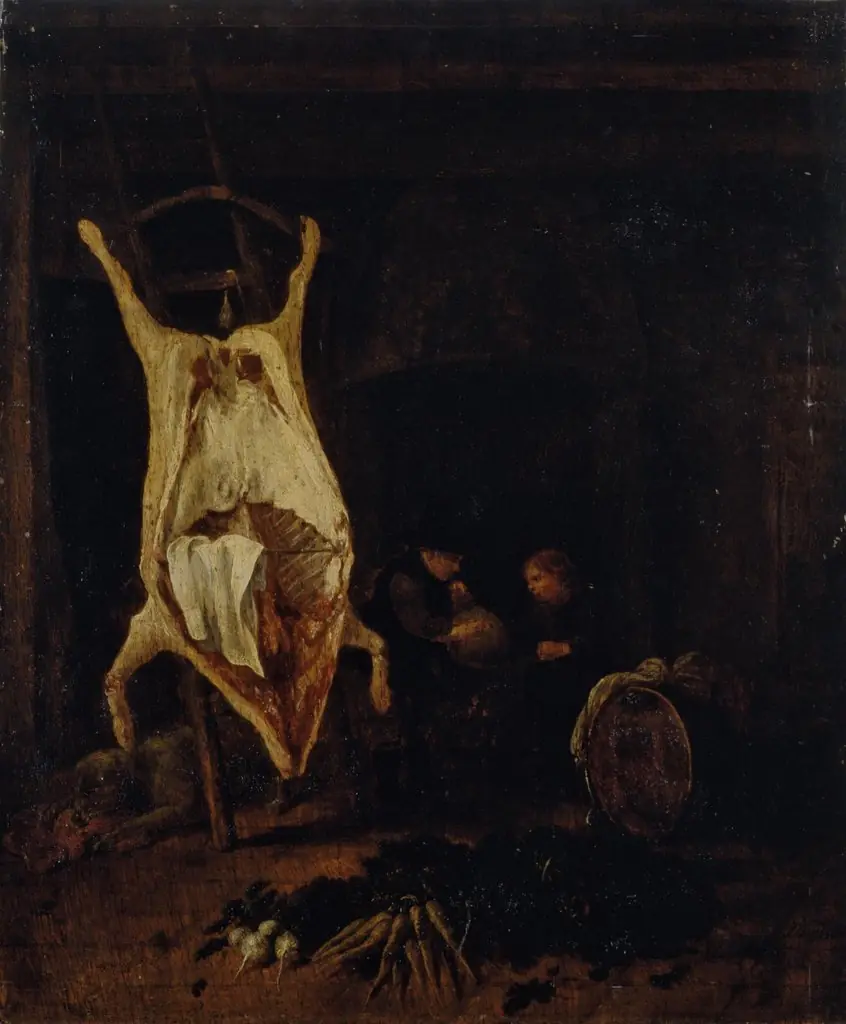
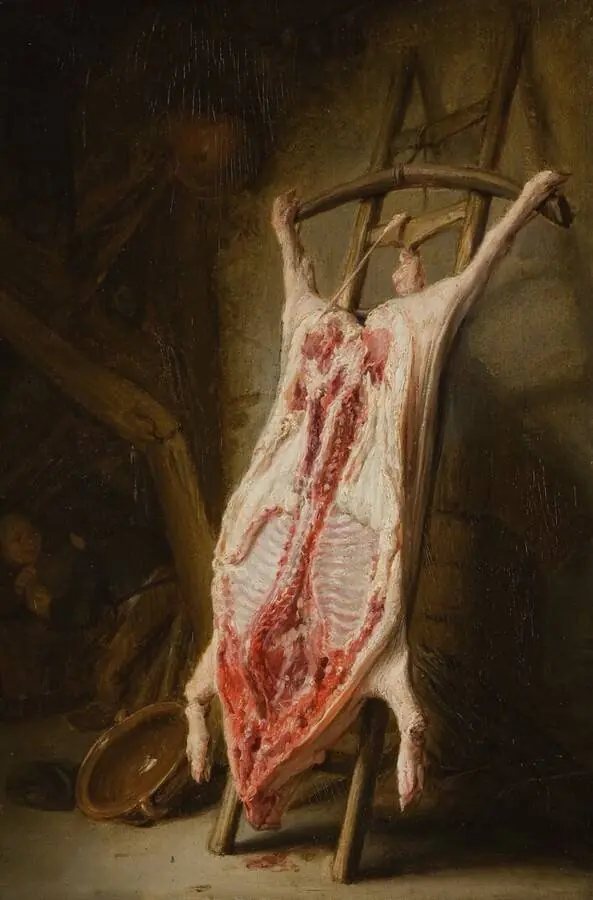
Slaughtered Ox is an oil painting by the Flemish Baroque painting artist Rembrandt. It dates from 1640 and is held in the collection of the Philadelphia Museum of Art.
About this work
Overview
Slaughtered Ox is a 1640 oil painting by Rembrandt van Rijn, characteristic of the Flemish Baroque movement. It is part of the Philadelphia Museum of Art's collection.
Subject & Meaning
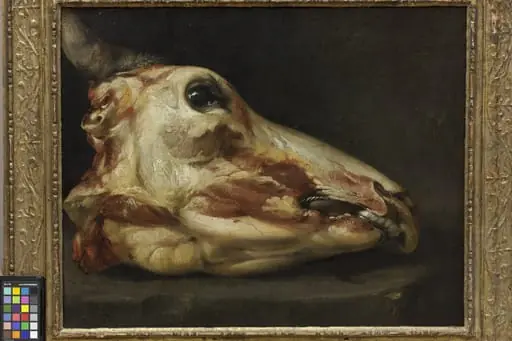
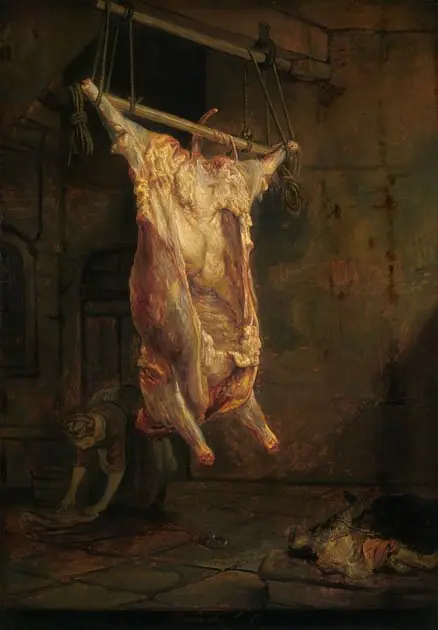
The painting depicts a skinned, slaughtered ox suspended from a beam, with internal organs exposed. This gruesome yet detailed scene may explore themes of mortality and the human relationship with food.
Technique & Style
Rembrandt employed chiaroscuro, with a light source from the left, casting dramatic shadows across the dark background. The ox's body is rendered in meticulous anatomical detail, showcasing the artist's mastery of realism.
History & Provenance
Created in 1640, the work is now held in the Philadelphia Museum of Art. While Rembrandt's diverse oeuvre includes various styles and subjects, this piece stands out for its unflinching realism.
Context
Within the Flemish Baroque, Slaughtered Ox aligns with the movement's emphasis on dramatic lighting and everyday life themes, albeit with an unusually stark subject.
Legacy
The painting's impact lies in its contribution to the history of realistic depiction in art, with its detailed, unsentimental portrayal of a slaughtered animal remaining notable.
Own this work as a print
Artist & collection
Artist
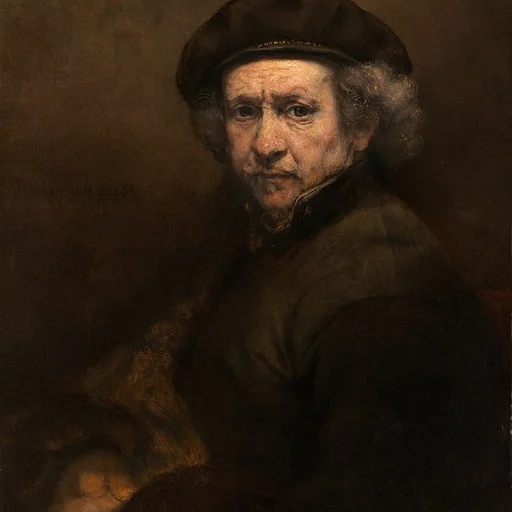
Rembrandt Harmenszoon van Rijn (15 July 1606 – 4 October 1669), known mononymously as Rembrandt, was a Dutch Golden Age painter, printmaker, and draughtsman.