Artwork
Marble bust of Homer
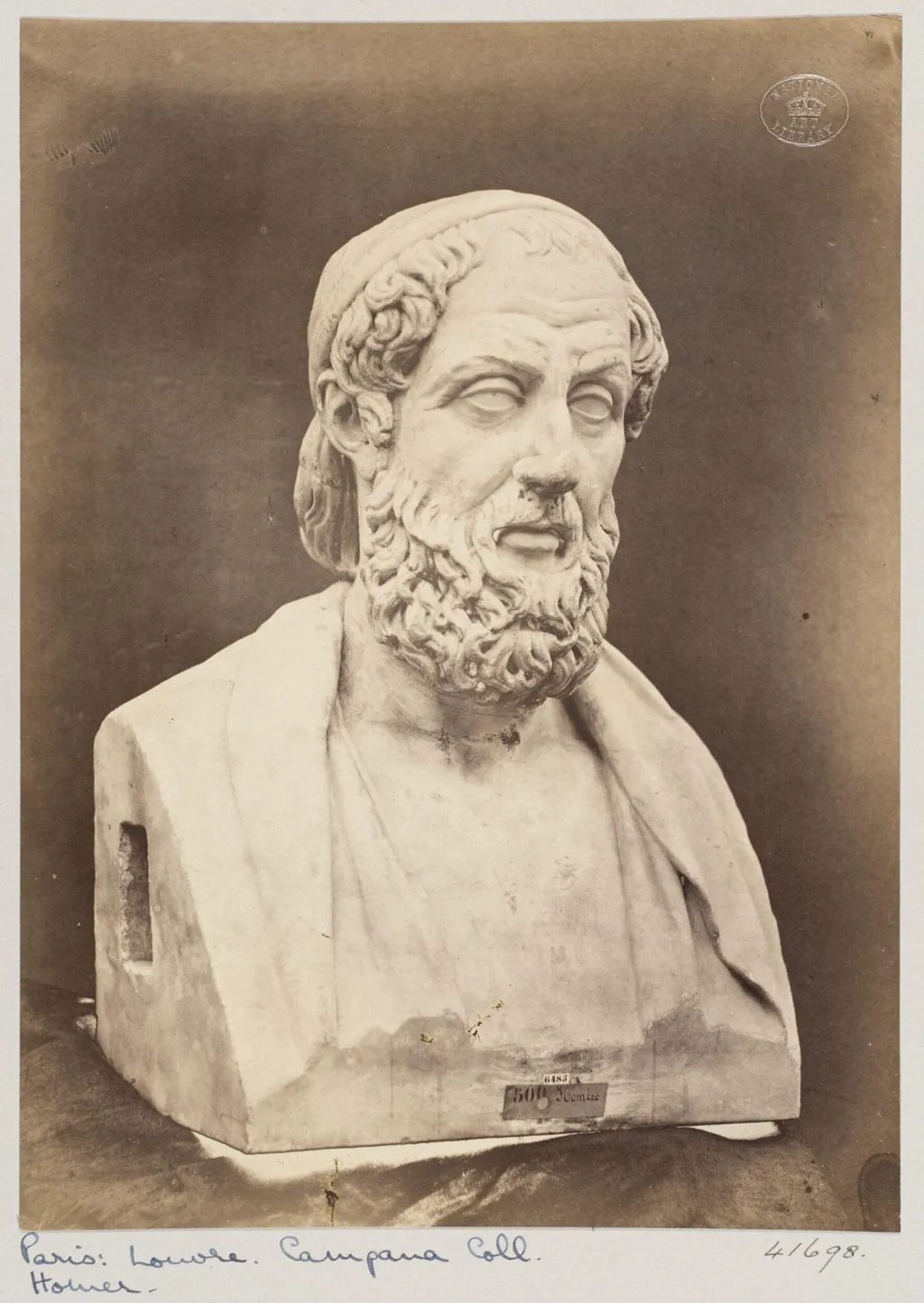
Marble bust of Homer is a photographic photography by the Impressionist artist Louise Laffon. It dates from 1864 and is held in the collection of the Victoria and Albert Museum.
About this work
The photograph is titled "Marble bust of Homer" by Louise Laffon.
It was taken in 1863-1864.
The image is held at the Victoria and Albert Museum, which has a long history of collecting photographs, starting from 1852, to support artists and students, and this photograph is one example of that effort.
You can learn more about this type of art by looking at the movement: Realism.
Overview
Acquired by the Victoria and Albert Museum in 1864, it is one of five hundred images from Laffon’s series documenting the Campana Collection in Paris.
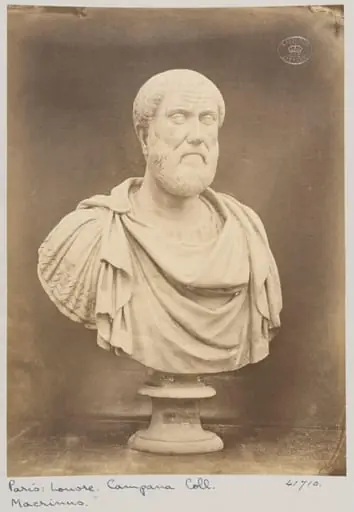
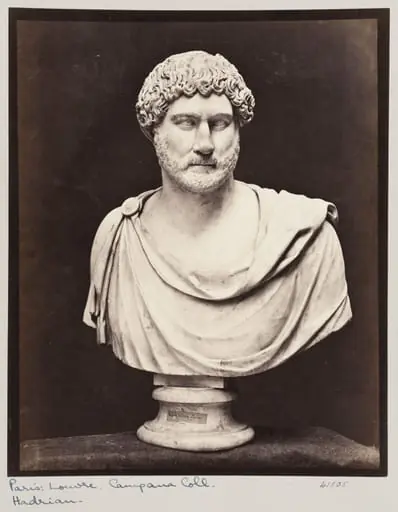
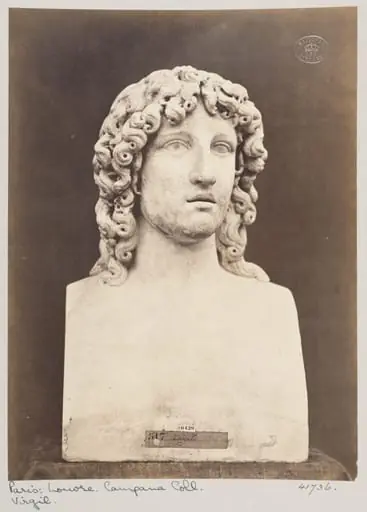
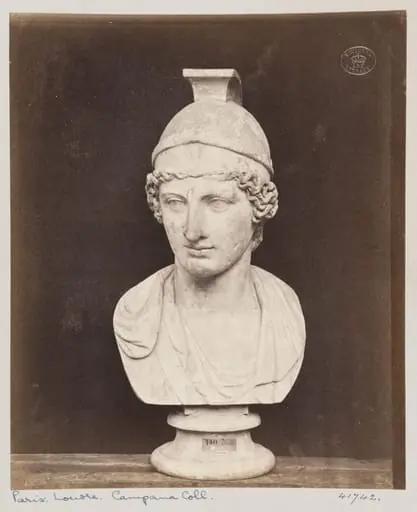
This photograph, taken between 1863 and 1864 by Louise Laffon, captures a marble bust of the ancient poet Homer. Acquired by the Victoria and Albert Museum in 1864, it is one of five hundred images from Laffon’s series documenting the Campana Collection in Paris. The photograph was collected not as fine art, but as an educational resource, reflecting the museum’s early commitment to using photography to expand access to classical sculpture for artists and students.
Subject & Meaning
The subject is a classical Roman or Hellenistic marble bust of Homer, traditionally regarded as the author of the Iliad and the Odyssey. The image preserves the sculpted features—brow, beard, and solemn gaze—with precision, emphasizing the enduring cultural authority of the poet. As a reproduction, the photograph serves to disseminate knowledge of ancient portraiture, detached from the object’s physical presence and repurposed for study in a distant institution.
Technique & Style
Laffon employed the albumen print process, common in mid-19th-century photographic documentation. The image exhibits fine tonal gradations and sharp detail, characteristic of careful studio lighting and long exposures. The composition is frontal and neutral, prioritizing accuracy over aesthetic flourish. This clinical approach aligns with the photograph’s function: to serve as a reliable visual record rather than an expressive work.
History & Provenance
The photograph was produced as part of a systematic project to document the Campana Collection at the Musée Napoléon III in Paris. Louise Laffon, one of the earliest recognized female photographers in France, was commissioned for this task. In 1864, the V&A acquired 500 prints from her series through the Parisian agent E. Cappe, integrating them into its growing archive of photographic reproductions for educational use.
Context
The V&A, established as the South Kensington Museum in 1852, was the first institution to collect photographs as teaching tools. Under Henry Cole’s leadership, photography was embraced to supplement drawing and plaster casts, enabling wider access to artworks. Laffon’s work fits within this framework, reflecting a broader European trend of using photography to catalog and circulate classical antiquities for academic purposes.
Legacy
Laffon’s photograph contributes to a foundational chapter in museum history, illustrating how women played critical, though often unacknowledged, roles in institutional photography. Her work helped establish photographic reproduction as a standard practice in art education. Today, the image remains part of the V&A’s archive, preserving not only the bust of Homer but also the early infrastructure of visual scholarship.
Artist & collection
Artist
Louise Laffon (1828–1885), was a French photographer and painter. She was one of the first female professional photographers in France. She had a studio in Paris between 1859 and 1876.

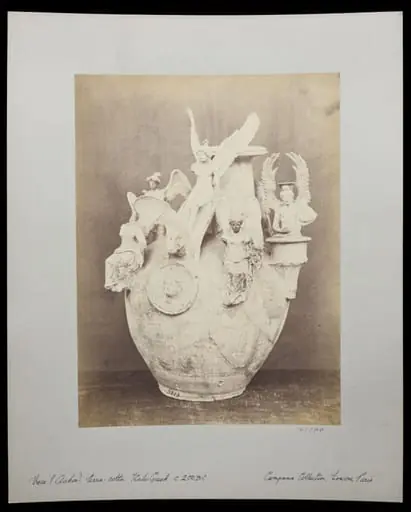 Perfume Burner in terra cotta
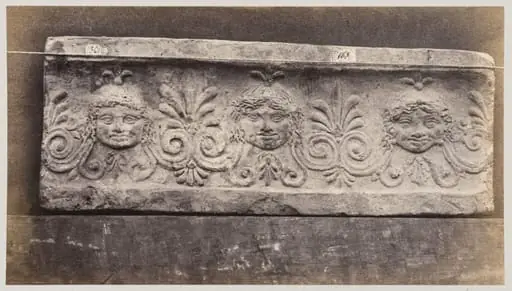 Three masques of gorgons in terra cotta
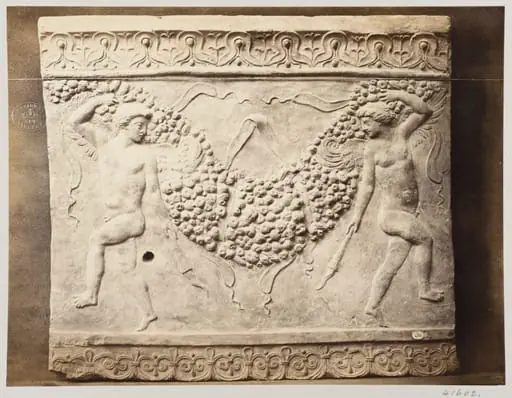 Bas-relief of portion of frieze of dancing figures with torches bearing festoon of fruit in terra cotta
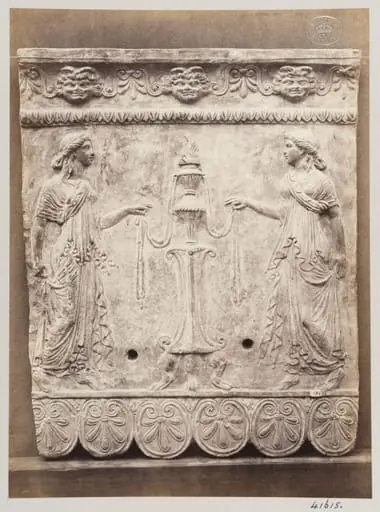 Bas-relief portion of a frieze of two draped females and an altar in terra cotta
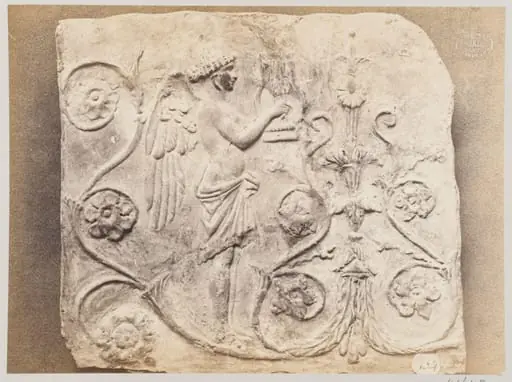 Bas-relief of a geni and a lyre in terra cotta
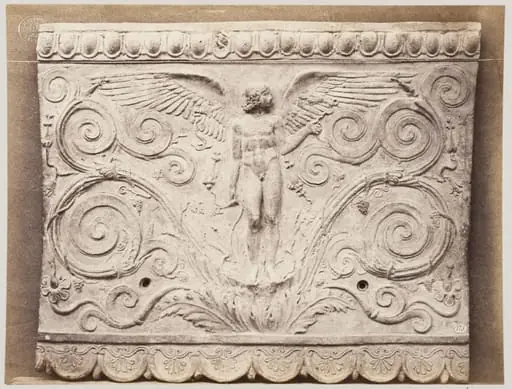 Bas-relief of a portion of frieze of Eros with scrollwork in terra cotta
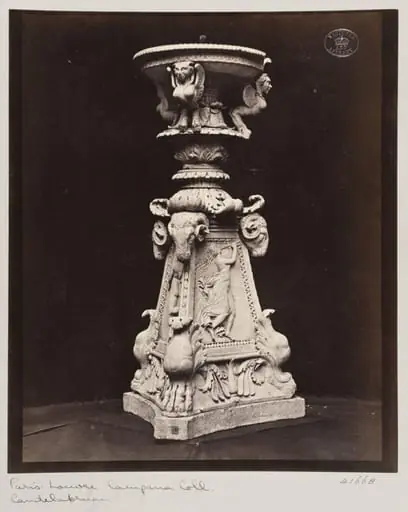 Marble sculptured fountain
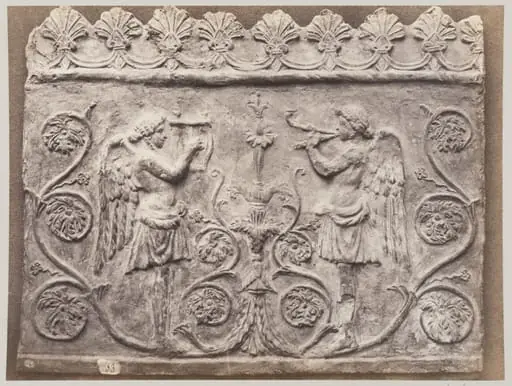 Bas-relief portion of frieze of Genii with double flutes and lyre