Artwork
Homer
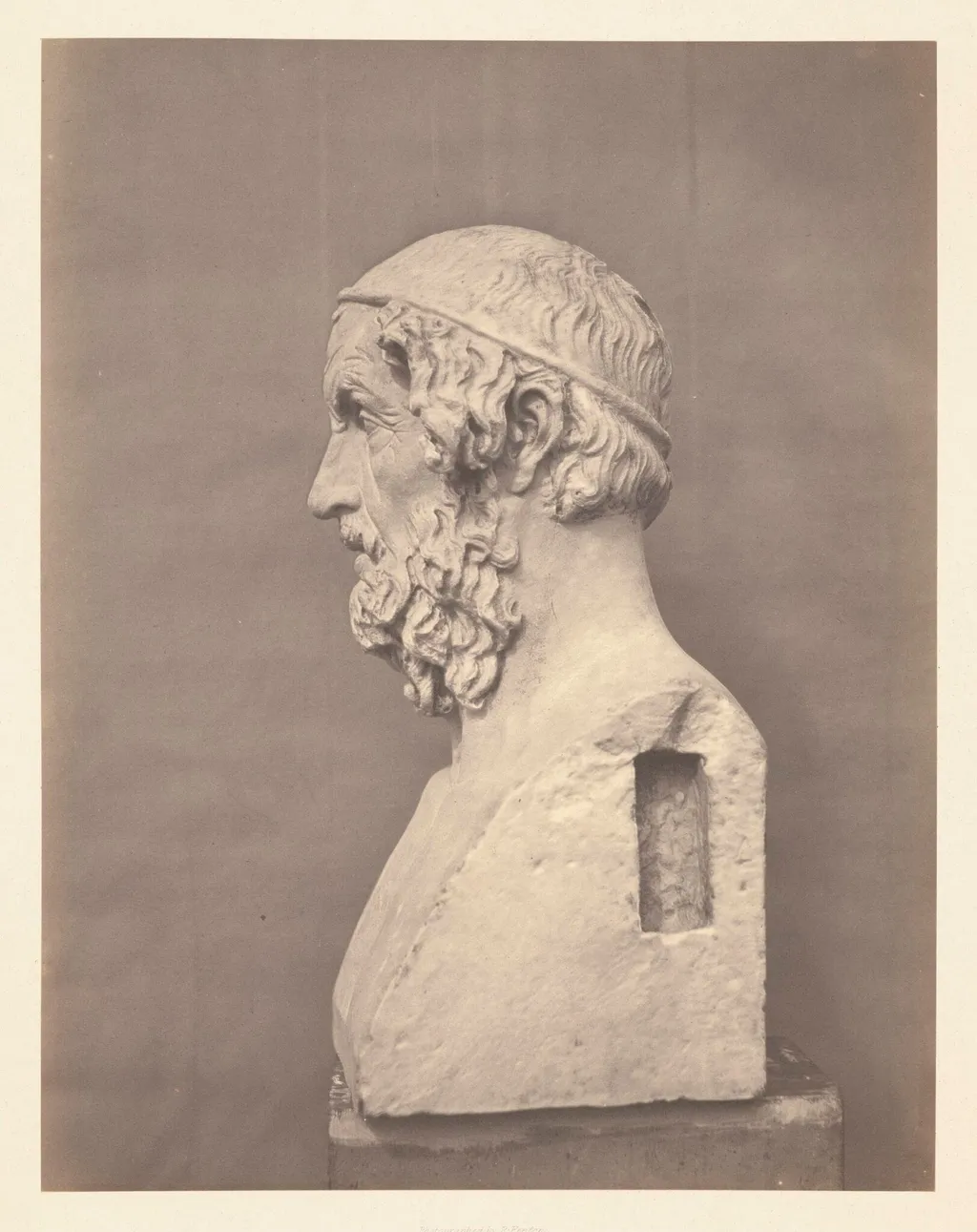
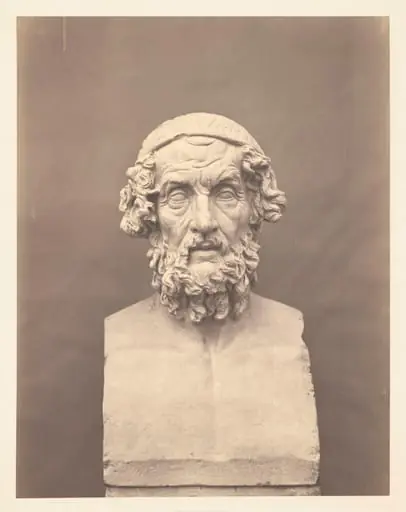
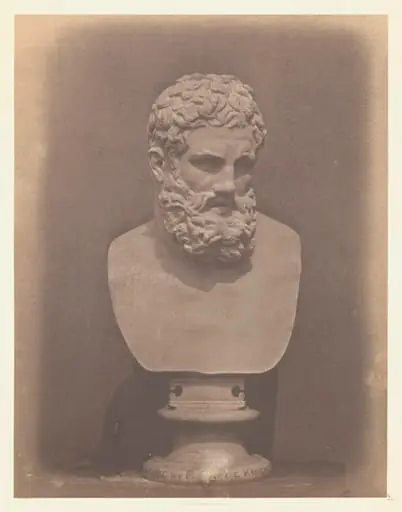
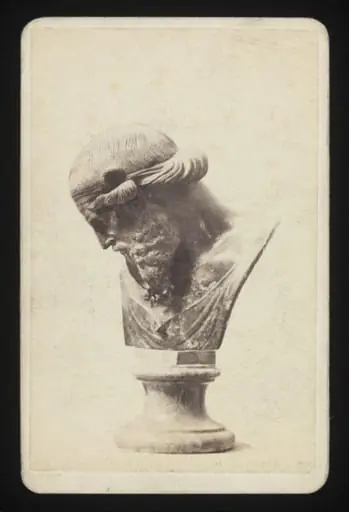
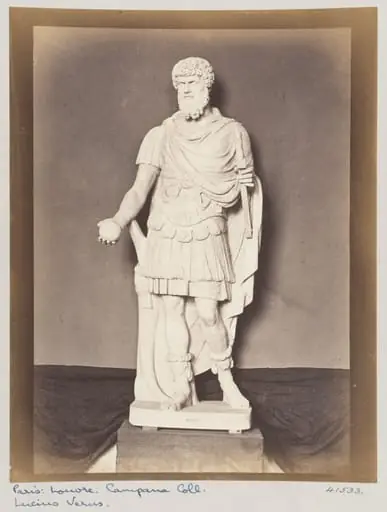
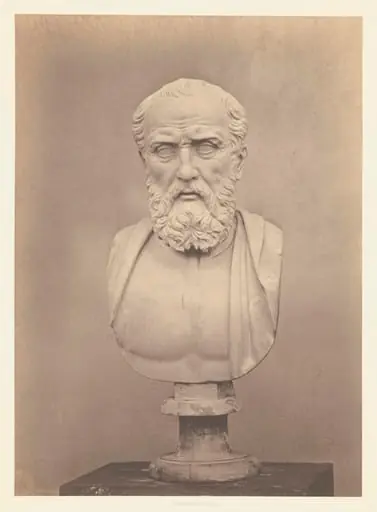
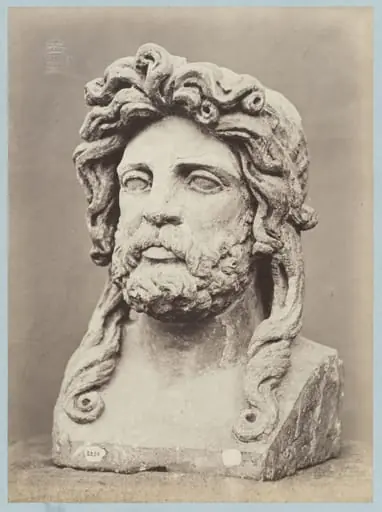
Homer is a photographic photography by the Impressionist artist Roger Fenton. It dates from 1855 and is held in the collection of the Victoria and Albert Museum. A black-and-white photograph from 1855 captures a marble bust of a bearded male figure, positioned on a plain surface.
About this work
The artist, Roger Fenton, made it from stone, and the details in the hair and face are very precise.
This is a photo of a stone bust of a bearded man. His hair is curly and long, falling over his shoulders. The face looks calm but serious, with deep lines around the eyes and mouth. The bust is cut off at the chest, showing a flat back with a small rectangular hole.
The photo was taken in 1855, and the bust is meant to look like the ancient poet Homer. The artist, Roger Fenton, made it from stone, and the details in the hair and face are very precise.
If you like this kind of sculpture, check out the Victoria and Albert Museum.
Overview
A black-and-white photograph from 1855 captures a marble bust of a bearded male figure, positioned on a plain surface. The image was taken by Roger Fenton, an early pioneer in photographic documentation. The bust, cut off at the chest, reveals a flat rear with a small rectangular recess, suggesting it was designed for mounting. The composition emphasizes texture and form, with careful attention to lighting and shadow.
Subject & Meaning
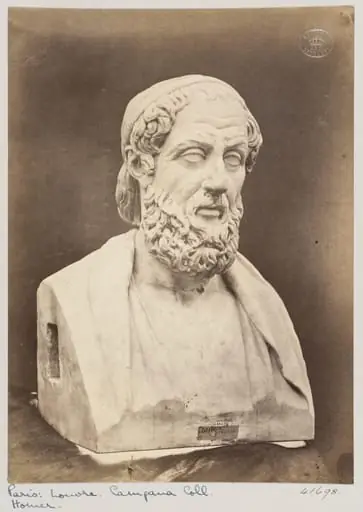
The bust is intended to represent Homer, the ancient Greek poet traditionally credited with composing the Iliad and the Odyssey. The long, curly hair and solemn expression align with 19th-century ideals of classical antiquity, evoking wisdom and gravitas. Though the identity is conventional rather than historically verified, the image reflects a cultural reverence for Homeric legacy during the Victorian era’s revival of classical themes.
Technique & Style
Fenton employed careful lighting and long exposure to render the marble’s surface with clarity, highlighting the intricate carving of the hair and facial contours. The photograph’s tonal range enhances the sculptural depth, transforming stone into a study of light and volume. The composition is restrained, with no background distractions, focusing attention entirely on the bust’s formal qualities and material presence.
History & Provenance
The photograph was taken in 1855 during Fenton’s early career, before his well-known Crimean War documentation. The bust itself likely belonged to a private collection or academic institution, common among antiquities enthusiasts of the period. Fenton’s interest in classical sculpture aligned with broader Victorian efforts to document and preserve cultural artifacts through photography.
Context
In mid-19th-century Britain, photography was increasingly used to record classical art for scholarly and educational purposes. Fenton’s work contributed to this movement, bridging the gap between physical artifacts and their mechanical reproduction. The choice of Homer as subject reflects the era’s enduring fascination with ancient literature and its idealized visual representations.
Legacy
Fenton’s photograph stands as an early example of photography’s role in art historical documentation. It preserves the appearance of a classical bust that may no longer be accessible or intact. The image remains a reference point for understanding how 19th-century viewers engaged with antiquity, not through direct encounter, but through mediated, carefully composed representations.
Artist & collection