Artwork
Der Tag
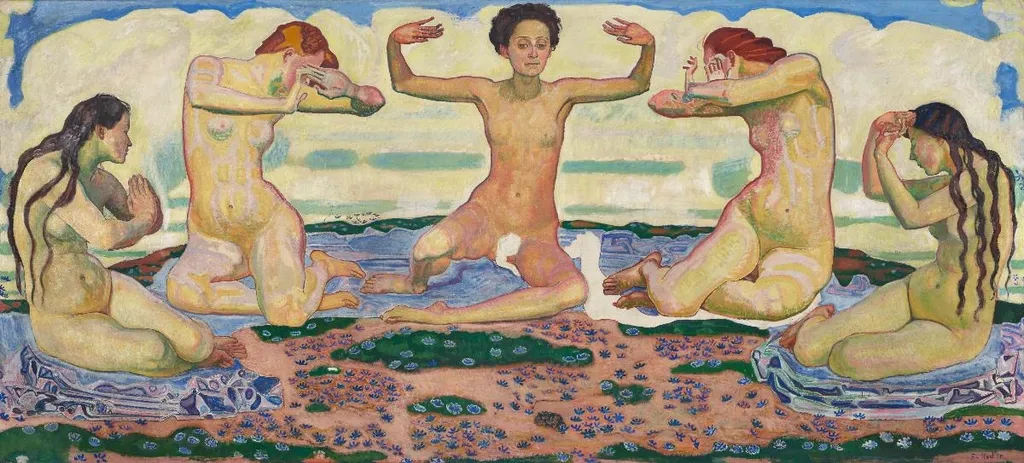
Der Tag is an oil painting by the Post-Impressionist artist Ferdinand Hodler. It dates from 1905 and is held in the collection of the Kunsthaus Zürich.
About this work
Overview
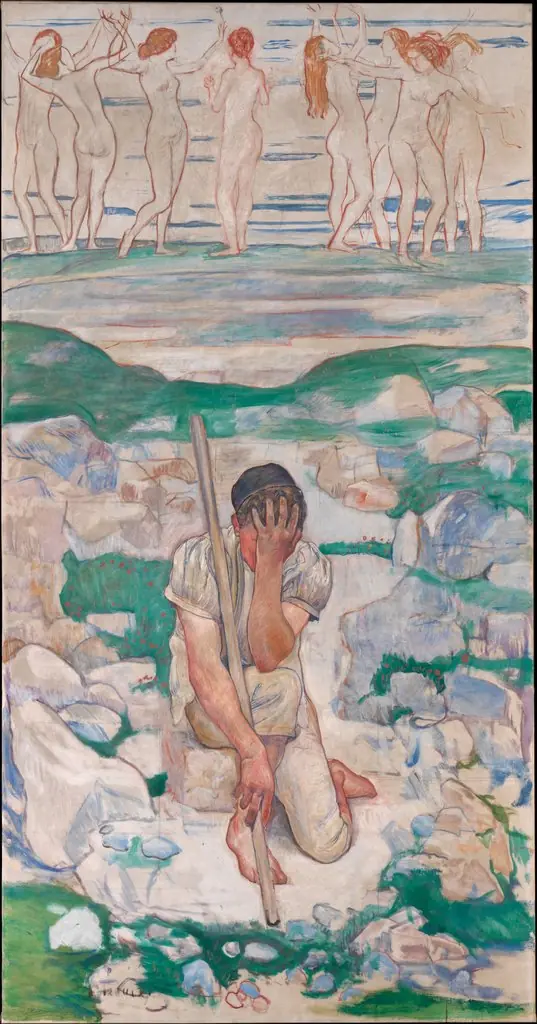
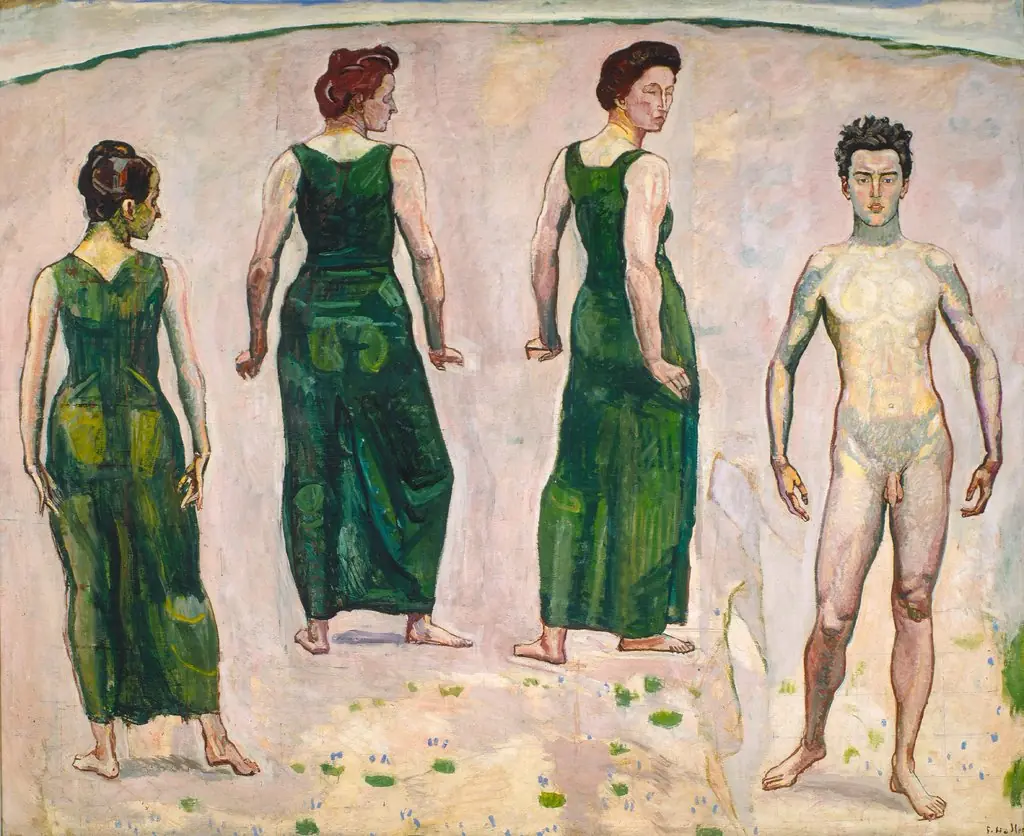
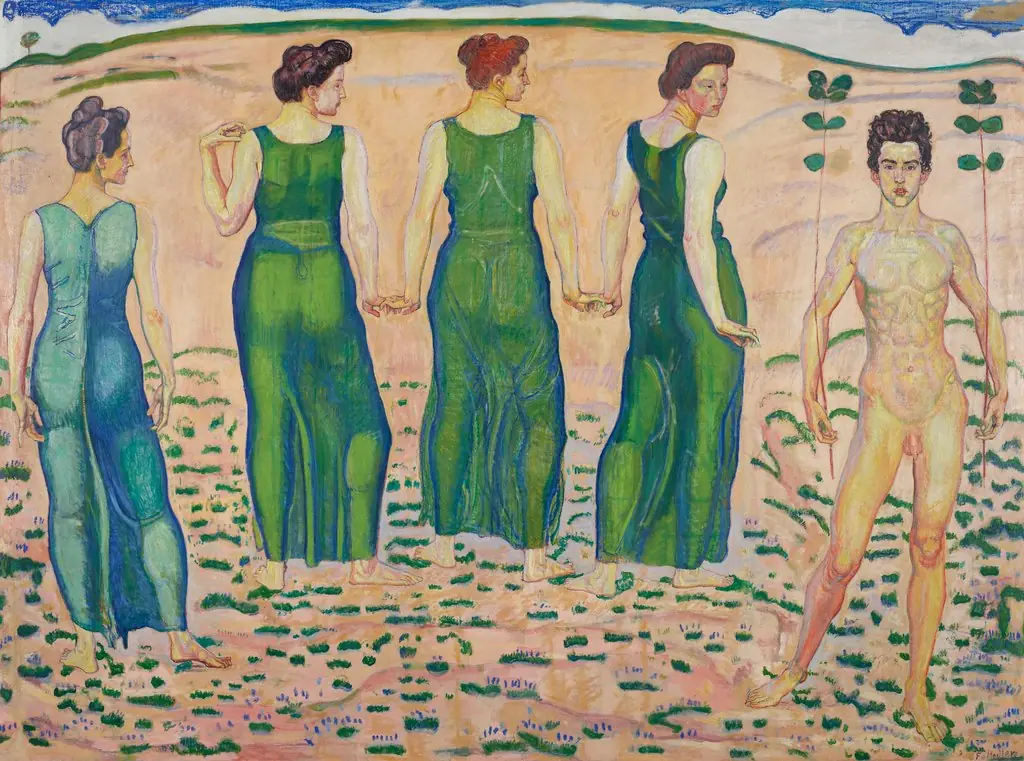
Der Tag, a 1905 oil painting by Swiss artist Ferdinand Hodler, exemplifies his later work characterized by a symbolic, post-impressionist style. The piece features five nude women in varied poses against a serene, predominantly light yellow background with blue and green accents.
Subject & Meaning
The painting depicts five nude women in contemplative poses, their gazes cast downward or aside, conveying a sense of calmness and serenity. Their long hair and the naturalistic yet subdued color palette enhance the tranquil atmosphere.
Technique & Style
Executed in oil paint, Der Tag showcases Hodler's 'parallelism' style, marked by simplified forms and a emphasis on rhythmic repetition, evident in the parallel lines and poses of the figures. The post-impressionist approach is further highlighted by the bold, expressive use of color.
History & Provenance
Created in 1905 during Hodler's symbolic period, Der Tag is part of the collection at Kunsthaus Zürich, reflecting the artist's influence within Swiss and European early 20th-century art movements.
Context
Der Tag represents a pivotal shift in Hodler's oeuvre from realism to a more expressive, symbolic language, aligning with early 20th-century artistic explorations of form and emotion.
Legacy
As a key work in Hodler's post-impressionist output, Der Tag contributes to the broader legacy of European modernism, influencing subsequent artistic explorations of figure, space, and emotional depth.
Artist & collection

Artist
Ferdinand Hodler (March 14, 1853 – May 19, 1918) was a Swiss painter. He is one of the best-known Swiss painters of the nineteenth century. His early works were portraits, landscapes, and genre paintings in a realistic…