Artwork
Ansichten aus den vier Weltteilen mit Szenen von Tieren: Krakau
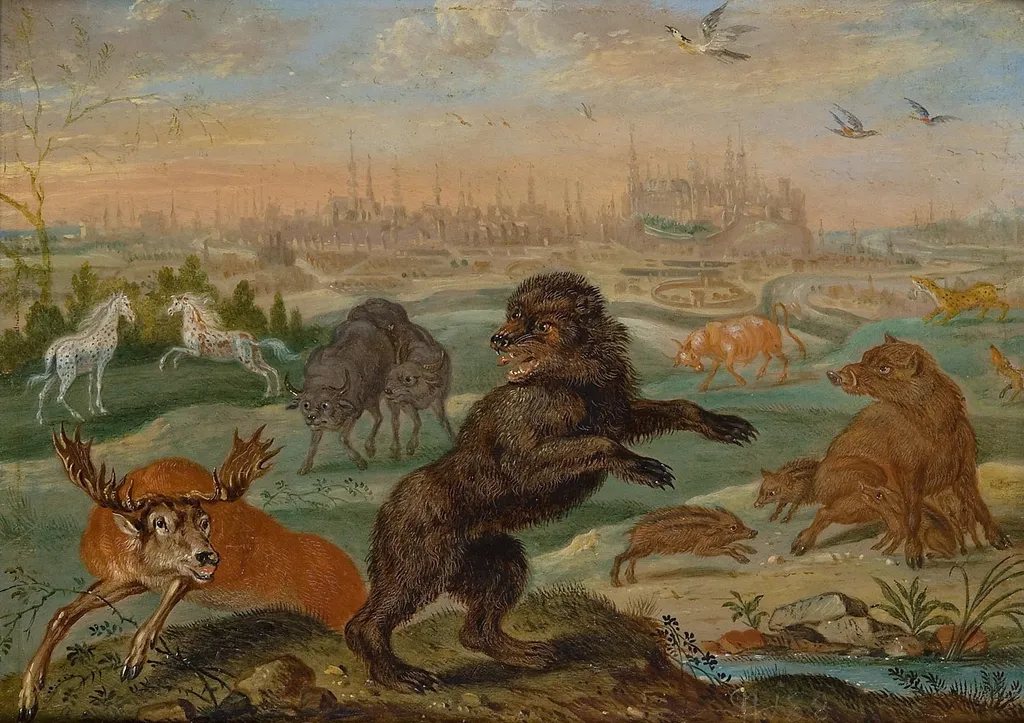
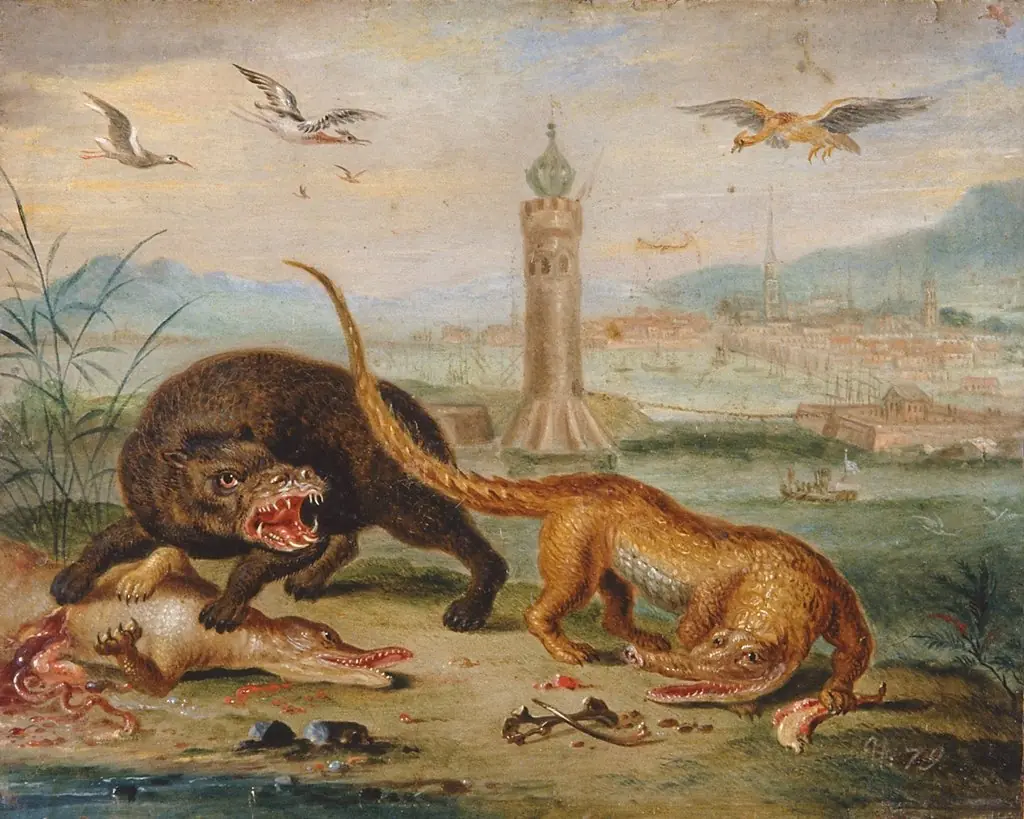
Ansichten aus den vier Weltteilen mit Szenen von Tieren: Krakau is an unspecified painting by Ferdinand van Kessel the Elder. It dates from 1682 and is held in the collection of the Kunsthistorisches Museum.
About this work
Overview
Painted around 1682 by Ferdinand van Kessel the Elder, this work is one of a series depicting scenes from the four continents, each paired with animal behavior.
Painted around 1682 by Ferdinand van Kessel the Elder, this work is one of a series depicting scenes from the four continents, each paired with animal behavior. The Kraków panel merges a recognizable urban skyline with a wild, chaotic animal encounter. Unlike typical topographical views, the city serves as a distant backdrop, overshadowed by the violent and frenetic activity in the foreground. The painting belongs to the Kunsthistorisches Museum’s collection, reflecting the artist’s interest in natural spectacle and exoticism.
Subject & Meaning
The scene juxtaposes the ordered architecture of Kraków with the unruly behavior of animals, suggesting a commentary on nature’s unpredictability versus human civilization. The bear’s aggressive posture toward a smaller creature, alongside fleeing deer and scattered livestock, evokes a moment of primal disruption. These animals, rendered with symbolic intensity, may allude to contemporary ideas about the natural world as both wondrous and perilous, a theme common in Flemish art of the period.
Technique & Style
Van Kessel employs vigorous brushwork and saturated hues to heighten the sense of motion and tension. The animals are rendered with detailed musculature and expressive poses, contrasting with the looser, atmospheric rendering of the distant city. Light falls unevenly across the composition, emphasizing the bear and its prey while allowing the background to recede. The palette—earthy browns, muted greens, and pale sky tones—grounds the scene in realism despite its dramatic intensity.
History & Provenance
Created during the later phase of Van Kessel’s career, this painting was likely produced for a collector interested in natural history and global themes. It entered the Kunsthistorisches Museum’s holdings in the 19th century as part of the Habsburg collections. Its inclusion in the series on the four continents aligns with 17th-century European fascination with categorizing the world’s diversity, though the Kraków panel diverges from literal representation in favor of symbolic narrative.
Context
In late 17th-century Flanders, artists often blended observation with allegory, particularly in depictions of animals. Van Kessel’s series responded to growing public interest in exotic fauna, fueled by imperial expansion and naturalist collections. While other panels in the series may reference Africa, Asia, or the Americas, Kraków’s inclusion suggests a deliberate fusion of local geography with imagined wildness, reflecting a broader European tendency to project exoticism onto familiar landscapes.
Legacy
Though not widely exhibited today, the painting remains a significant example of Flemish Baroque interest in nature’s chaos. Van Kessel’s approach—mixing topography with animal drama—prefigures later developments in Romantic landscape painting. Its presence in a major museum collection underscores its role in documenting how 17th-century viewers perceived the boundaries between civilization and the wild, a theme that continued to resonate in European art for centuries.
Artist & collection
Artist
Ferdinand van Kessel the Elder
Ferdinand van Kessel (1648 – 1696), was a Flemish Baroque painter known for his landscapes, still lifes and genre pieces with monkeys.

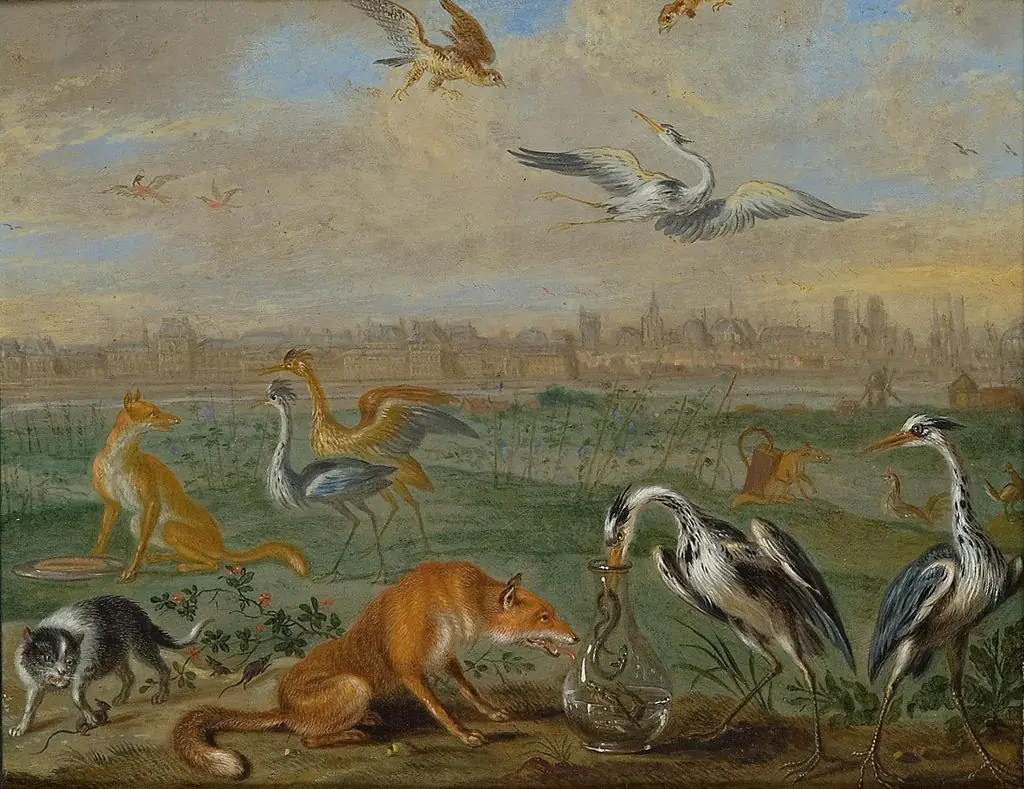
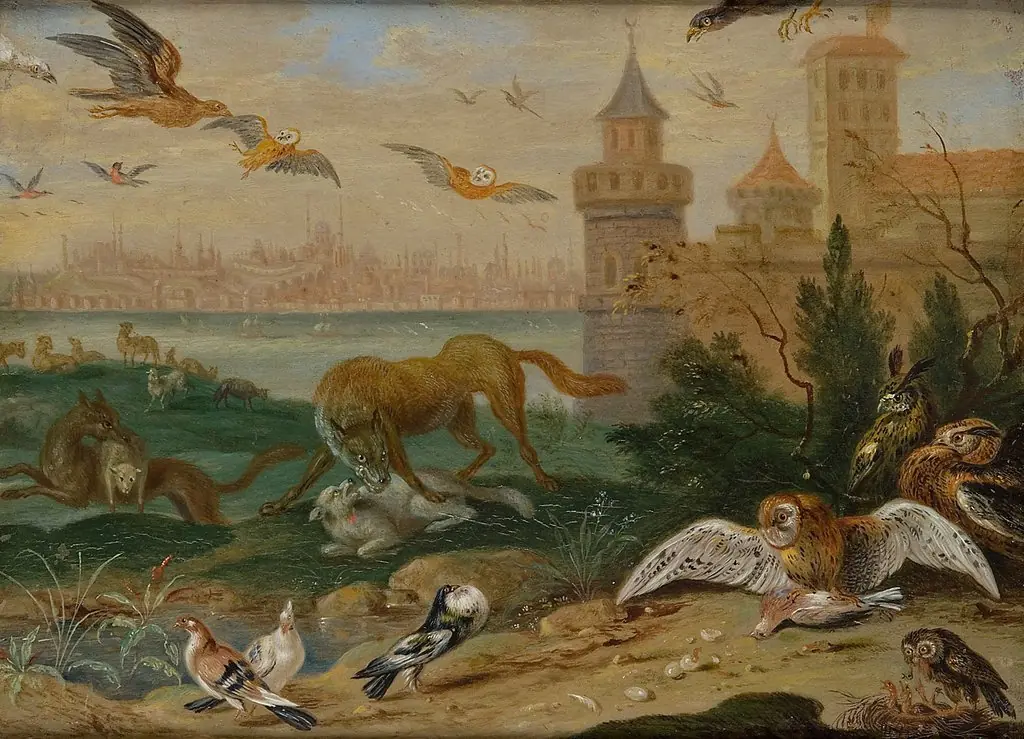 Ansichten aus den vier Weltteilen mit Szenen von Tieren: Konstantinopel
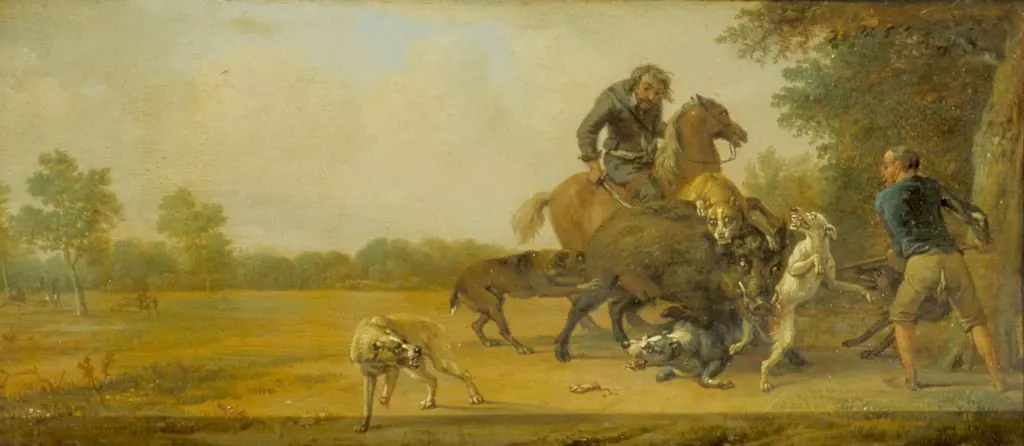 The Boar Hunt
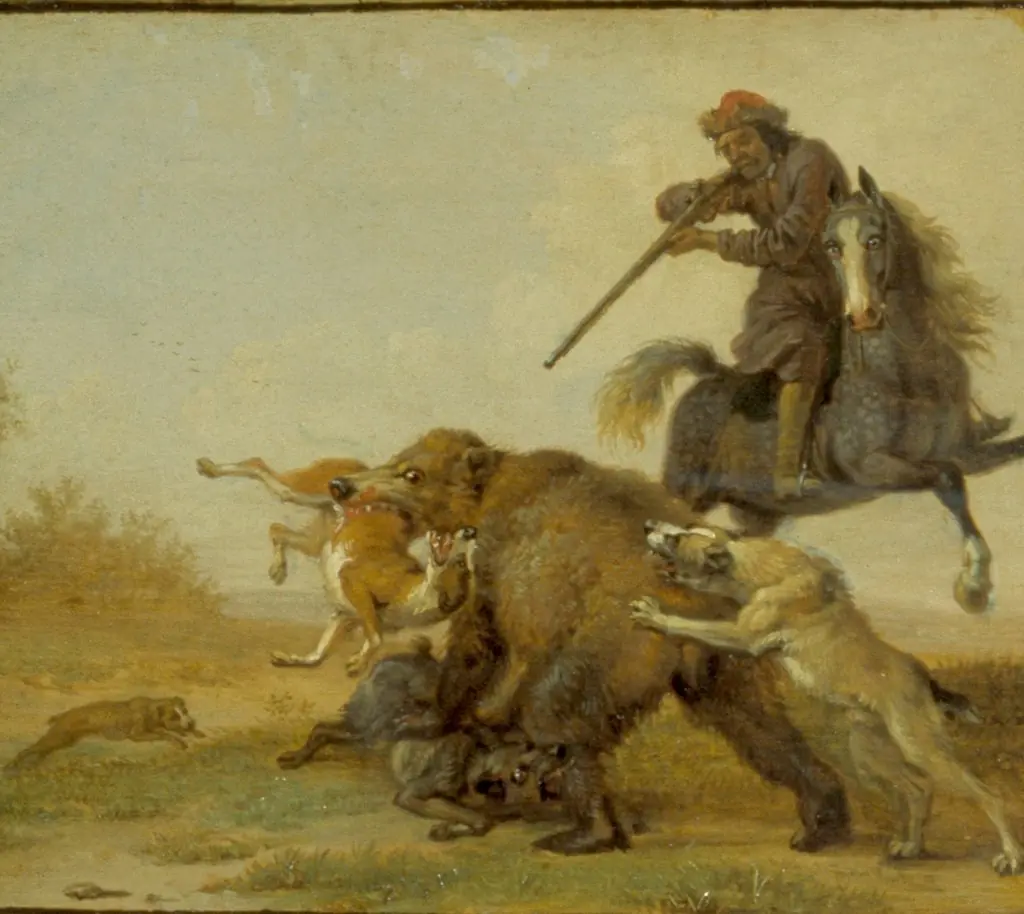 The Bear Hunt
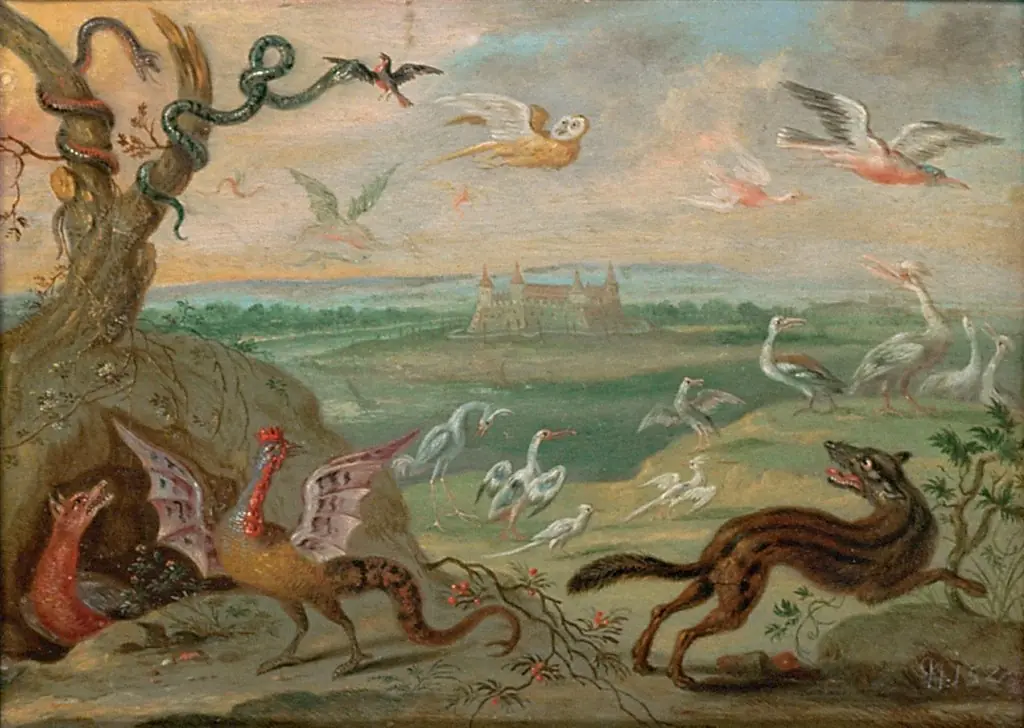 Ansichten aus den vier Weltteilen mit Szenen von Tieren: Salvador (Brasilien)
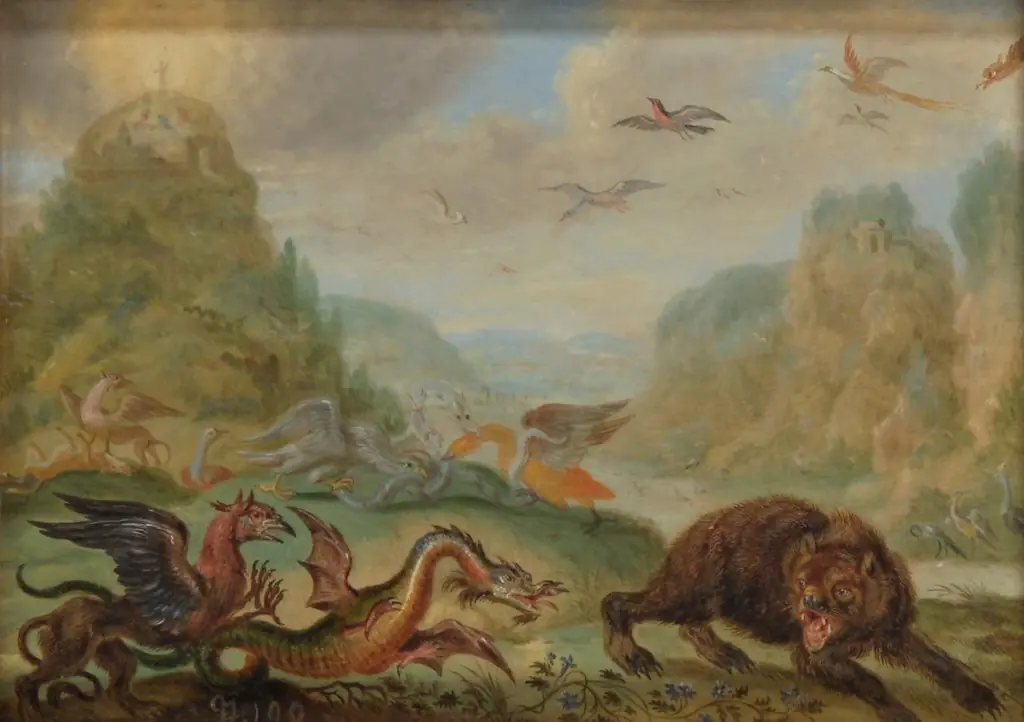 Ansichten aus den vier Weltteilen mit Szenen von Tieren: Berg Tabor
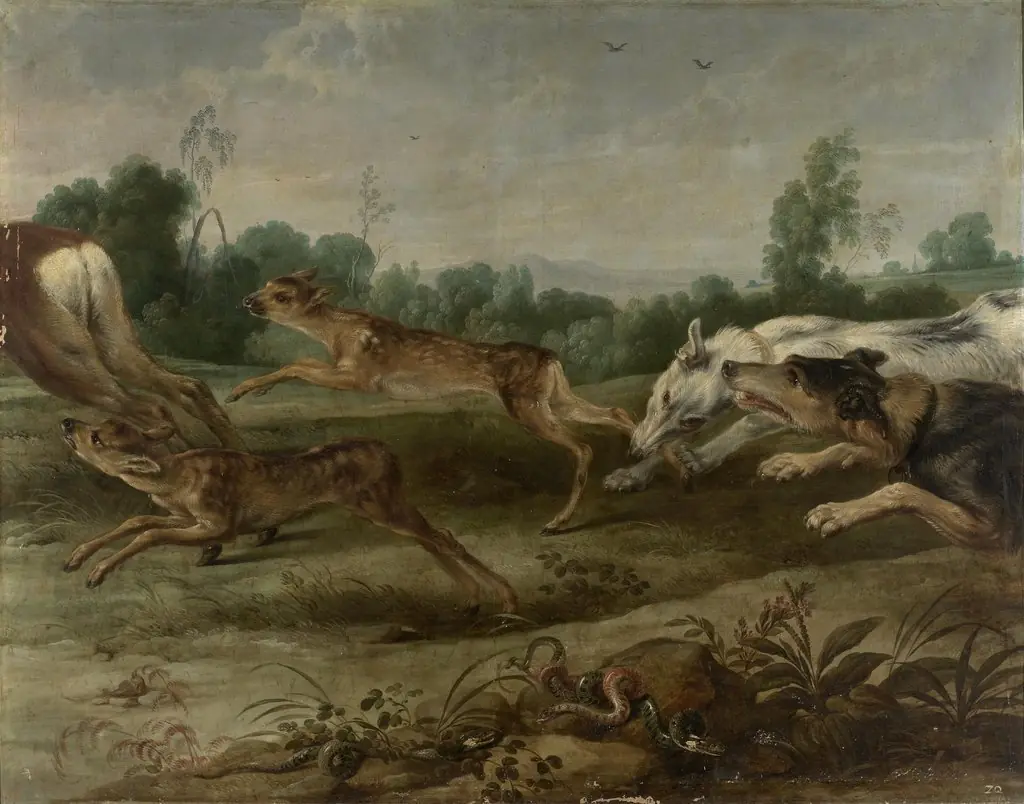 Caza de ciervos
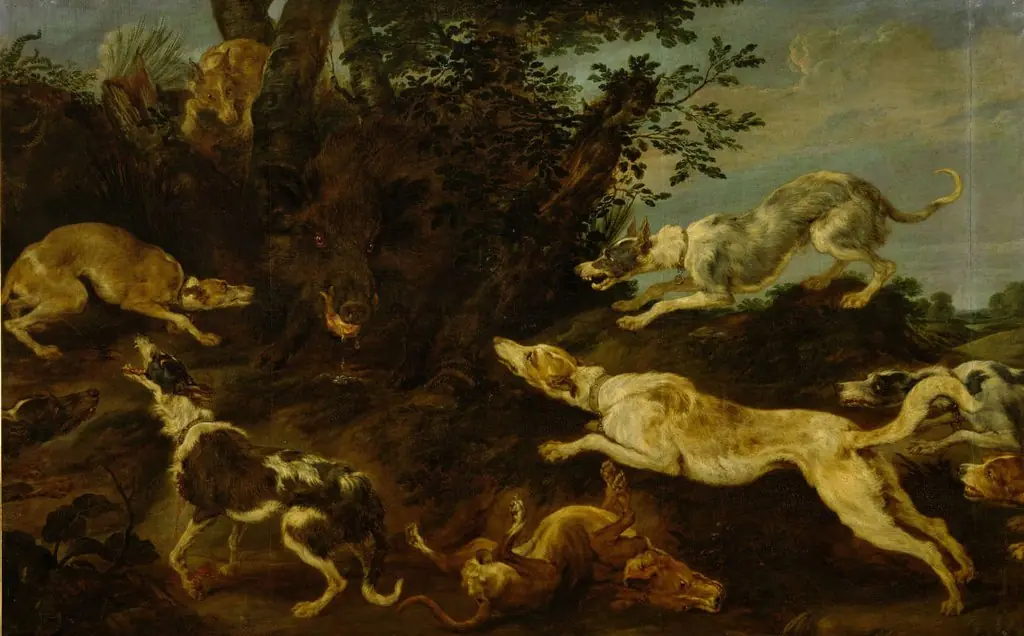 Boar hunt
 Ansichten aus den vier Weltteilen mit Szenen von Tieren: Havanna