Artwork
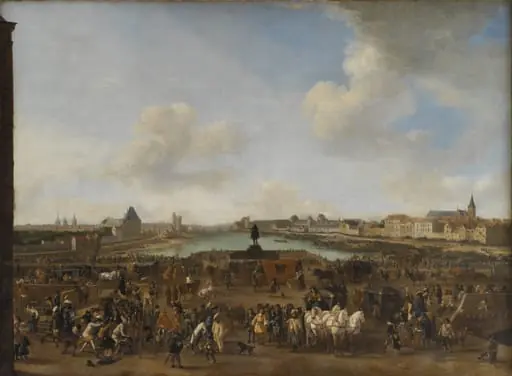
Entry of King Charles X in Colmar on 10 September 1828
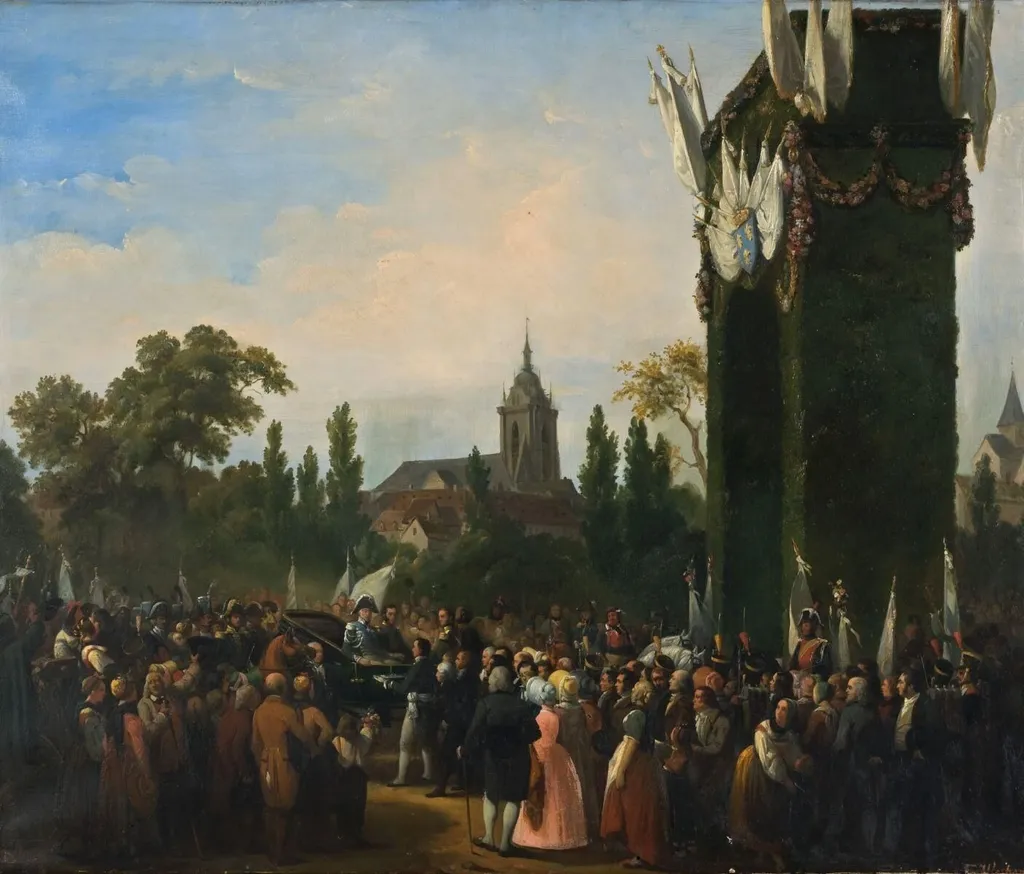
Entry of King Charles X in Colmar on 10 September 1828 is an oil painting by Ferdinand Wachsmuth. It dates from 1838 and is held in the collection of the Palace of Versailles.
About this work
Overview
Commissioned to document a royal visit, the work belongs to the genre of historical pageantry painting.
Painted in 1838 by Ferdinand Wachsmuth, this oil on canvas captures the ceremonial entry of King Charles X into the Alsatian town of Colmar on September 10, 1828. Commissioned to document a royal visit, the work belongs to the genre of historical pageantry painting. It is part of the collection at the Palace of Versailles, where it serves as a record of Bourbon-era public rituals during a period of political transition in France.
Subject & Meaning
The painting centers on a tall, ornate column draped in white flags and floral decorations, symbolizing civic homage to the monarch. Crowds in formal dress line the streets, their gestures and postures conveying loyalty and celebration. Though the king himself is not prominently featured, his presence is implied through the architecture and collective attention, emphasizing the ritual nature of monarchy rather than individual royalty.
Technique & Style
Wachsmuth employs precise brushwork to render textures of fabric, stone, and foliage, with careful attention to light and shadow. The composition directs the viewer’s gaze toward the central column through converging lines and a balanced arrangement of figures. Cool blues and greens dominate the palette, contrasted by the white banners and bright accents in clothing, enhancing the sense of a festive, sunlit procession.
History & Provenance
Commissioned after the event, the painting was completed a decade later as part of a broader effort to visually archive royal ceremonies. It entered the Versailles collection in the 19th century, where it was preserved alongside other state-sponsored works documenting the Bourbon monarchy. Its survival through political upheavals reflects its status as an official historical document rather than a private commission.
Context
Charles X’s visit to Colmar occurred during a period of strained relations between the monarchy and liberal factions in France. Public displays of loyalty in provincial towns like Colmar were politically significant, intended to reinforce royal authority. Wachsmuth’s depiction aligns with state efforts to project stability and continuity, even as revolutionary sentiments grew in urban centers.
Legacy
The painting remains a primary visual source for understanding how the French monarchy sought to legitimize itself through public spectacle in the early 19th century. While Wachsmuth is not widely known today, this work contributes to the broader corpus of official art that documented state rituals, offering insight into the intersection of politics, ceremony, and visual culture during the Bourbon Restoration.
Artist & collection

 Market with temple and maypole
 Mehemet Effendi, ambassadeur turc arrive aux Tuileries, 21 mars 1721
 Drawing the Eel
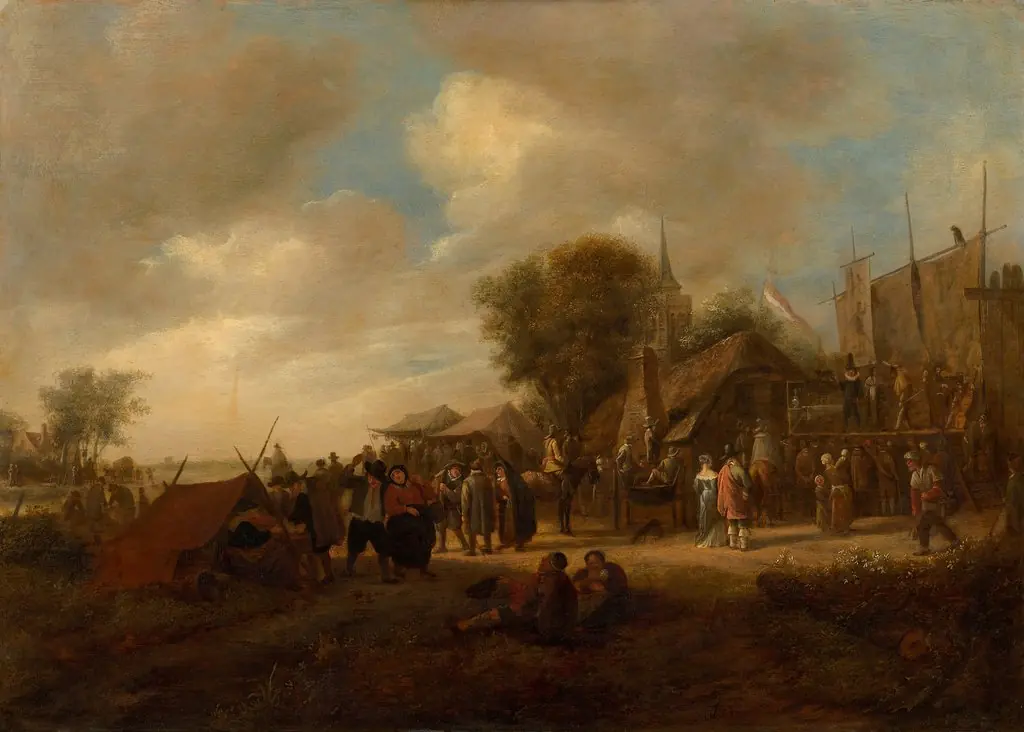 Village Fair
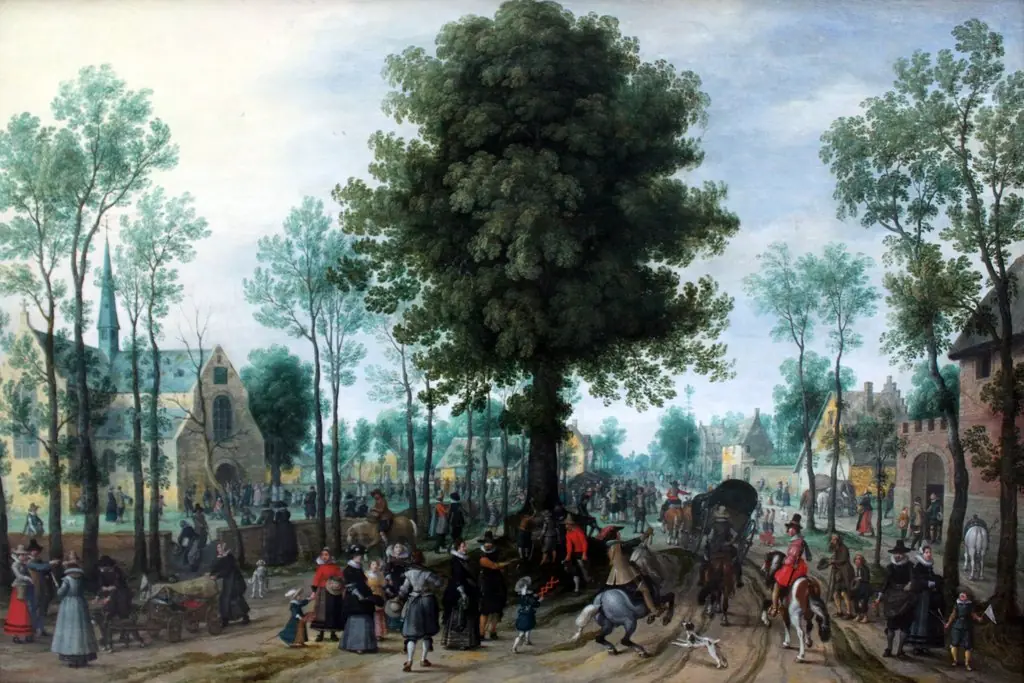 Flemish Fair
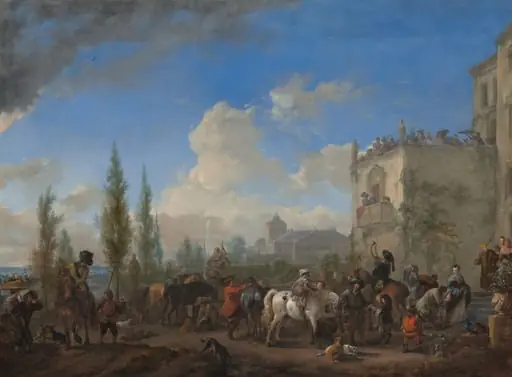 The Departure for the Hunt
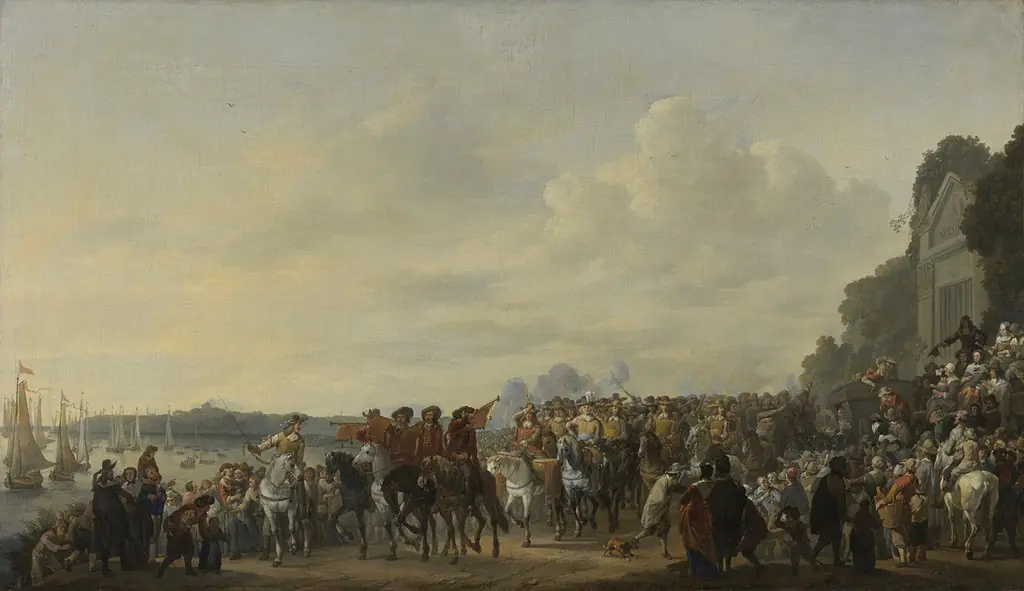 Charles II (1630-1685) stopping at the Estate of Wema on the Rotte on his Journey from Rotterdam to The Hague, 25 May 1660
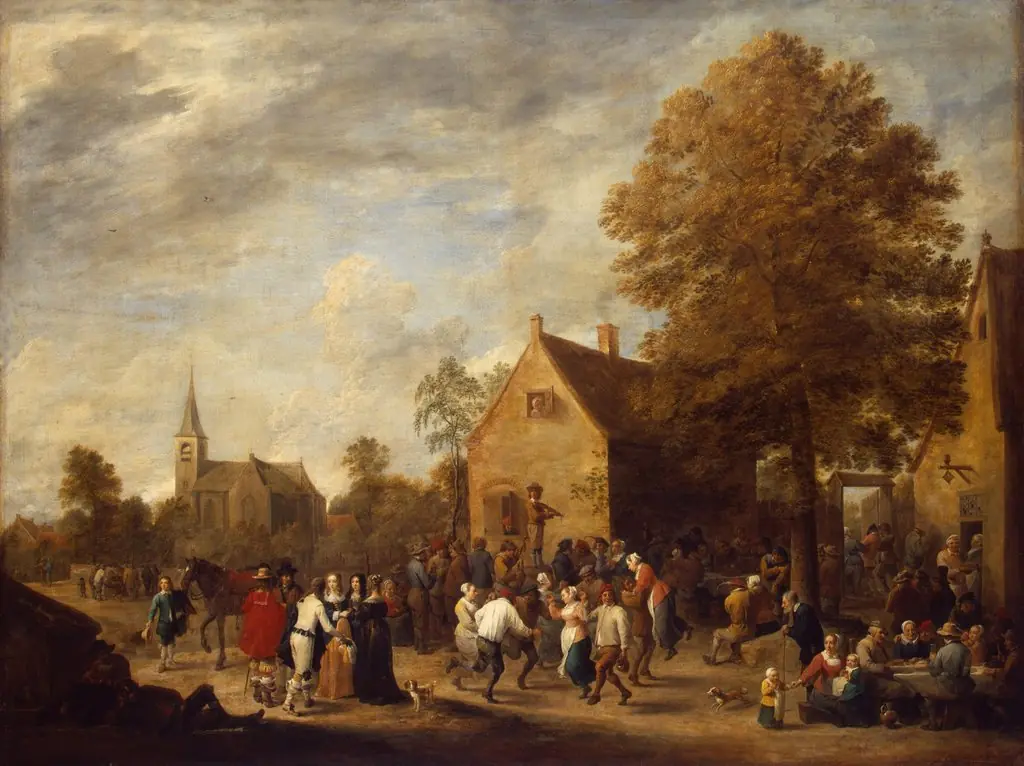 Rural Feast
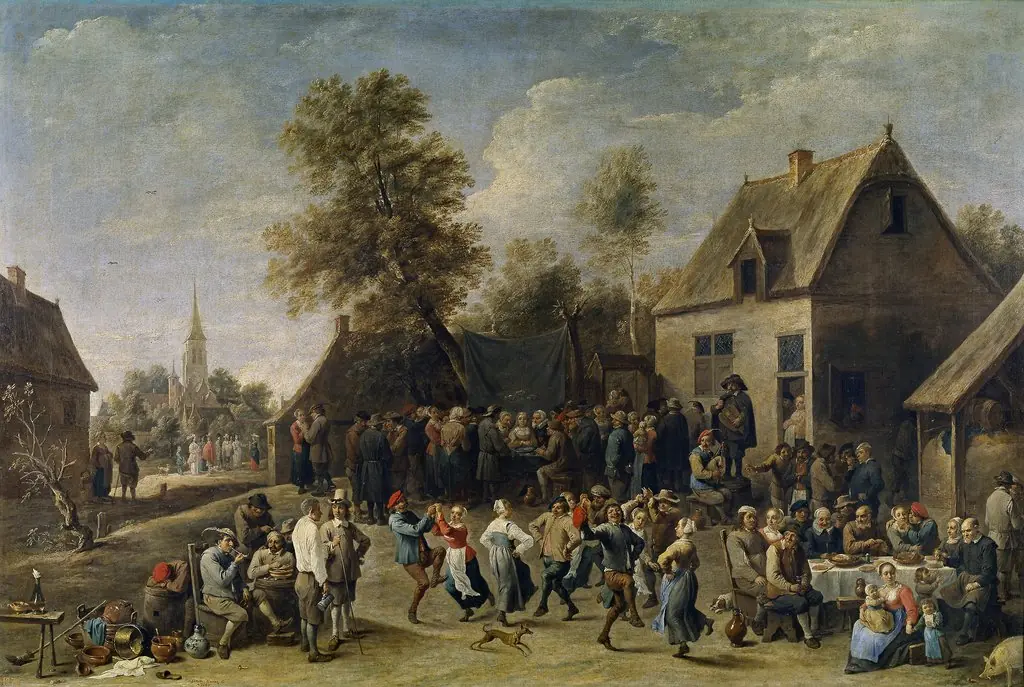 Country Feast
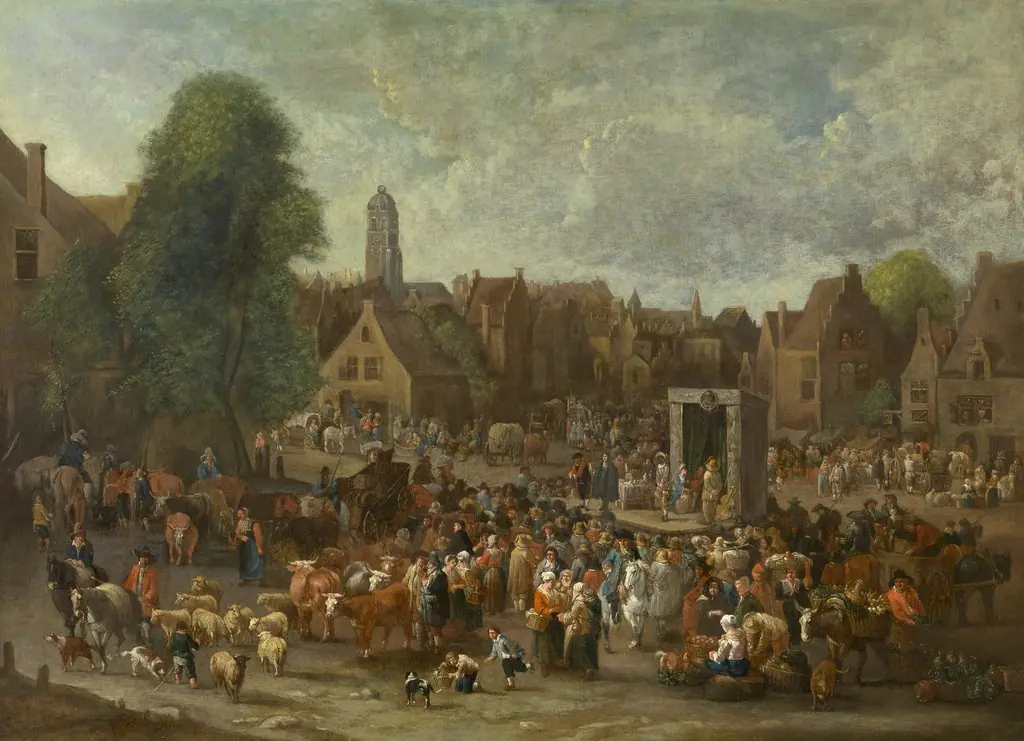 Theatre on the Marketplace
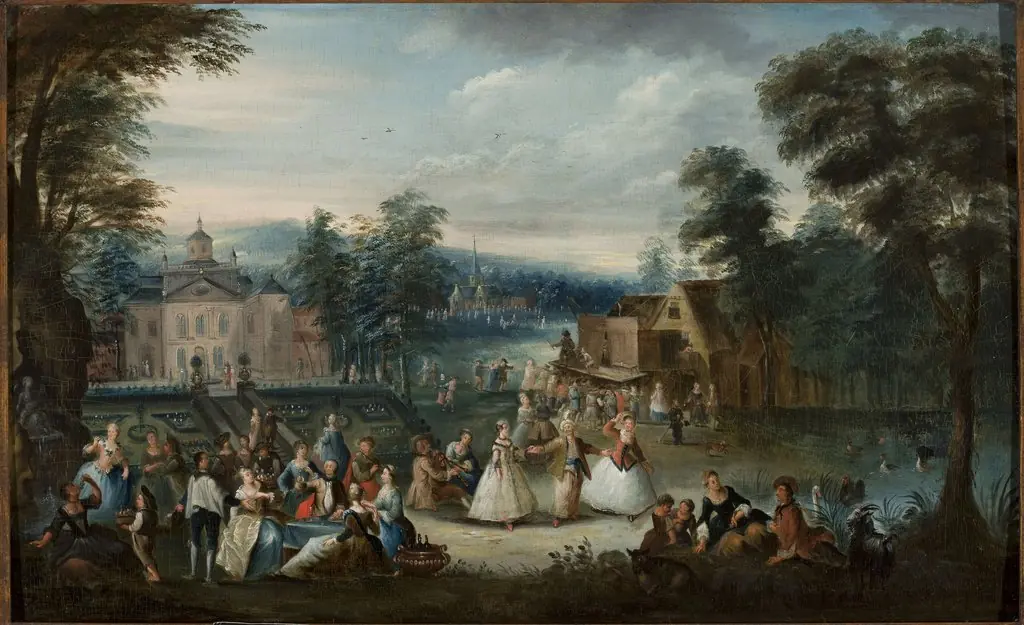 Merry-making in a park
 View of Paris seen from the Place Dauphine