Artwork
La cage symbolique (The Symbolic Cage)
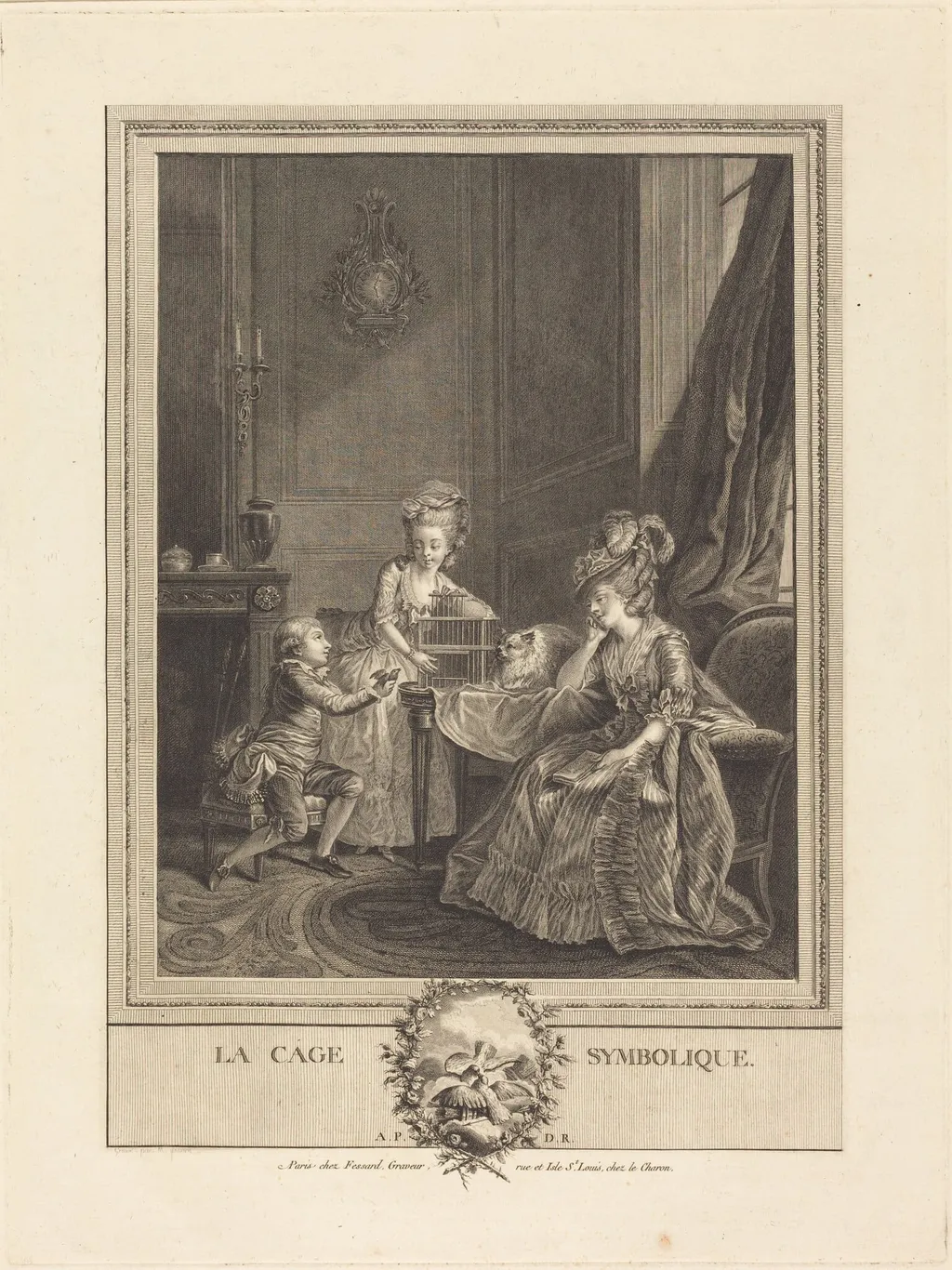
La cage symbolique (The Symbolic Cage) is an ink print by the Baroque artist Etienne Fessard. It dates from 1738 and is held in the collection of the National Gallery of Art.
About this work
Overview
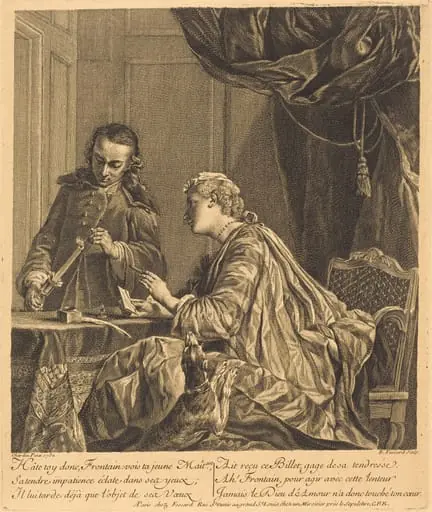
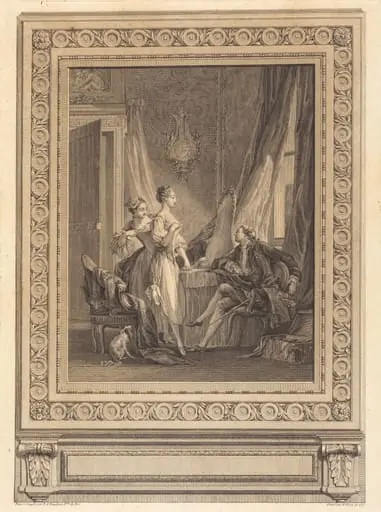
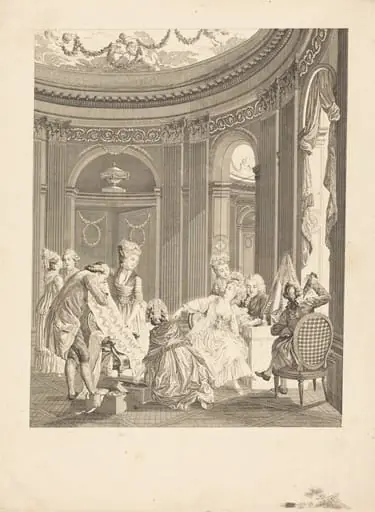
Etienne Fessard’s 1738 print, titled La cage symbolique (The Symbolic Cage), is an engraving that depicts an interior gathering.
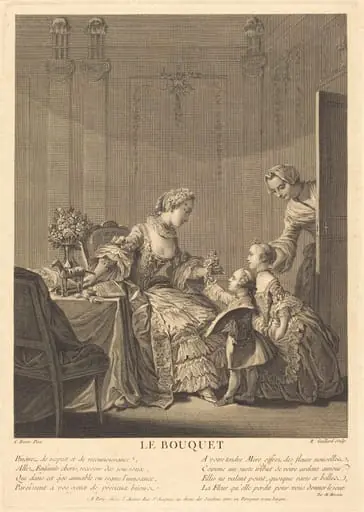
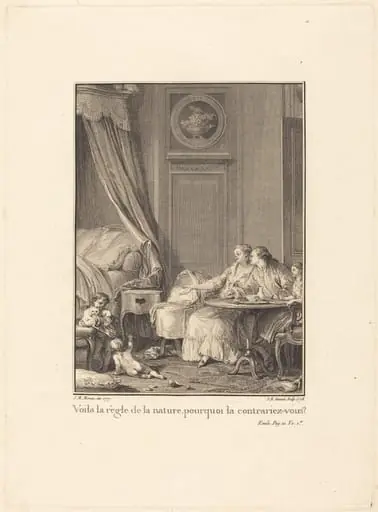
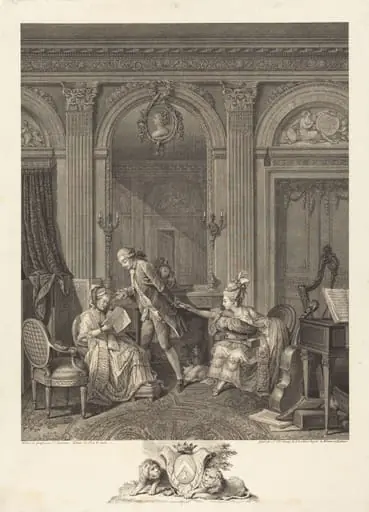
Etienne Fessard’s 1738 print, titled La cage symbolique (The Symbolic Cage), is an engraving that depicts an interior gathering. The composition centers on a table bearing a birdcage, surrounded by elegantly dressed figures—a woman in a flowing gown and hat, another woman holding a bird, and a kneeling boy extending his hands toward the creature. The setting includes ornate furniture and a large wall mirror, rendered with careful attention to light and shadow.
Subject & Meaning
The scene presents a domestic tableau in which the birdcage functions as a visual metaphor, inviting contemplation of confinement and freedom. The contrasting gestures—one woman gazing at the cage, another studying the bird, and the child reaching out—suggest varied attitudes toward captivity, curiosity, and innocence. The mirror’s presence may further allude to self‑reflection and the social conventions of the period.
Technique & Style
Fessard employed a combination of etching and engraving to achieve fine line work and tonal variation. The interplay of chiaroscuro creates depth, emphasizing the textures of fabric, wood, and glass. Delicate hatching delineates the folds of the women’s gowns and the reflective surface of the mirror, while broader strokes model the room’s architectural elements, characteristic of mid‑18th‑century French printmaking.
Context
Produced in the late Baroque era, the print reflects contemporary tastes for refined interior scenes that celebrated aristocratic leisure. Such works often served as decorative prints for collectors and as didactic illustrations of moral themes. Fessard, active in Paris, contributed to a tradition of narrative engravings that combined technical skill with allegorical content.
Artist & collection