Artwork
Le Billet doux
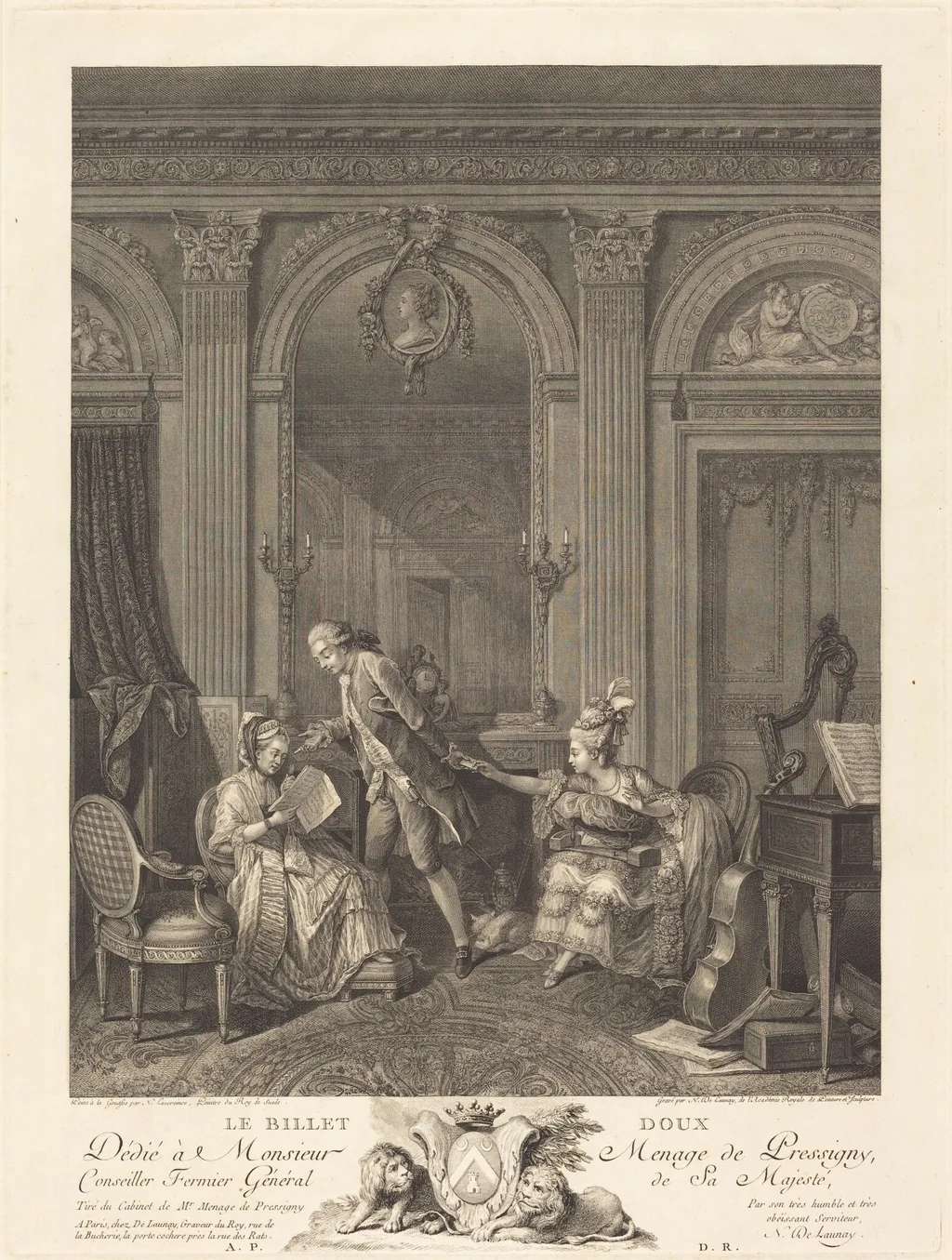
Le Billet doux is an ink print by the Romanticist artist Nicolas Delaunay. It dates from 1778 and is held in the collection of the National Gallery of Art.
About this work
Overview
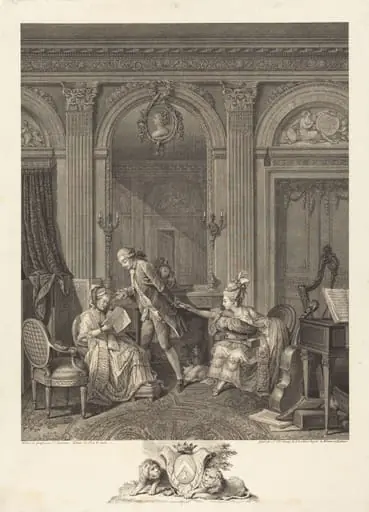
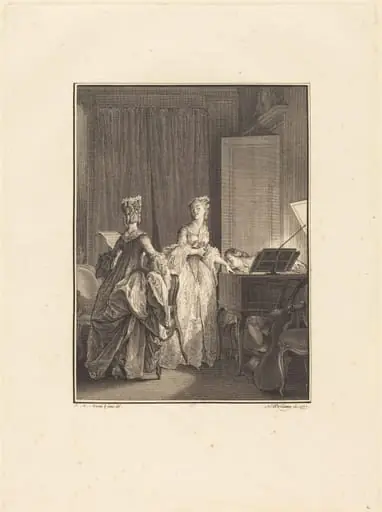
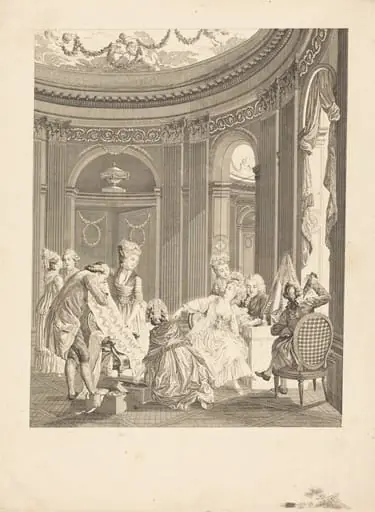
It portrays a quiet domestic moment in an elaborately furnished interior, capturing a man delivering a letter to one of two women.
Le Billet doux is an 1778 print by Nicolas Delaunay, executed in etching and engraving. It portrays a quiet domestic moment in an elaborately furnished interior, capturing a man delivering a letter to one of two women. The scene unfolds with restrained gesture and subtle tension, emphasizing interpersonal dynamics over dramatic action. The medium’s fine lines allow for detailed rendering of textures and spatial depth.
Subject & Meaning
The image depicts a private exchange: a man offers a written note to a seated woman while another woman, absorbed in a book, remains apart. The letter, a symbol of intimacy or concealed communication, suggests emotional undercurrents. The arrangement of figures implies a triangular relationship, with the book-reading woman serving as an observer, heightening the sense of secrecy and unspoken tension within the domestic sphere.
Technique & Style
Delaunay employed fine etching and engraving lines to define the figures and interior details with precision. Soft gradations of tone, achieved through controlled hatching, model forms and create atmospheric depth. The muted palette and careful lighting direct attention to the figures’ gestures and facial expressions, while the ornate room—mirror, harp, carved moldings—anchors the scene in aristocratic domesticity without overwhelming it.
History & Provenance
Created in 1778, the print emerged during a period when French graphic arts increasingly explored intimate, narrative scenes. Delaunay, known for his reproductive engravings and original genre subjects, likely produced this as part of a series appealing to middle- and upper-class collectors interested in refined domestic life. Its survival in institutional collections suggests early recognition of its technical and thematic merit.
Context
Le Billet doux reflects 18th-century French interest in private emotion and social nuance, aligning with the rise of genre painting and print culture. While often associated with Rococo elegance, the work’s subdued mood and psychological subtlety anticipate emerging sensibilities that would later inform Romanticism. It speaks to a broader cultural fascination with letters as vessels of personal revelation in an era of strict social codes.
Legacy
Though not widely known today, Delaunay’s print contributes to the historical record of French graphic art’s engagement with psychological realism. Its careful composition and restrained emotion influenced later printmakers exploring domestic themes. The work remains a quiet example of how print media could convey complex human interactions with nuance and restraint, beyond the grand narratives of history painting.
Artist & collection