Artwork
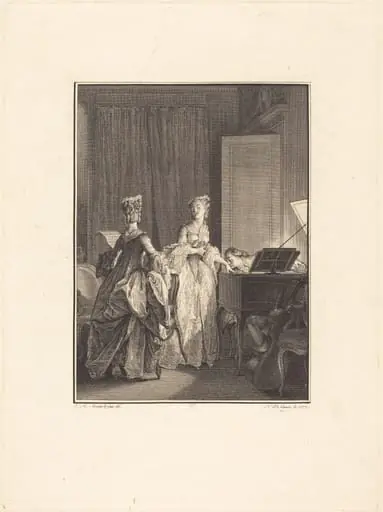
Le Billet doux
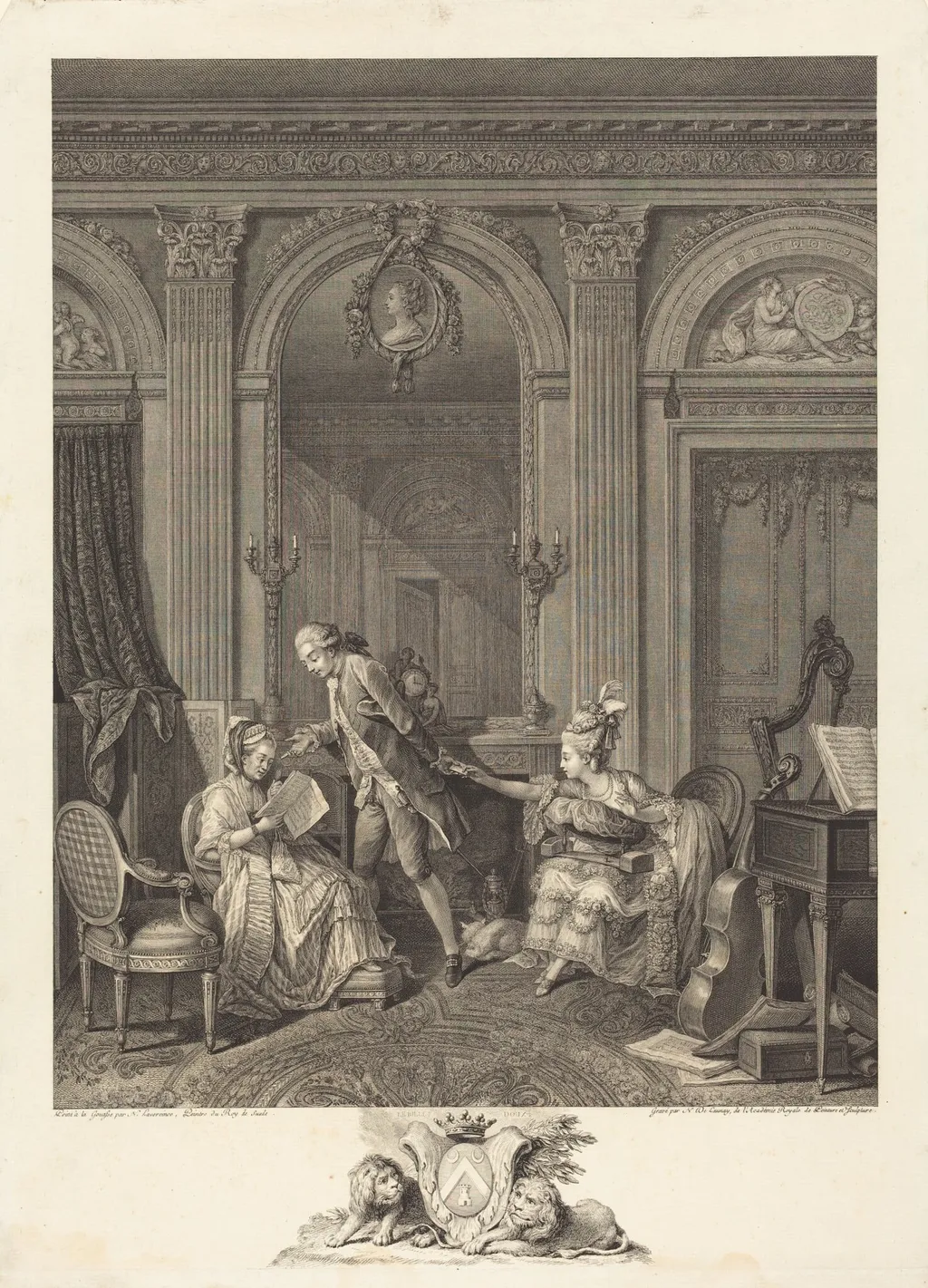
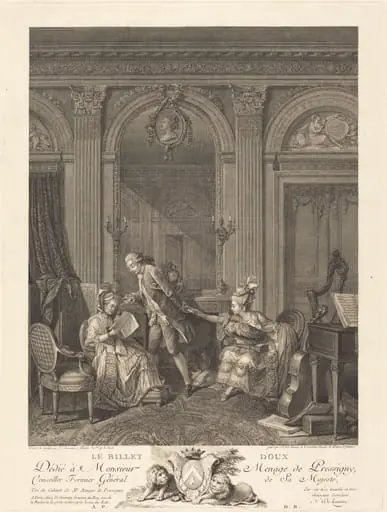
Le Billet doux is an ink print by the Romanticist artist Nicolas Delaunay. It dates from 1778 and is held in the collection of the National Gallery of Art.
About this work
Overview
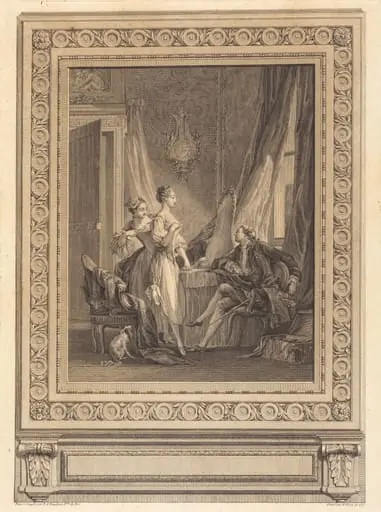
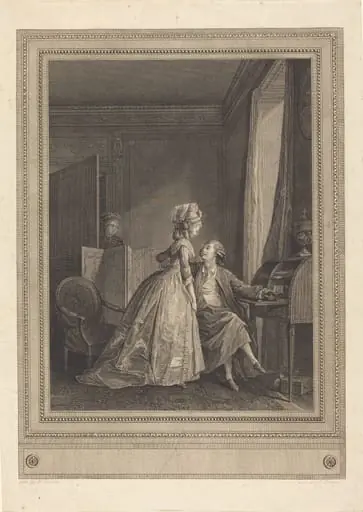
Nicolas Delaunay’s 1778 print, titled Le Billet doux, presents an interior scene rendered through fine line work characteristic of etching and engraving. The composition captures a moment of intimate exchange within a richly appointed room, highlighting the social customs of the late eighteenth century.
Subject & Meaning
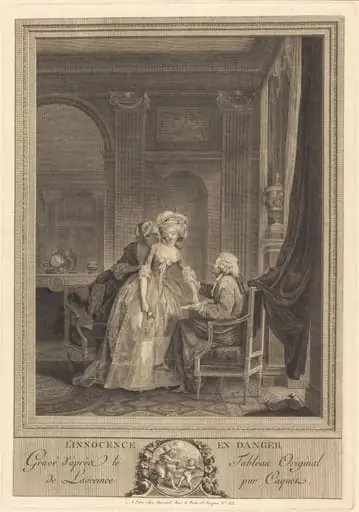
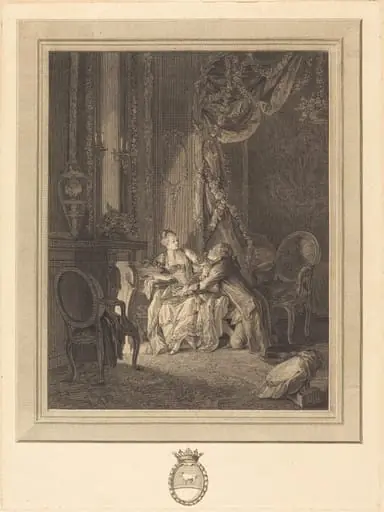
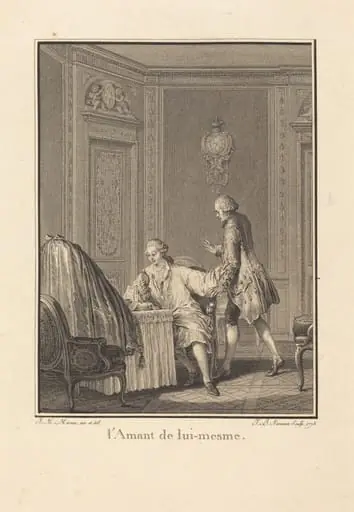
At the center of the image, a gentleman in a powdered wig extends a folded paper to a seated lady, suggesting the delivery of a love note. A second woman, reclined near a harpsichord, watches the interaction with a calm demeanor, evoking themes of courtship, anticipation, and the private rituals of aristocratic life.
Technique & Style
Delaunay employed the precise incisions of etching combined with the deeper lines of engraving to delineate textures such as gilded walls, mirrors, and ornate carvings. The contrast of sharp outlines against subtle shading creates a sense of depth and material richness, typical of French printmaking in the late Rococo period.
History & Provenance
Created in 1778, the print reflects the fashionable domestic interiors of pre‑revolutionary France. While specific ownership records are scarce, the work has been documented in several 19th‑century catalogues of Delaunay’s prints, indicating its circulation among collectors of French decorative art.
Context
Le Billet doux belongs to a broader genre of genre prints that depict everyday scenes of the elite, offering visual commentary on social etiquette. The inclusion of a harpsichord and elaborate décor situates the scene within the cultural milieu of the French aristocracy just before the upheavals of the Revolution.
Legacy
The print exemplifies Delaunay’s skill in merging narrative content with meticulous draftsmanship, influencing later French printmakers who sought to capture intimate domestic moments. Its detailed rendering of interior space continues to serve as a reference for scholars studying eighteenth‑century French visual culture.
Artist & collection