Artwork
A Boat That Has for Sails the Wings of a Huge Bird
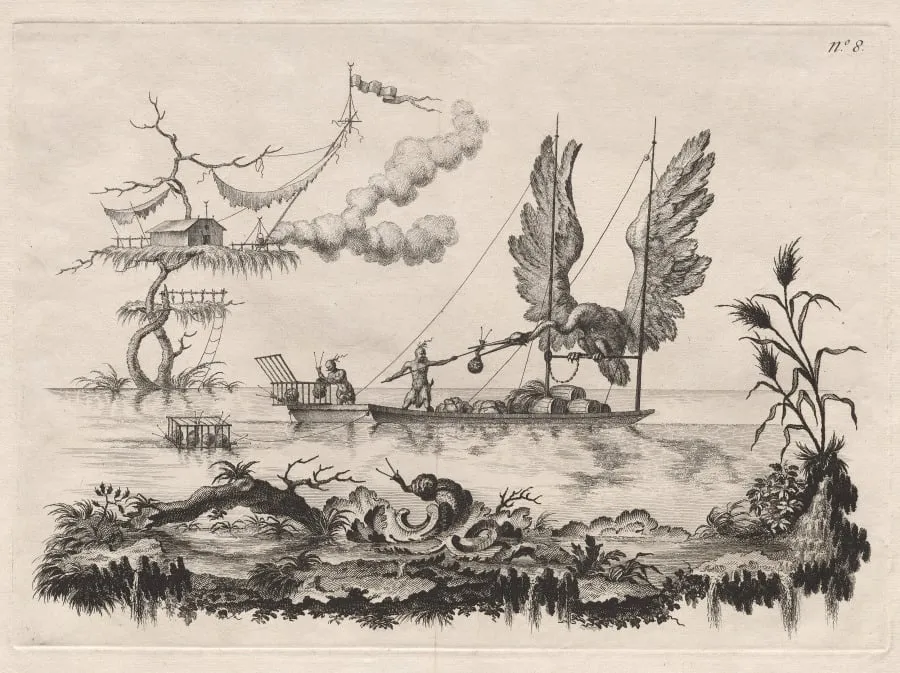
A Boat That Has for Sails the Wings of a Huge Bird is a print by the Romanticist artist Filippo Morghen. It dates from 1769 and is held in the collection of the Cleveland Museum of Art.
About this work
Overview
The works blend speculative fiction with satirical observation, presenting a whimsical vision of lunar inhabitants and their peculiar technologies.
Filippo Morghen created a series of ten etchings depicting an imagined lunar society, published in the late 18th century. The works blend speculative fiction with satirical observation, presenting a whimsical vision of lunar inhabitants and their peculiar technologies. Each plate expands on the theme of lunar life through absurd yet meticulously rendered inventions, reflecting contemporary fascination with distant worlds and the boundaries of human imagination.
Subject & Meaning
The series portrays lunar residents engaging in daily activities using fantastical tools: giant birds serve as aerial vessels, pumpkins function as both boats and homes, and enormous scissors are employed to capture oversized rodents. These inventions parody earthly labor and exploration, subtly critiquing European colonial and scientific ambitions. The moon becomes a mirror for human folly, where familiar tasks are distorted by scale and absurdity.
Technique & Style
Morghen employed fine-line etching to achieve intricate detail and delicate tonal gradations, enhancing the surreal quality of his scenes. The compositions are densely populated, with figures and objects arranged in orderly, almost bureaucratic fashion, contrasting with their impossible nature. The style draws from academic engraving traditions but infuses them with comic exaggeration, creating a tension between precision and fantasy.
History & Provenance
The series was produced in Italy during a period of heightened interest in lunar travel narratives, influenced by works like Cyrano de Bergerac’s fiction. Morghen’s prints circulated among educated collectors and were likely commissioned for private cabinets of curiosities. Their survival in limited numbers suggests they were prized as intellectual curiosities rather than mass-produced entertainment.
Context
The lunar figures are dressed in stylized garments inspired by European fantasies of Asian, Ottoman, and Indigenous American cultures—practices known as chinoiserie and turquerie. These visual tropes, common in decorative arts, reveal how distant cultures were reimagined as exotic and primitive. Morghen’s moon dwellers reflect this trend, using cultural appropriation as a tool of humor and othering within a fictional context.
Legacy
Morghen’s series stands as a rare example of Italian engagement with lunar fantasy, distinct from the more widely known French and English traditions. While not widely influential in mainstream art, it contributes to the broader 18th-century genre of speculative illustration. Its blend of technical skill and absurdist imagination continues to resonate in studies of early science fiction and visual satire.
Artist & collection

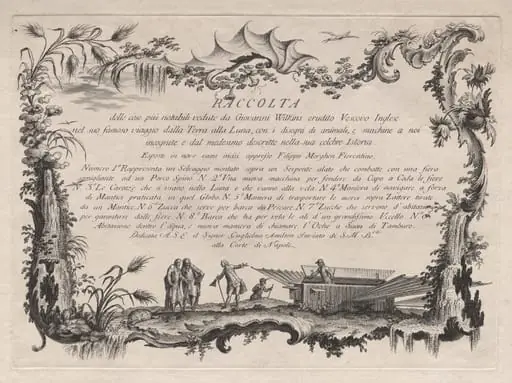 Title and Dedication Page
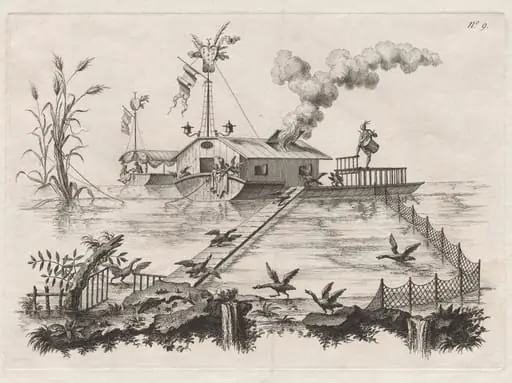 A House on Water, and a New Way to Summon Geese by the Beat of a Drum
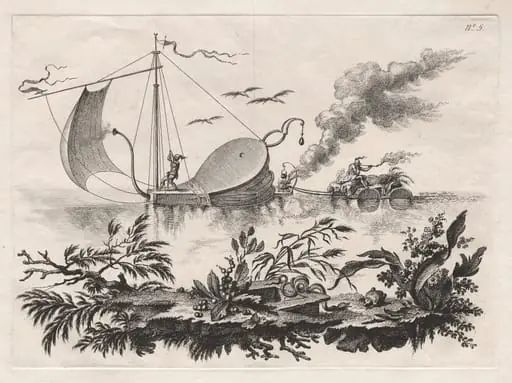 The Manner of Transporting Wares on Barges Drawn by a Bellows
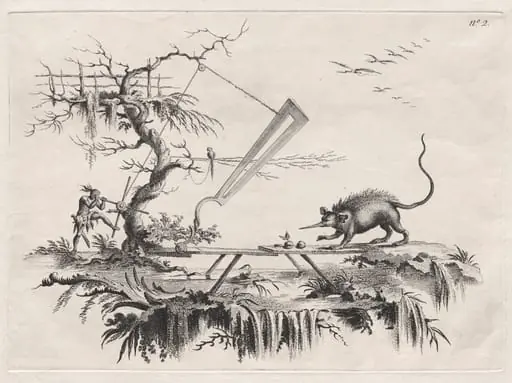 A new device to cleave wild beasts from Head to Tail
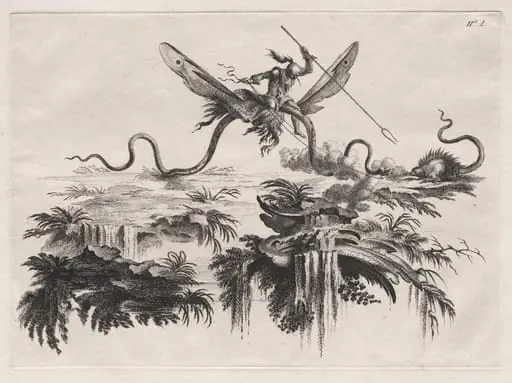 A Savage mounted on a winged Serpent battling with a wild beast resembling a Porcupine
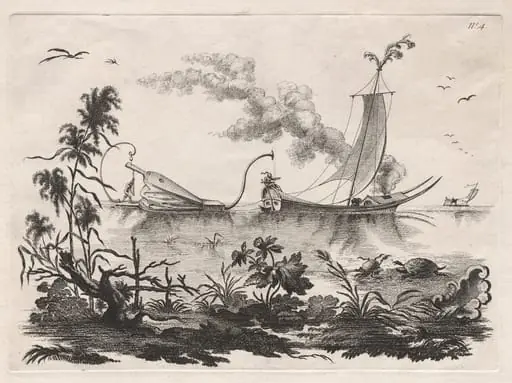 The Manner of sailing by the power of Bellows practiced on that Planet
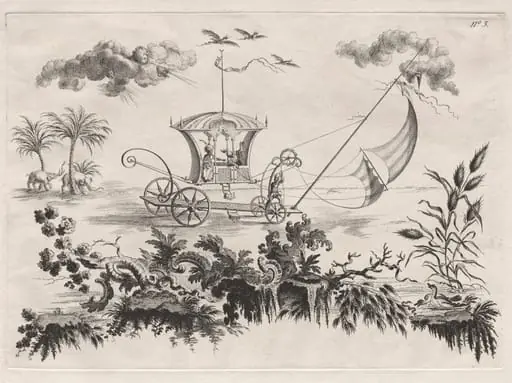 The Carriages used on the Moon and which move by sails
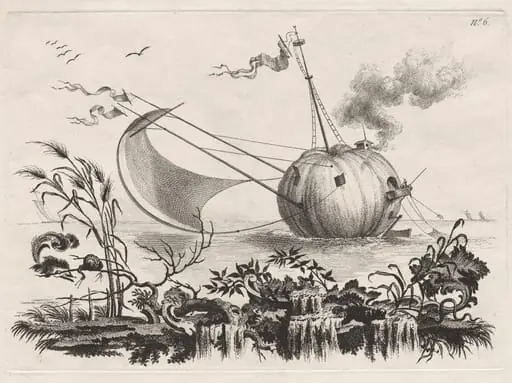 A Pumpkin Used as a Fishing Boat