Artwork
A House on Water, and a New Way to Summon Geese by the Beat of a Drum
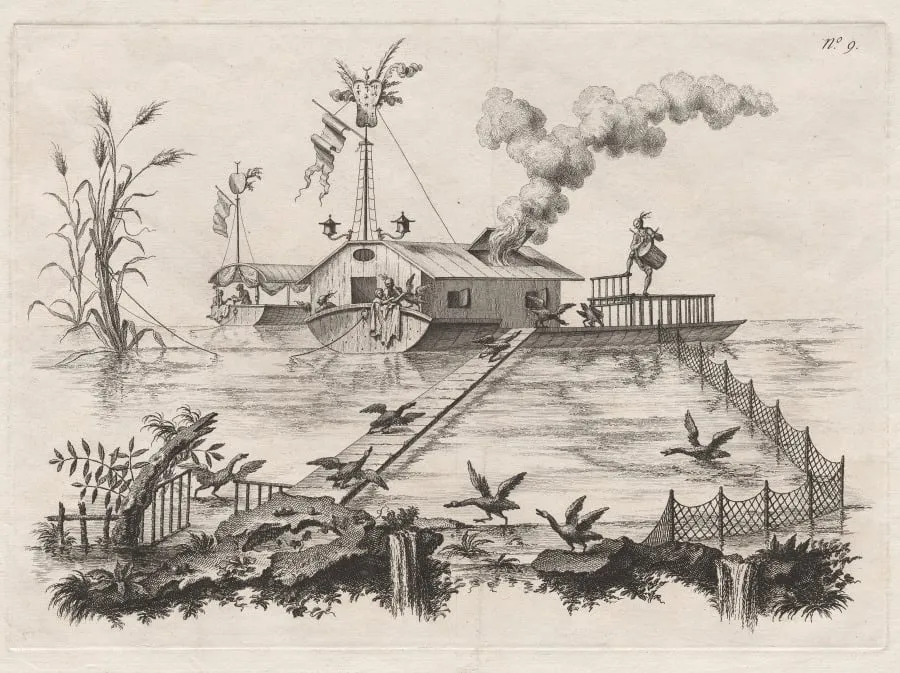
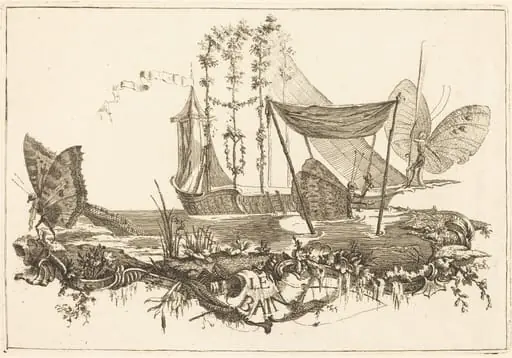
A House on Water, and a New Way to Summon Geese by the Beat of a Drum is a print by the Romanticist artist Filippo Morghen. It dates from 1769 and is held in the collection of the Cleveland Museum of Art.
About this work
Overview
Each plate constructs an alternate world where natural and domestic elements are reimagined on a fantastical scale.
Filippo Morghen’s series of ten etchings, titled A House on Water, and a New Way to Summon Geese by the Beat of a Drum, presents a fictional lunar society through imaginative scenes of daily life. Created in the late 18th century, the set blends speculative fiction with decorative fantasy, reflecting contemporary European fascination with lunar travel narratives. Each plate constructs an alternate world where natural and domestic elements are reimagined on a fantastical scale.
Subject & Meaning
The series depicts lunar inhabitants engaging in absurd yet methodical routines: using giant pumpkins as boats and homes, employing bellows-driven sailboats, and capturing beasts with oversized scissors. One plate shows a dwelling floating on water, while a figure drums to attract geese—transforming a mundane act into ritualized spectacle. These scenes critique or parody European notions of exoticism, using the moon as a blank canvas for projecting imagined foreignness.
Technique & Style
Morghen employed fine-line etching to render intricate, detailed compositions with precise cross-hatching and delicate tonal gradations. The style is meticulous yet whimsical, combining Enlightenment-era draftsmanship with the playful exaggeration typical of decorative arts. Figures and objects are rendered with stylized proportions, emphasizing surreal scale shifts that heighten the otherworldly atmosphere without sacrificing visual coherence.
History & Provenance
The series was produced in Italy during the 1780s, a period when lunar voyages and fantastical travelogues gained popularity in European print culture. Morghen, known for reproductive engravings, turned to original fantasy subjects likely to appeal to collectors intrigued by scientific curiosity and exoticism. The complete set survives in a few institutional collections, including The Cleveland Museum of Art, where it is preserved as a rare example of speculative printmaking.
Context
The imagery draws from prevailing European trends like chinoiserie and turquerie, reinterpreting Asian, Ottoman, and Indigenous motifs through a lens of fantasy rather than ethnographic accuracy. These borrowings were common in decorative arts but here repurposed to depict an alien civilization, revealing how cultural stereotypes were projected onto imagined realms. The moon served as a safe space to explore and exaggerate difference without direct political consequence.
Legacy
Morghen’s etchings stand as a quiet precursor to later science fiction and satirical visual narratives. Though not widely influential in his time, the series exemplifies how print culture allowed artists to interrogate perception, knowledge, and cultural bias through fantasy. Today, it is valued for its nuanced blend of technical skill and imaginative subversion, offering insight into how 18th-century audiences processed the unknown.
Artist & collection

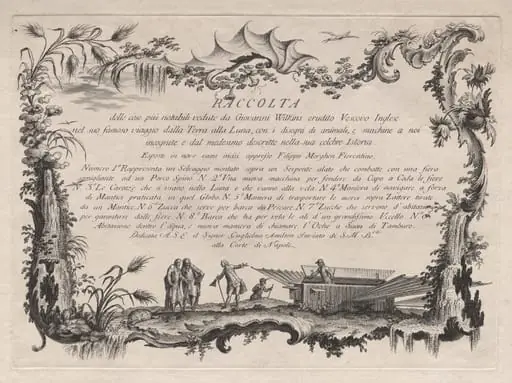 Title and Dedication Page
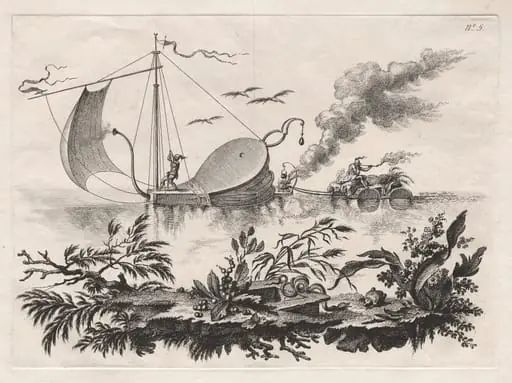 The Manner of Transporting Wares on Barges Drawn by a Bellows
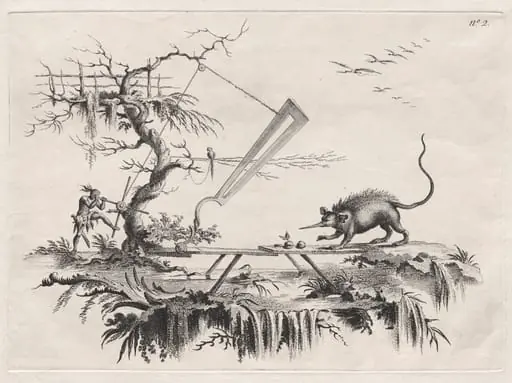 A new device to cleave wild beasts from Head to Tail
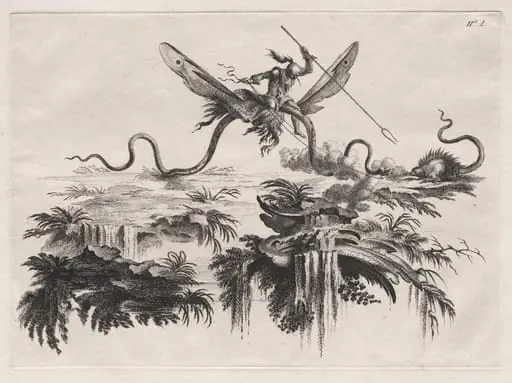 A Savage mounted on a winged Serpent battling with a wild beast resembling a Porcupine
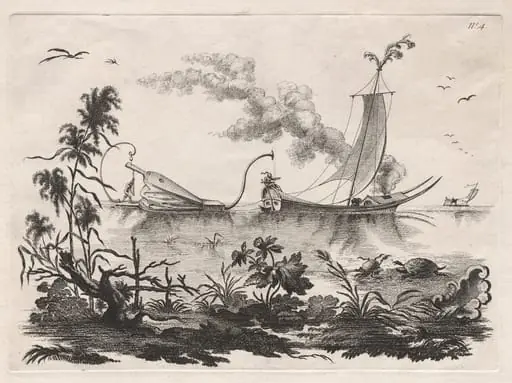 The Manner of sailing by the power of Bellows practiced on that Planet
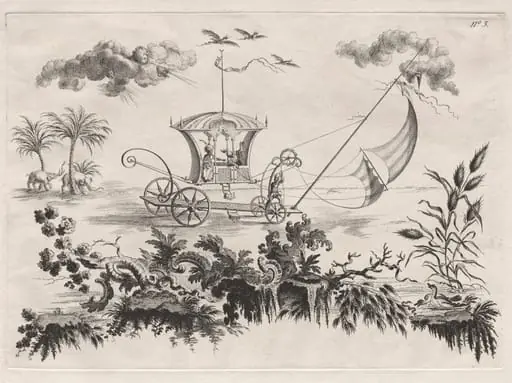 The Carriages used on the Moon and which move by sails
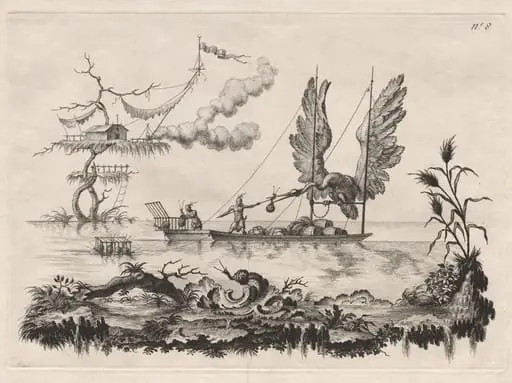 A Boat That Has for Sails the Wings of a Huge Bird
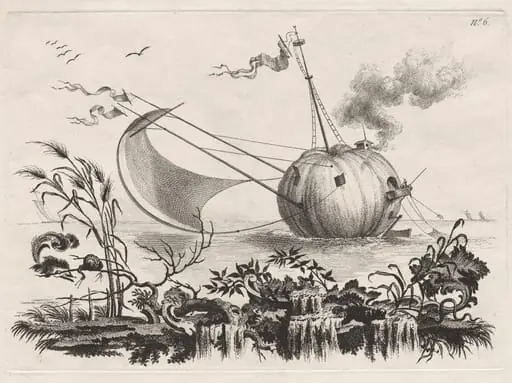 A Pumpkin Used as a Fishing Boat