Artwork
A Pumpkin Used as a Fishing Boat
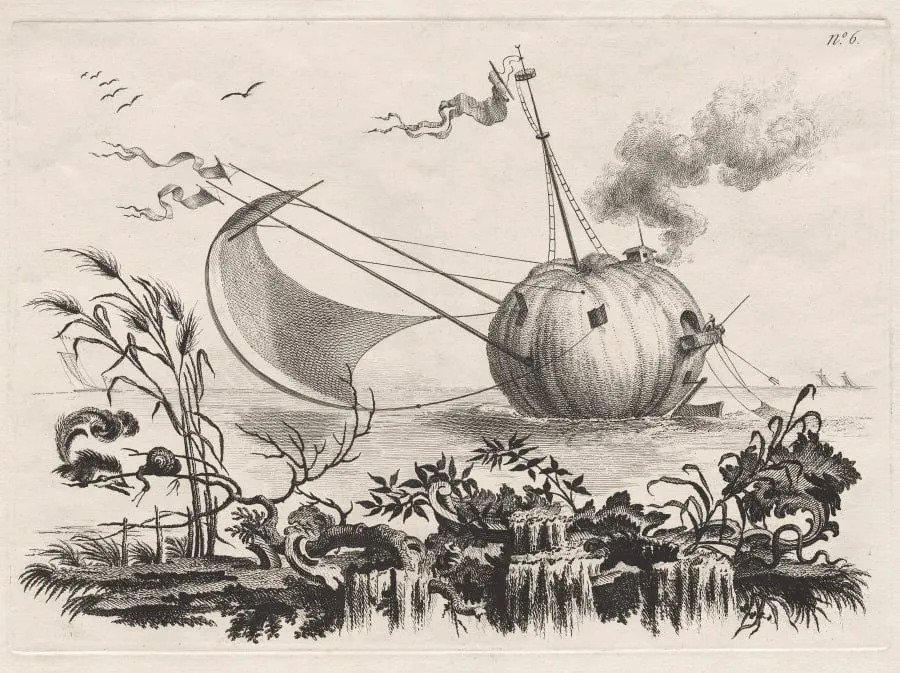
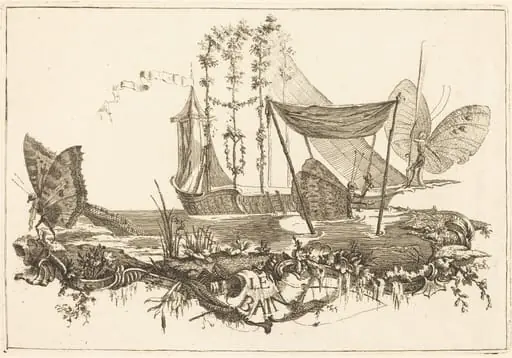
A Pumpkin Used as a Fishing Boat is a print by the Romanticist artist Filippo Morghen. It dates from 1769 and is held in the collection of the Cleveland Museum of Art.
About this work
People then loved stories of imaginary worlds—Morghen filled his with giant rats, scissor-wielding hunters, and pumpkin boats like this one.
You see a tiny man in a hollowed-out pumpkin, floating on water with a fishing line.
This is one of ten strange prints about life on the moon, made in 1769. People then loved stories of imaginary worlds—Morghen filled his with giant rats, scissor-wielding hunters, and pumpkin boats like this one. It’s playful, but also a little creepy.
If you like odd old prints, look up *sfumato*—a soft-blurring technique that makes edges melt, used in dreamier works of the time.
Overview
A Pumpkin Used as a Fishing Boat is one of ten etchings from Filippo Morghen's 1769 series depicting imaginary life on the moon. The print showcases a diminutive figure fishing from a hollowed-out pumpkin boat, exemplifying the set's whimsical and fantastical narrative.
Subject & Meaning
The subject combines playful fantasy with elements of 18th-century European misconceptions of non-European cultures (chinoiserie, turquerie), reflecting the era's fascination with exotic, imagined worlds. The pumpkin boat symbolizes inventive transportation methods in this fictional lunar society.
Technique & Style
While the series' overall style is not explicitly linked to sfumato in this piece, the soft, dreamlike quality of the etching aligns with contemporary artistic trends that often featured blurred edges for ethereal effects. The composition balances detail with a sense of lightness, typical of Morghen's imaginative vignettes.
History & Provenance
Created in 1769 as part of a ten-piece etching set, this work is part of Morghen's contribution to the 18th-century literary and visual phenomenon of imaginary voyages, captivating audiences with tales of extraordinary worlds.
Context
The print reflects the 18th century's appetite for fantastical narratives and its penchant for misinterpreting foreign cultures through decorative arts motifs. It stands alongside literary works of the time that explored similar themes of discovery and the unknown.
Legacy
As part of Morghen's set, the piece contributes to the historical record of European fascination with imaginary worlds and misconstrued exoticism. Its enduring appeal lies in its blend of the bizarre and the meticulously detailed, appealing to collectors of unusual antiquarian prints.
Artist & collection

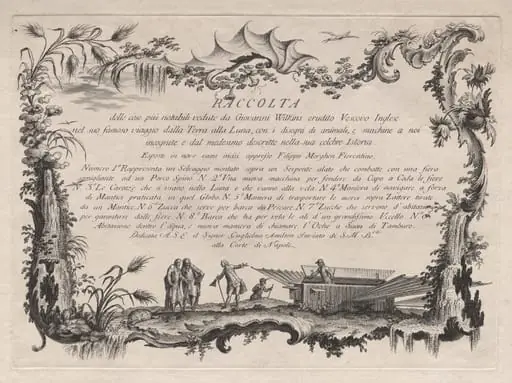 Title and Dedication Page
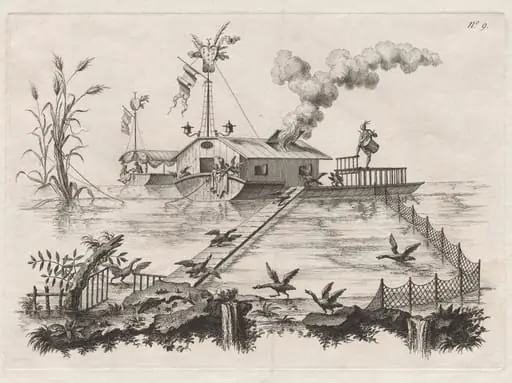 A House on Water, and a New Way to Summon Geese by the Beat of a Drum
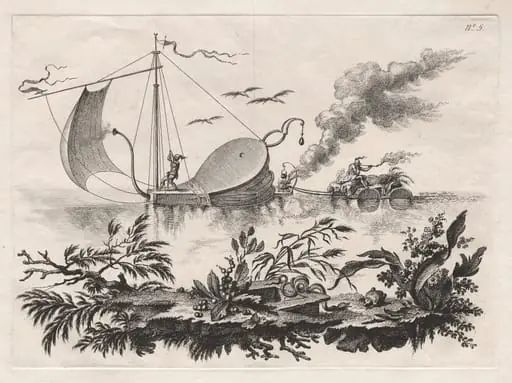 The Manner of Transporting Wares on Barges Drawn by a Bellows
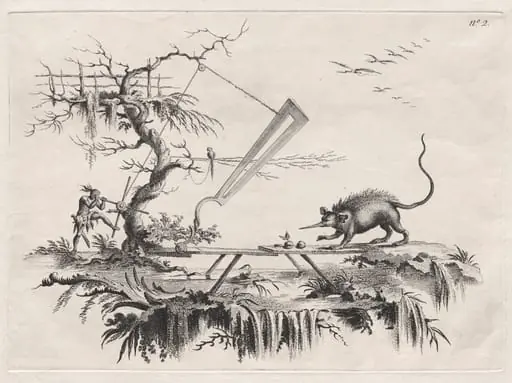 A new device to cleave wild beasts from Head to Tail
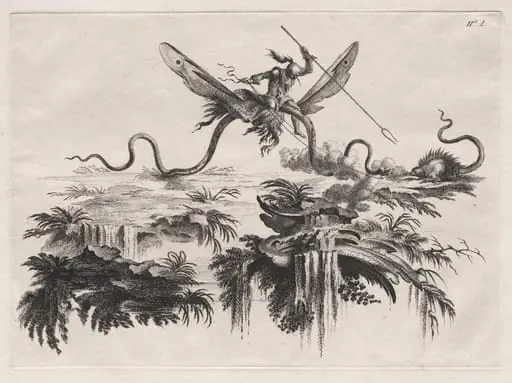 A Savage mounted on a winged Serpent battling with a wild beast resembling a Porcupine
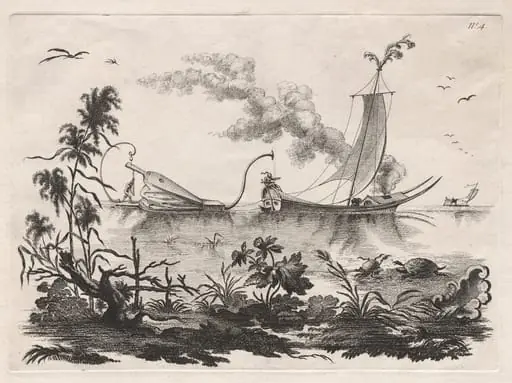 The Manner of sailing by the power of Bellows practiced on that Planet
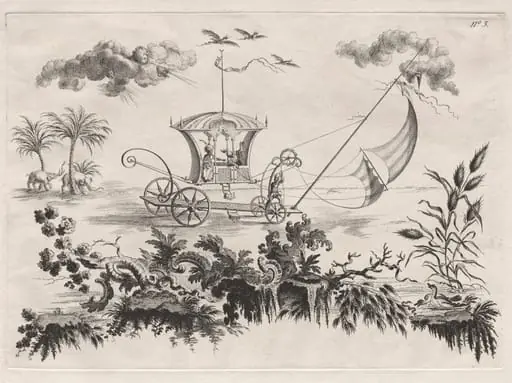 The Carriages used on the Moon and which move by sails
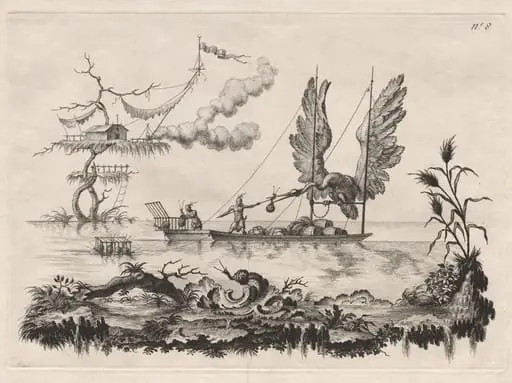 A Boat That Has for Sails the Wings of a Huge Bird