Artwork
Pumpkins Used as Dwellings to Be Secure against Wild Beasts
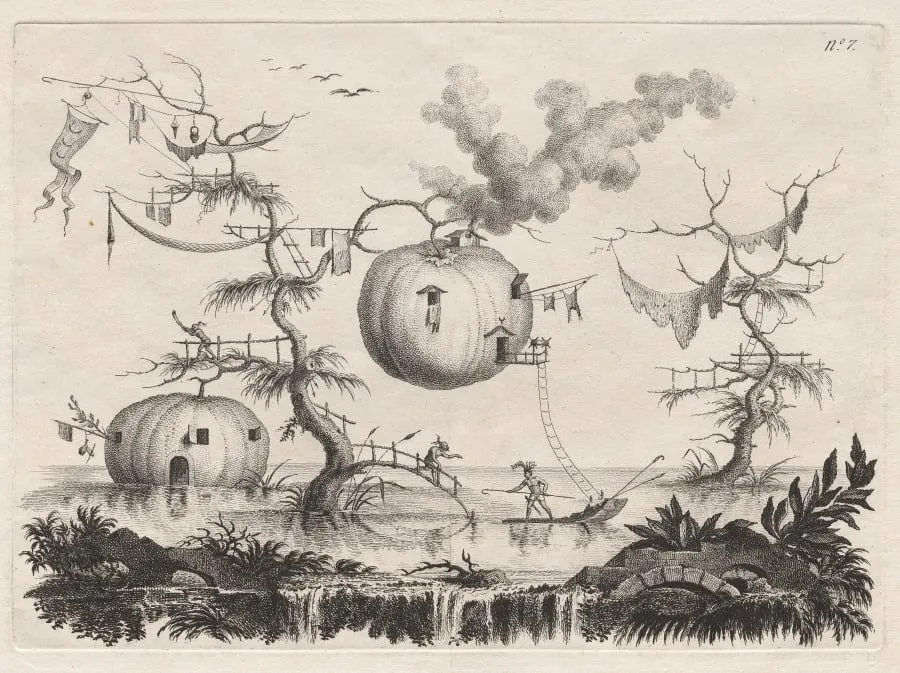
Pumpkins Used as Dwellings to Be Secure against Wild Beasts is a print by the Romanticist artist Filippo Morghen. It dates from 1769 and is held in the collection of the Cleveland Museum of Art.
About this work
Overview
Filippo Morghen created a series of ten etchings depicting an imagined lunar society, published in the late 18th century.
Filippo Morghen created a series of ten etchings depicting an imagined lunar society, published in the late 18th century. The set includes a title page and nine illustrated plates that construct a whimsical, fictional civilization on the Moon. Each image presents eccentric technologies and customs, blending scientific curiosity with fantasy, reflecting the era’s fascination with speculative travel narratives and extraterrestrial life.
Subject & Meaning
The etchings portray lunar inhabitants using giant pumpkins as homes and fishing vessels, alongside absurd tools like bellows-powered sailboats and colossal scissors for hunting oversized rodents. These inventions serve no practical purpose but reflect a satirical imagination, critiquing European colonial assumptions through exaggerated, impossible solutions. The scenes invert terrestrial norms, inviting viewers to question the logic of their own cultural practices.
Technique & Style
Morghen employed fine-line etching to render intricate, detailed scenes with delicate cross-hatching and precise contours. The compositions are densely populated, balancing fantastical elements with a veneer of documentary realism. The style echoes 18th-century topographical prints but infuses them with surreal invention, creating a tension between observed detail and impossible subject matter that heightens the work’s imaginative impact.
History & Provenance
The series was produced in Italy during the 1780s, a period when lunar travel fantasies flourished in European print culture. Morghen, known for reproductive engravings, turned to original fantasy subjects likely in response to popular demand. The set was circulated among collectors and intellectuals, though no single provenance is well-documented; surviving examples are held in institutions including the Cleveland Museum of Art.
Context
The imagery draws on contemporary European trends like chinoiserie and turquerie, projecting stereotyped Asian and Ottoman aesthetics onto lunar figures. These portrayals reveal how exoticism functioned as a tool for fantasy, detached from cultural accuracy. The series aligns with broader Enlightenment-era interests in speculative science and travel literature, where the Moon became a canvas for projecting societal anxieties and curiosities.
Legacy
Morghen’s lunar series remains a rare example of detailed visual storytelling in 18th-century print fantasy. While not widely influential in artistic movements, it endures as a cultural artifact illustrating how imagination shaped scientific discourse. The work offers insight into the period’s blend of wonder and prejudice, preserving a moment when the unknown was rendered through the lens of familiar, yet distorted, cultural tropes.
Artist & collection

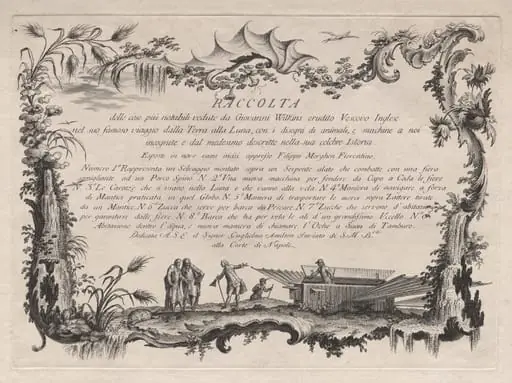 Title and Dedication Page
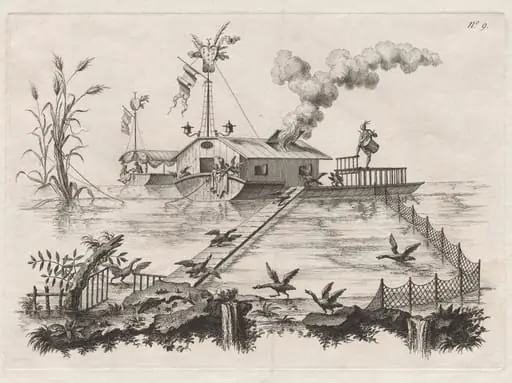 A House on Water, and a New Way to Summon Geese by the Beat of a Drum
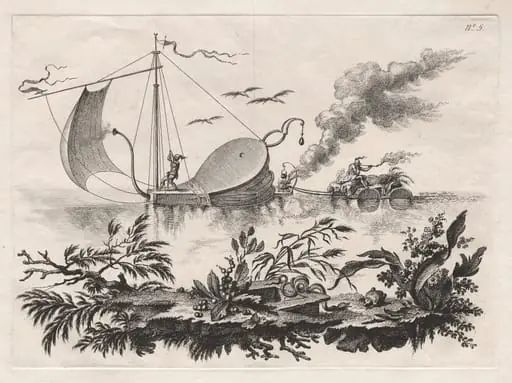 The Manner of Transporting Wares on Barges Drawn by a Bellows
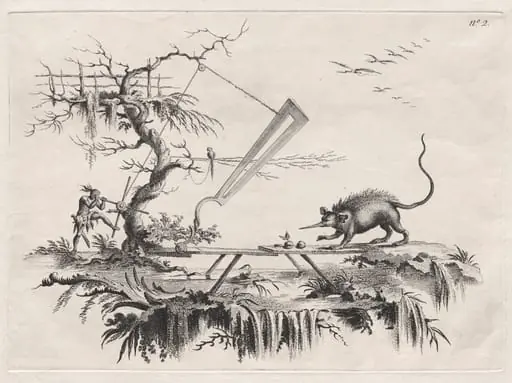 A new device to cleave wild beasts from Head to Tail
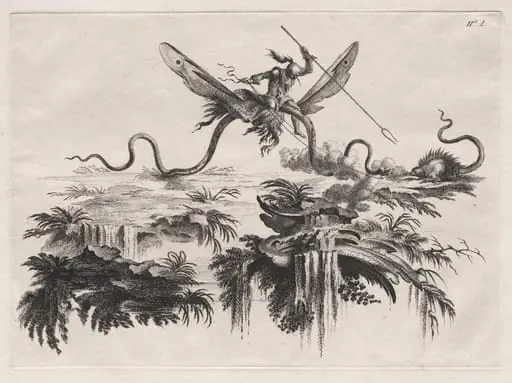 A Savage mounted on a winged Serpent battling with a wild beast resembling a Porcupine
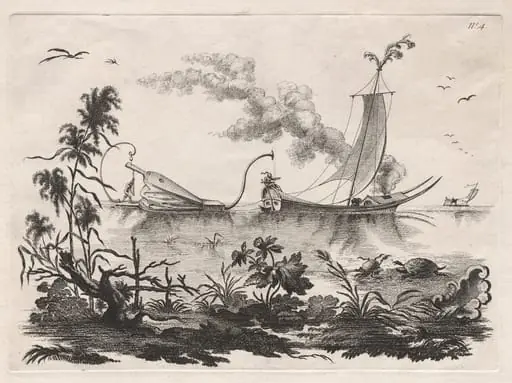 The Manner of sailing by the power of Bellows practiced on that Planet
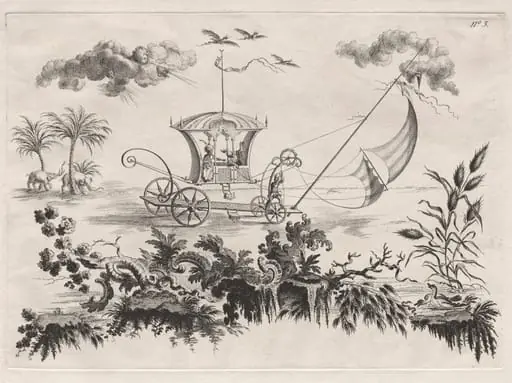 The Carriages used on the Moon and which move by sails
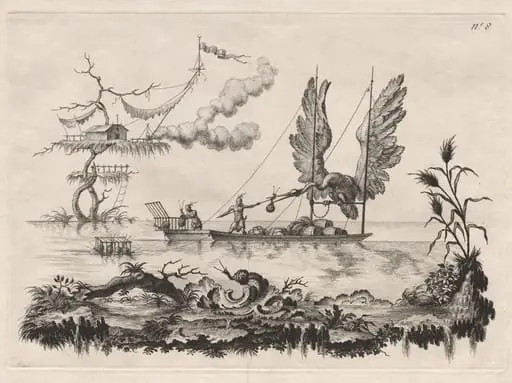 A Boat That Has for Sails the Wings of a Huge Bird