Artwork
Framlingham Castle
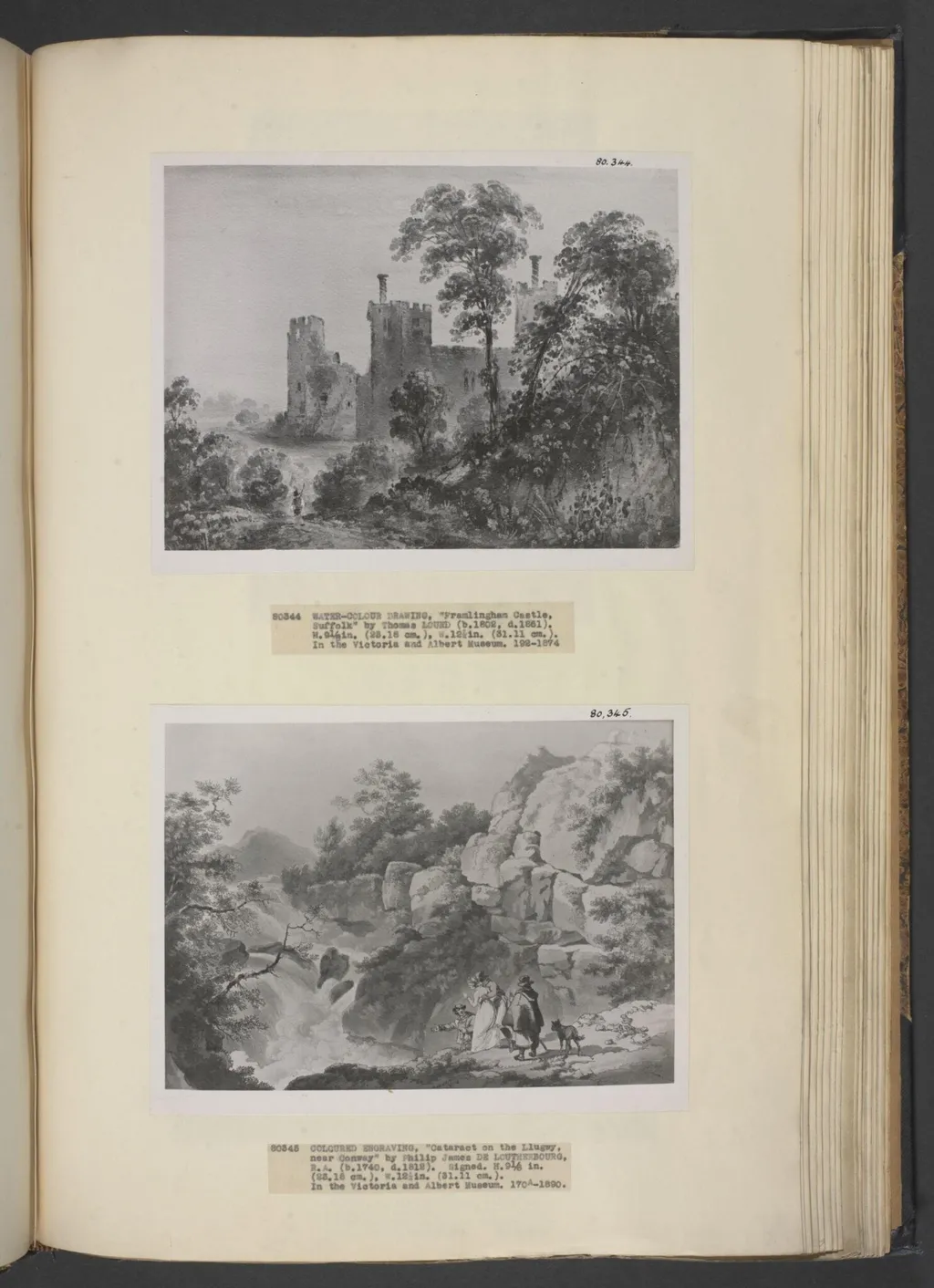
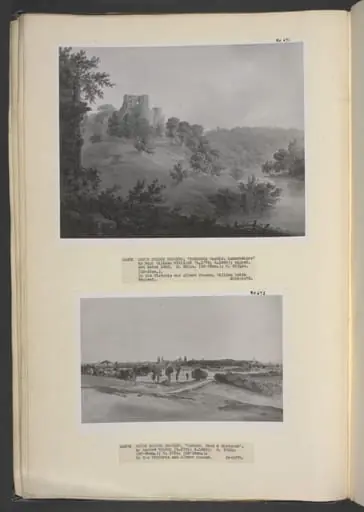
Framlingham Castle is a watercolor work on paper by the British Romanticist artist Thomas Lound. It dates from 1825 and is held in the collection of the Victoria and Albert Museum.
About this work
Overview
Thomas Lound’s 1825 watercolour presents the medieval silhouette of Framlingham Castle set against a verdant landscape.
Thomas Lound’s 1825 watercolour presents the medieval silhouette of Framlingham Castle set against a verdant landscape. The composition balances the stone structure with surrounding trees and foliage, emphasizing the passage of time through the castle’s weathered walls and partially obscured windows. The work reflects early nineteenth‑century interests in historic architecture and the natural environment.
Subject & Meaning
The painting captures the castle in a state of partial ruin, its crumbling masonry intertwined with overgrown vegetation. This juxtaposition of human construction and encroaching nature conveys a Romantic fascination with decay and the transience of power, inviting contemplation of history’s remnants within a living landscape.
Technique & Style
Executed in watercolour, Lound employs a muted palette and delicate washes that lend the scene a soft, atmospheric quality. Subtle contrasts of light and shadow—an application of chiaroscuro—enhance the depth of the towers and the surrounding foliage, while the fluid medium allows for the impression of mist and distant horizon.
History & Provenance
Created in 1825, the work belongs to Lound’s broader series of British topographical studies, produced during a period of heightened antiquarian interest. The watercolour has remained in private collections before entering the museum’s holdings, where it serves as a visual record of Framlingham Castle’s appearance in the early nineteenth century.
Artist & collection
Artist
Thomas Lound painted quiet English landscapes in watercolour during the 1800s, specialising in views around Suffolk.