Artwork
Wheelwright's Home (La maison du charron)
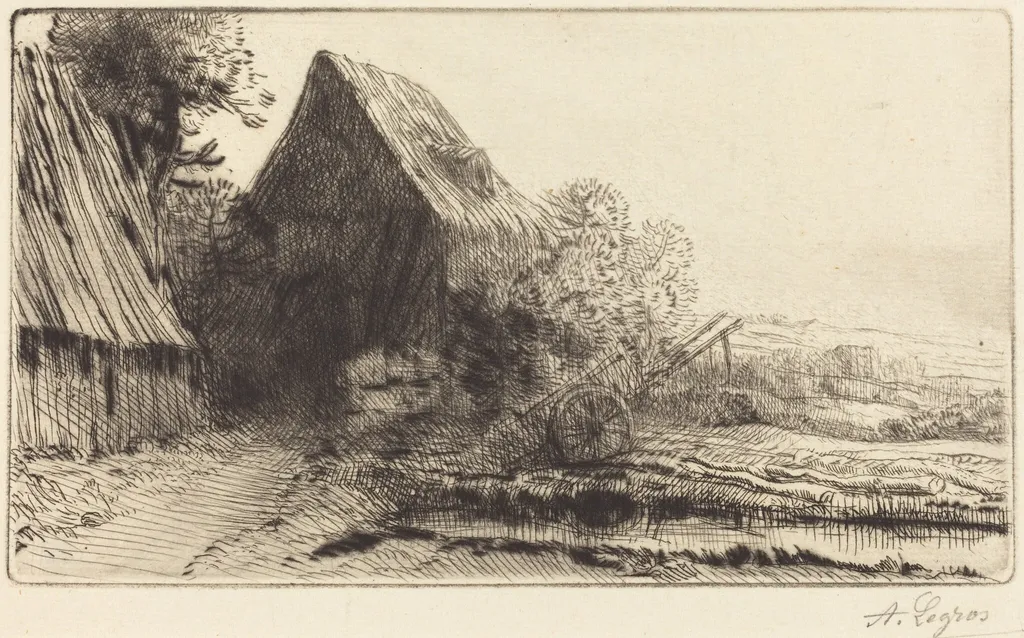
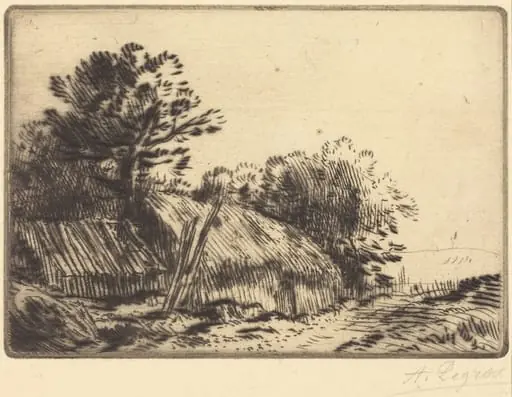
Wheelwright's Home (La maison du charron) is an ink print by the Romanticist artist Alphonse Legros. It dates from 1874 and is held in the collection of the National Gallery of Art.
About this work
Overview
Legros, who settled in London and taught at the Slade School, used this work to explore rural life through the quiet intimacy of a single dwelling.
Created in 1874 by French-born artist Alphonse Legros, *Wheelwright's Home (La maison du charron)* is an etching and drypoint that exemplifies his commitment to printmaking during the British etching revival. Legros, who settled in London and taught at the Slade School, used this work to explore rural life through the quiet intimacy of a single dwelling. The piece reflects his technical precision and interest in everyday subjects, distinguishing him as a bridge between French realism and British print traditions.
Subject & Meaning
The scene portrays a modest cottage nestled against a steep, rocky hillside, linked to the trade of a wheelwright—a craftsman who mended wooden cart wheels. A solitary, indistinct figure stands near the structure, suggesting labor or quiet contemplation without narrative detail. The focus is not on the individual but on the relationship between human habitation and the rugged landscape, evoking themes of rural endurance and anonymity in the face of nature’s persistence.
Technique & Style
Legros employed etching and drypoint to build texture through fine, incised lines. The rocky terrain, sparse vegetation, and wooden fence are rendered with rapid, scratchy strokes that capture the roughness of the environment. Drypoint’s burr creates soft, velvety darks, while etching defines sharper contours. The blurred figure and uneven surfaces reflect a deliberate embrace of imperfection, aligning with the 19th-century revival’s preference for expressive, hand-wrought marks over polished finish.
History & Provenance
Executed during Legros’s early years in England, the print emerged from his active participation in London’s artistic circles and his role as a professor at the Slade School. It was likely produced for private circulation or exhibition among print collectors, reflecting the period’s renewed interest in original etchings as fine art. No documented early ownership is recorded, but its inclusion in institutional collections confirms its recognition within the British printmaking community by the late 19th century.
Context
In the 1870s, British artists were re-engaging with etching as a medium for personal expression, moving away from reproductive prints. Legros, trained in Paris and influenced by Daumier and Millet, brought continental realism to this movement. His focus on humble rural life aligned with broader European trends in naturalism, while his technical rigor helped elevate etching’s status in British art education and collecting circles.
Legacy
Legros’s *Wheelwright's Home* contributed to the legitimization of etching as a serious artistic medium in Britain. His teaching and prints influenced a generation of British printmakers, emphasizing direct observation and tactile mark-making. Though not widely reproduced, the work remains a quiet testament to his role in reshaping print aesthetics, bridging French and British traditions through disciplined, unadorned observation of the everyday.
Own this work as a print
Artist & collection

Artist
Alphonse Legros (French pronunciation: ; 8 May 1837 – 8 December 1911) was a French, later British, painter, etcher, sculptor, and medallist.

 Rustic Scene (Scene rustique)
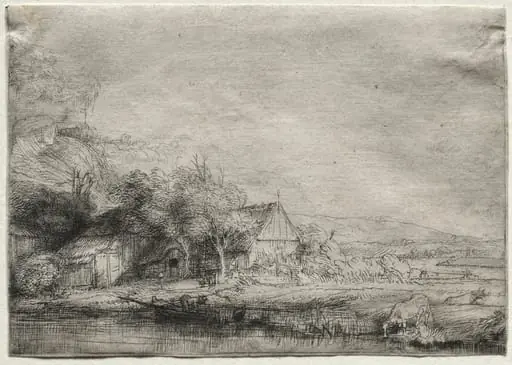 Landscape with a Cow
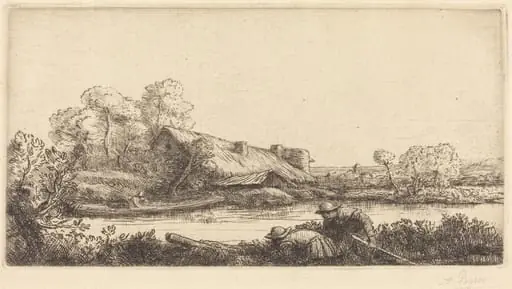 Farm along the River seen by Evening Light (La ferme sur la riviere: Effet du soir)
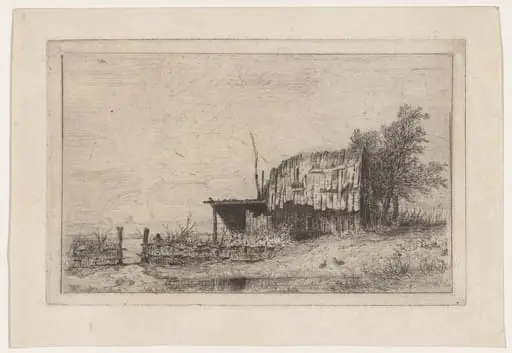 The Little Shed (Le petit Hangar)
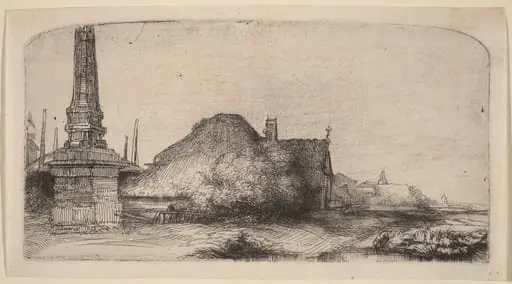 Landscape with an Obelisk
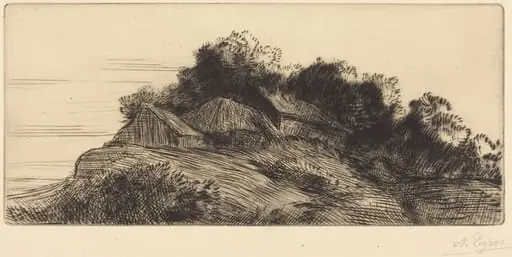 Landscape (Paysage)
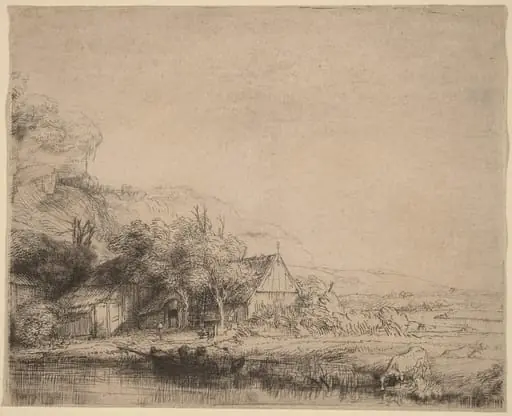 Landscape with a Cow
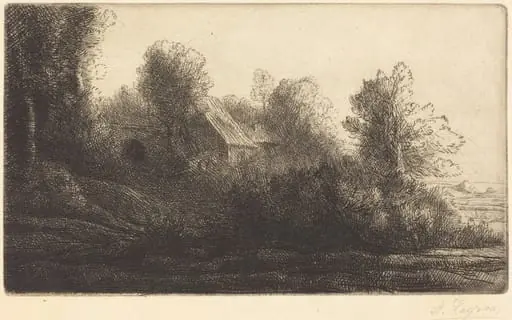 View of a Farm, 2nd plate (La ferme de Bienheureux)
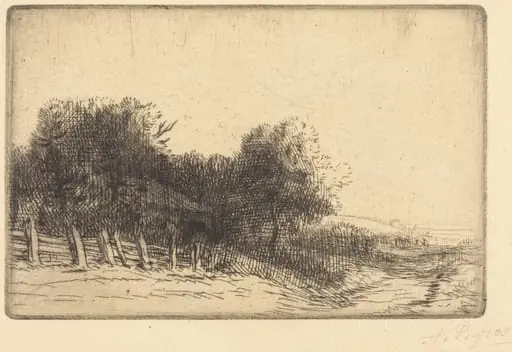 Landscape (Un paysage)
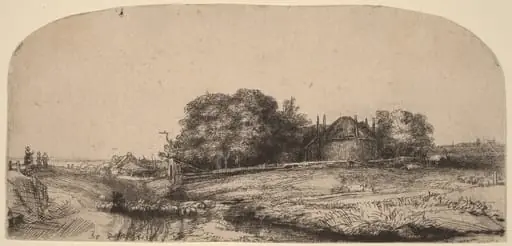 Landscape with a Hay Barn and a Flock of Sheep