Artwork
Castine, Maine
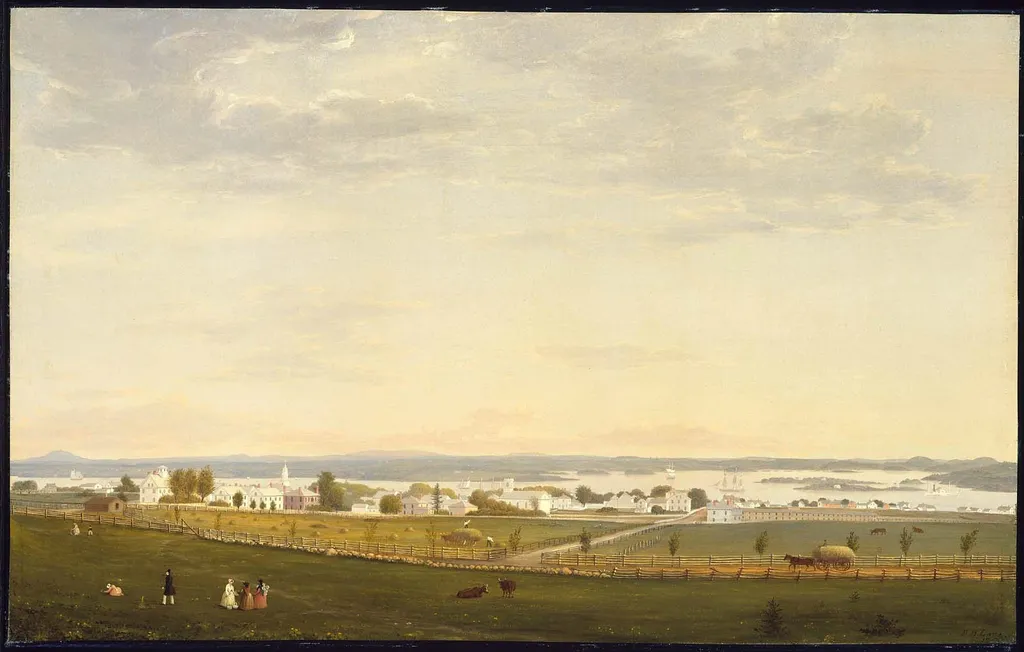
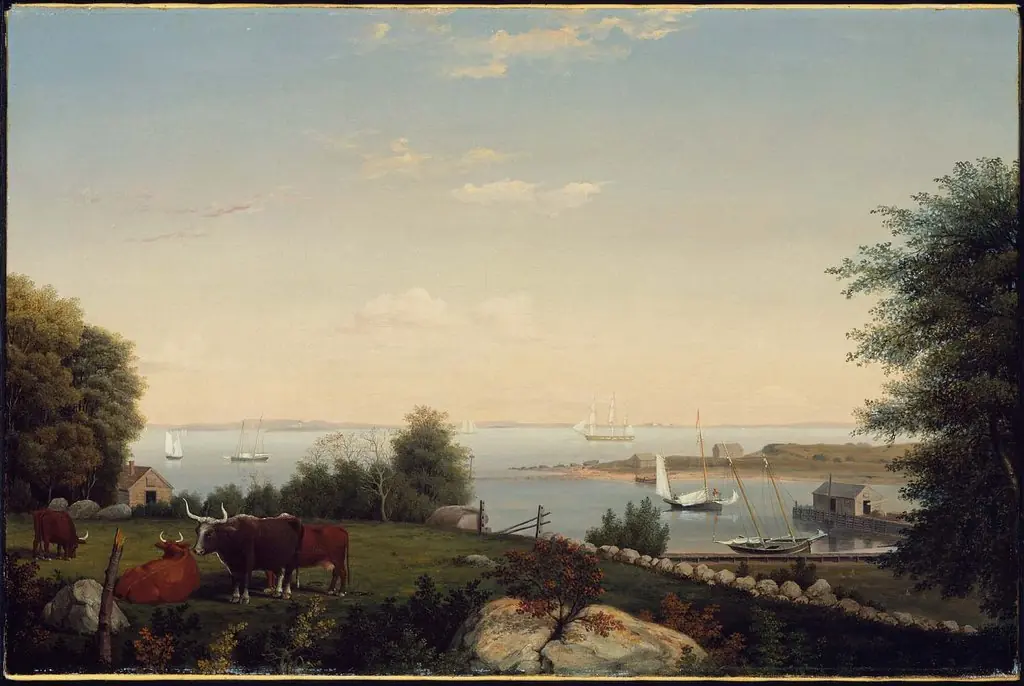
Castine, Maine is an oil painting by the Hudson River School artist Fitz Henry Lane. It dates from 1856 and is held in the collection of the Museum of Fine Arts Boston.
About this work
Overview
Fitz Henry Lane, originally named Nathaniel Rogers Lane, produced this 1856 oil painting depicting the coastal town of Castine, Maine. The work exemplifies his refined approach to landscape, emphasizing quiet natural light and precise detail. Though linked to the Hudson River School, Lane’s focus on maritime environments and atmospheric clarity distinguishes his style within the movement.
Subject & Meaning
The composition suggests harmony between human presence and the natural environment, conveyed through stillness and subdued activity.
The painting presents a tranquil coastal scene with rolling fields, a winding path, and scattered figures and livestock, all framed by distant buildings and a hazy horizon. The absence of dramatic action or human narrative invites contemplation rather than storytelling. The composition suggests harmony between human presence and the natural environment, conveyed through stillness and subdued activity.
Technique & Style
Lane employed delicate brushwork and layered glazes to achieve a luminous effect, with soft transitions between light and shadow. The golden, diffused sky illuminates the land and water with uniform warmth, enhancing spatial depth without harsh contrasts. His attention to atmospheric detail and reflective surfaces reflects a method rooted in observation rather than idealization.
History & Provenance
Created in 1856, the painting remained in private hands until entering the Museum of Fine Arts, Boston’s collection. Lane’s works were largely overlooked after his death in 1865 but were rediscovered in the mid-20th century as scholars reevaluated 19th-century American landscape painting. The painting’s preservation and institutional acquisition reflect its growing recognition in art historical circles.
Context
During the 1850s, Castine was a modest port town with a history tied to maritime trade and military activity. Lane, based in Gloucester, frequently painted coastal Maine, drawn to its quiet harbors and shifting light. His works responded to a broader cultural interest in regional identity and the sublime in everyday landscapes, distinct from the grander vistas favored by contemporaries.
Legacy
Lane’s paintings, including this one, helped define a uniquely American form of luminism—characterized by stillness, clarity, and light as structural elements. Though not widely known in his lifetime, his influence grew as 20th-century critics emphasized his technical restraint and emotional subtlety. Today, his works are studied for their quiet precision and contribution to American visual culture.
Artist & collection
Artist
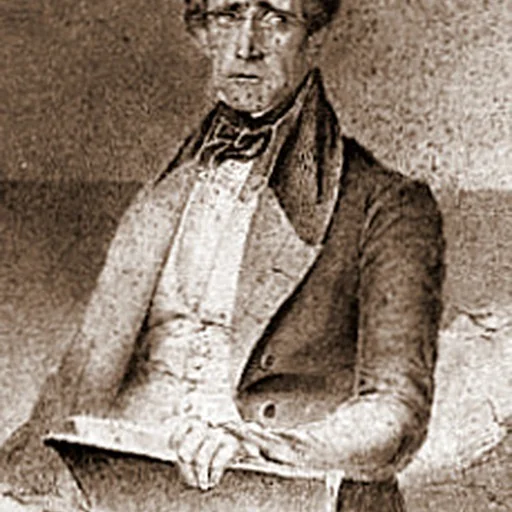
Fitz Henry Lane (born Nathaniel Rogers Lane; also formerly, mistakenly, known as Fitz Hugh Lane; December 19, 1804 – August 14, 1865) was an American painter and printmaker of a style that would later be called Luminism, for its use of…

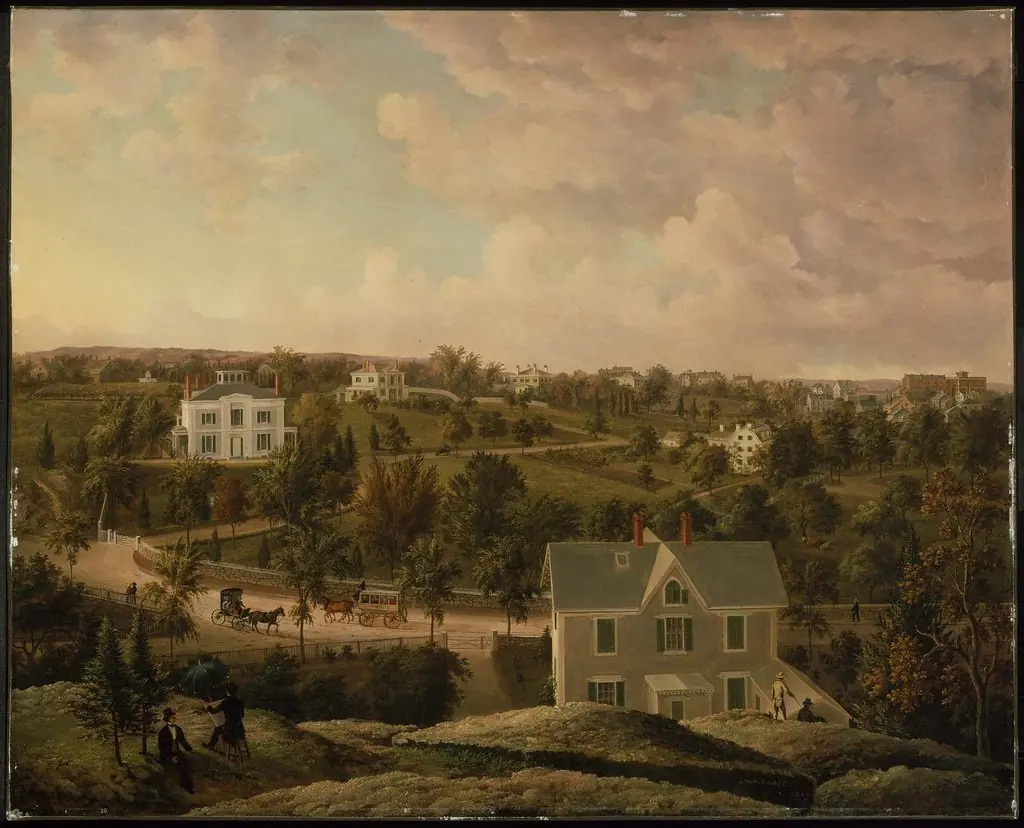 View of Roxbury
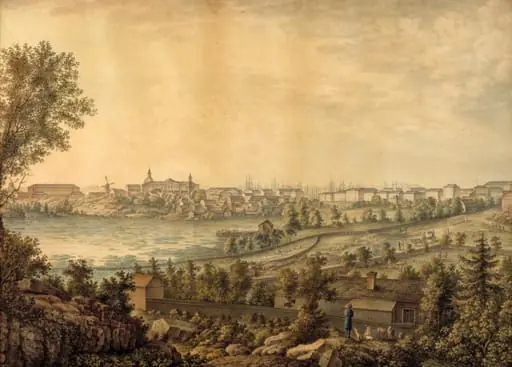 Helsinki nähtynä Kluuvinlahden yli
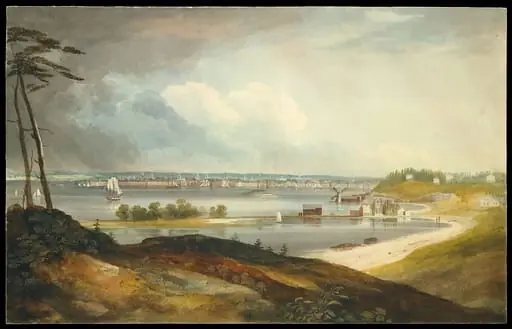 New York from the Heights near Brooklyn
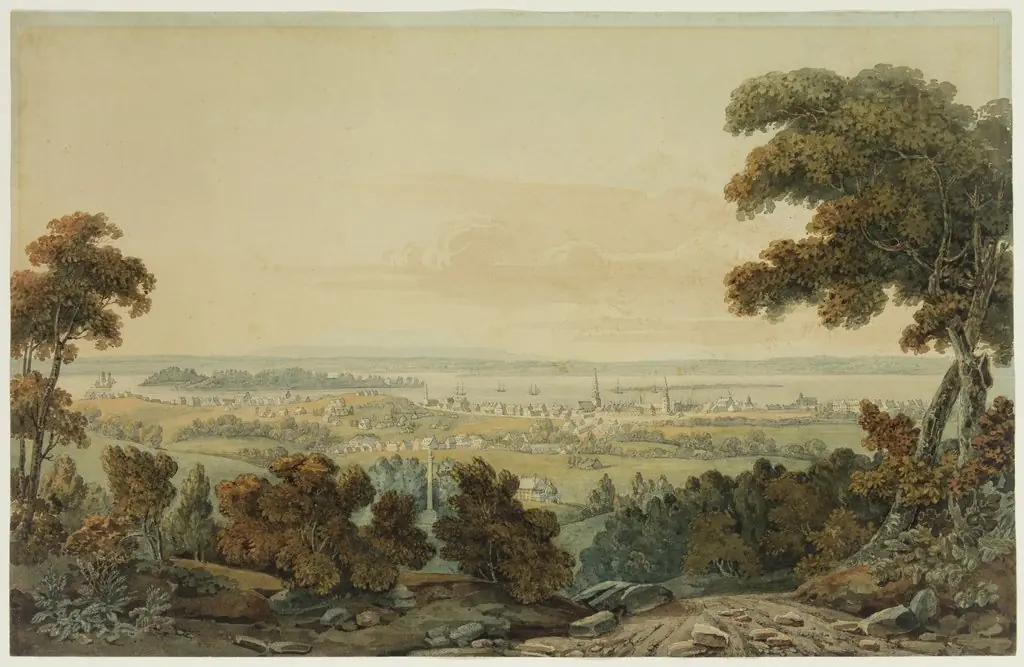 Montreal from the Mountain and View of the St. Lawrence River
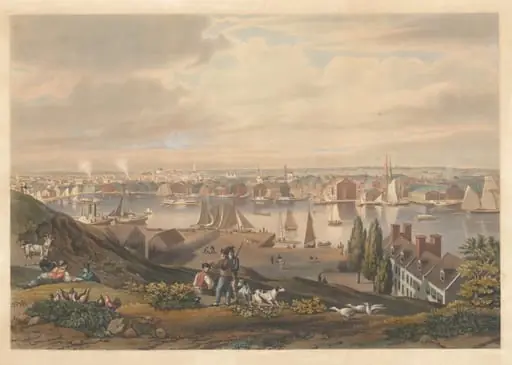 Baltimore from Federal Hill
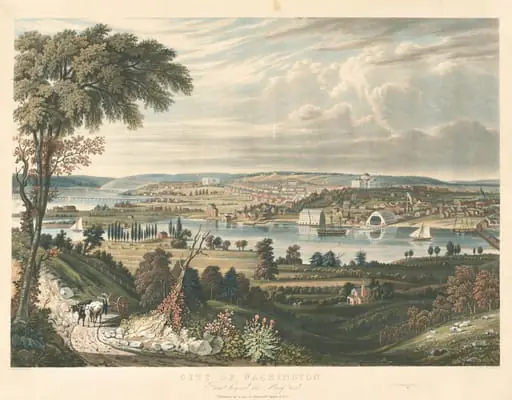 City of Washington: From beyond the Navy Yards
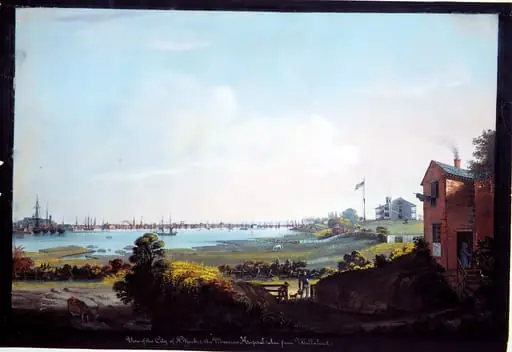 View of the City of New York and the Marine Hospital Taken from Wallabout
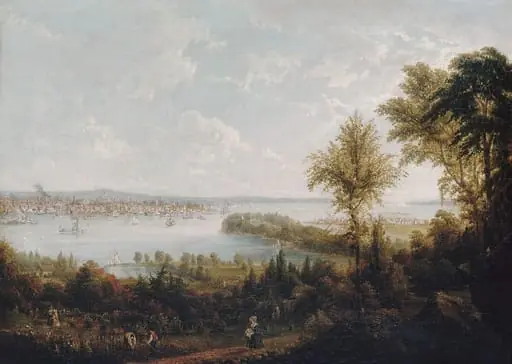 View of the Bay and City of New York from Weehawken
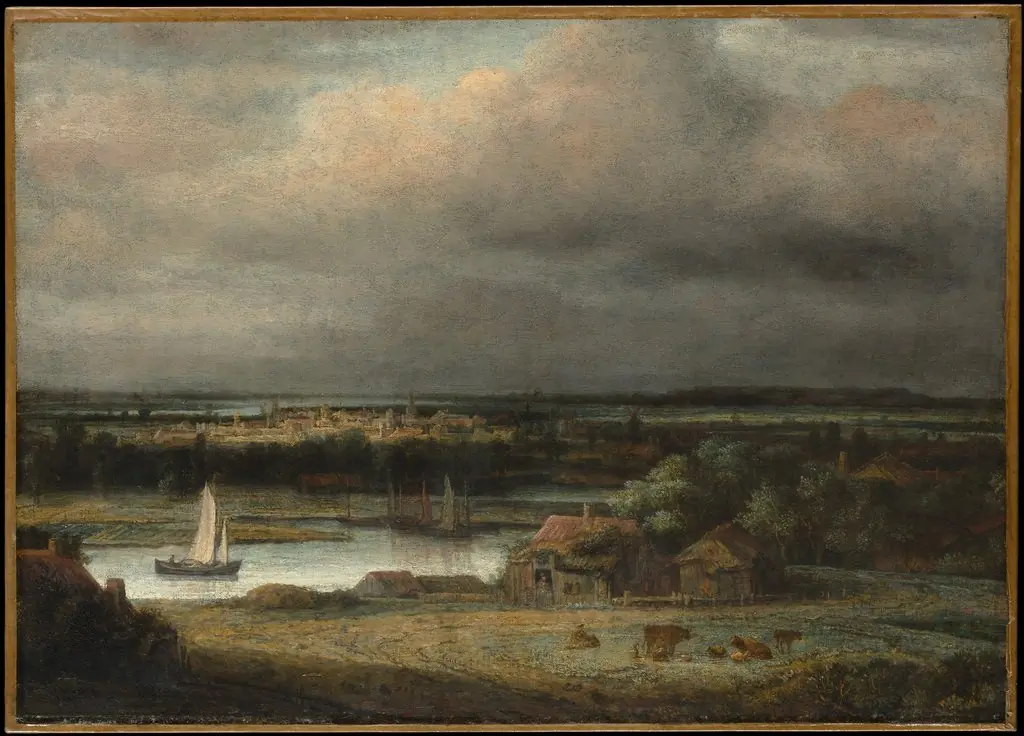 Wide River Landscape
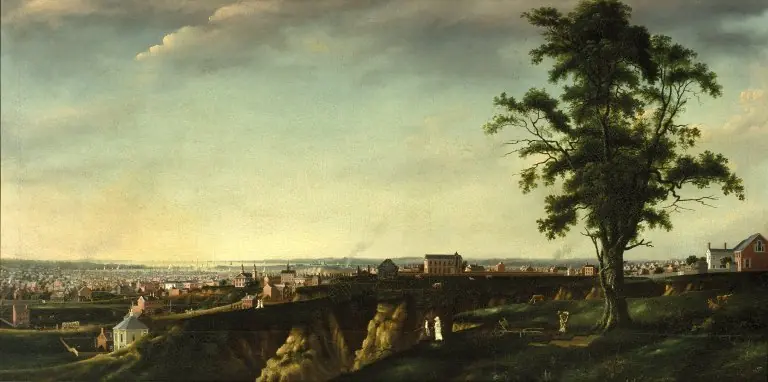 View of Baltimore from Chapel Hill
 Alppila
 Swansea