Artwork
Alppila
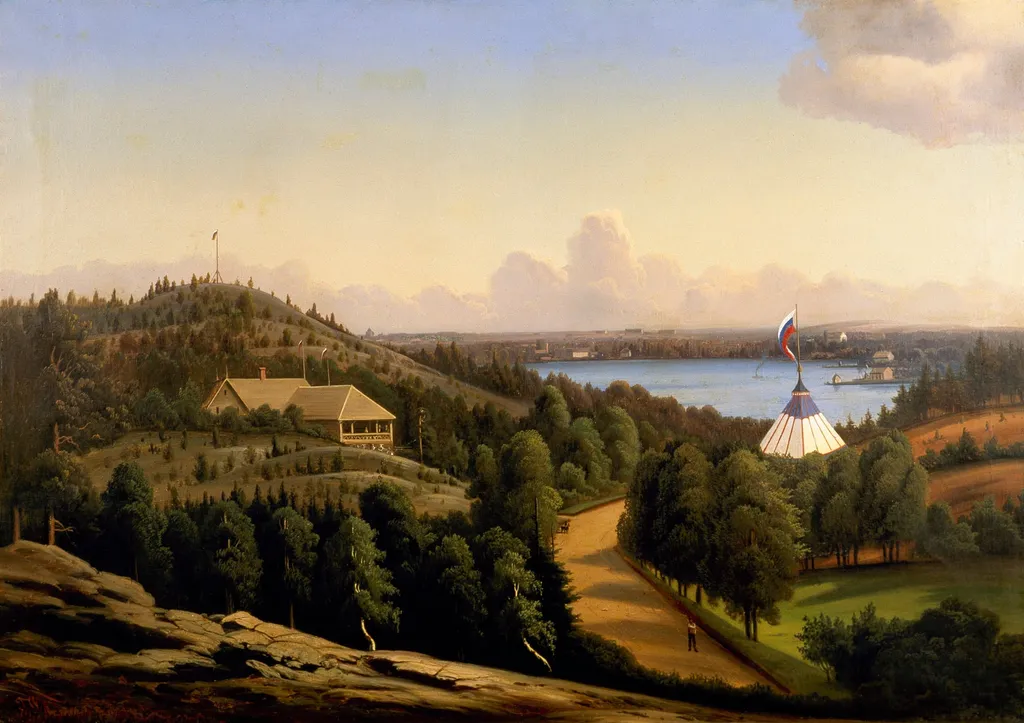
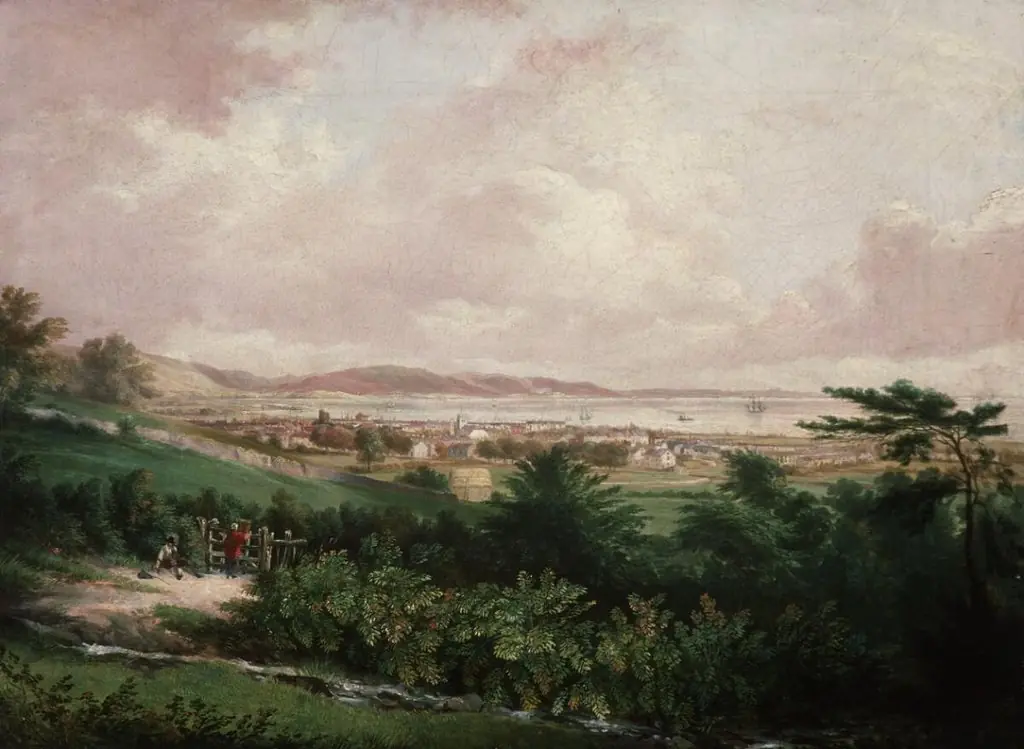
Alppila is a drawing by Thorsten Adolf Waenerberg. It is held in the collection of the Helsinki City Museum. This landscape painting captures a quiet rural scene in Finland, rendered with muted earth tones and soft brushwork.
About this work
Overview
Figures near the house suggest daily life, while distant boats on a calm body of water extend the composition into the horizon.
This landscape painting captures a quiet rural scene in Finland, rendered with muted earth tones and soft brushwork. A gently sloping hill, dense with trees and undergrowth, supports a modest dwelling. Figures near the house suggest daily life, while distant boats on a calm body of water extend the composition into the horizon. The sky, lightly clouded and pale blue, completes an atmosphere of stillness and introspection.
Subject & Meaning
The scene portrays an ordinary moment in a Finnish countryside setting, emphasizing harmony between human habitation and nature. The small house and scattered figures imply domestic life, not grandeur. No dramatic action is present; instead, the work conveys quiet endurance and the rhythm of rural existence. The absence of overt symbolism invites contemplation of place and solitude.
Technique & Style
The artist employs delicate, layered brushstrokes to build texture in the foliage and terrain, creating subtle depth without sharp definition. Colors remain restrained—ochres, greens, and soft grays dominate—enhancing the tranquil mood. The sky is rendered with minimal contrast, allowing clouds to blend gently into the blue. Attention to naturalistic detail grounds the scene in observed reality rather than idealization.
History & Provenance
The painting is attributed to Wäinö Aaltonen, a Finnish artist active in the early 20th century. It was likely created during a period when Finnish painters were turning toward domestic landscapes as expressions of national identity. The work entered public collections after being exhibited in regional shows, though its early ownership records remain incomplete.
Context
Created in the decades following Finnish independence, the painting reflects a broader cultural shift toward valuing local landscapes and everyday life. Artists like Aaltonen moved away from romanticized foreign scenes, focusing instead on familiar Finnish terrain. This work aligns with a national artistic movement that sought to define cultural identity through quiet, authentic depictions of the land and its people.
Legacy
Though not widely reproduced, the painting contributes to a body of work that helped shape Finland’s visual representation of rural tranquility. Its restrained aesthetic influenced later generations of Finnish landscape painters who prioritized emotional resonance over spectacle. Today, it remains a quiet example of how modest scenes can carry cultural weight through sincerity and observation.
Artist & collection
Artist
Thorsten Waenerberg carried a sketchbook like others carry phones—always at the ready, sketching Helsinki’s quiet corners in pencil before coffee got cold.

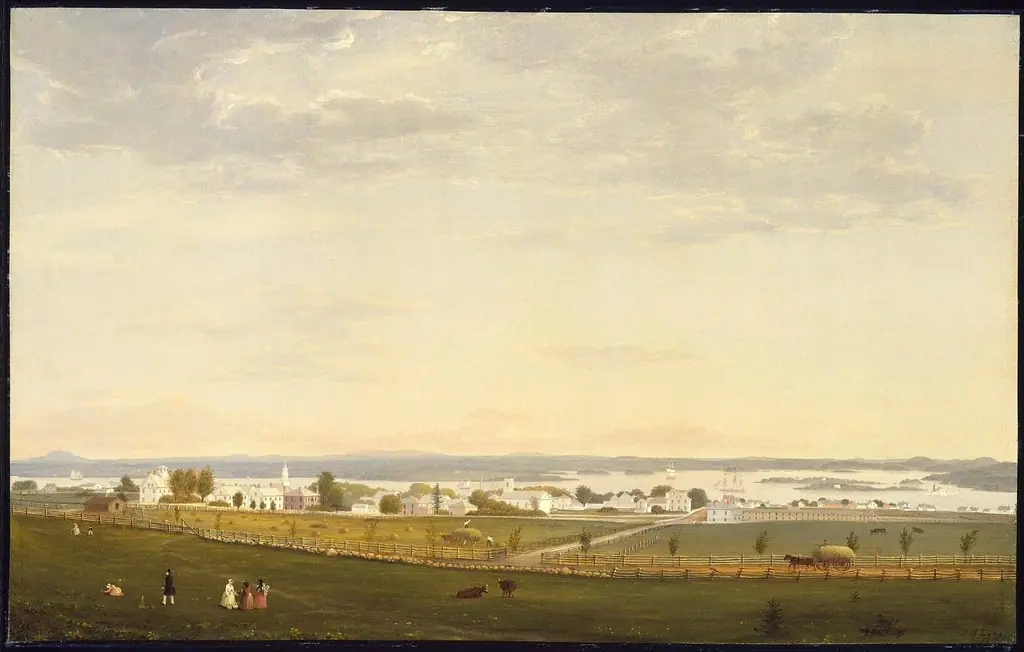 Castine, Maine
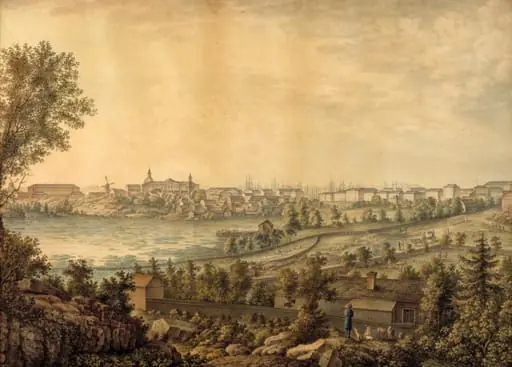 Helsinki nähtynä Kluuvinlahden yli
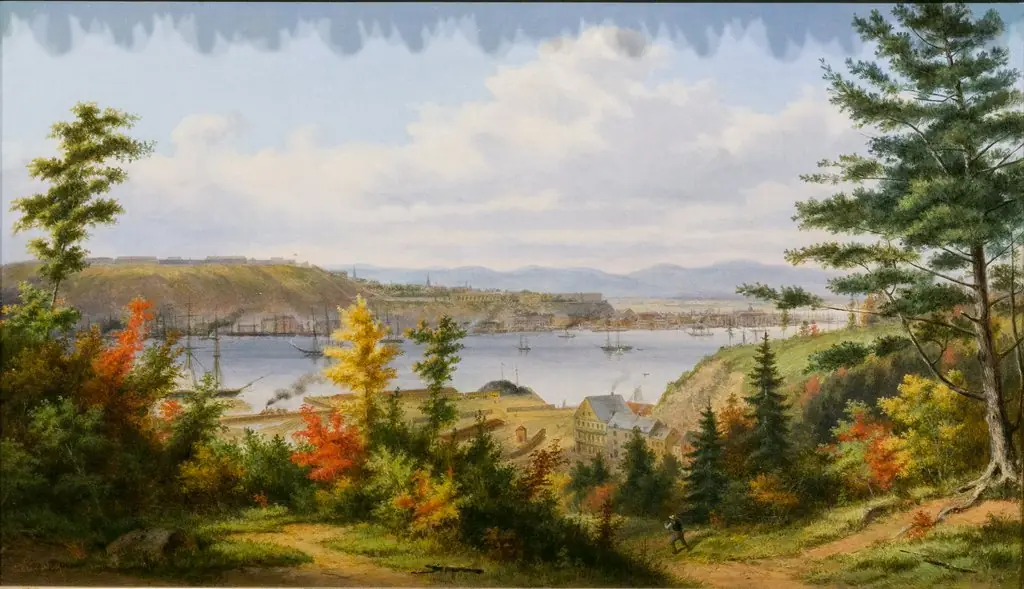 View of Quebec City from Pointe De Lévy
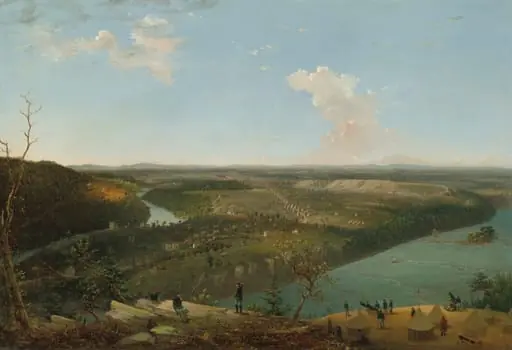 Maryland Heights: Siege of Harpers Ferry
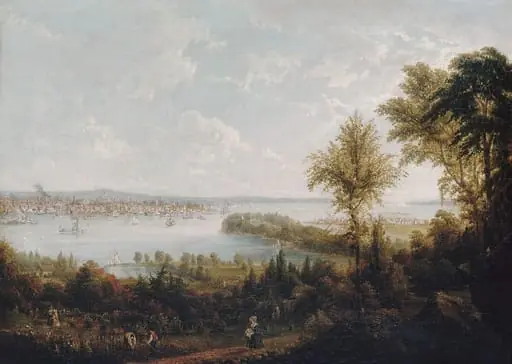 View of the Bay and City of New York from Weehawken
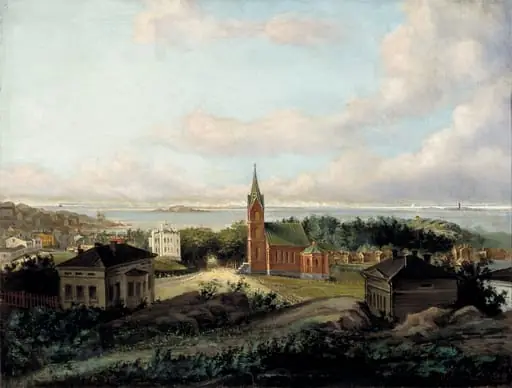 Roomalaiskatolinen kirkko. Pyhän Henrikin kirkko nähtynä Tähtitornin vuorelta.
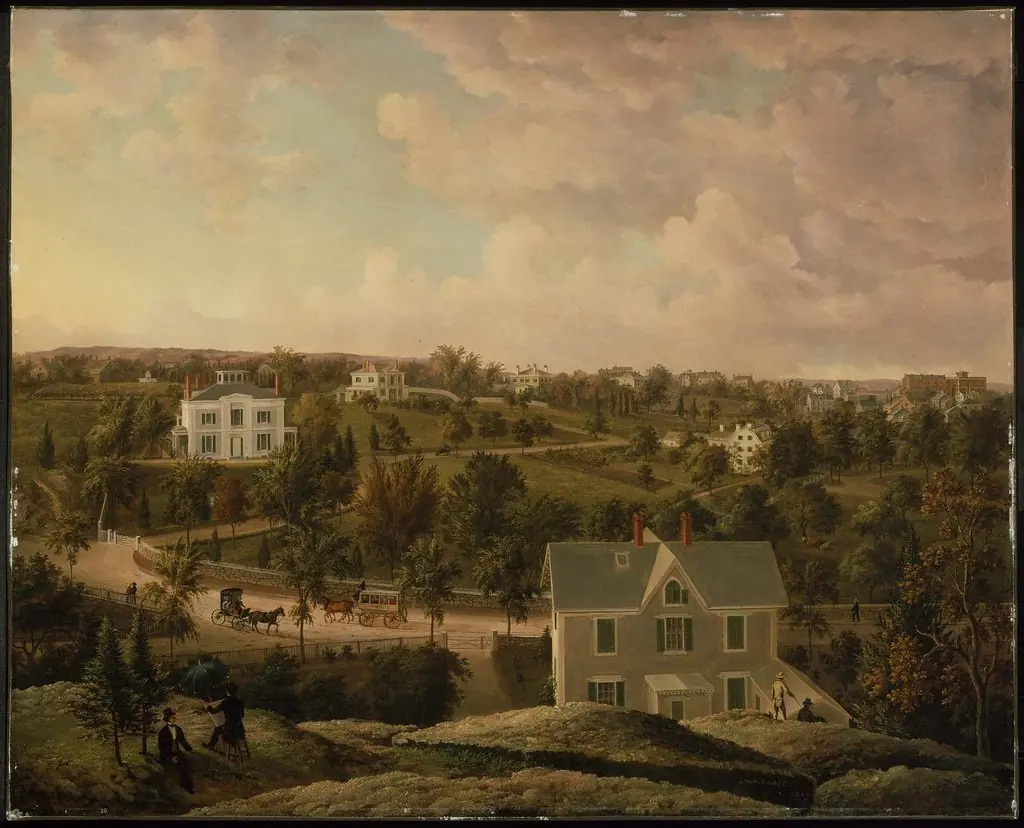 View of Roxbury
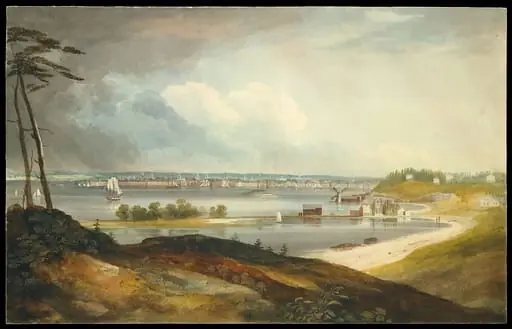 New York from the Heights near Brooklyn
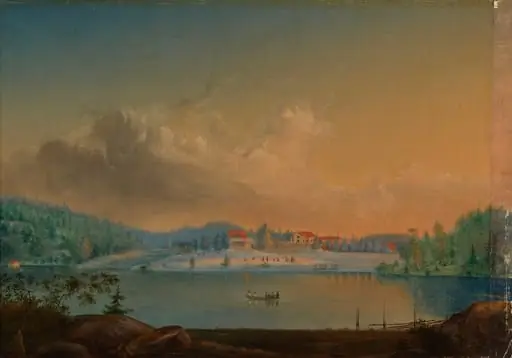 Stormsin eli Degervikin kruununvirkatalo Kirkkonummella
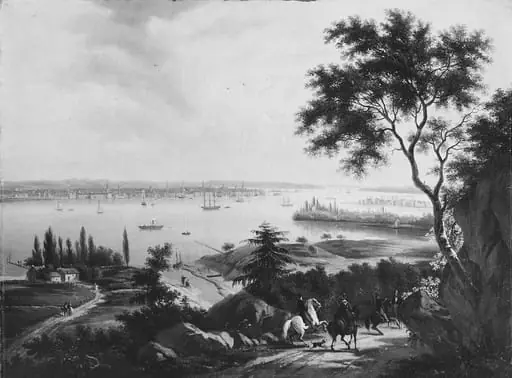 View of New York from New Jersey
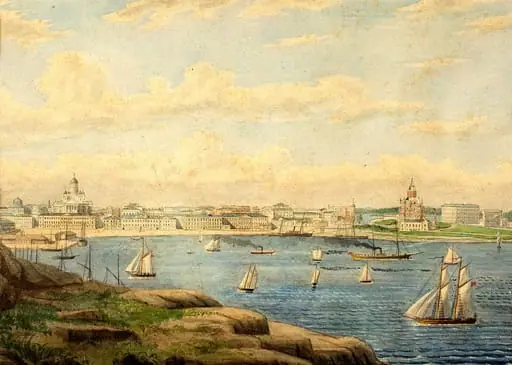 Helsinki etelästä
 Swansea