Artwork
Ispahan - Cour intérieure de la grande Mosquée
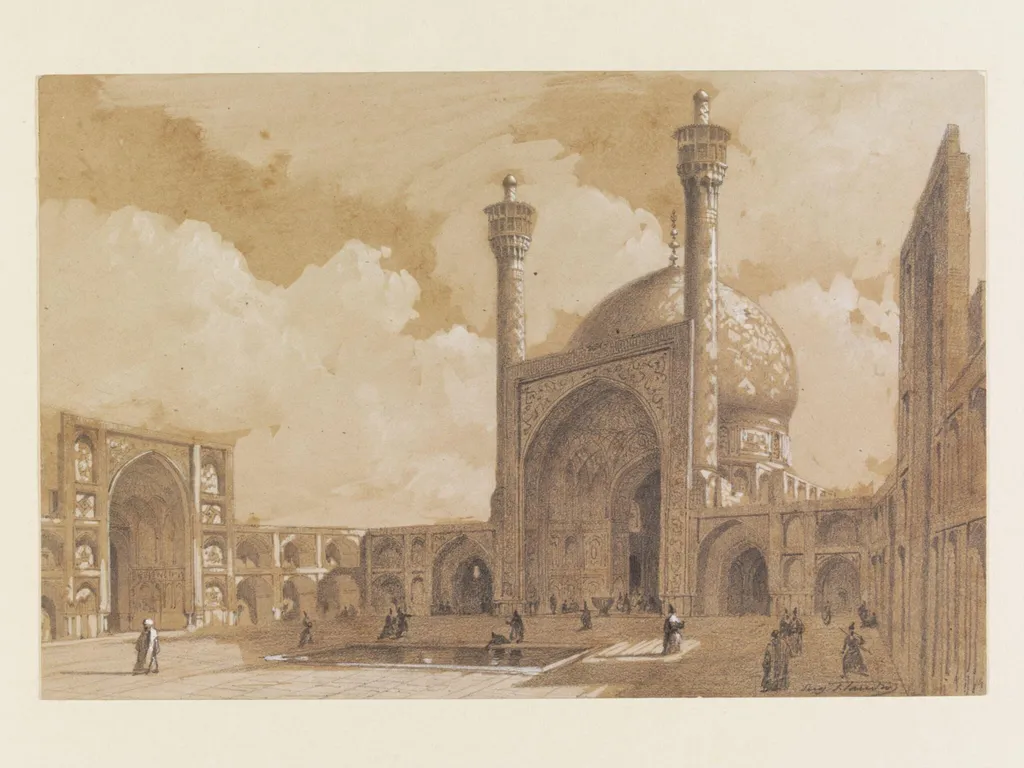
Ispahan - Cour intérieure de la grande Mosquée is a watercolor work on paper by the Orientalist artist Eugène-Napoléon Flandin. It dates from 1842 and is held in the collection of the Victoria and Albert Museum.
About this work
Overview
This watercolour by Eugène-Napoléon Flandin, completed in 1842, captures the interior courtyard of the Great Mosque in Isfahan.
This watercolour by Eugène-Napoléon Flandin, completed in 1842, captures the interior courtyard of the Great Mosque in Isfahan. It is a refined adaptation of an earlier pencil sketch made two years prior, now held at the Victoria and Albert Museum. The work was produced during Flandin’s travels in Persia alongside Pascal Coste, as part of a broader documentation effort for their published study on Persian architecture.
Subject & Meaning
The composition centers on the Masjid-i-Shah, its towering minarets and central dome dominating the scene. Figures move subtly through the vast stone courtyard, emphasizing scale and human presence within sacred space. The rendering prioritizes architectural harmony over narrative, reflecting an ethnographic intent to record structural precision rather than convey religious symbolism or cultural activity.
Technique & Style
Flandin employed delicate watercolour washes to convey the texture of glazed tiles and the play of light across the dome’s surface. Soft, muted clouds in the sky suggest a tranquil atmosphere, while precise linework defines the arches and windows. The use of blue paper in the original sketch informed the tonal subtlety of this watercolour, enhancing the sense of atmospheric depth and architectural clarity.
History & Provenance
The watercolour originated as part of Flandin and Coste’s systematic survey of Persian monuments, later published in *Voyage en Perse*. The earlier pencil study, dated May 1840, resides in the Victoria and Albert Museum. This watercolour version entered private collection in 1977 when acquired by Crenshaw, its provenance traceable through documented sales records from that period.
Context
Created during a period of heightened European interest in Persian architecture, the work aligns with 19th-century Orientalist documentation practices. Flandin’s attention to structural detail served scholarly aims, contributing to Western understanding of Islamic design. Unlike romanticized depictions, this image prioritizes accuracy, reflecting the influence of emerging archaeological methodologies in art.
Legacy
Flandin’s watercolours remain valuable references for architectural historians studying Safavid-era mosques. Though not widely exhibited, the work contributes to the corpus of visual records that preserve the appearance of Isfahan’s monuments before modern interventions. Its presence in institutional collections underscores its role as a documentary artifact rather than a purely aesthetic object.
Artist & collection
Artist
Eugène-Napoléon Flandin spent years wandering Persia with a sketchbook and a stopwatch, timing how long it took for shadows to stretch across the tile floors of mosques.

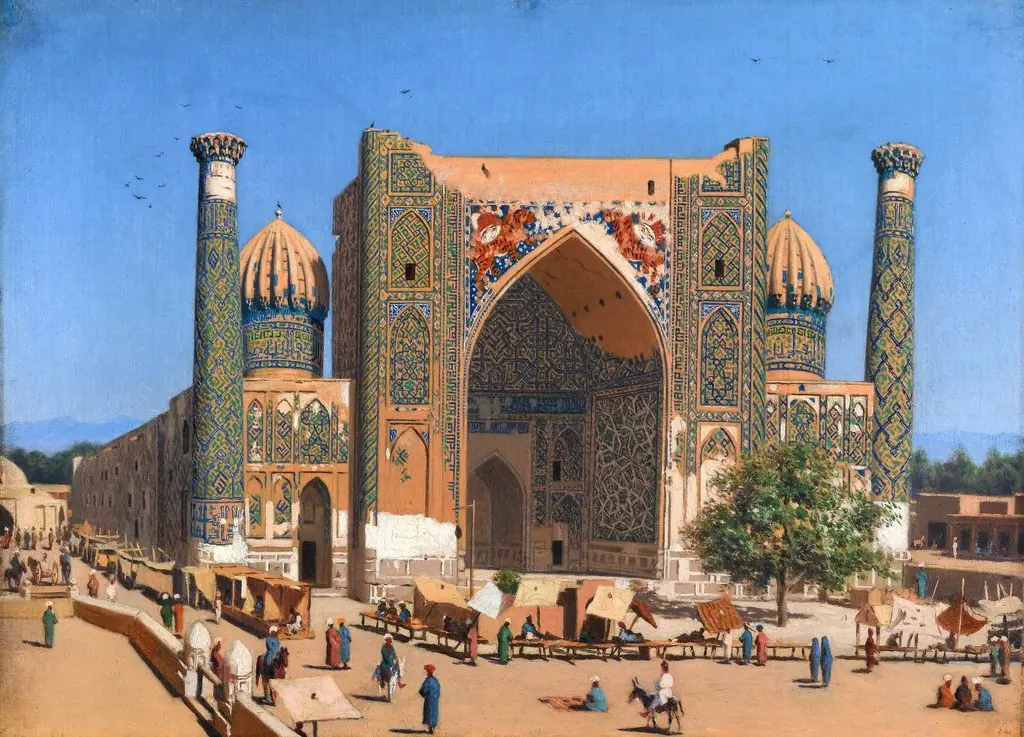 Medrasah Shir-Dhor at Registan place in Samarkand
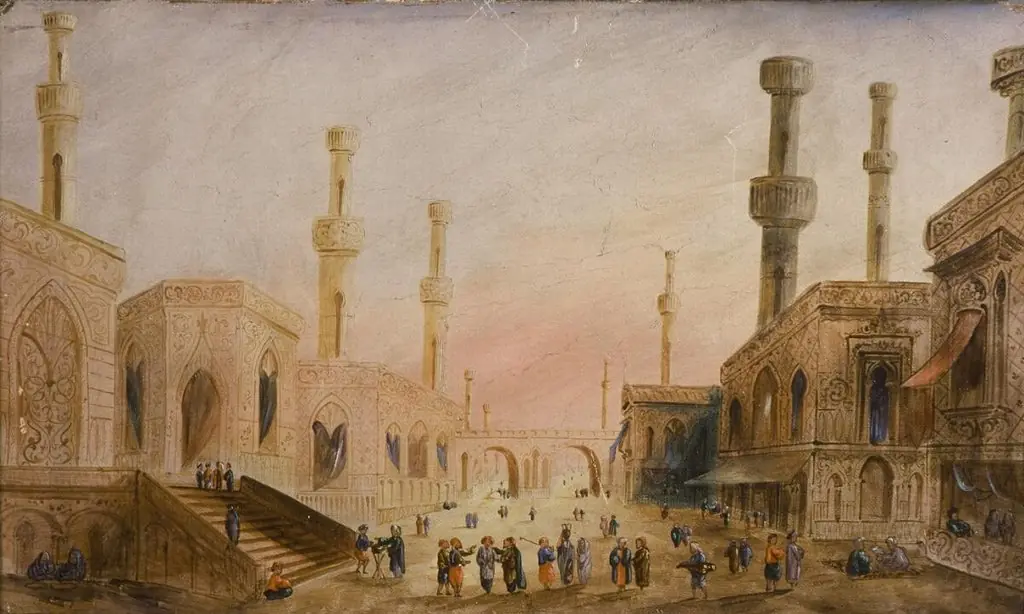 eastern square or palace
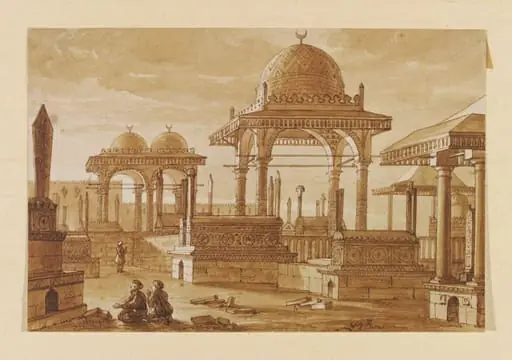 Part of the City of Tombs at Cairo
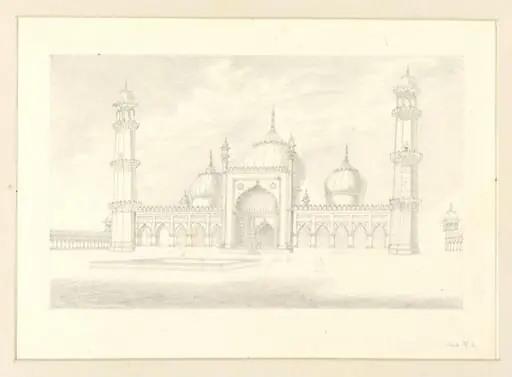 Untitled
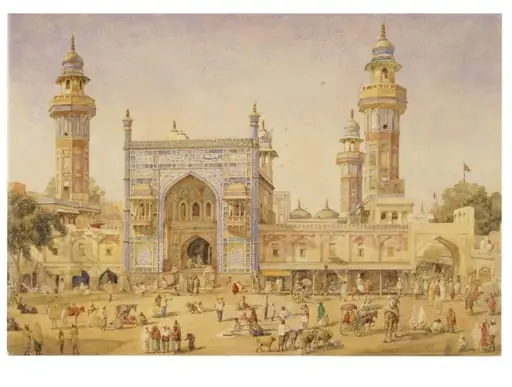 'The Musjid of Wazeer Ali Khan, Lahore, Panjab'
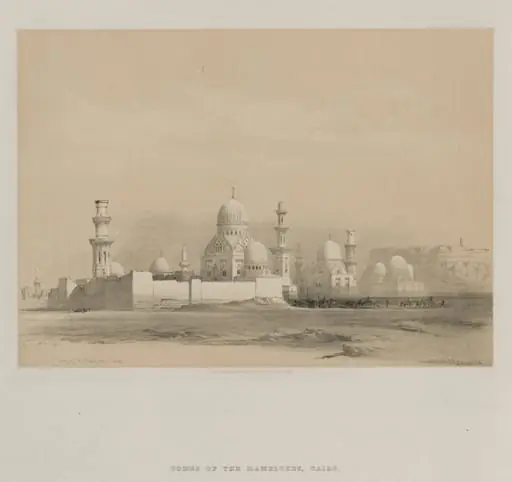 Egypt and Nubia, Volume III: Tombs of the Memlooks, Cairo
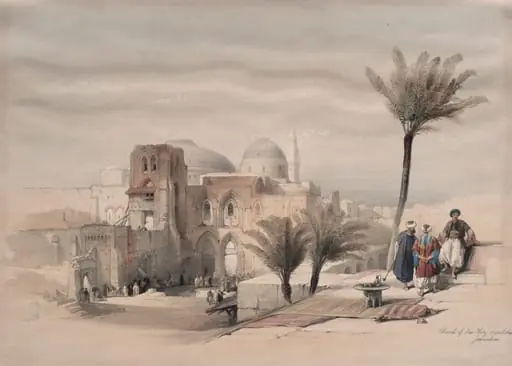 Church of the Holy Sepulchre, Jerusalem
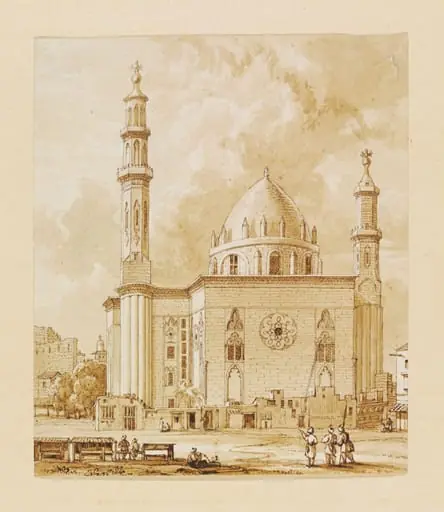 Mosque of Sultan Hassan at Cairo
 Interior of the Tomb Chamber, Taj Mahal, Agra