Artwork
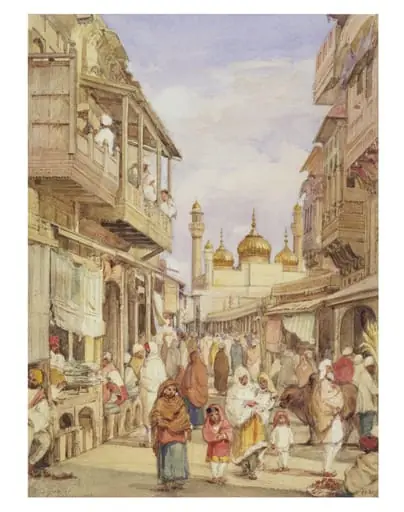
'The Musjid of Wazeer Ali Khan, Lahore, Panjab'
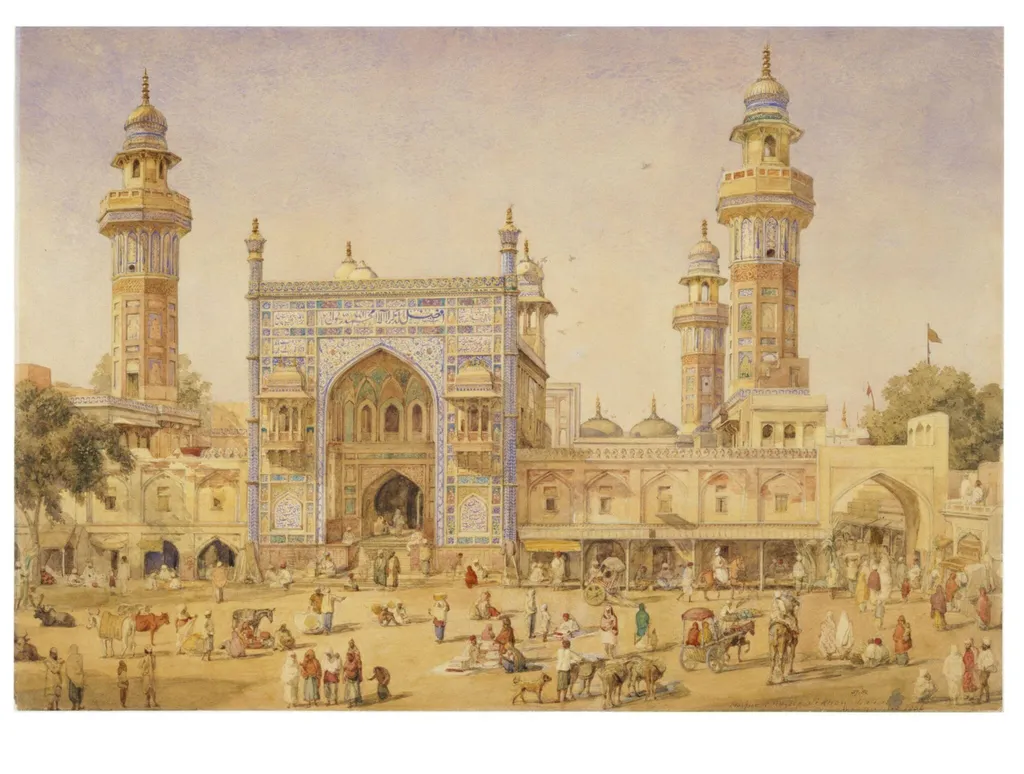
'The Musjid of Wazeer Ali Khan, Lahore, Panjab' is a paint painting by the Impressionist artist William Carpenter. It dates from 1856 and is held in the collection of the Victoria and Albert Museum.
About this work
Carpenter spent years traveling from Bombay up to Kashmir, making portraits and scenes along the way.
William Carpenter painted this image of a mosque in Lahore back in 1856. He was British but often dressed in Indian clothes while traveling and painting in South Asia. The work mixes impressionist light touches with realistic architectural detail.
Carpenter spent years traveling from Bombay up to Kashmir, making portraits and scenes along the way. This mosque painting is one of his views of local rulers and their buildings.
See more of his Indian scenes at the Victoria and Albert Museum.
Overview
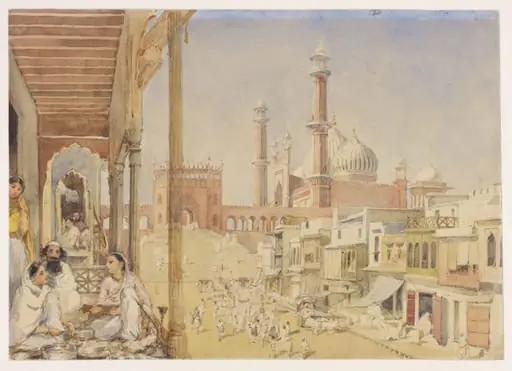
The work depicts the façade of the Mosque of Wazir Ali Khan in Lahore, presenting a frontal view of the structure as it appears from the adjoining square. Executed in 1856, the painting records a moment of mid‑nineteenth‑century architecture in the Punjab region, now part of Pakistan, and reflects the artist’s interest in documenting local monuments.
Subject & Meaning
The composition focuses on the mosque’s architectural elements—its arches, domes, and ornamental detailing—while also hinting at the surrounding urban space. By portraying the building from a public viewpoint, the artist emphasizes the mosque’s role as a communal landmark within the city’s daily life.
Technique & Style
Carpenter combines delicate, light‑filled brushwork with precise rendering of structural features. The painting balances an almost impressionistic handling of light and atmosphere with a careful, almost documentary accuracy in the depiction of the mosque’s geometry and decorative motifs.
History & Provenance
William Carpenter, son of noted portraitist Margaret Sarah Carpenter, traveled extensively across the Indian subcontinent between 1850 and 1856. After returning to England, he later lived in Boston before settling again in London, where he died in 1899. This canvas was produced during his stay in the Punjab and later entered the collection of the Victoria and Albert Museum.
Context
Carpenter’s South Asian oeuvre frequently captures local dress, agricultural scenes, and civic architecture, reflecting the broader Victorian fascination with the exoticism of the British Empire. The mosque painting aligns with his practice of recording the visual culture of the regions he visited, from Bombay to Kashmir.
Artist & collection
Artist
William Carpenter (1818–1899) was an English watercolour artist. He travelled for six or seven years in the 1850s painting scenes of India, its people and its life. The Victoria and Albert Museum bought over 280 of his…

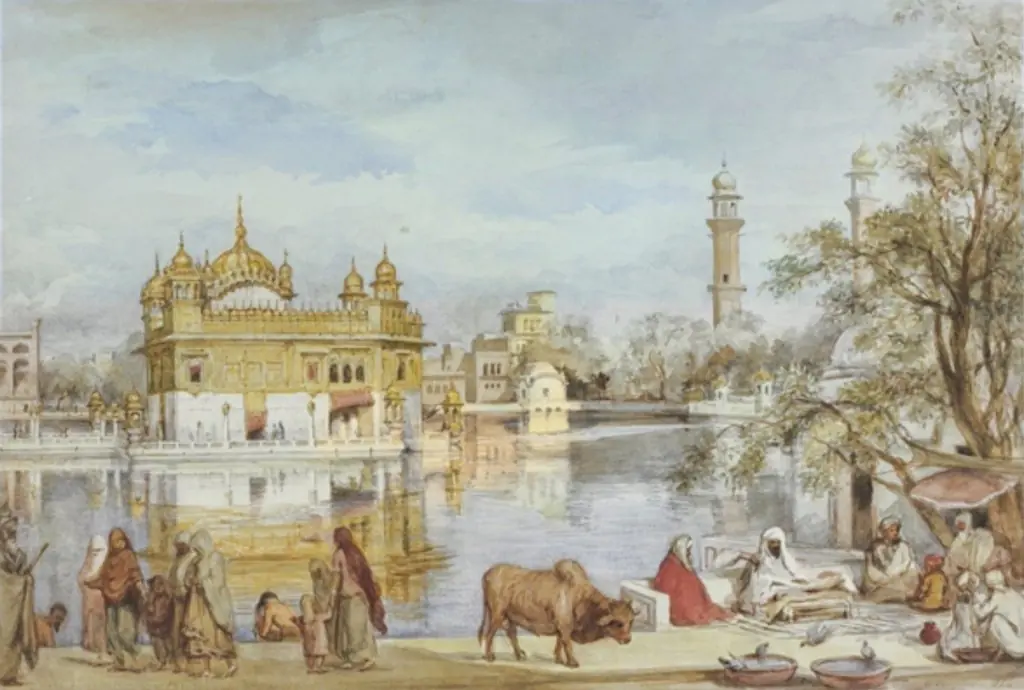 The Golden Temple, Amritsar
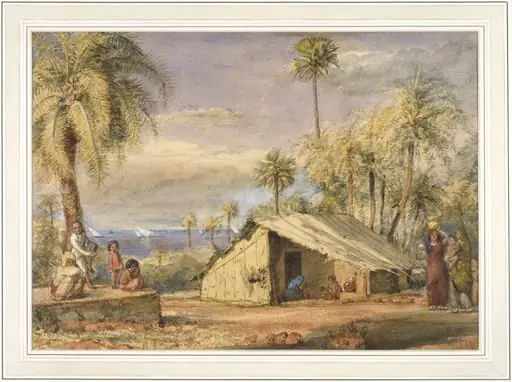 Toddywallah's hut in a grove of date palms near Breach Candy, Bombay
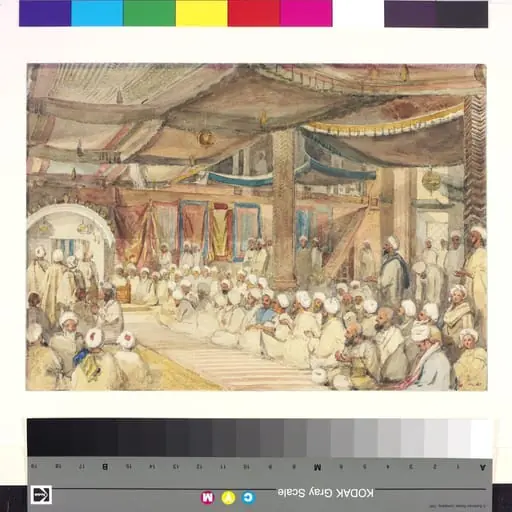 Interior of Shah Hamadan's Masjid during a religious ceremony
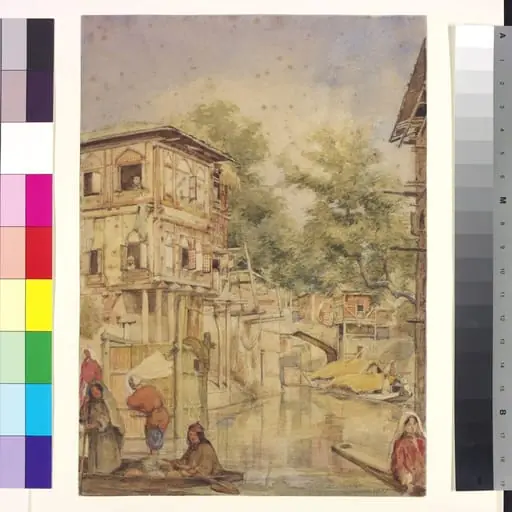 On the Mar Canal at Srinagar, Kashmir
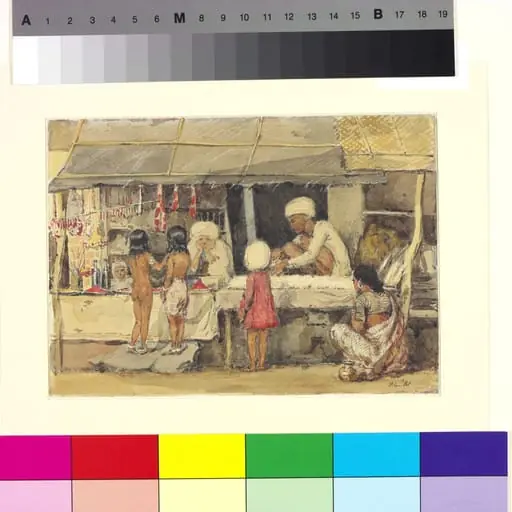 Shops for colours and flowers used at festivals, Sadr bazaar, Pune
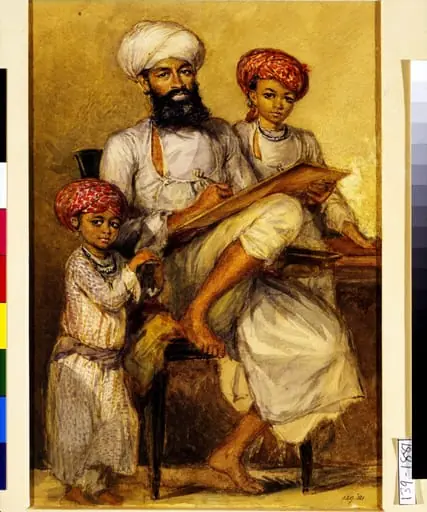 Portrait of Tara Chand, the court painter
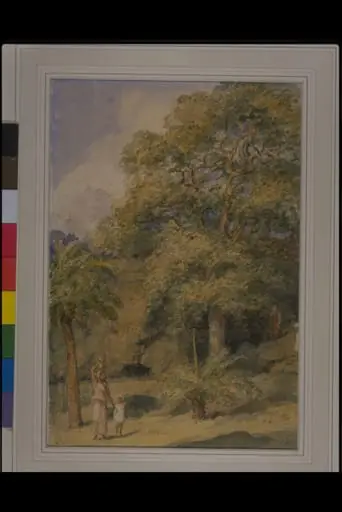 Study of a tamarind tree and date palms near Sir William Yardley's house at Breach Candy, Bombay
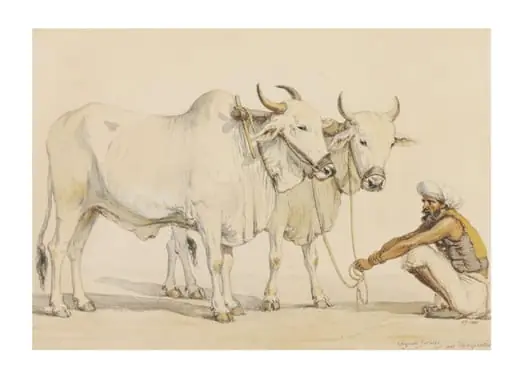 Two harnessed bullocks from Gujarat with their keeper