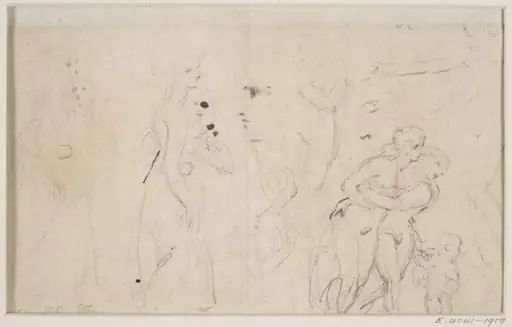
Artwork
Hercules
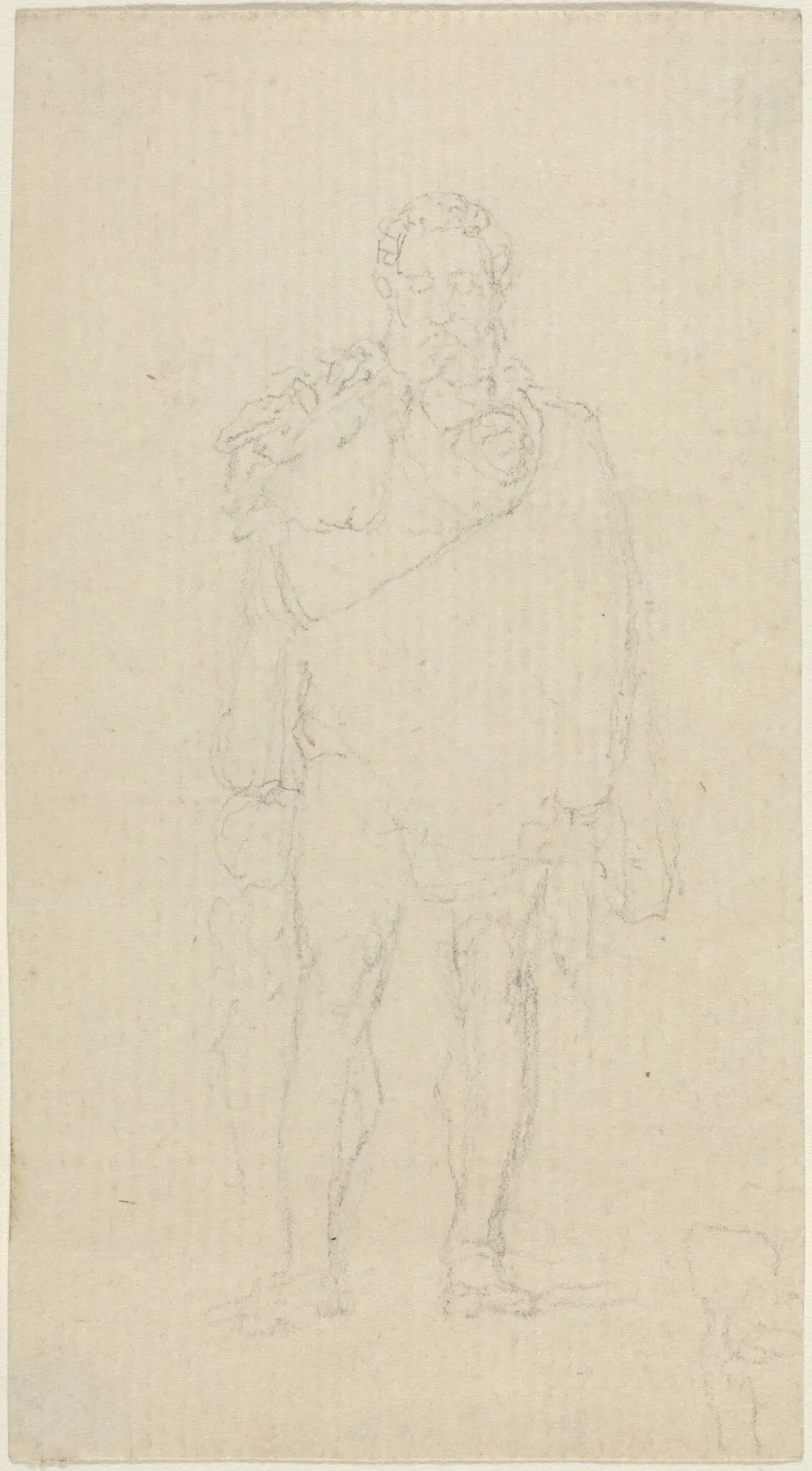
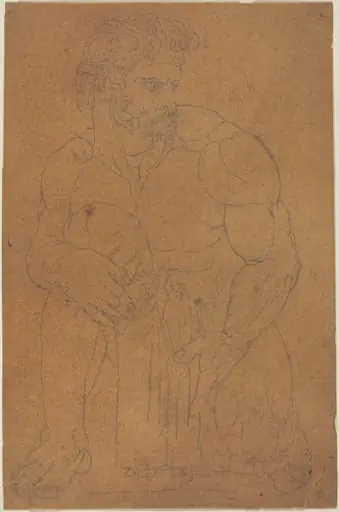
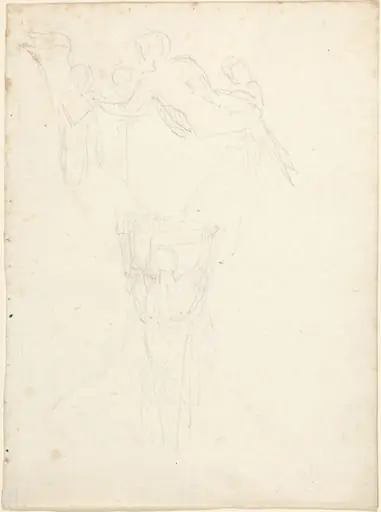
Hercules is a graphite drawing by the Romanticist artist John Flaxman. It dates from 1790 and is held in the collection of the National Gallery of Art.
About this work
Overview
This graphite drawing, titled 'Hercules', was created by John Flaxman in 1790. It exemplifies the artist's work in a medium that allowed for expressive and rapid rendering of the human form.
Subject & Meaning
The drawing depicts Hercules, a figure from ancient mythology, characterized by his muscular physique, club, and lion's pelt. The representation is rooted in classical themes, aligning with the Neoclassical movement's emphasis on ancient subjects.
Technique & Style
Executed in a loose and rapid style, the drawing features light shading and an absence of background details, suggesting it is a study or preparatory work. The linear style and restraint in the depiction reflect the Neoclassical aesthetic.
History & Provenance
John Flaxman, an English sculptor and draughtsman, was associated with the Neoclassical movement. He trained under Josiah Wedgwood before becoming a prominent figure in British and European Neoclassicism.
Artist & collection
Artist
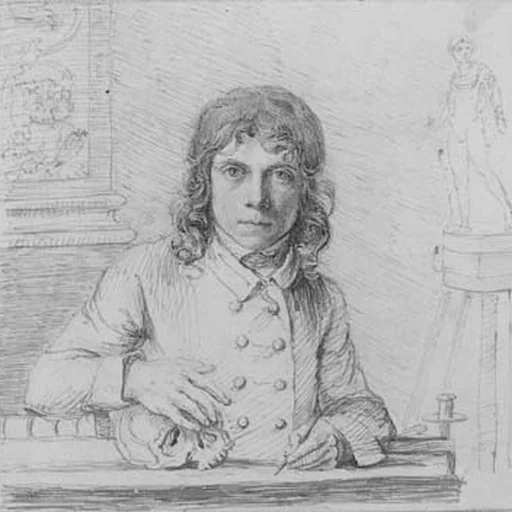
John Flaxman (6 July 1755 – 7 December 1826) was an English sculptor and draughtsman who was a leading figure in British and European Neoclassicism.

![Study of a Foot [verso], by Benjamin Haydon](https://artifactworldgallery.com/img/benjamin-haydon--study-of-a-foot-verso--1953df802be24b7d-w320.webp)
![Sheet of Studies with the Drunken Pan and Nymphs [verso], by Jacob Jordaens](https://artifactworldgallery.com/img/jacob-jordaens--sheet-of-studies-with-the-drunken-pan-and-nymphs-verso--7da29549b59c490a-w320.webp)
![Study of the "Ecorché" [recto], by Paul Cezanne](https://artifactworldgallery.com/img/paul-cezanne--study-of-the-ecorche-recto--1614b86d796e004d-w320.webp)