Artwork
Beggars at a Door (Study for the Yarborough Monument)
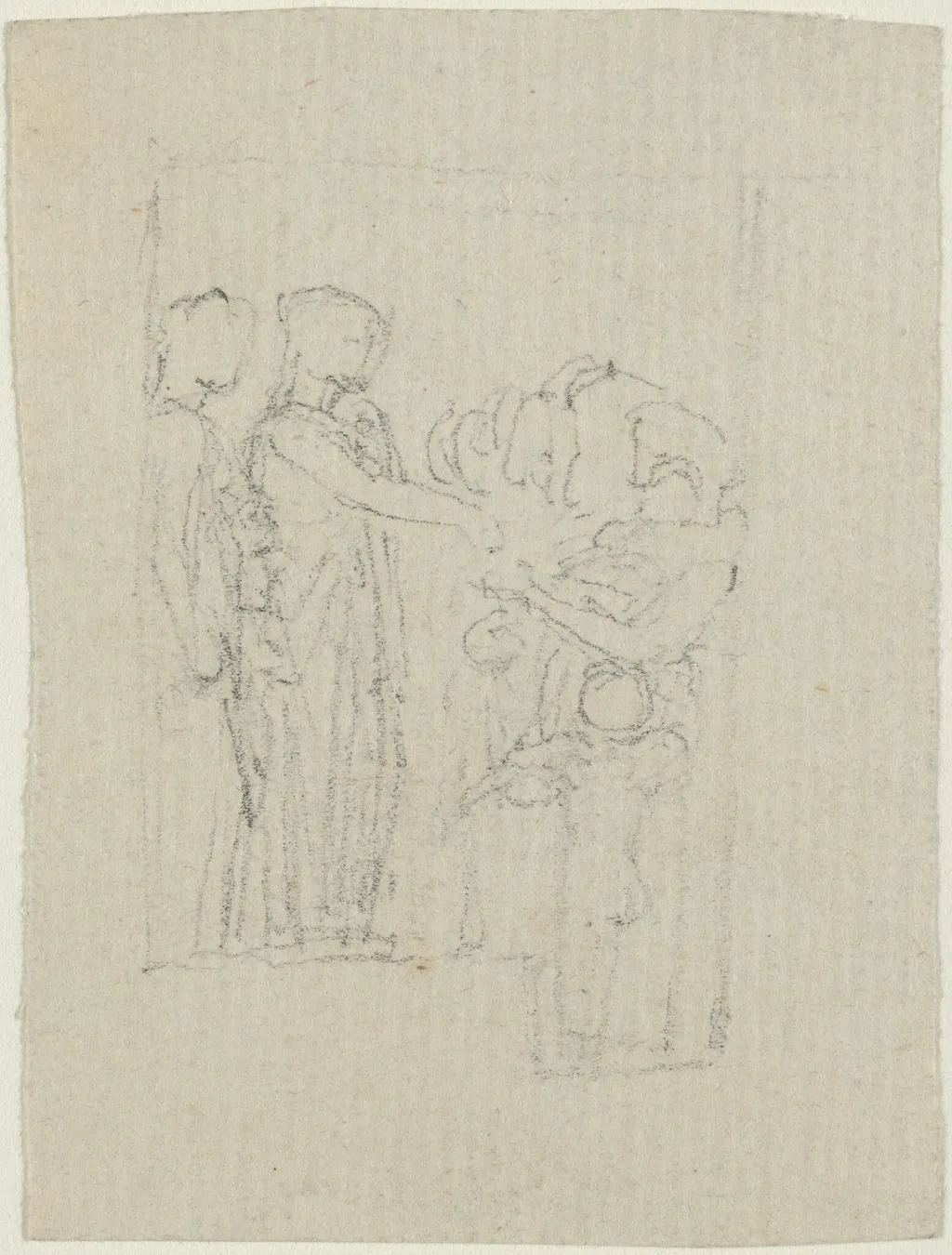
Beggars at a Door (Study for the Yarborough Monument) is a graphite drawing by the Romanticist artist John Flaxman. It dates from 1804 and is held in the collection of the National Gallery of Art.
About this work
Overview
Though modest in scale and medium, it reflects Flaxman’s role as a leading Neoclassical draughtsman, whose work bridged sculpture and illustration.
Created around 1804, this graphite drawing by John Flaxman was made as a preparatory study for the Yarborough Monument, a funerary commission. Though modest in scale and medium, it reflects Flaxman’s role as a leading Neoclassical draughtsman, whose work bridged sculpture and illustration. The sketch captures a moment of human vulnerability, stripped of ornament, serving as a direct observation for a larger commemorative project.
Subject & Meaning
The drawing portrays two impoverished figures at a threshold—one leaning on a cane, the other clutching a bundle—gesturing toward the viewer with outstretched hands. Their postures convey exhaustion and need, emphasizing physical hardship over individual identity. Flaxman avoids narrative detail, focusing instead on the universal condition of dependence, aligning with the monument’s broader themes of mortality and social duty.
Technique & Style
Rendered in light, uneven graphite strokes, the composition appears spontaneous, almost like a rapid notation. Contours are suggestive rather than defined, and shading blurs facial features, dissolving individuality into form. Flaxman’s linear approach, refined through years of illustration work, prioritizes gesture and volume over finish, revealing his method of distilling complex scenes into essential shapes.
History & Provenance
The drawing belongs to a series of studies Flaxman produced for the Yarborough Monument, commissioned in the early 1800s. While the final monument was executed in stone, these preparatory sketches remained private, offering insight into his creative process. The work has remained within institutional collections since the 19th century, preserved as evidence of his methodical approach to public sculpture.
Context
Flaxman worked during a period when Neoclassicism dominated British art, favoring idealized forms derived from antiquity. Yet this study diverges by focusing on ordinary suffering, hinting at emerging Romantic concerns with human emotion and social realism. His ability to merge classical discipline with raw observation positioned him between two artistic movements.
Legacy
Though overshadowed by his finished monuments, Flaxman’s preparatory drawings like this one reveal the quiet humanity beneath his formal style. They influenced later artists seeking to ground classical traditions in lived experience, demonstrating how sketches could carry emotional weight independent of final execution.
Artist & collection
Artist
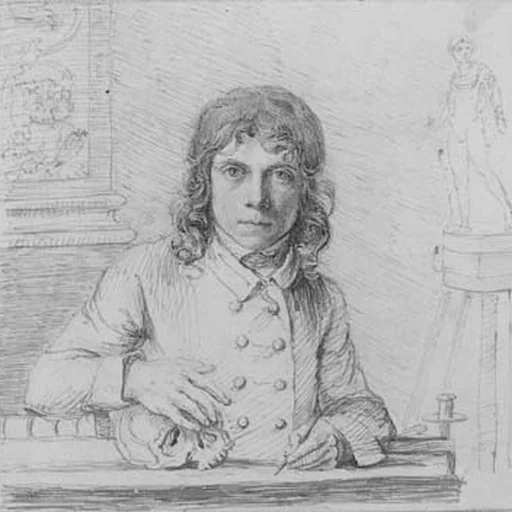
John Flaxman (6 July 1755 – 7 December 1826) was an English sculptor and draughtsman who was a leading figure in British and European Neoclassicism.

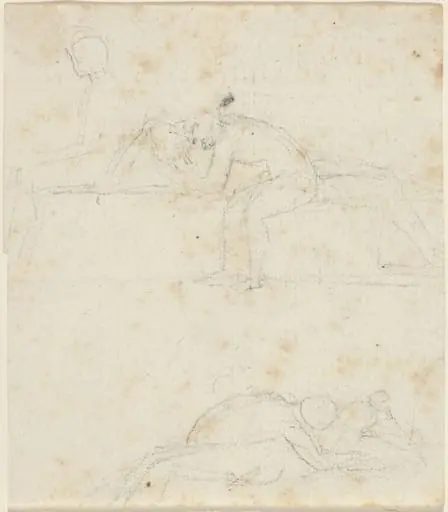
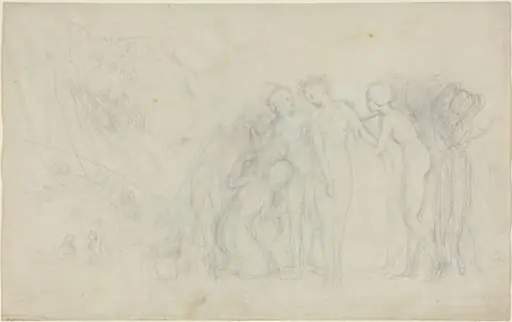
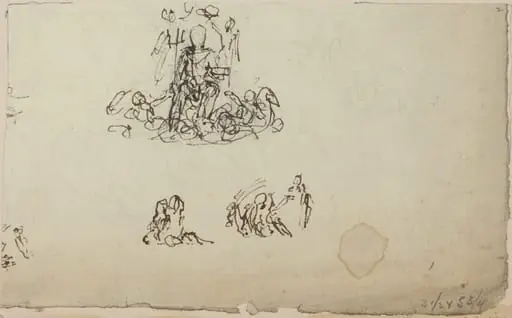
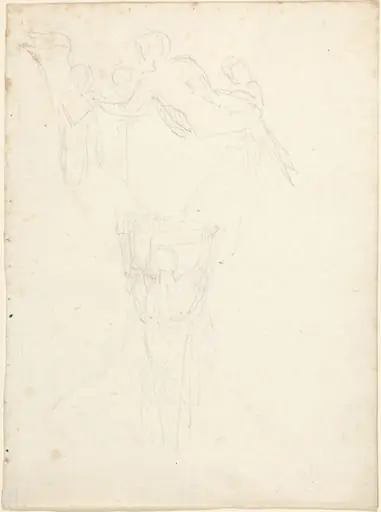 Figure Studies
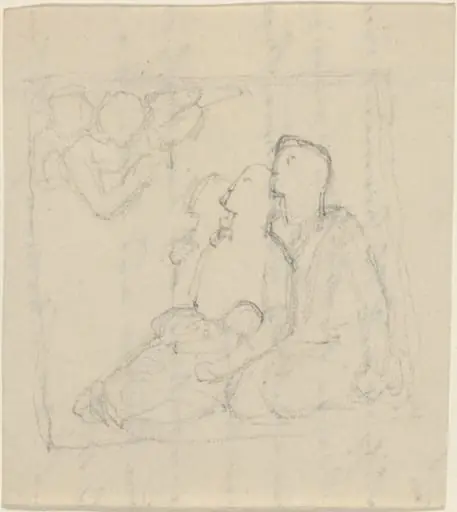 A Family Addressed by Angels
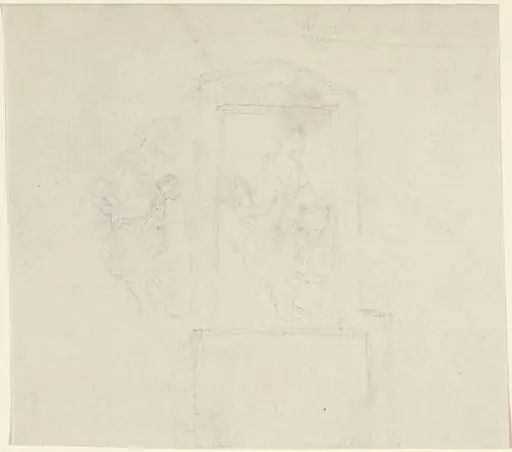 Monument to Agnes Cromwell (?)
![Study for a Monument to a Clergyman [recto and verso], by John Flaxman](https://artifactworldgallery.com/img/john-flaxman--study-for-a-monument-to-a-clergyman-recto-and-verso--c5e3374976ecf5f9-w320.webp) Study for a Monument to a Clergyman [recto and verso]
Study for a Monument to a Clergyman [recto and verso]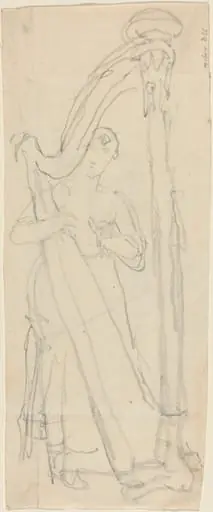 Woman Playing a Harp (Lavinia Banks?)
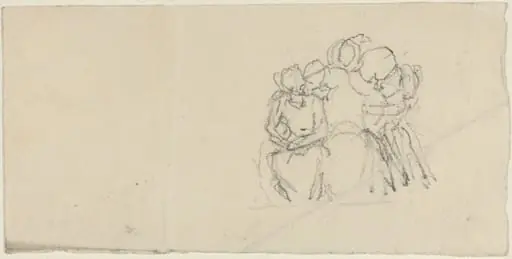 Group of Figures Surrounding Seated Figure
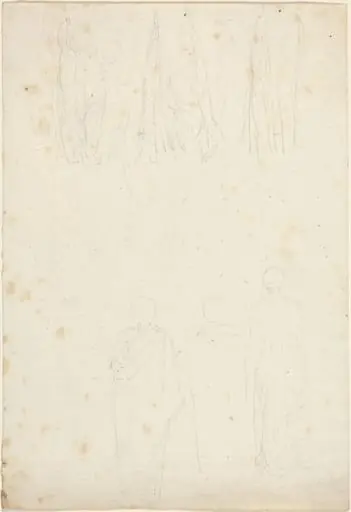 Sheet of Studies of Cloaked Figures
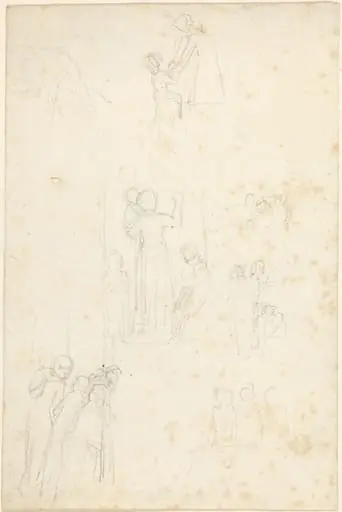 Sheet of Studies
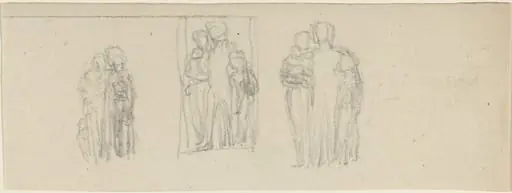 Three Groups of Figures (Parents and Children?)
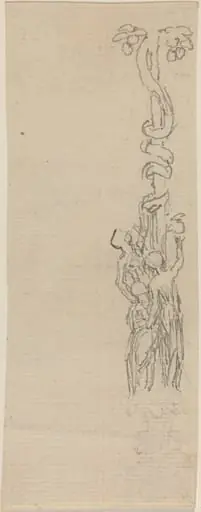 Design for a Candelabrum Representing the Three Graces Gathering the Apples of Hesper