Artwork
Sheet of Studies
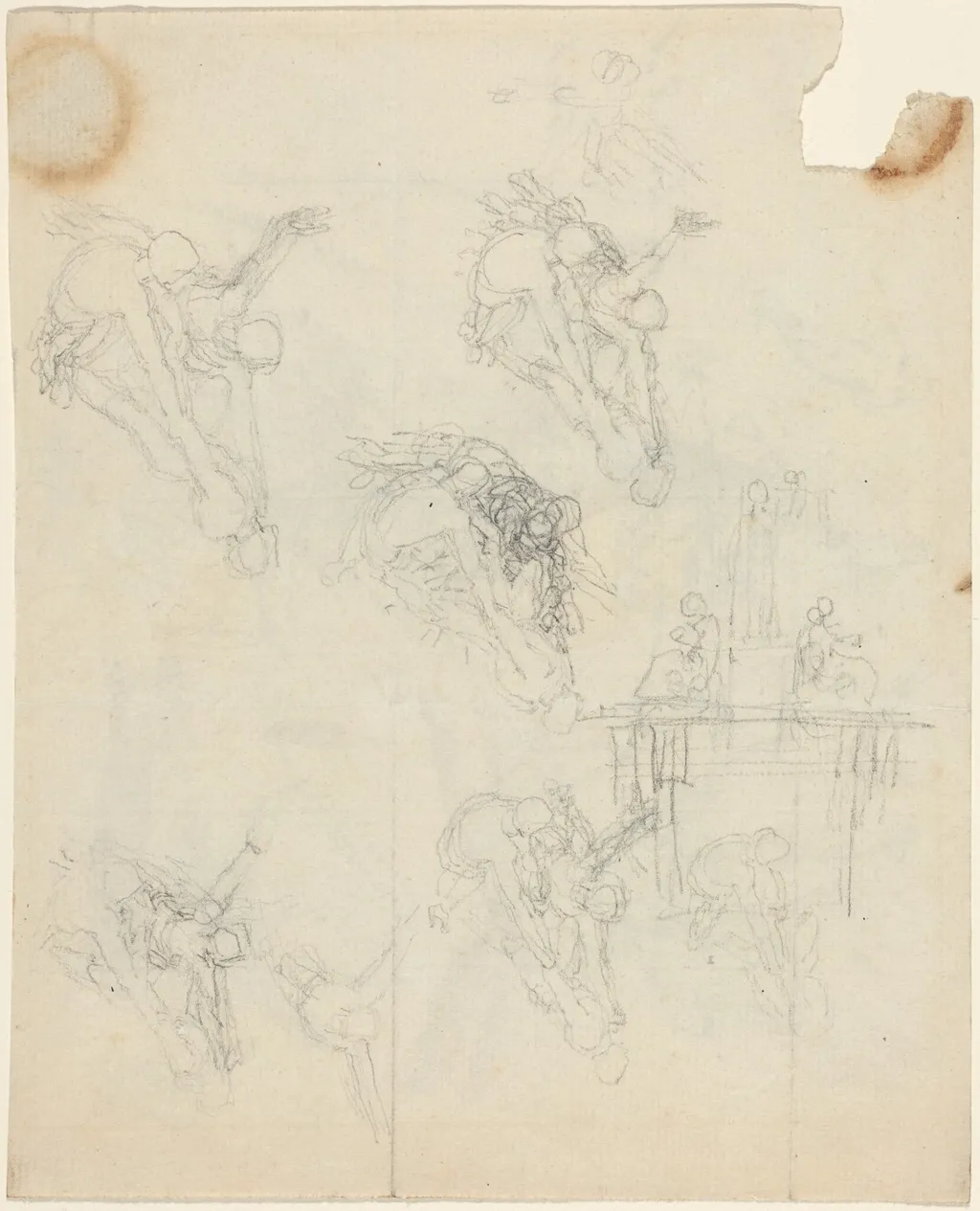
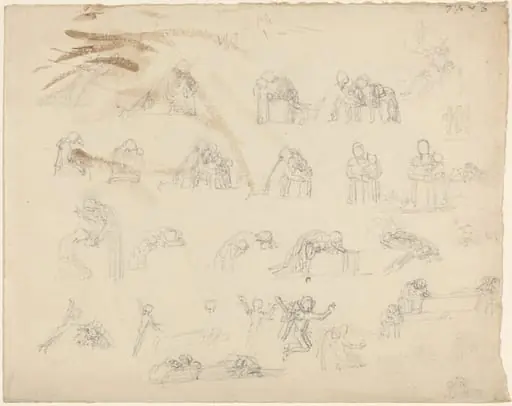
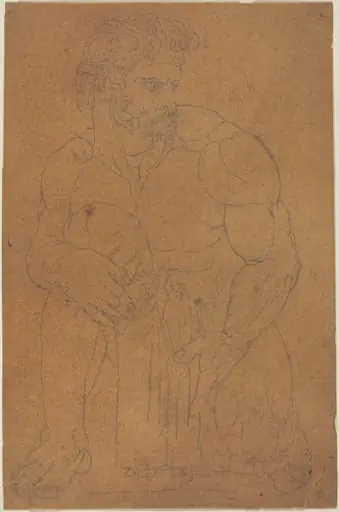
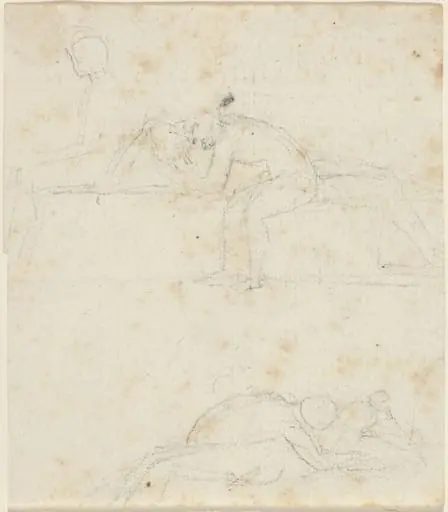
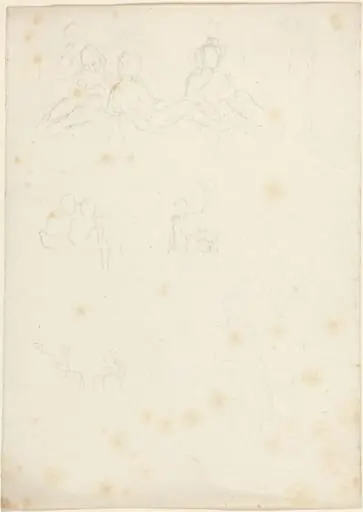
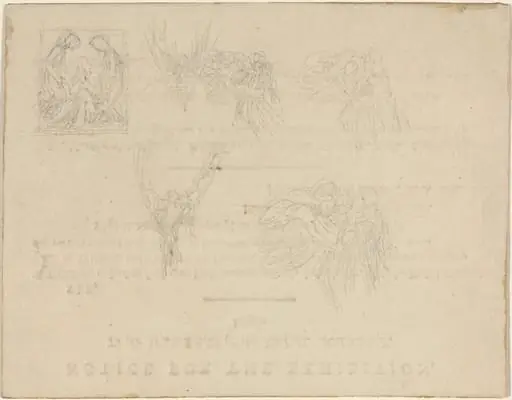
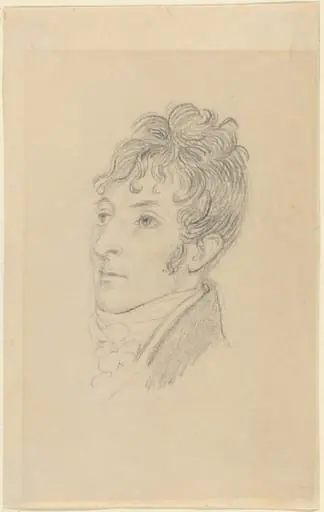
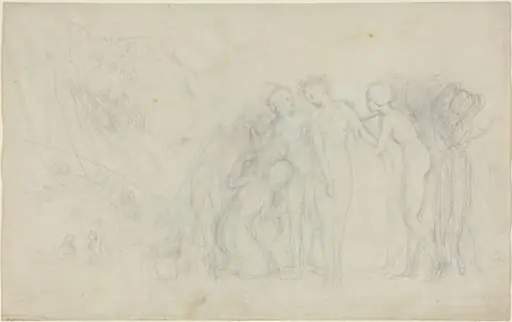
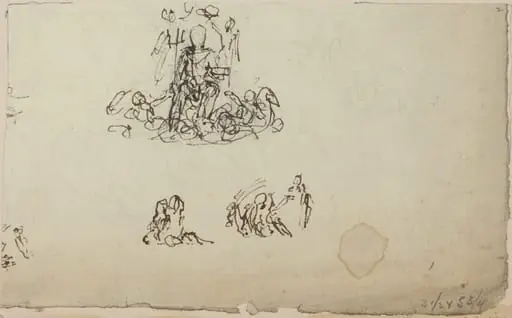
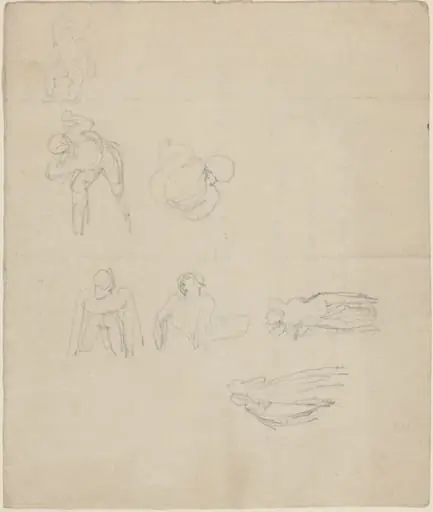
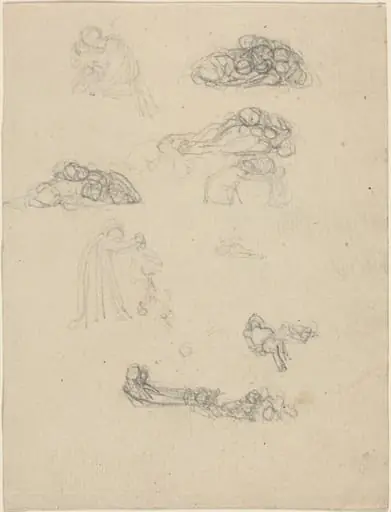
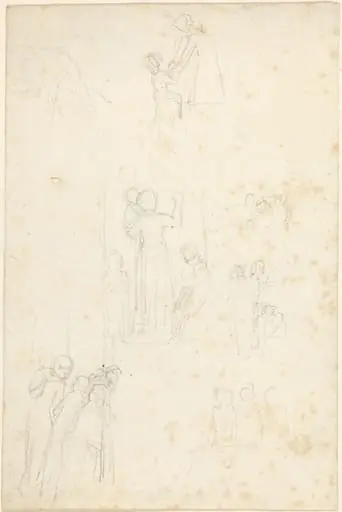
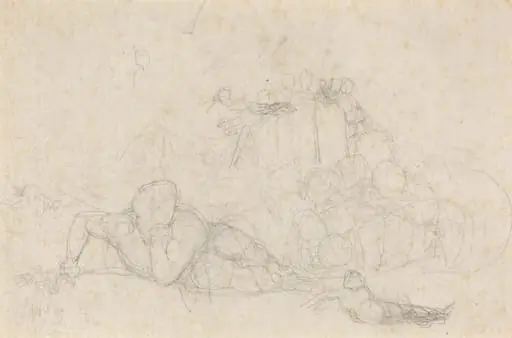
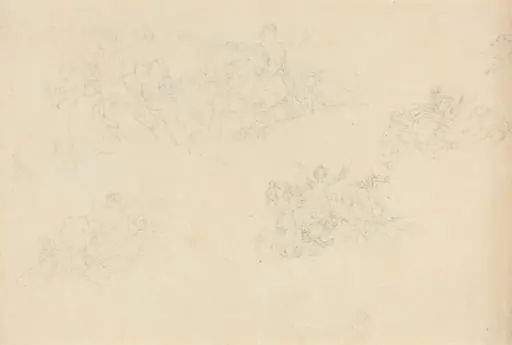
Sheet of Studies is a graphite drawing by the Romanticist artist John Flaxman. It dates from 1790 and is held in the collection of the National Gallery of Art.
About this work
Overview
Executed on a single sheet of paper, the work reveals the artist’s habit of capturing motion and form through rapid, economical lines.
This graphite drawing, dated 1790, is a compilation of spontaneous figure studies by John Flaxman. Executed on a single sheet of paper, the work reveals the artist’s habit of capturing motion and form through rapid, economical lines. The surface shows signs of frequent use—tears and wear suggest it was a working tool rather than a finished piece. Its monochromatic palette and unpolished appearance reflect its function as a preparatory resource.
Subject & Meaning
The figures depicted are engaged in dynamic, often ambiguous actions—gestures suggest dance, combat, or ritual. There is no narrative context, only isolated poses that emphasize bodily tension and flow. These studies likely served Flaxman as references for sculptural compositions or book illustrations, distilling human movement into essential contours. The absence of detail shifts focus to posture and energy, aligning with Neoclassical ideals of idealized form.
Technique & Style
Flaxman employed graphite with minimal shading, relying on swift, confident strokes to define anatomy and motion. Lines vary in weight and pressure, capturing the rhythm of movement without fixed outlines. The style is reductive, avoiding texture or background, which underscores his training in classical sculpture and his familiarity with ancient relief. This economy of means reflects a deliberate pursuit of clarity over ornamentation.
History & Provenance
Created during Flaxman’s mature period, after his time in Rome and during his association with Wedgwood, the sheet likely originated in his London studio. Its condition indicates regular consultation, possibly over years. Though its early ownership is undocumented, it entered institutional collections in the 19th century, preserved as an example of the artist’s working method rather than as a standalone artwork.
Context
Flaxman’s drawings emerged within the broader Neoclassical revival, which prized clarity, restraint, and classical antiquity. Unlike the emotional intensity of later Romanticism, his work sought timeless forms through disciplined observation. This sheet aligns with contemporaneous studies by artists like Canova and Thorvaldsen, who similarly used drawing to refine sculptural ideas rooted in ancient models.
Legacy
The sheet exemplifies how Neoclassical artists used sketchbooks as intellectual tools, bridging observation and creation. Flaxman’s approach influenced later generations of draftsmen who valued immediacy and structural precision. Though not widely exhibited in his lifetime, such studies are now recognized as vital to understanding the transition from preparatory work to monumental sculpture in early 19th-century Europe.
Artist & collection
Artist
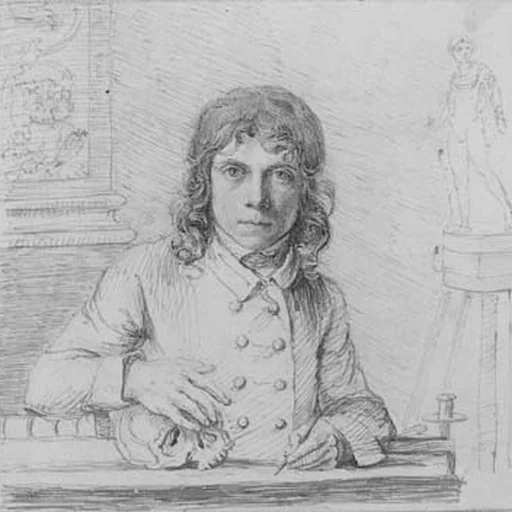
John Flaxman (6 July 1755 – 7 December 1826) was an English sculptor and draughtsman who was a leading figure in British and European Neoclassicism.

![Sheet of Studies [recto and verso], by John Flaxman](https://artifactworldgallery.com/img/john-flaxman--sheet-of-studies-recto-and-verso--acf1b2004c9fc50f-w320.webp)
![Sheet of Studies [recto and verso], by John Flaxman](https://artifactworldgallery.com/img/john-flaxman--sheet-of-studies-recto-and-verso--7cd3e8a27787ed92-w320.webp)
![Sheet of Studies [recto and verso], by John Flaxman](https://artifactworldgallery.com/img/john-flaxman--sheet-of-studies-recto-and-verso--3a0de97c6f7386d1-w320.webp)
![Sheet of Studies [recto and verso], by John Flaxman](https://artifactworldgallery.com/img/john-flaxman--sheet-of-studies-recto-and-verso--f6a63f702efb4c37-w320.webp)