Artwork
Sheet of Studies
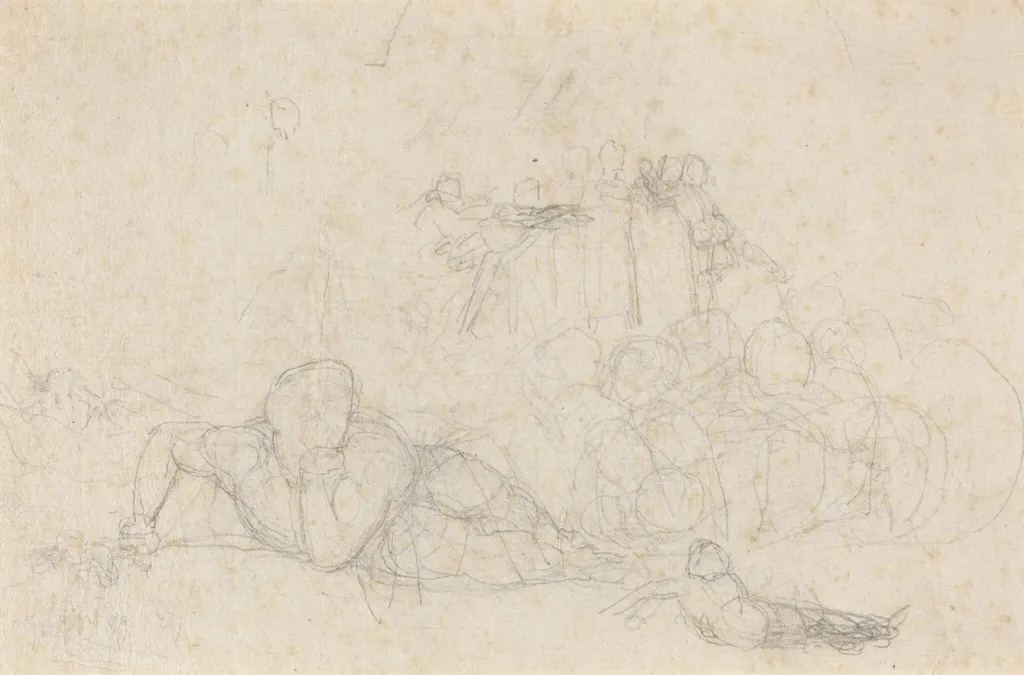
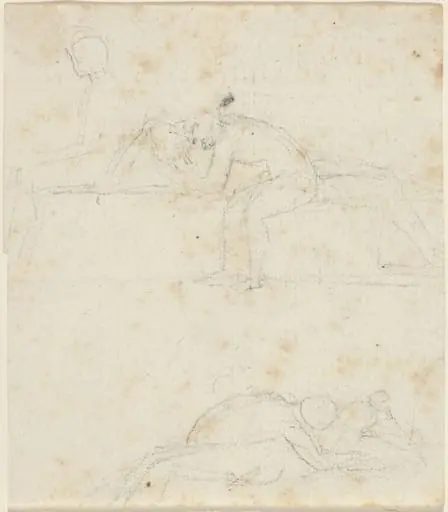
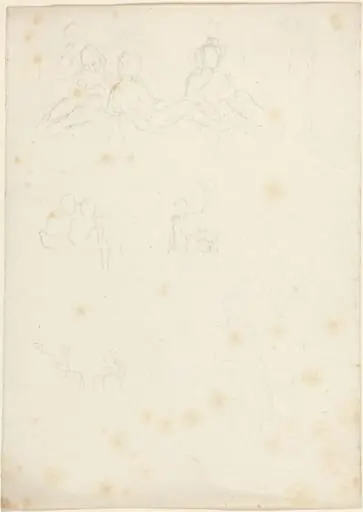
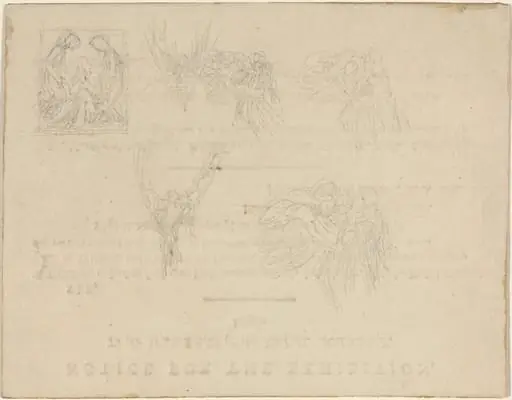
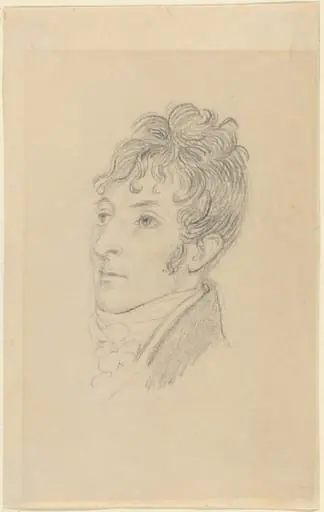
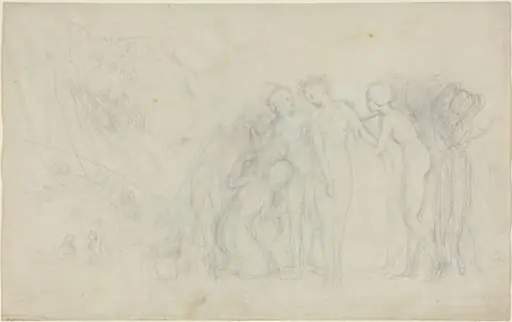
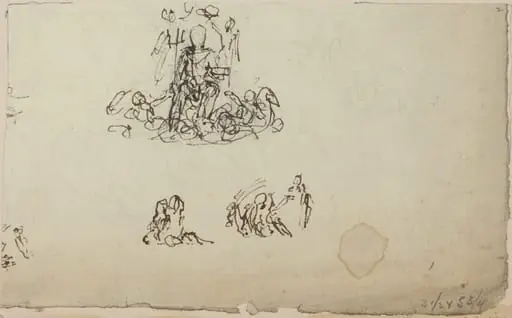
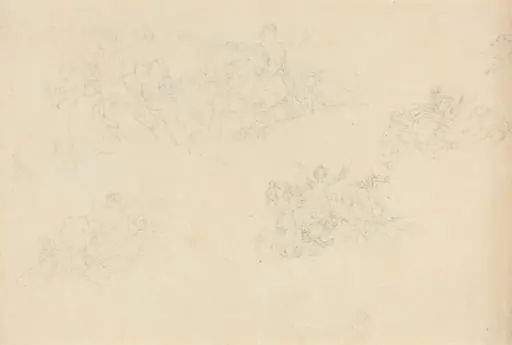
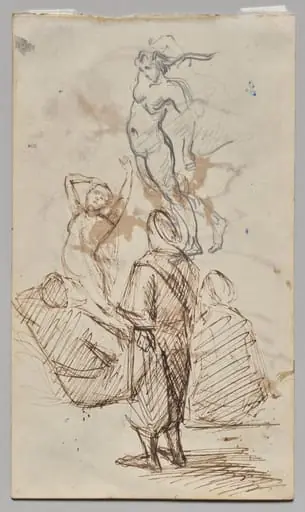
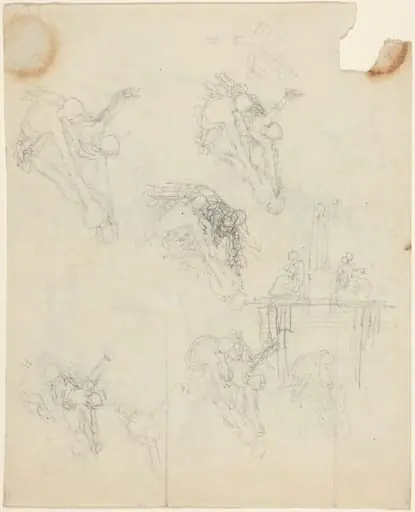
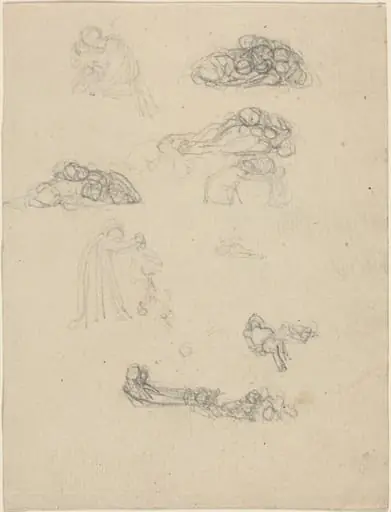
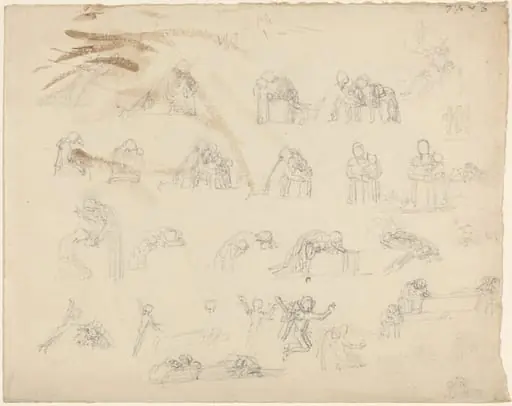
Sheet of Studies is a graphite drawing by the Romanticist artist John Flaxman. It dates from 1790 and is held in the collection of the National Gallery of Art.
About this work
Overview
Created in 1790, this graphite drawing by John Flaxman is one of many preparatory studies from his early career. Executed with swift, light strokes, it captures a dense group of figures in motion, arranged without clear hierarchy or spatial depth. The absence of shading or color emphasizes line and gesture, suggesting its function as a working sketch rather than a finished composition.
Subject & Meaning
The figures appear entangled in a moment of physical struggle or collapse, their limbs overlapping in a compressed space.
The figures appear entangled in a moment of physical struggle or collapse, their limbs overlapping in a compressed space. No narrative context is given, but the composition evokes classical themes of human conflict or lamentation, likely drawn from mythological or historical sources Flaxman was studying at the time. The focus on collective movement hints at his interest in group dynamics within ancient sculpture.
Technique & Style
Flaxman employed minimal graphite strokes to suggest form, relying on contour and implied weight rather than modeling. The lines are rapid and economical, revealing his training in draftsmanship and his preference for clarity over detail. This approach aligns with Neoclassical ideals of restraint and structural precision, even in informal studies.
History & Provenance
Produced during Flaxman’s formative years in Rome, the sheet reflects his immersion in classical art and his work for Josiah Wedgwood’s pottery firm. Though the drawing’s early ownership is undocumented, it survives as part of a broader corpus of studies that informed his later sculptural reliefs and funerary monuments, demonstrating his consistent engagement with figure composition.
Context
In late 18th-century Europe, artists increasingly turned to ancient sources for compositional models. Flaxman’s sketch reflects this trend, but with a personal emphasis on movement and spatial compression—qualities that diverged from the static idealism of mainstream Neoclassicism. His studies were tools for internalizing form, not public displays.
Legacy
Flaxman’s preparatory drawings, including this sheet, influenced later generations of British artists by demonstrating how classical themes could be reinterpreted through dynamic, linear expression. Though not widely exhibited in his lifetime, these works became essential references for understanding his transition from designer to sculptor and his role in shaping Neoclassical aesthetics.
Artist & collection
Artist
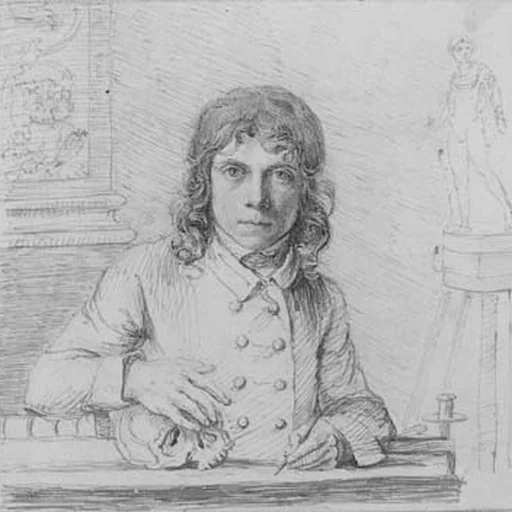
John Flaxman (6 July 1755 – 7 December 1826) was an English sculptor and draughtsman who was a leading figure in British and European Neoclassicism.

![Sheet of Studies [recto and verso], by John Flaxman](https://artifactworldgallery.com/img/john-flaxman--sheet-of-studies-recto-and-verso--5d19d38e20f446c0-w320.webp)
![Sheet of Studies [recto and verso], by John Flaxman](https://artifactworldgallery.com/img/john-flaxman--sheet-of-studies-recto-and-verso--adecfee0d85e12e5-w320.webp)
![Sheet of Studies [recto and verso], by John Flaxman](https://artifactworldgallery.com/img/john-flaxman--sheet-of-studies-recto-and-verso--acf1b2004c9fc50f-w320.webp)
![Sheet of Studies [recto and verso], by John Flaxman](https://artifactworldgallery.com/img/john-flaxman--sheet-of-studies-recto-and-verso--af59e52d5279d768-w320.webp)
![Sheet of Studies [recto and verso], by John Flaxman](https://artifactworldgallery.com/img/john-flaxman--sheet-of-studies-recto-and-verso--37ffe1e79b52e688-w320.webp)
![Sheet of Studies [recto and verso], by John Flaxman](https://artifactworldgallery.com/img/john-flaxman--sheet-of-studies-recto-and-verso--47b91b8b6f057ed6-w320.webp)