Artwork
Sheet of Studies [recto and verso]
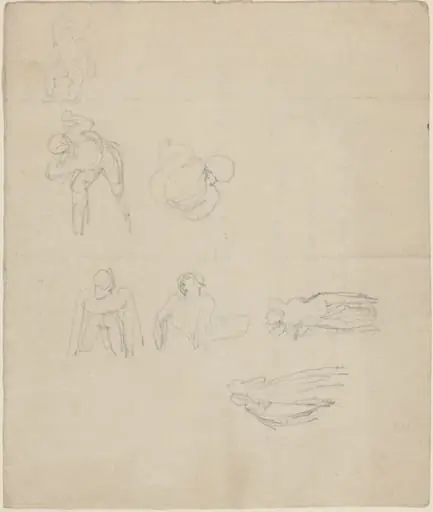
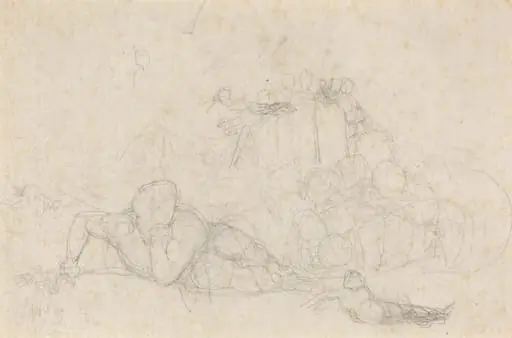
![Sheet of Studies [recto and verso], by John Flaxman, graphite, 1790](https://artifactworldgallery.com/img/john-flaxman--sheet-of-studies-recto-and-verso--37ffe1e79b52e688-w1024.webp)
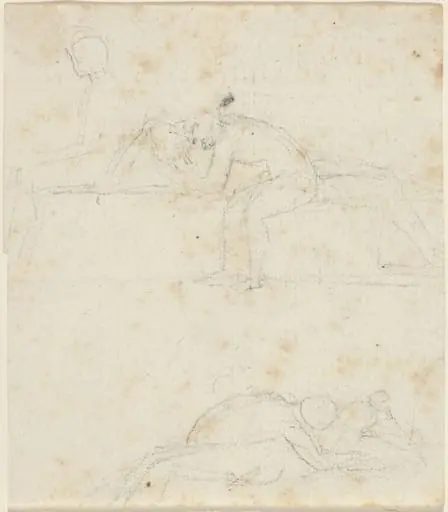
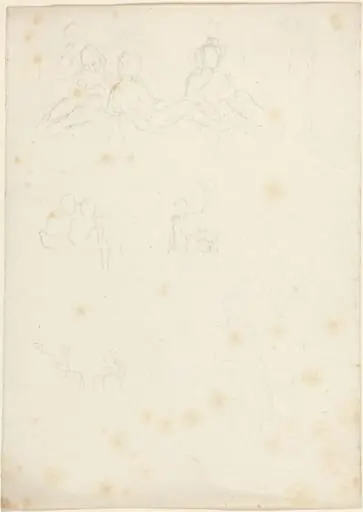
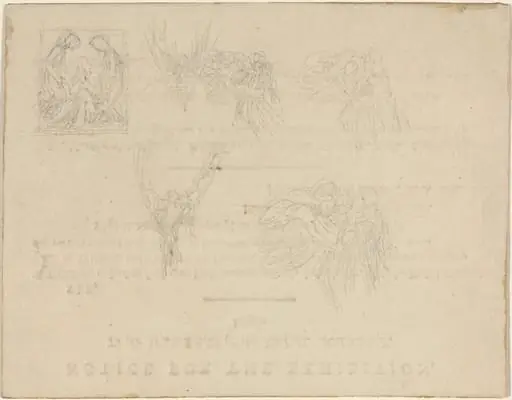
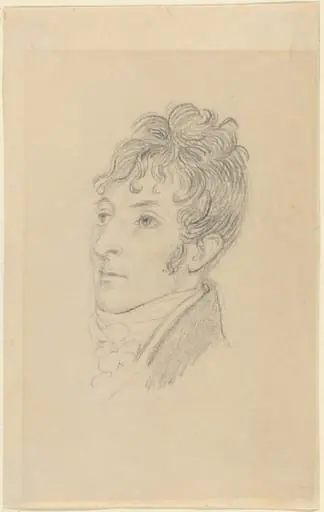
Sheet of Studies [recto and verso] is a graphite drawing by the Romanticist artist John Flaxman. It dates from 1790 and is held in the collection of the National Gallery of Art.
About this work
Overview
The work emerged during a formative period in his career, after his time in Rome and alongside his commercial work for Josiah Wedgwood.
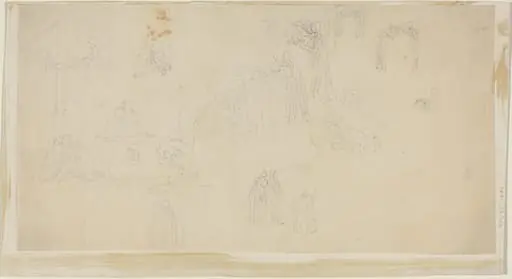
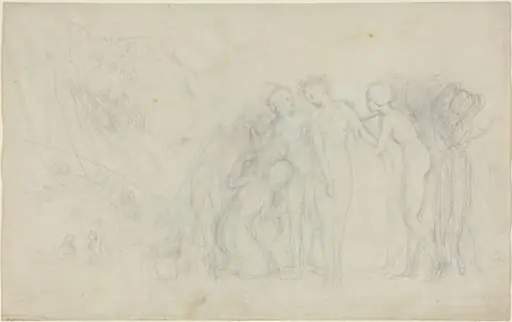
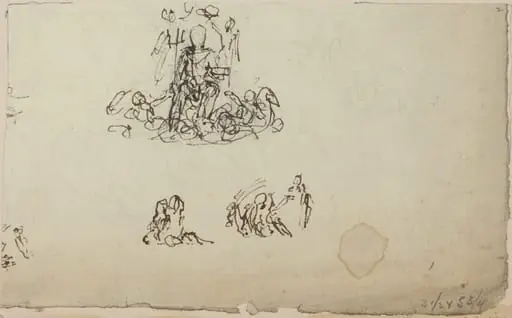
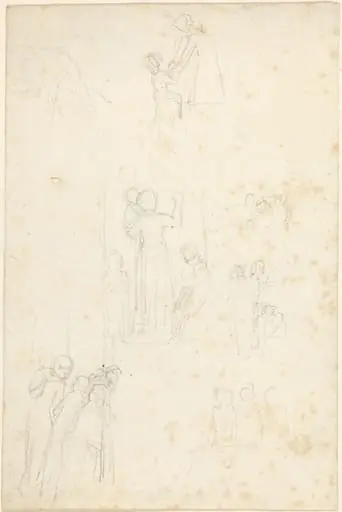
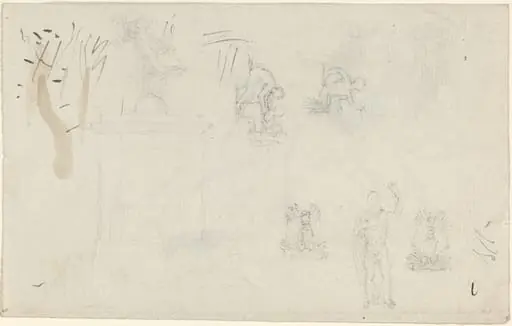
This graphite drawing, dated 1790, is a double-sided sheet of preparatory studies by John Flaxman. It captures a range of figure compositions and anatomical details, reflecting his disciplined approach to drawing. The work emerged during a formative period in his career, after his time in Rome and alongside his commercial work for Josiah Wedgwood. It serves as a record of his ongoing engagement with classical forms through direct observation and memory.
Subject & Meaning
The figures on the sheet are drawn from classical mythology and ancient sculpture, rendered without narrative context. Flaxman isolates poses and gestures to study proportion and movement, emphasizing idealized human forms. These studies were not intended as finished works but as tools for refining his visual vocabulary. Their purpose was internal: to internalize the principles of classical art for use in sculpture and illustration.
Technique & Style
Flaxman employed fine, controlled graphite lines to define contours and subtle shading. His draftsmanship is precise yet fluid, avoiding heavy modeling in favor of clear outlines that suggest volume. The style reflects his Neoclassical ideals—clarity, restraint, and harmony. The absence of background or setting directs focus entirely to the human form, aligning with his belief in the primacy of line in conveying classical beauty.
History & Provenance
Created in 1790, the sheet dates from Flaxman’s return to England after several years in Rome, where he immersed himself in ancient art. It likely served as reference material for his commissions, including illustrations for Homer and his sculptural projects. The drawing remained in private hands until acquired by a public collection, preserving its role as a working document rather than a display piece.
Context
In late 18th-century Britain, Neoclassicism dominated artistic discourse, fueled by archaeological discoveries and Enlightenment ideals. Flaxman’s studies align with broader efforts to revive classical aesthetics in art and design. His work for Wedgwood, which translated ancient motifs into ceramic reliefs, paralleled his graphic practice. This sheet exemplifies how artists bridged commercial production and scholarly engagement with antiquity.
Legacy
Flaxman’s preparatory drawings, including this sheet, influenced later generations of British artists by demonstrating how disciplined study of classical forms could inform both sculpture and illustration. Though less celebrated than his published engravings, these studies reveal the foundation of his artistic method. They remain valuable for understanding the transition from academic training to creative execution in Neoclassical practice.
Artist & collection
Artist
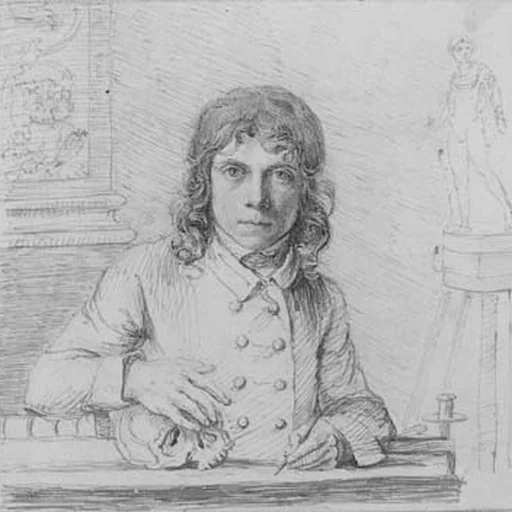
John Flaxman (6 July 1755 – 7 December 1826) was an English sculptor and draughtsman who was a leading figure in British and European Neoclassicism.

![Sheet of Studies [recto and verso], by John Flaxman](https://artifactworldgallery.com/img/john-flaxman--sheet-of-studies-recto-and-verso--624ac0ec758f08e5-w320.webp)
![Sheet of Studies [recto and verso], by John Flaxman](https://artifactworldgallery.com/img/john-flaxman--sheet-of-studies-recto-and-verso--acf1b2004c9fc50f-w320.webp)
![Sheet of Studies [recto and verso], by John Flaxman](https://artifactworldgallery.com/img/john-flaxman--sheet-of-studies-recto-and-verso--6fd1500085ec614c-w320.webp)
![Sheet of Studies [recto and verso], by John Flaxman](https://artifactworldgallery.com/img/john-flaxman--sheet-of-studies-recto-and-verso--e428fab422bf3286-w320.webp)
![Sheet of Studies [recto and verso], by John Flaxman](https://artifactworldgallery.com/img/john-flaxman--sheet-of-studies-recto-and-verso--5d19d38e20f446c0-w320.webp)
![Sheet of Sketches [recto and verso], by John Flaxman](https://artifactworldgallery.com/img/john-flaxman--sheet-of-sketches-recto-and-verso--18d631208bf3ea60-w320.webp)