Artwork
Study for a Monument
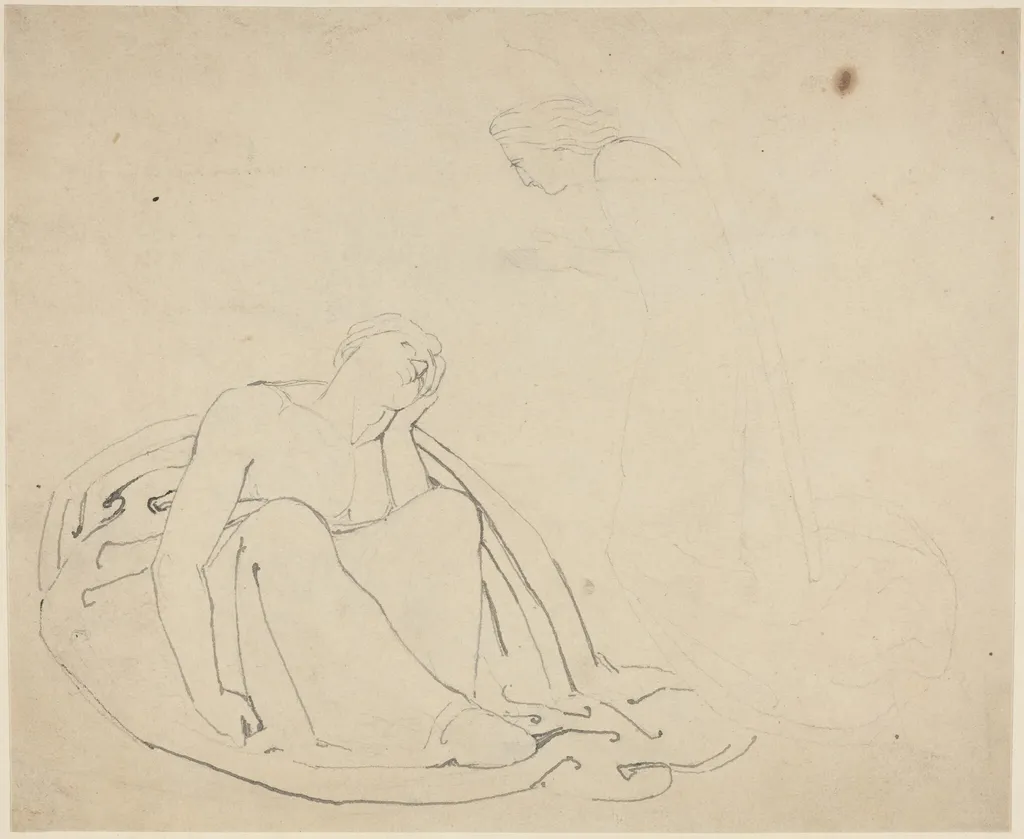
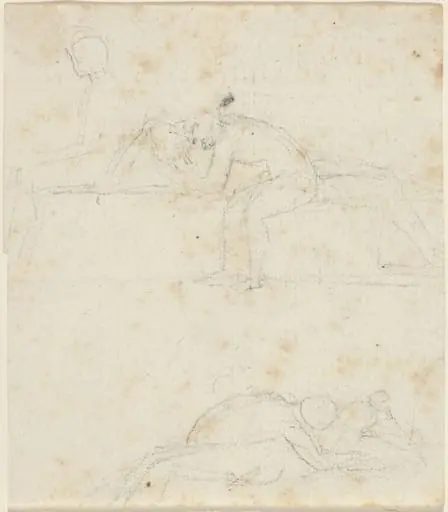
Study for a Monument is a graphite drawing by the Romanticist artist John Flaxman. It dates from 1790 and is held in the collection of the National Gallery of Art.
About this work
Overview
John Flaxman's Study for a Monument, created in 1790, is a drawing that showcases his skills as a sculptor and draughtsman. Executed in pen and gray ink over graphite, it exemplifies his distinctive style.
Subject & Meaning
The drawing depicts a seated figure with a tilted head, accompanied by a faint, draped figure above, possibly representing a ghost or spirit. The composition is characteristic of Flaxman's funerary monuments, which often featured restrained, classical forms.
Technique & Style
The work is rendered in loose, quick lines, with some areas left unfinished, suggesting a rapid or experimental approach. The use of gray ink over graphite contributes to the sketchy, dreamy quality of the drawing, reflecting a focus on expressive feeling over precise detail.
Context
Flaxman was a leading figure in British and European Neoclassicism, having trained under Josiah Wedgwood and later developed his style in Rome. His work was influenced by classical forms and the artistic values of his time.
Artist & collection
Artist
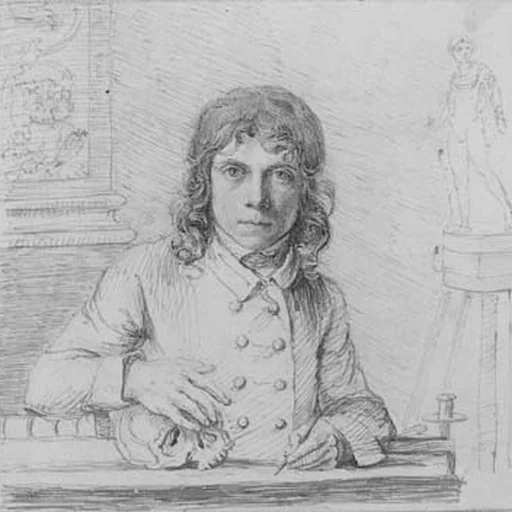
John Flaxman (6 July 1755 – 7 December 1826) was an English sculptor and draughtsman who was a leading figure in British and European Neoclassicism.

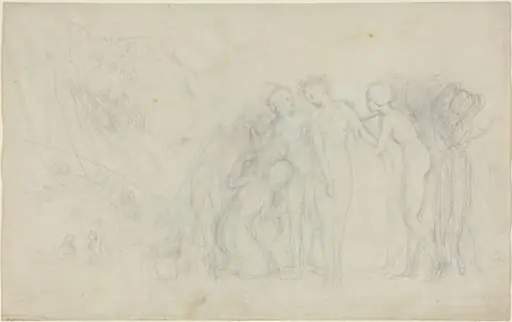
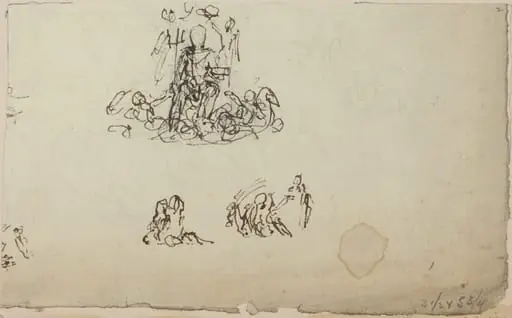
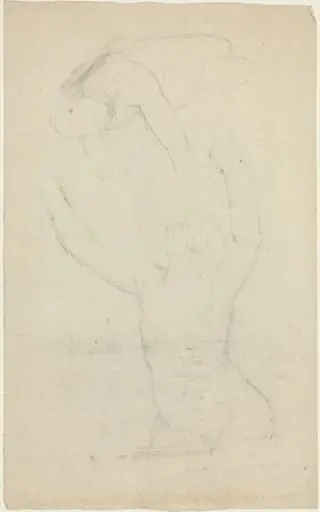 Two Airborne? Figures Reaching out to One Another
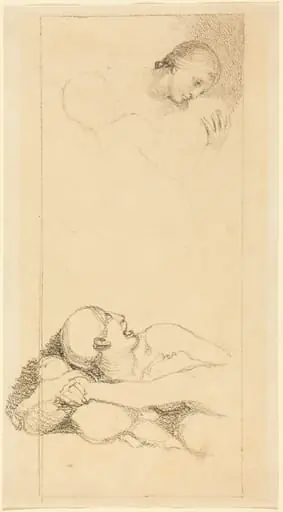 Frightened Man Looking Up; Woman and Children
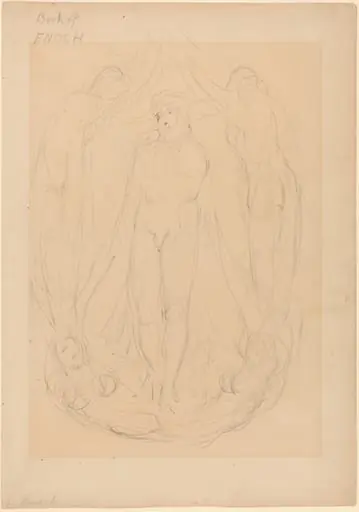 The Vision of the Lord of Spirits
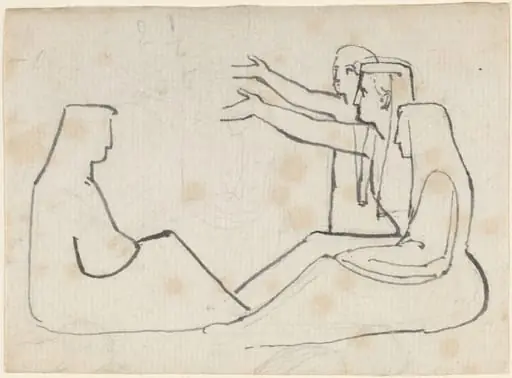 Four Seated Figures
![Sketch of a Swordsman Standing Over His Defeated Opponent [recto], by William Blake](https://artifactworldgallery.com/img/william-blake--sketch-of-a-swordsman-standing-over-his-defeated-opponent-re--c9ecb7b4c136050a-w320.webp) Sketch of a Swordsman Standing Over His Defeated Opponent [recto]
Sketch of a Swordsman Standing Over His Defeated Opponent [recto]![Figure Seated on the Ground [recto], by Paul Gauguin](https://artifactworldgallery.com/img/paul-gauguin--figure-seated-on-the-ground-recto--ce49e9c311169db0-w320.webp) Figure Seated on the Ground [recto]
Figure Seated on the Ground [recto]![Time's Triple Bow [recto], by William Blake](https://artifactworldgallery.com/img/william-blake--time-s-triple-bow-recto--dc15bf51bd241980-w320.webp) Time's Triple Bow [recto]
Time's Triple Bow [recto]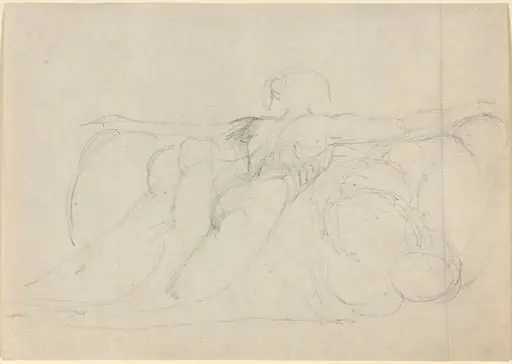 A Man Seen from Behind, Rising on Clouds
![Studies for a Lunette [verso], by Charles Sprague Pearce](https://artifactworldgallery.com/img/charles-sprague-pearce--studies-for-a-lunette-verso--5d54507e74f08054-w320.webp) Studies for a Lunette [verso]
Studies for a Lunette [verso]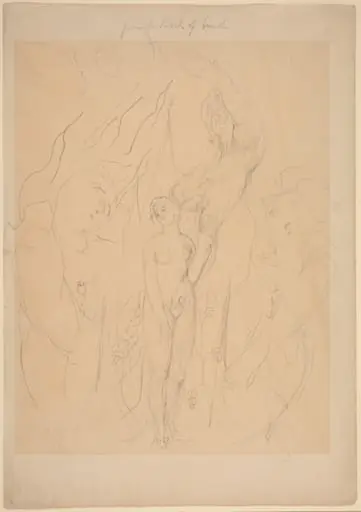 An Angel Teaching a Daughter of Men the Secrets of Sin
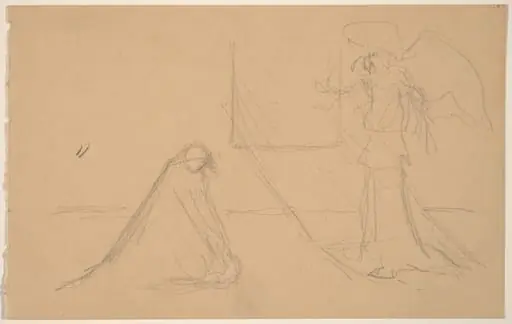 Study of Figures
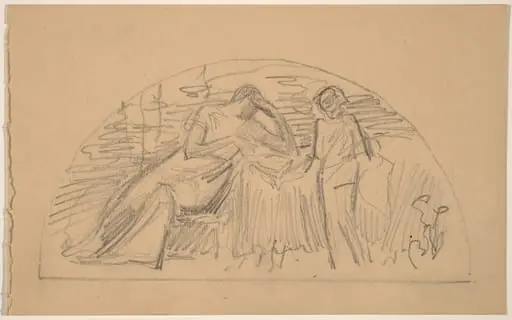 Study for a Lunette