Artwork
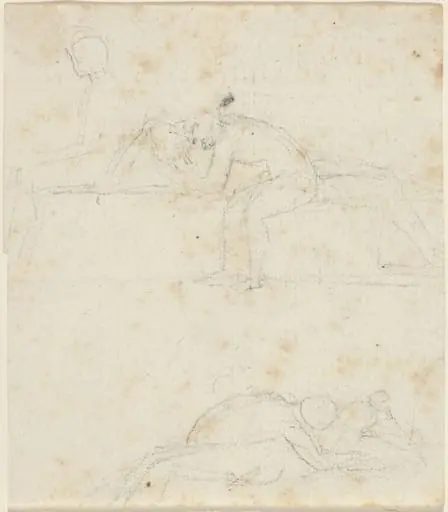
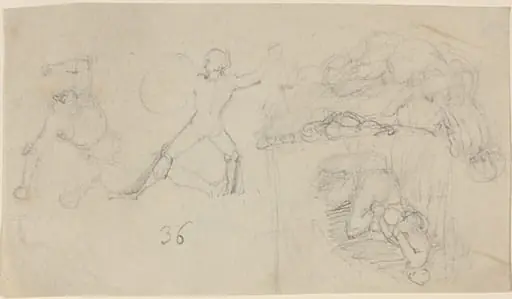
Two Fighting Figures
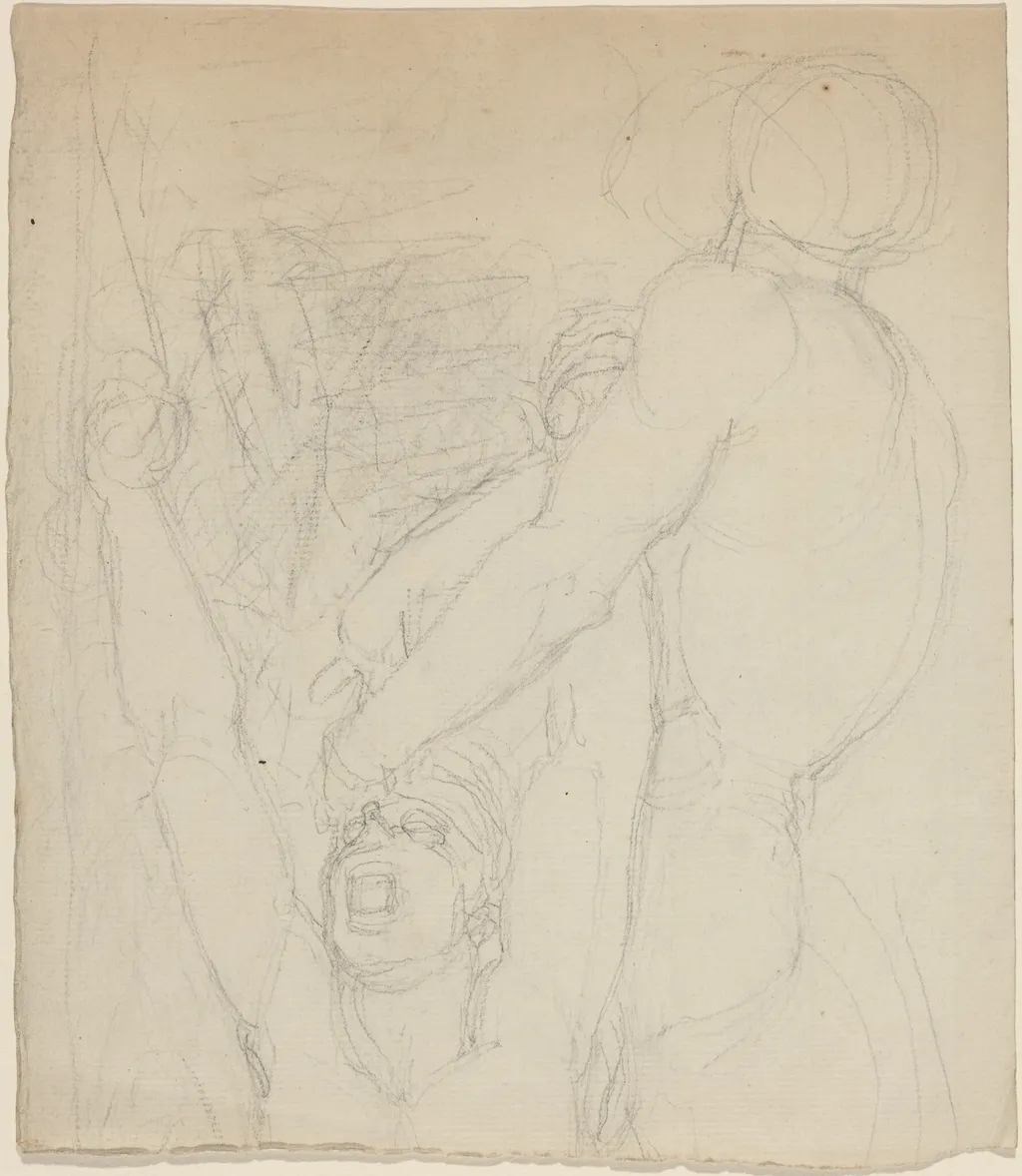
Two Fighting Figures is a graphite drawing by the Romanticist artist John Flaxman. It dates from 1790 and is held in the collection of the National Gallery of Art.
About this work
Overview
Created in 1790, this graphite drawing by John Flaxman captures two figures locked in violent motion. Executed on laid paper, the work is a rapid, unpolished study that prioritizes expressive energy over finish. Flaxman, known for his linear precision in published illustrations, here abandons refinement for immediacy, suggesting a spontaneous exploration of movement and tension.
Subject & Meaning
The drawing depicts an unidentifiable struggle between two male figures, their limbs entangled in a dynamic, almost chaotic embrace.
The drawing depicts an unidentifiable struggle between two male figures, their limbs entangled in a dynamic, almost chaotic embrace. There is no narrative context—no weapons, setting, or identifiers—only the raw physicality of conflict. The absence of detail invites interpretation as a universal study of human force, possibly reflecting Flaxman’s interest in classical themes of heroism and bodily exertion.
Technique & Style
Flaxman employs loose, urgent graphite strokes, avoiding smooth contours or erasures. The lines are layered and uneven, with hatched shading suggesting volume without modeling. The paper’s texture is visible, contributing to the sketch’s tactile quality. This approach contrasts with his polished engravings, revealing a more instinctive side of his draftsmanship, rooted in observation rather than idealization.
History & Provenance
Produced during Flaxman’s mature period, shortly after his return from Rome, the drawing aligns with his ongoing work on literary illustrations and funerary monuments. While its exact provenance is undocumented, it likely originated as a preparatory study or personal exercise, unrelated to any commissioned project. Its survival suggests it was retained by the artist or a close associate as a record of his visual inquiry.
Context
Though often associated with Neoclassicism, this work anticipates Romanticism’s emphasis on emotion and physical intensity. Flaxman’s focus on unidealized motion and raw gesture diverges from the calm symmetry of his published designs. The sketch reflects a broader shift in late 18th-century art toward capturing transient, visceral experiences, even within a formally classical framework.
Legacy
This drawing stands as a rare glimpse into Flaxman’s private process, revealing how his disciplined style could yield to spontaneity. It contributes to understanding the range of his draftsmanship beyond commercial illustrations. While not widely exhibited, it remains a significant example of how Neoclassical artists engaged with movement and emotion in intimate, unmediated forms.
Artist & collection
Artist
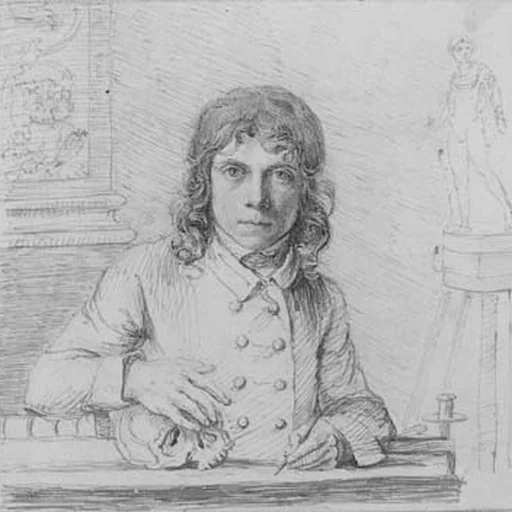
John Flaxman (6 July 1755 – 7 December 1826) was an English sculptor and draughtsman who was a leading figure in British and European Neoclassicism.

 Battle Scene
![Los and His Spectre [verso], by William Blake](https://artifactworldgallery.com/img/william-blake--los-and-his-spectre-verso--615ad7f82d334e5f-w320.webp) Los and His Spectre [verso]
Los and His Spectre [verso]![Time's Triple Bow [recto], by William Blake](https://artifactworldgallery.com/img/william-blake--time-s-triple-bow-recto--dc15bf51bd241980-w320.webp) Time's Triple Bow [recto]
Time's Triple Bow [recto] Two Airborne? Figures Reaching out to One Another
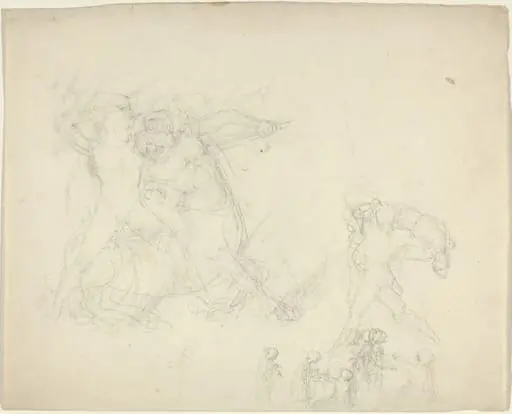 Sheet of Studies, including a Man Battling a Centaur
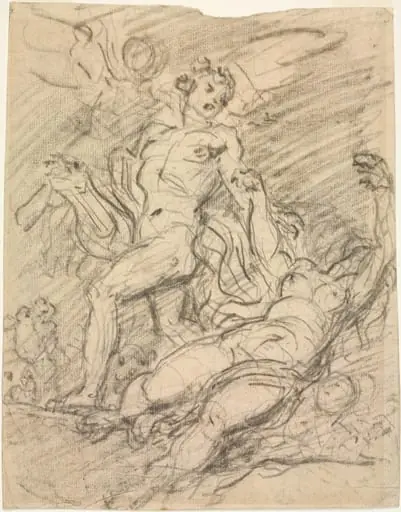 Orpheus and Eurydice (recto)
![Sheet of Studies [recto and verso], by John Flaxman](https://artifactworldgallery.com/img/john-flaxman--sheet-of-studies-recto-and-verso--7cd3e8a27787ed92-w320.webp) Sheet of Studies [recto and verso]
Sheet of Studies [recto and verso]![Study of the "Ecorché" [recto], by Paul Cezanne](https://artifactworldgallery.com/img/paul-cezanne--study-of-the-ecorche-recto--1614b86d796e004d-w320.webp) Study of the "Ecorché" [recto]
Study of the "Ecorché" [recto]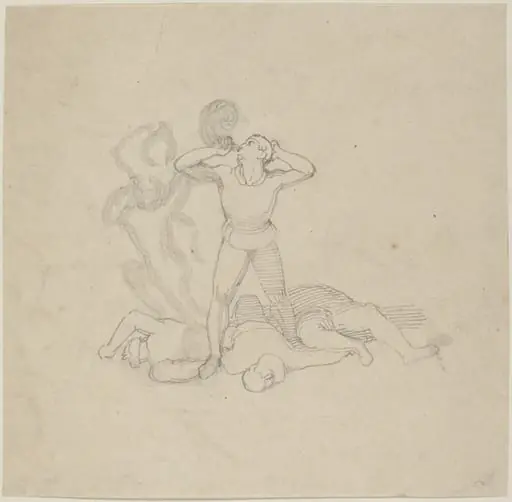 Figure Standing over Corpses, Blowing a Horn
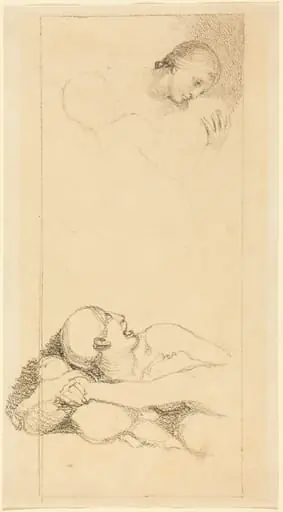 Frightened Man Looking Up; Woman and Children
 Sheet of Sketches, including Two Warriors Fighting
 Two Male Nudes seen from Above