Artwork
Two Huddled Figures
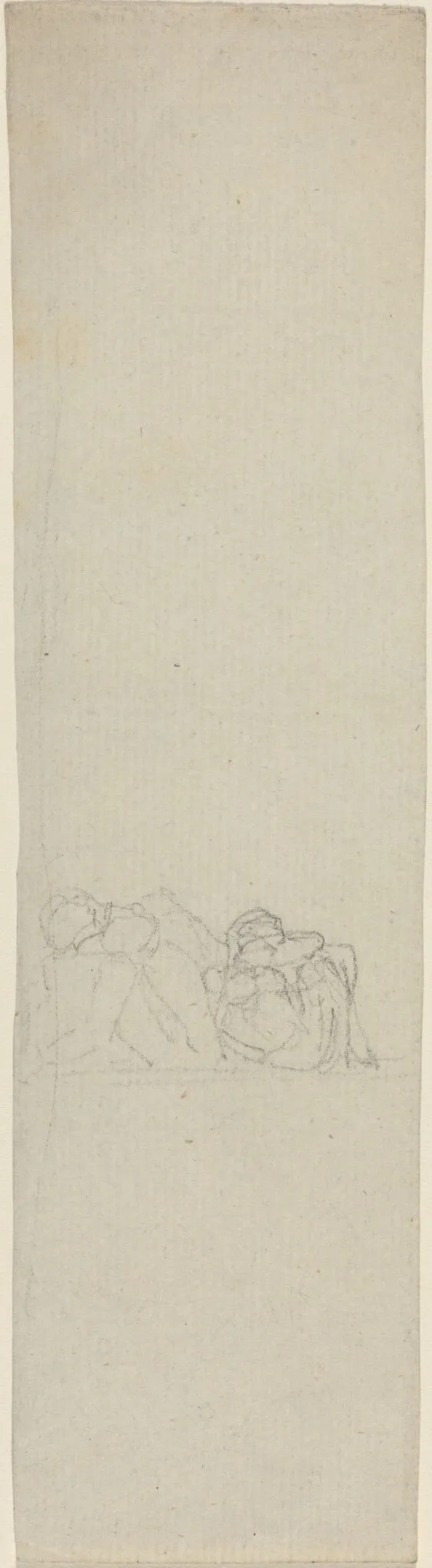
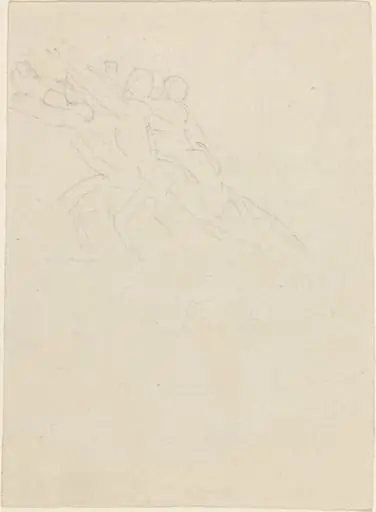
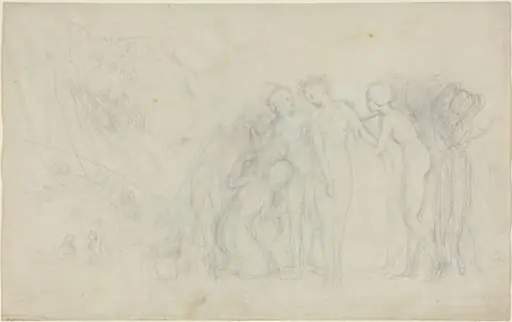
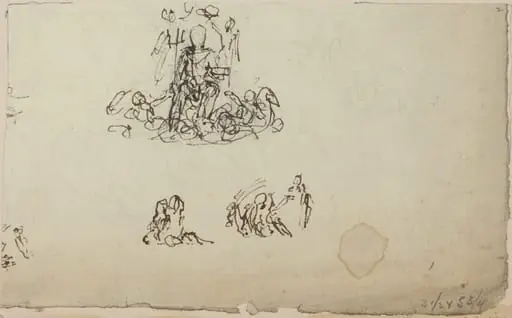
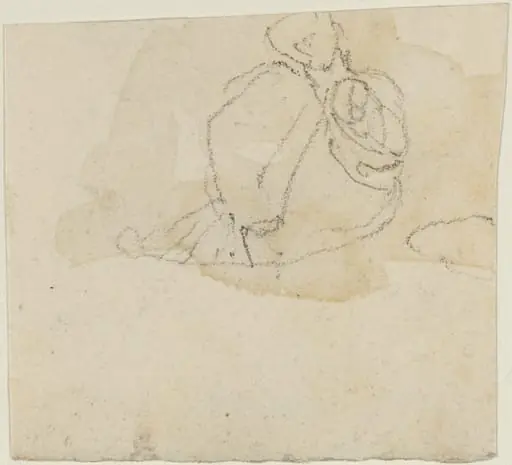
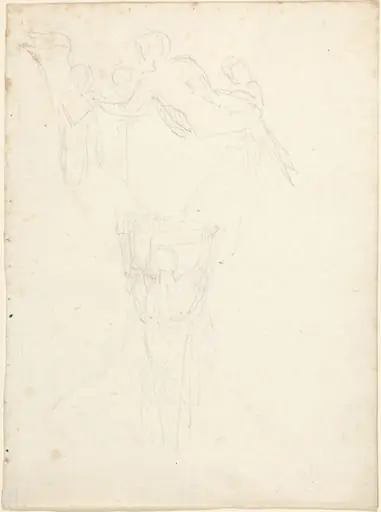
Two Huddled Figures is a graphite drawing by the Romanticist artist John Flaxman. It dates from 1790 and is held in the collection of the National Gallery of Art.
About this work
Overview
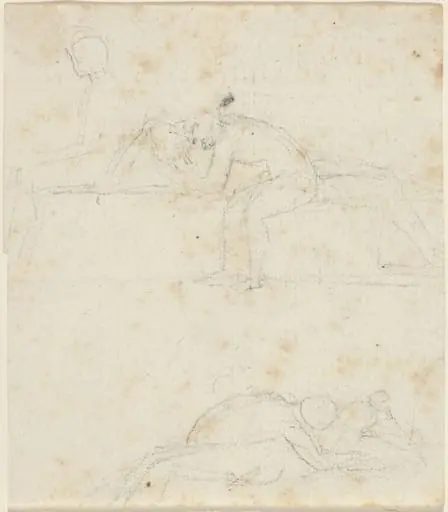
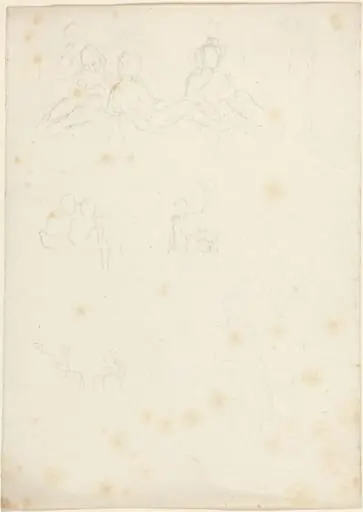
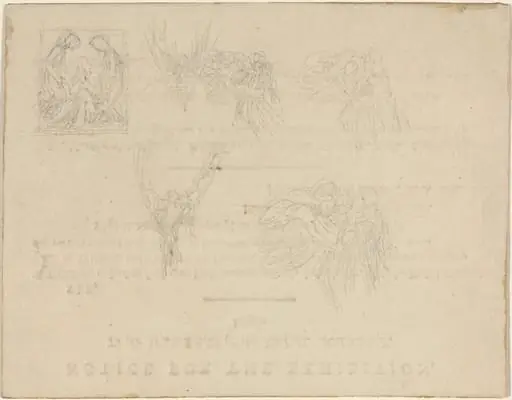
John Flaxman’s graphite drawing *Two Huddled Figures* dates to 1790. Executed in a single medium, the work consists of two small, closely positioned figures rendered with light, sketchy lines against an empty, pale background. The composition is minimal, suggesting a preparatory study rather than a finished piece.
Subject & Meaning
The drawing presents two diminutive figures huddled beneath a simple, tent‑like canopy. Their proximity and the sheltering form imply a moment of shared protection or intimacy, though no narrative details are provided beyond the basic gesture.
Technique & Style
Flaxman employs a restrained graphite technique, using thin, fluid strokes that convey form without elaborate modeling. The limited tonal range and the absence of shading reinforce a sense of immediacy, characteristic of his disciplined line work and classical restraint.
History & Provenance
Created during Flaxman’s early career, the piece reflects his transition from modeling for Josiah Wedgwood’s ceramics to his later work as a draughtsman in Rome. While primarily known for monumental funerary sculpture, this drawing illustrates his parallel development as a book illustrator and preparatory artist.
Context
*Two Huddled Figures* belongs to the broader Neoclassical movement that dominated British and European art in the late 18th century. Flaxman’s emphasis on clear contour and compositional simplicity aligns with the period’s revival of classical ideals, even in informal studies such as this.
Artist & collection
Artist
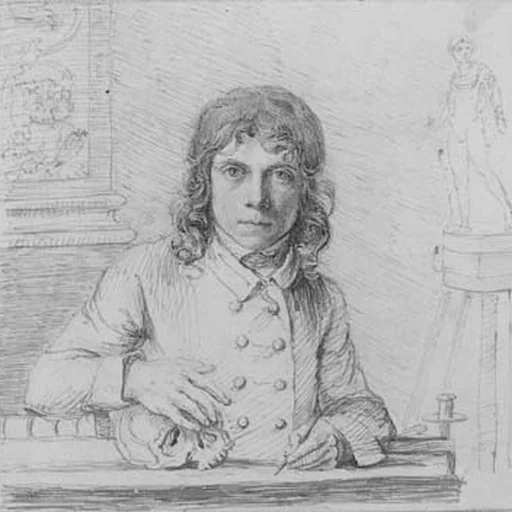
John Flaxman (6 July 1755 – 7 December 1826) was an English sculptor and draughtsman who was a leading figure in British and European Neoclassicism.

![Head of a Cow [recto], by Paul Gauguin](https://artifactworldgallery.com/img/paul-gauguin--head-of-a-cow-recto--b91cefb1149f906f-w320.webp)