Artwork
Face in Profile Facing Left and Monument
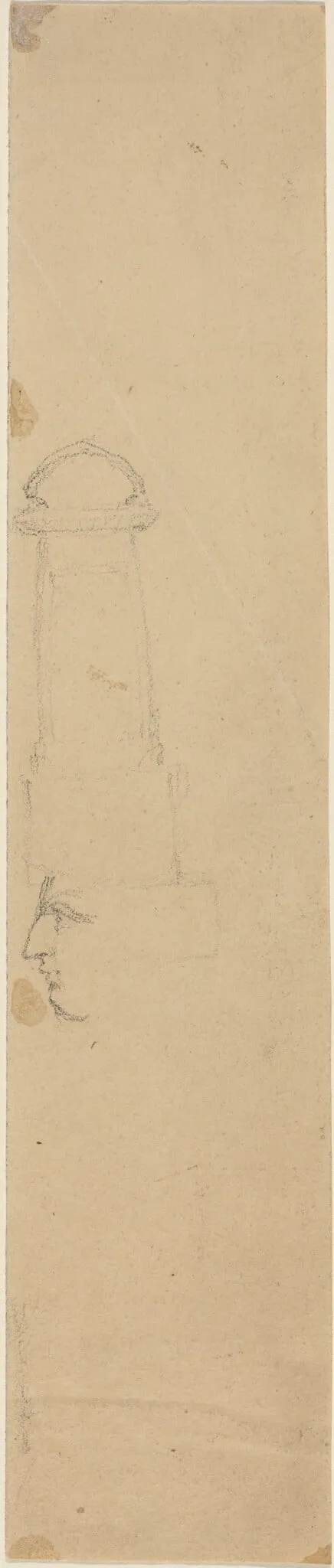
Face in Profile Facing Left and Monument is a graphite drawing by the Romanticist artist John Flaxman. It dates from 1790 and is held in the collection of the National Gallery of Art.
About this work
Overview
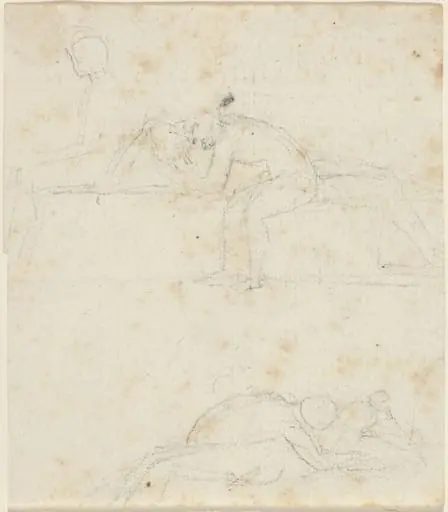
Created in 1790, this graphite drawing by John Flaxman captures a fleeting study of a profile face and a simplified funerary structure.
Created in 1790, this graphite drawing by John Flaxman captures a fleeting study of a profile face and a simplified funerary structure. Executed on light brown paper with delicate, uneven lines, the work reveals the artist’s spontaneous approach to form. Its unfinished quality suggests it was a preparatory sketch rather than a polished composition, reflecting Flaxman’s habit of recording ideas quickly for later development.
Subject & Meaning
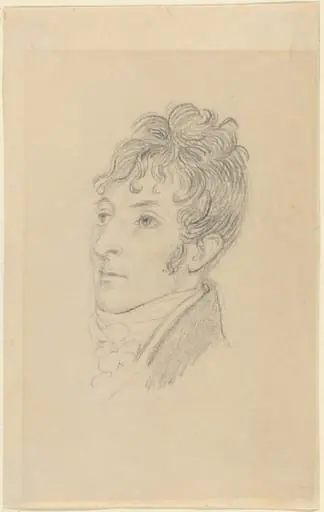
The drawing pairs a human profile with a slender, arch-topped monument, evoking themes of mortality and remembrance. Though minimal, the combination implies a commemorative intent, aligning with Flaxman’s broader interest in funerary symbolism. The face, rendered without individualizing features, functions as a generalized figure of the deceased, consistent with Neoclassical ideals of universal human forms.
Technique & Style
Flaxman employed graphite with a light, hesitant touch, creating soft, barely defined contours that suggest movement rather than solidity. The lines are thin and irregular, indicating rapid execution. The medium’s erasable nature allowed for revision, supporting the sketch’s role as a working note. The restrained palette and absence of shading emphasize line over volume, characteristic of his illustrative method.
History & Provenance
Made during Flaxman’s mature period after his return from Rome, the drawing belongs to a series of studies he produced for sculptural and print projects. Though undocumented in early collections, its style and materials align with other known preparatory works from the 1790s. It likely remained in the artist’s possession until his death, later entering institutional holdings through family or estate distribution.
Context
Flaxman’s practice bridged sculpture and graphic art, often using drawings to explore compositions for public monuments and book illustrations. In the 1790s, he was deeply engaged with Neoclassical themes drawn from antiquity and literature, particularly in commemorative art. This sketch reflects a broader trend among artists of the time to distill complex subjects into essential forms, prioritizing clarity over detail.
Legacy
Though modest in scale, the drawing exemplifies Flaxman’s influence on 19th-century memorial art and graphic design. His ability to convey solemnity through minimal means informed later illustrators and sculptors working in classical idioms. The sketch’s economy of line became a model for artists seeking emotional resonance without ornamental excess, particularly in the transition from Neoclassicism to Romantic sensibilities.
Artist & collection
Artist
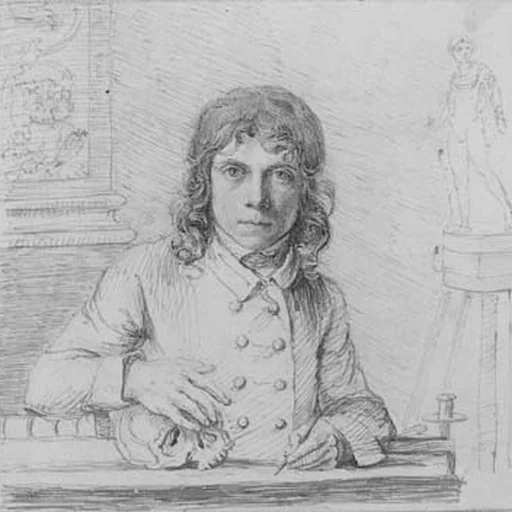
John Flaxman (6 July 1755 – 7 December 1826) was an English sculptor and draughtsman who was a leading figure in British and European Neoclassicism.

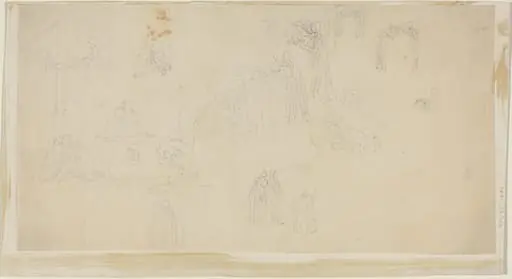
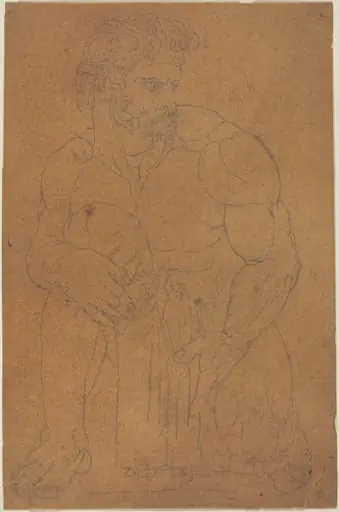
![Sheet of Studies [recto and verso], by John Flaxman](https://artifactworldgallery.com/img/john-flaxman--sheet-of-studies-recto-and-verso--c82bf77b351cdf13-w320.webp)

![Study for "Shoeing Calvary Horses at the Front" [verso], by John Singer Sargent](https://artifactworldgallery.com/img/john-singer-sargent--study-for-shoeing-calvary-horses-at-the-front-verso--6f6d1a163e84e9ab-w320.webp)