Artwork
Compoziție ludică II
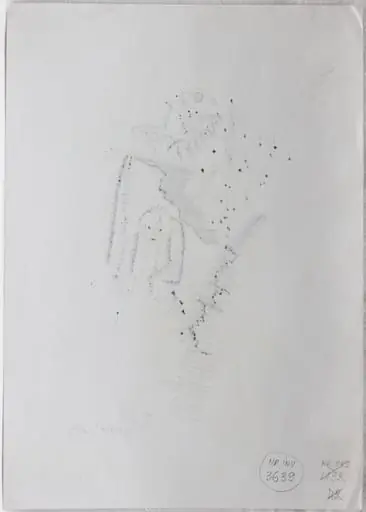
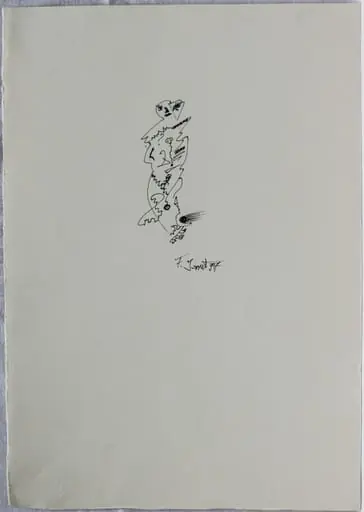
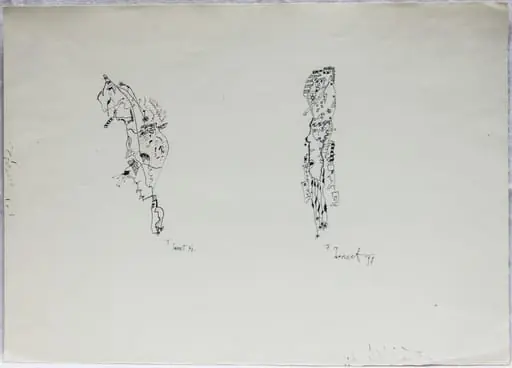
Compoziție ludică II is a drawing by Ionuț Cătălin Florea. It dates from 1950 and is held in the collection of the Gavrila Simion Eco-Museum Research Institute Tulcea.
About this work
Overview
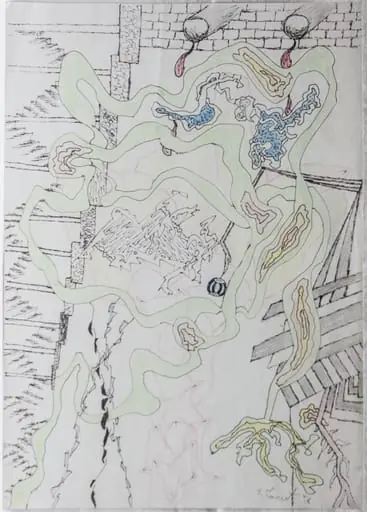
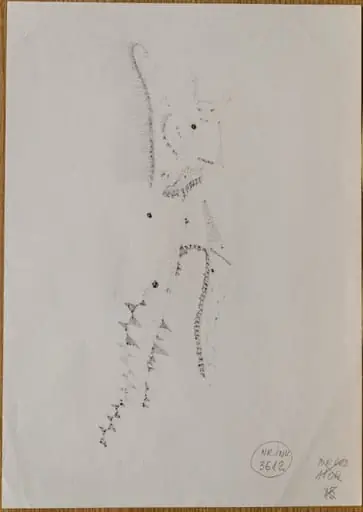
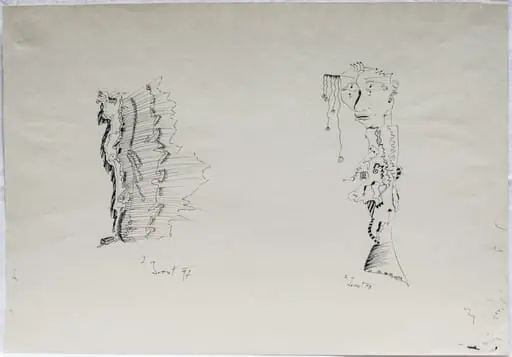
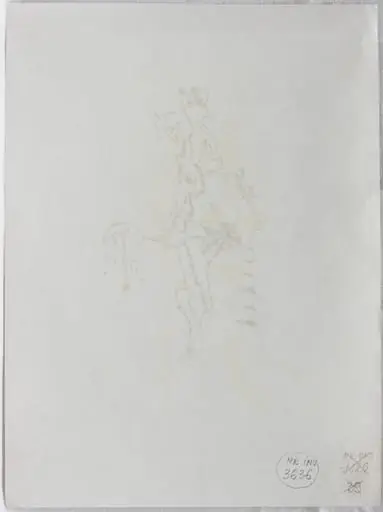
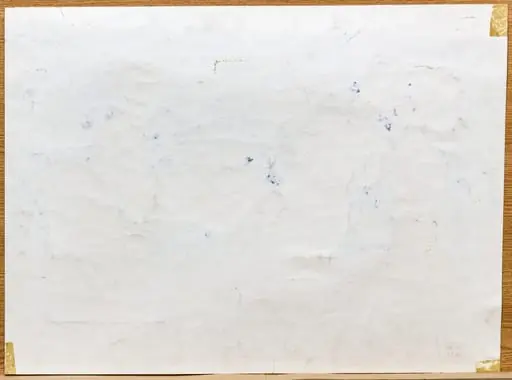
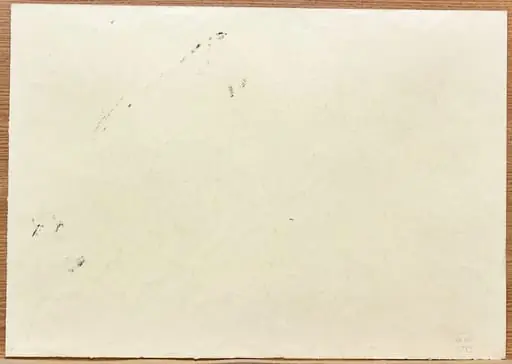
Compoziție ludică II is a minimalist drawing attributed to Ionuț Cătălin Florea, dated around 1950.
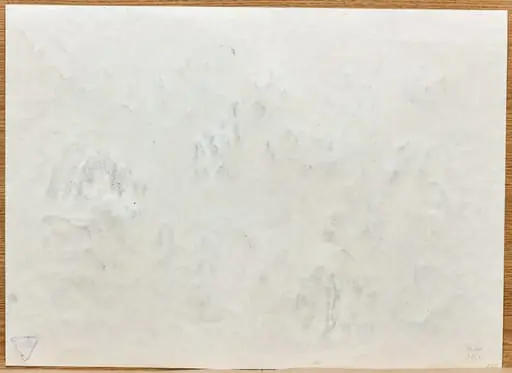
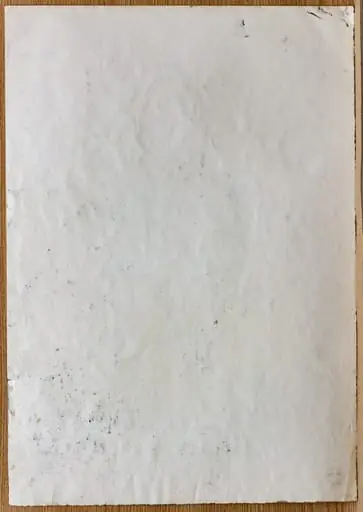
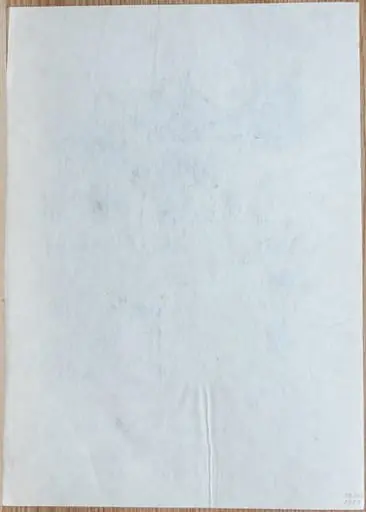
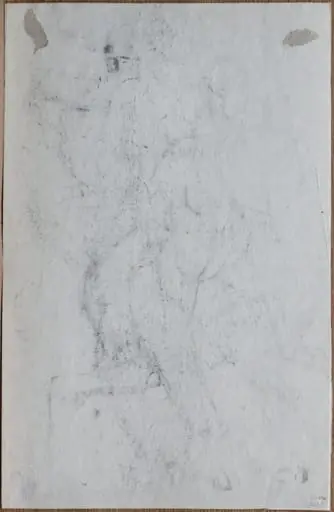
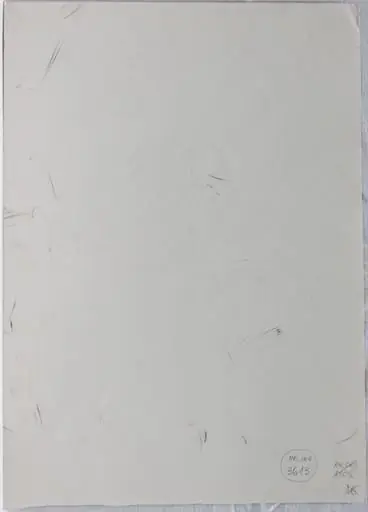
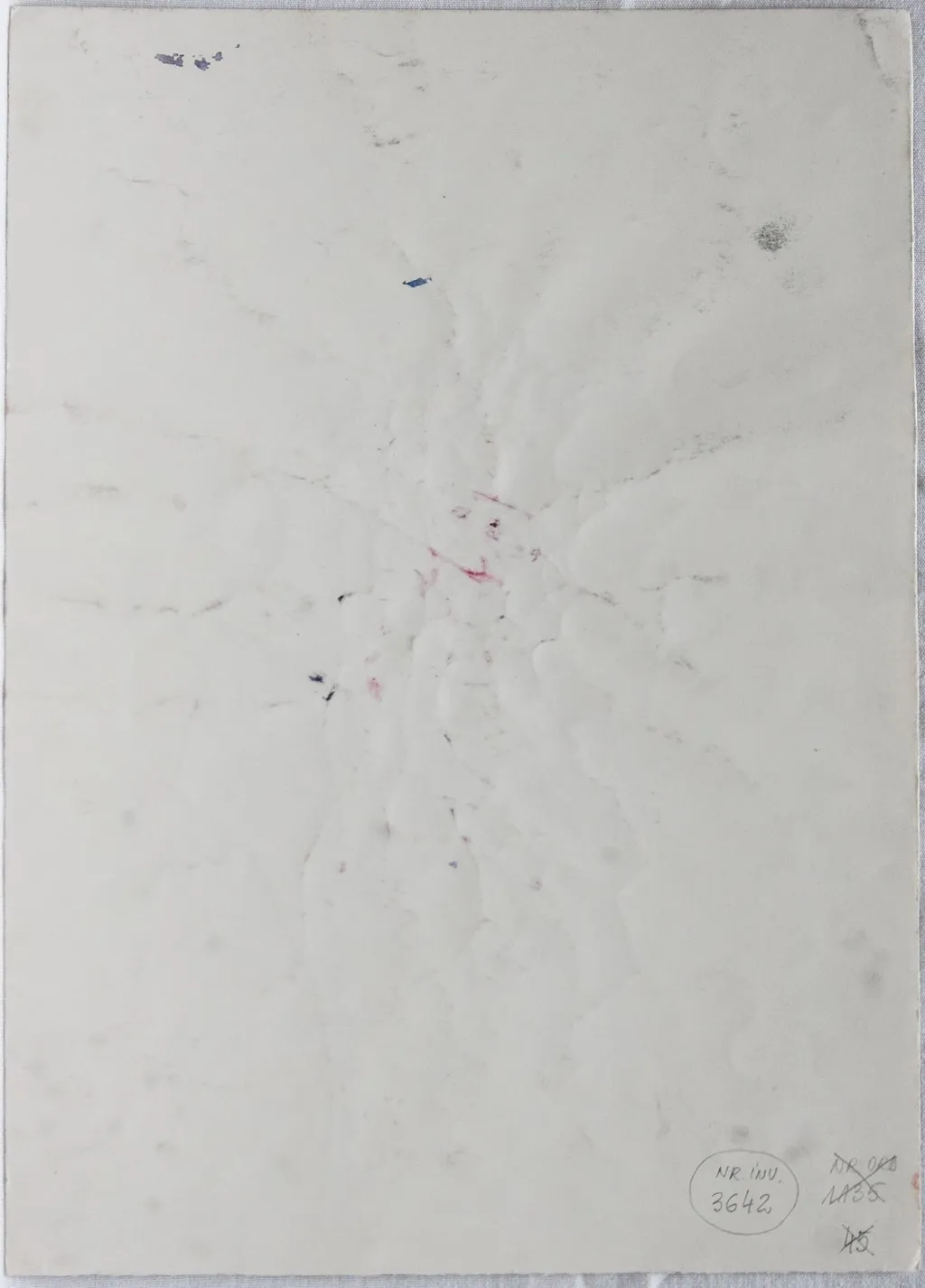
Compoziție ludică II is a minimalist drawing attributed to Ionuț Cătălin Florea, dated around 1950. Executed on fragile paper, it presents an almost empty field with only subtle traces of pigment: a single blue dot near the upper edge and a handful of faint red and black lines clustered centrally. The surface bears signs of age—smudges, stains, and wear—suggesting handling or prolonged exposure. Its extreme reduction challenges conventional expectations of artistic representation.
Subject & Meaning
The work resists clear narrative or symbolic interpretation. The sparse marks—dots and strokes—do not depict recognizable forms, nor do they suggest a deliberate composition in the traditional sense. Instead, they function as gestures of absence, inviting contemplation of what remains when representation is stripped away. The title, suggesting playfulness, may imply an experimental attitude toward mark-making rather than a fixed meaning.
Technique & Style
Florea employed minimal materials—ink or pencil on paper—to create a composition defined by restraint. The faintness of the lines and the irregularity of the stains suggest spontaneous, possibly improvised execution. The paper’s deterioration contributes to the work’s aesthetic, blurring the line between artist intent and accidental decay. This approach aligns with postwar tendencies toward abstraction and material honesty over polished finish.
History & Provenance
The drawing has been held by the Museum of Ethnography since at least the mid-20th century, though its acquisition details are undocumented. Its presence in an ethnographic institution, rather than a fine arts collection, may reflect its perceived connection to informal or non-canonical artistic practices. Its survival, despite its fragile state, suggests it was preserved as a record of experimental activity rather than as a valued object.
Context
Created in the early 1950s under Romania’s communist regime, the work exists in tension with state-mandated socialist realism. Its abstraction and lack of ideological messaging may reflect quiet resistance or personal exploration. While public art promoted clarity and heroism, Florea’s piece embraces ambiguity, aligning with underground or private artistic experiments that prioritized individual expression over public utility.
Legacy
Compoziție ludică II remains an obscure but significant example of Romanian postwar minimalism. It contributes to a broader understanding of how artists navigated repression through understatement. Though not widely exhibited, its preservation in a public collection affirms its value as a document of quiet defiance and aesthetic inquiry, influencing later generations interested in the power of absence in art.
Artist & collection
Artist
This artist made abstract drawings and one sculpture, blending lines and shapes in ways that feel both deliberate and playful.
Museum
Gavrila Simion Eco-Museum Research Institute Tulcea
Continue through works from the same source collection.