Artwork
Portret de fată
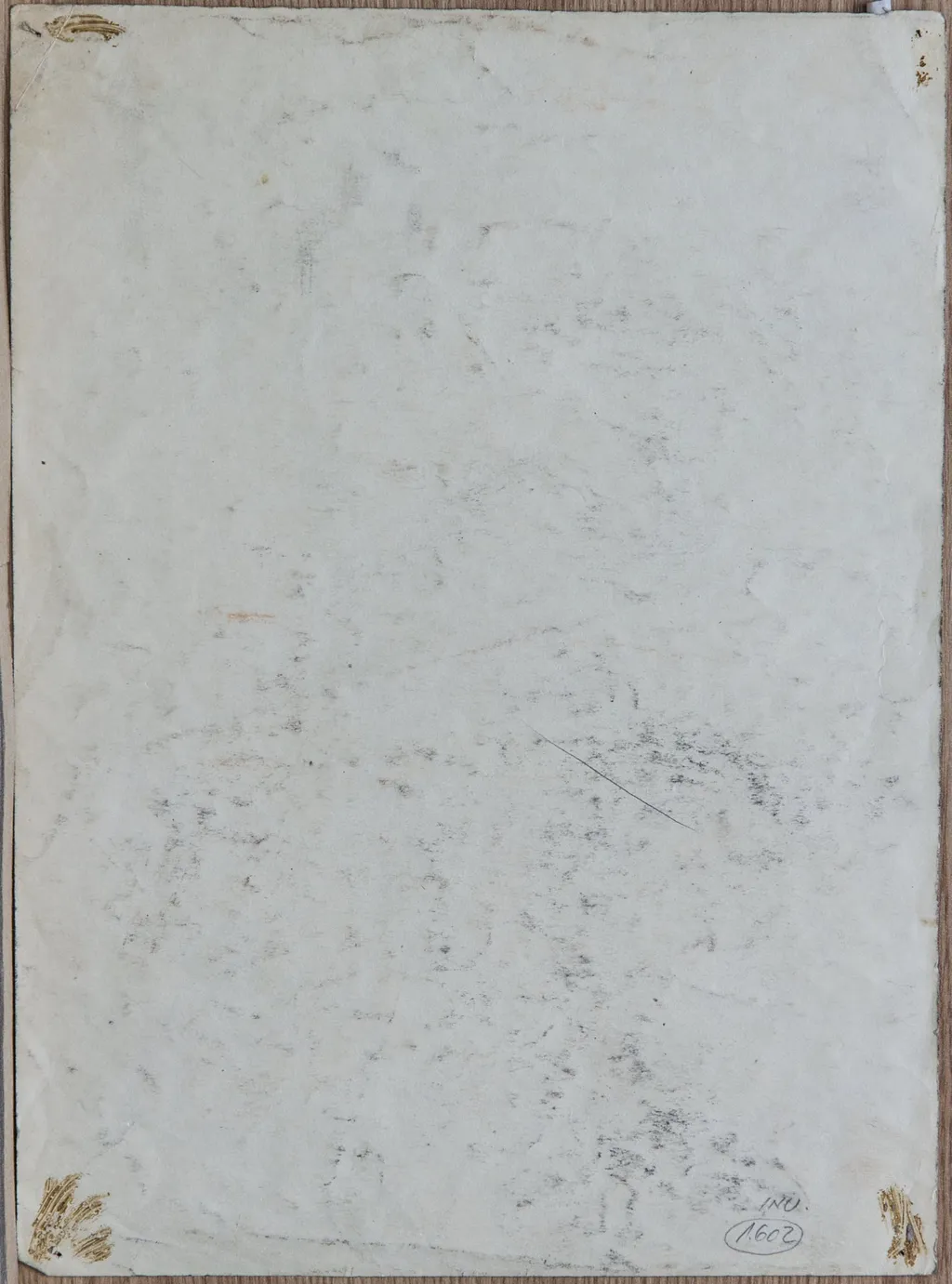
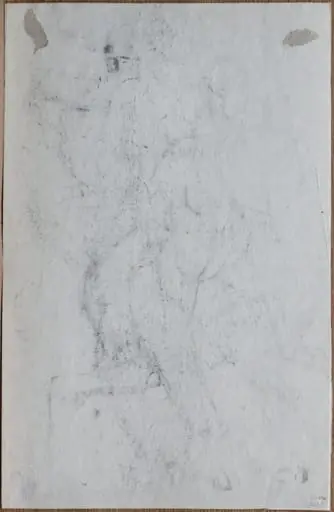
Portret de fată is a drawing by Anatolie Cudinoff. It dates from 1950 and is held in the collection of the Gavrila Simion Eco-Museum Research Institute Tulcea.
About this work
The edges have a wooden frame, and small handwritten notes appear in the corners—one says "180" and "1602.
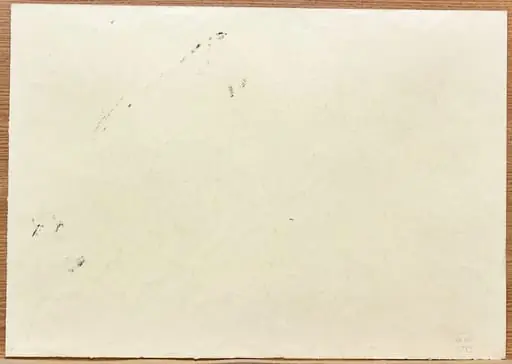
This is a blank-looking sheet of paper with faint gray smudges scattered across it. A single thin line cuts diagonally from the top right toward the center. The edges have a wooden frame, and small handwritten notes appear in the corners—one says "180" and "1602."
The drawing looks unfinished, almost like a sketch left behind. The light marks might be accidental smudges or early attempts at shading.
Next, check out stippling to see how artists build images with tiny dots.
Overview
Portret de fată is a small, enigmatic drawing attributed to Anatolie Cudinoff, dated around 1950. Executed on paper, it presents minimal visual elements: faint gray smudges, a single diagonal line, and handwritten numerals in the corners. The work lacks traditional portraiture features, suggesting it may be an experimental sketch or fragment rather than a completed portrait. It resides in the collection of the Museum of Ethnography.
Subject & Meaning
The title suggests a portrait of a girl, yet no facial features or bodily forms are discernible. The absence of detail invites interpretation as an abstraction of memory or intention, possibly representing an early stage of artistic thought. The handwritten numbers may reference dimensions, inventory codes, or personal annotations, but their purpose remains undocumented. The work resists narrative closure, emphasizing process over representation.
Technique & Style
The drawing employs subtle graphite or charcoal marks, with no defined contours or shading systems. The smudges appear unintentional or exploratory, while the single diagonal line introduces a structural tension across the surface. There is no evidence of stippling or deliberate tonal modeling. The work’s rawness aligns with informal sketching practices, prioritizing gesture over finish, and reflects a private, non-public mode of creation.
History & Provenance
The drawing entered the Museum of Ethnography’s collection without detailed documentation of its origin or acquisition. No exhibition history or correspondence regarding its creation is publicly available. The presence of handwritten numerals suggests it may have been part of a larger, unrecorded series or study. Its preservation implies recognition of its evidentiary value, despite its incomplete appearance.
Context
Created in postwar Eastern Europe, the work emerges during a period when many artists experimented with minimalism and personal symbolism amid political constraints. Cudinoff’s practice, though poorly documented, may have involved private sketches as alternatives to state-sanctioned realism. This piece could reflect an individual’s quiet resistance to formal artistic expectations, valuing introspection over public display.
Legacy
Portret de fată endures not as a finished image but as a trace of artistic inquiry. Its ambiguity invites reflection on the nature of artistic intent and the value of unfinished work. It contributes to broader discussions about marginalia in art, the role of the sketch in creative development, and how institutions preserve ephemeral gestures that resist conventional categorization.
Artist & collection
Artist
Anatolie Cudinoff made bold, solid sculptures in the mid-20th century style we now call Socialist Realism.
Museum
Gavrila Simion Eco-Museum Research Institute Tulcea
Continue through works from the same source collection.