Artwork
Crochiu 9
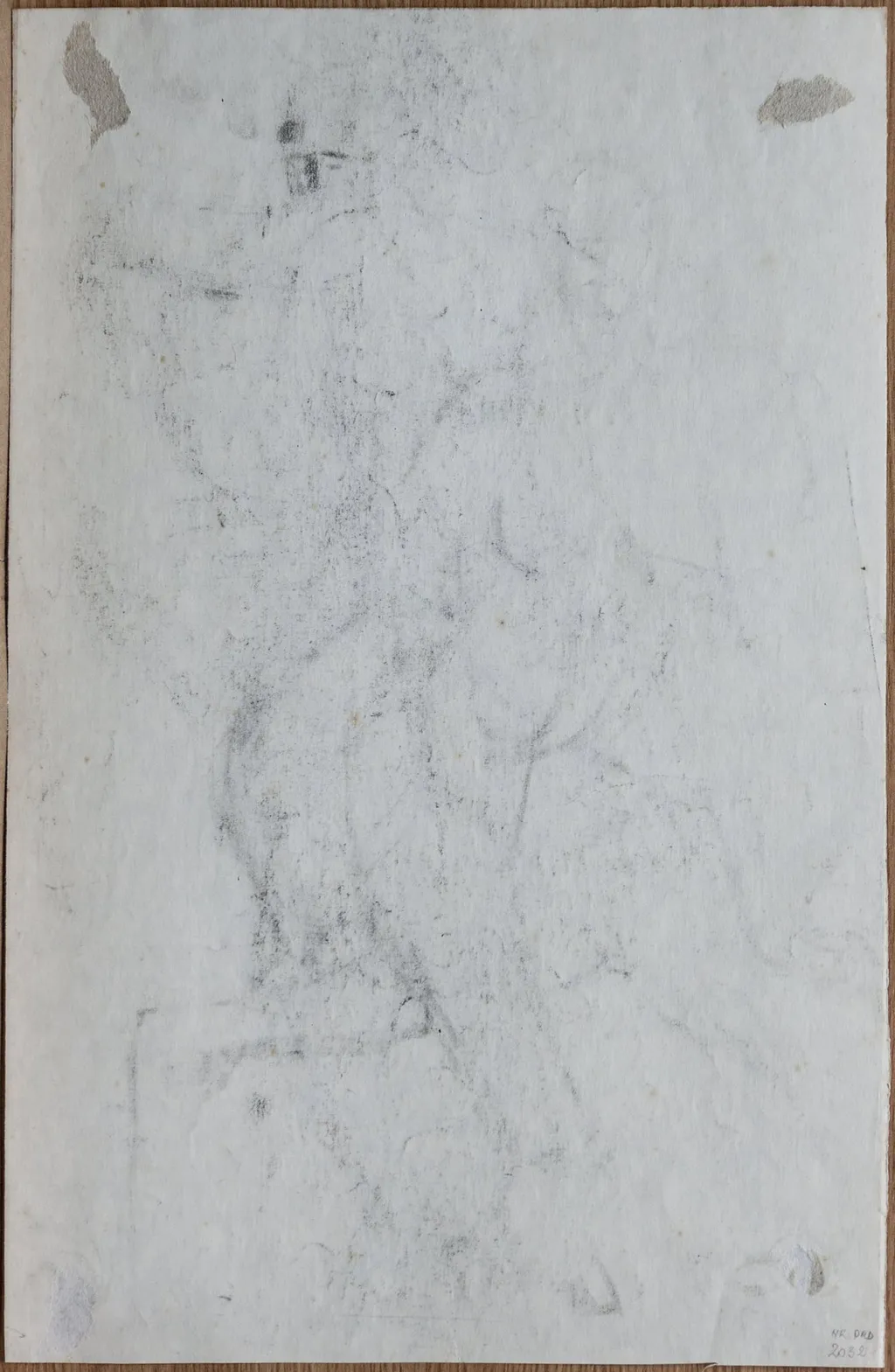
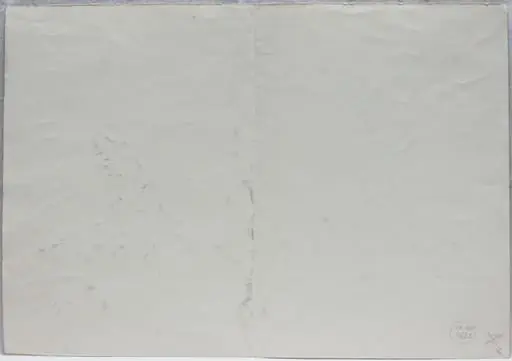
Crochiu 9 is a drawing by Teodor Hrib. It dates from 1950 and is held in the collection of the Gavrila Simion Eco-Museum Research Institute Tulcea.
About this work
Overview
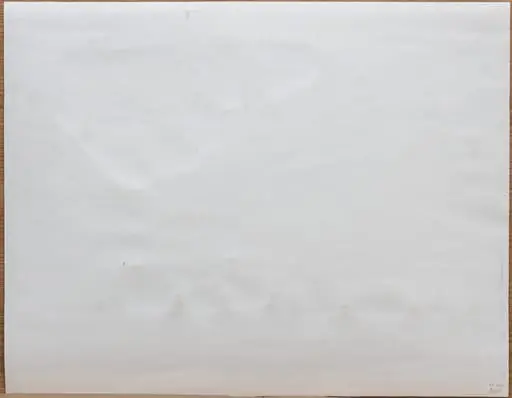
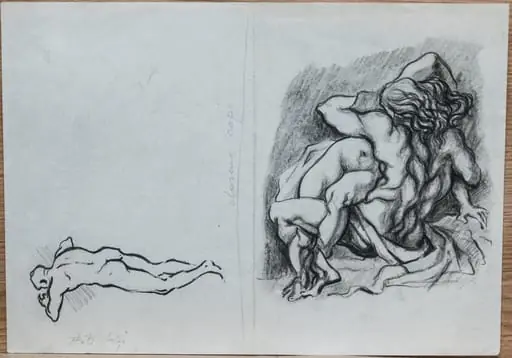
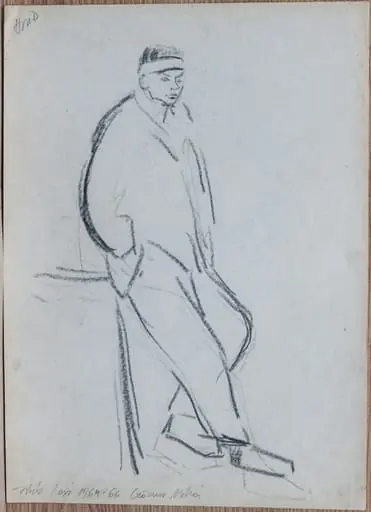
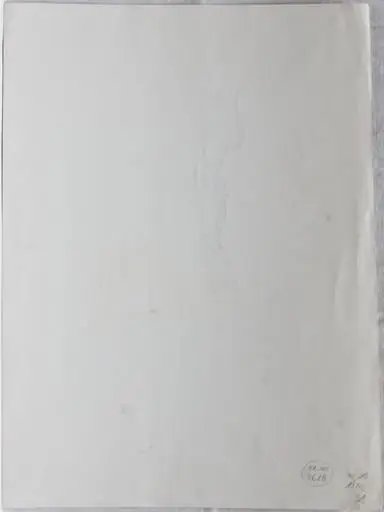
The work consists of a largely white sheet of paper on which faint, barely discernible forms emerge, suggesting a solitary figure positioned centrally.
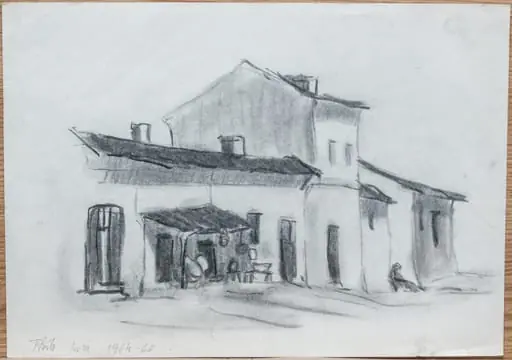
Crochiu 9, attributed to Teodor Hrib and dated to around 1950, is a modestly sized drawing preserved in the collection of the Museum of Ethnography. The work consists of a largely white sheet of paper on which faint, barely discernible forms emerge, suggesting a solitary figure positioned centrally. Its overall impression is one of quiet restraint, inviting close inspection of the barely visible marks.
Subject & Meaning
The central motif of the piece appears to be a lone human silhouette, rendered as a vague, shadow‑like presence. The minimalistic treatment may allude to themes of anonymity or transience, allowing the viewer to project personal interpretations onto the indistinct figure. The absence of explicit narrative details encourages contemplation of presence and absence within the visual field.
Technique & Style
Hrib employed a light, scratchy line quality, likely produced with a rough drawing implement that leaves irregular strokes. The drawing relies on subtle tonal variations rather than detailed rendering, creating a ghostly atmosphere. The paper’s worn surface, showing signs of handling, contributes to the work’s tactile character and underscores the artist’s economical, almost spontaneous approach.
History & Provenance
Created circa 1950, Crochiu 9 entered the Museum of Ethnography’s holdings at an unspecified date, where it remains part of the institution’s representation of mid‑twentieth‑century visual practice. The work’s provenance is limited to its attribution to Hrib and its current museum placement, with no recorded changes of ownership prior to acquisition.
Context
The drawing emerges from a period when many artists explored reductionist strategies, emphasizing gesture over detail. Within this broader trend, Hrib’s piece aligns with a minimalist aesthetic that privileges suggestion over explicit representation, reflecting post‑war artistic currents that favored introspection and economy of means.
Artist & collection
Artist
Teodor Hrib shaped small plaster figures and ink drawings in the 1800s academic tradition.
Museum
Gavrila Simion Eco-Museum Research Institute Tulcea
Continue through works from the same source collection.