Artwork
Mobile Foot Troops
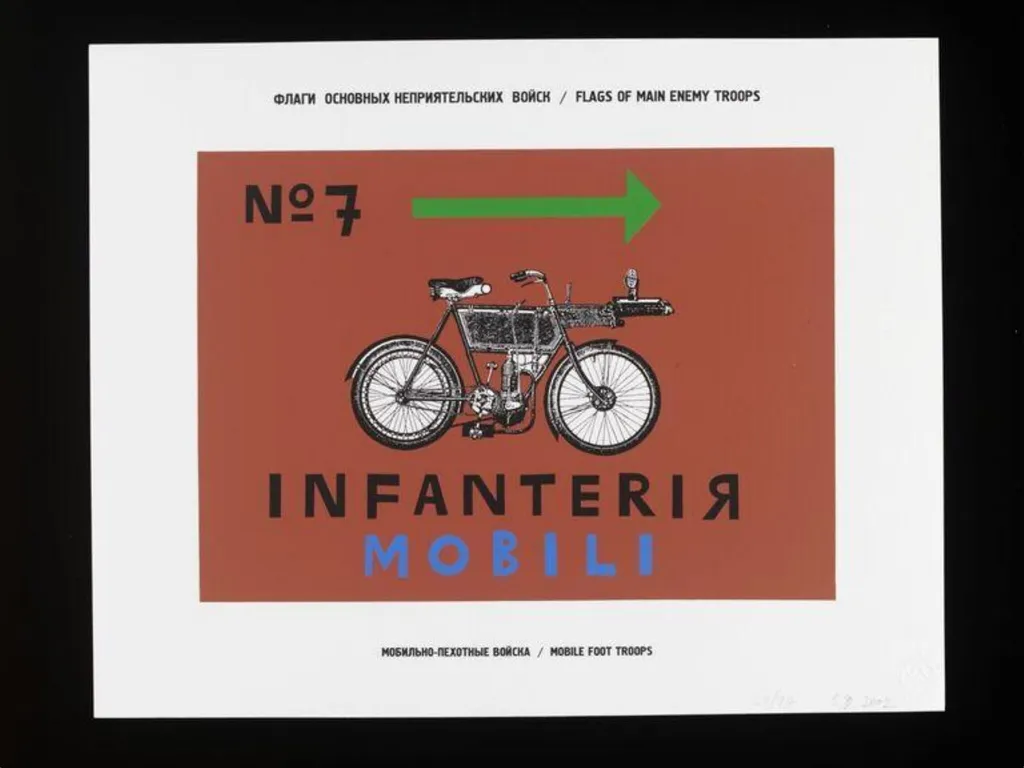
Mobile Foot Troops is a print by Olga Florenskaya. It dates from 2002 and is held in the collection of the Victoria and Albert Museum.
About this work
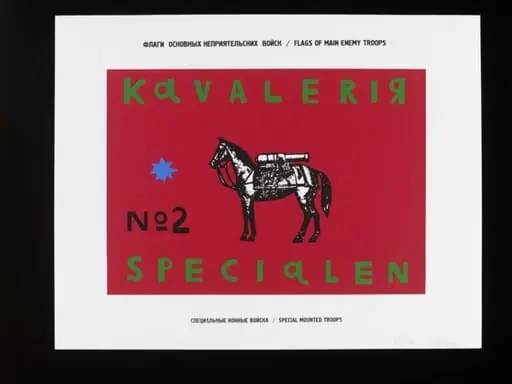
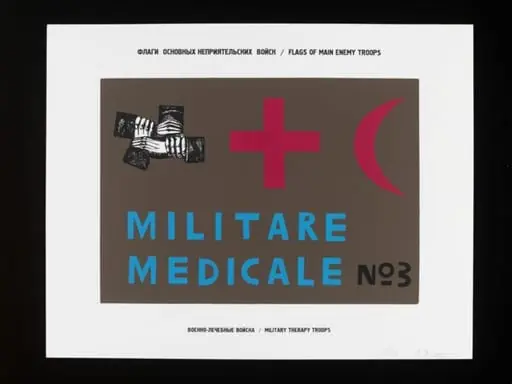
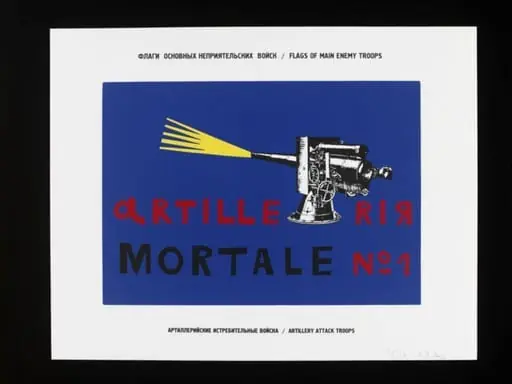
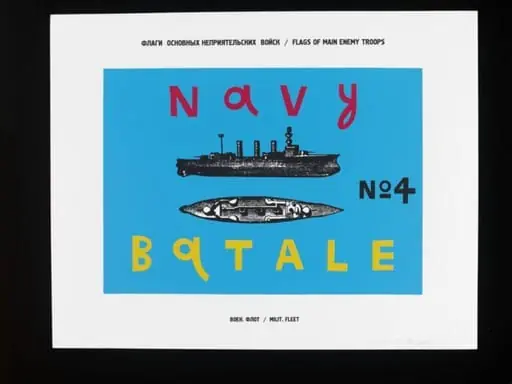
This print is part of Olga Florenskaya’s 2002 project “Russian Trophy.”
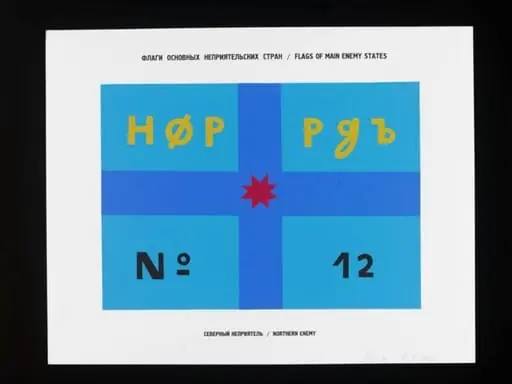
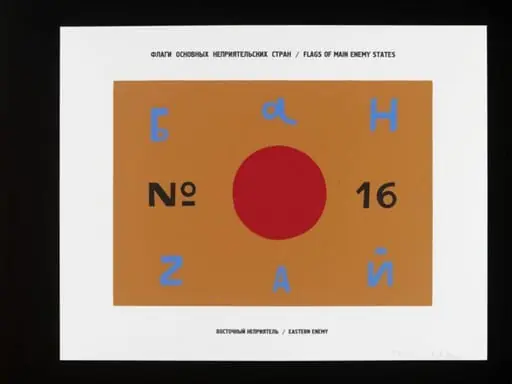
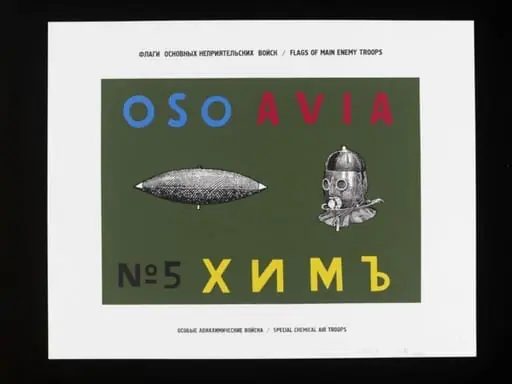
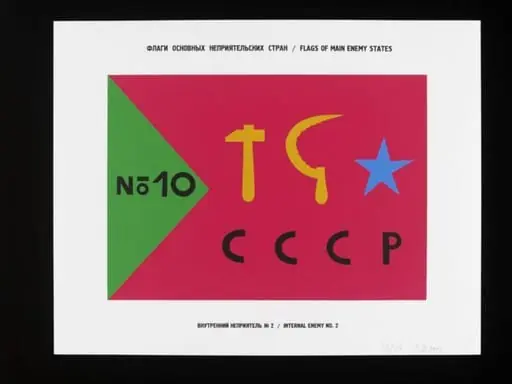
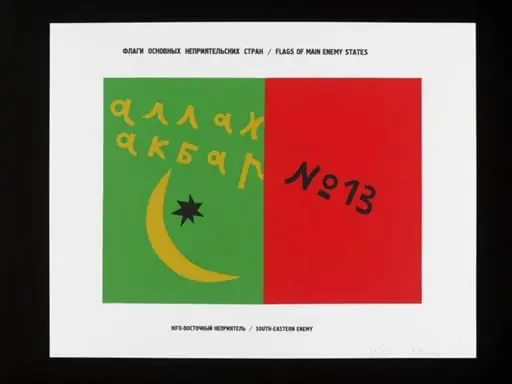
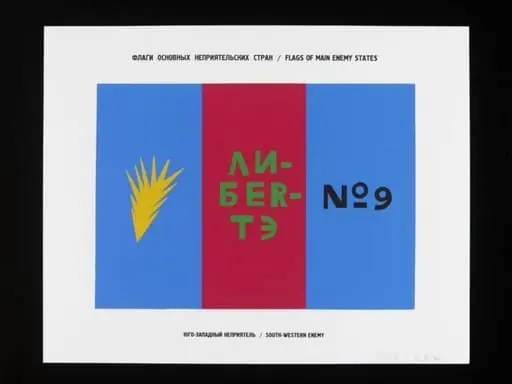
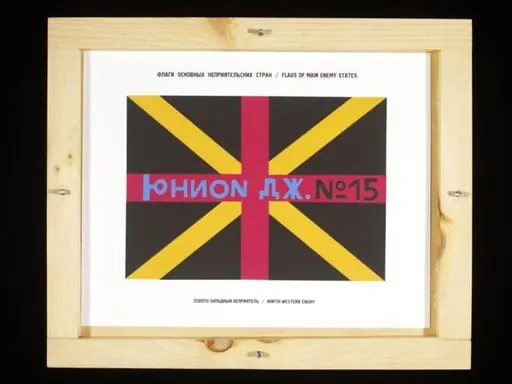
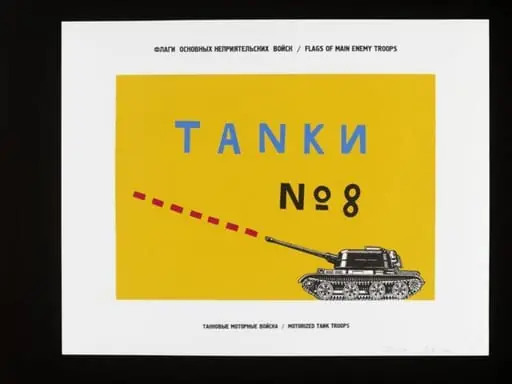
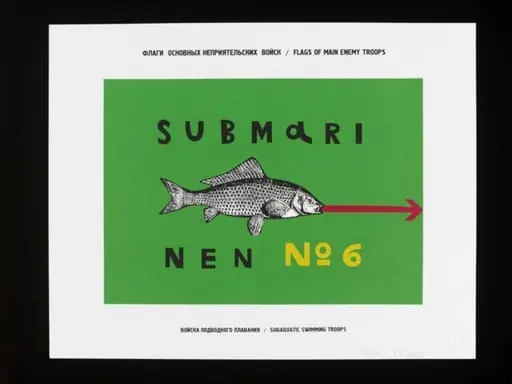
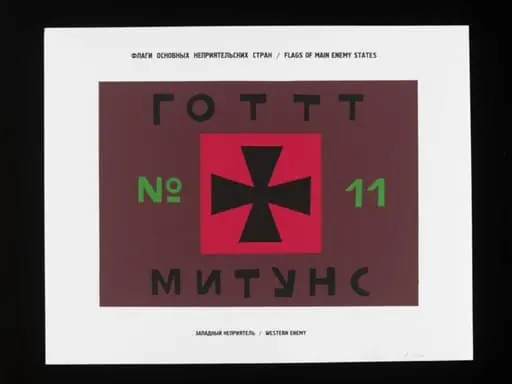
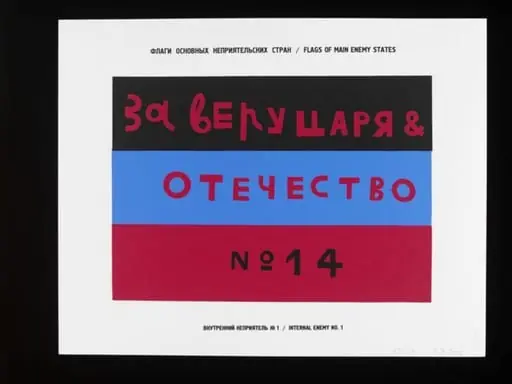
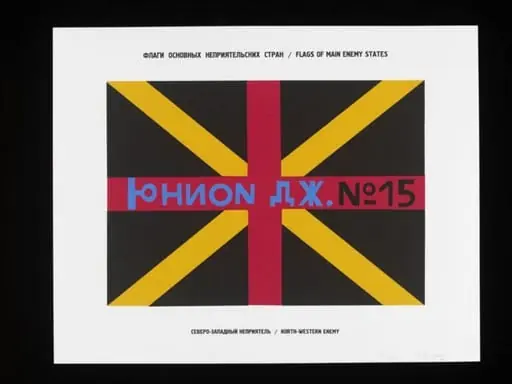
It shows objects from a pretend war museum made from junk and old scraps.
The artist mocked Russia’s fear of outside powers with silly flags and fake troops.
Some flags hide real countries like Britain or Japan behind odd names.
Look up more prints from this series at the Victoria and Albert Museum.
Overview
This set of prints originates from Olga and Alexander Florensky’s 2002 project 'Russian Trophy,' a fictional military museum assembled from discarded materials.
This set of prints originates from Olga and Alexander Florensky’s 2002 project 'Russian Trophy,' a fictional military museum assembled from discarded materials. The works function as satirical artifacts, mimicking the aesthetics of state-sponsored militarism while subverting its seriousness. Presented in a sealed wooden crate marked with stenciled lettering and wingnuts, the ensemble evokes the bureaucratic packaging of wartime relics, reinforcing its ironic tone.
Subject & Meaning
The project critiques Russia’s historical paranoia toward foreign powers through invented enemy identities. Flags labeled 'North-Western Enemy' or 'Eastern Enemy' allude to Britain and Japan without naming them directly. Absurd designations like 'Subaquatic Swimming Troops' mock the logic of militarized nationalism, exposing how fear of the Other is often constructed through performative symbolism rather than real threat.
Technique & Style
Materials are deliberately humble—scrap metal, fabric, cardboard—reconfigured into mock-military objects. The prints replicate the rough, handcrafted look of the original assemblages, with crude typography and uneven printing that mimic wartime propaganda or makeshift signage. The visual language borrows from Soviet iconography but distorts it with absurdity, creating a dissonance between form and content.
History & Provenance
Created in 2002, 'Russian Trophy' emerged in the post-Soviet era, reflecting on the persistence of imperial mindset in Russian identity. The project was exhibited in contemporary art contexts and later acquired by institutions such as the Victoria and Albert Museum. Its physical presentation as a sealed crate suggests both preservation and concealment, mirroring the way historical narratives are curated and controlled.
Context
The work responds to a cultural climate in which state narratives often emphasized external threats to justify internal control. By inventing ridiculous enemies and militarized absurdities, the Florenskys highlighted the artificiality of such rhetoric. Their project aligns with broader post-Soviet artistic practices that interrogated national mythmaking through irony and material reclamation.
Legacy
'Russian Trophy' remains a reference point in discussions of political satire in contemporary Russian art. Its use of everyday materials and institutional parody influenced later artists exploring the aesthetics of state power. The project’s enduring relevance lies in its ability to reveal how nationalism is sustained through visual symbols, even when those symbols are clearly fabricated.
Artist & collection
Artist
Olga Florenskaya’s prints from 2002 turn Cold War fears into bold, graphic shapes.