Artwork
Portrait of a Hindu woman
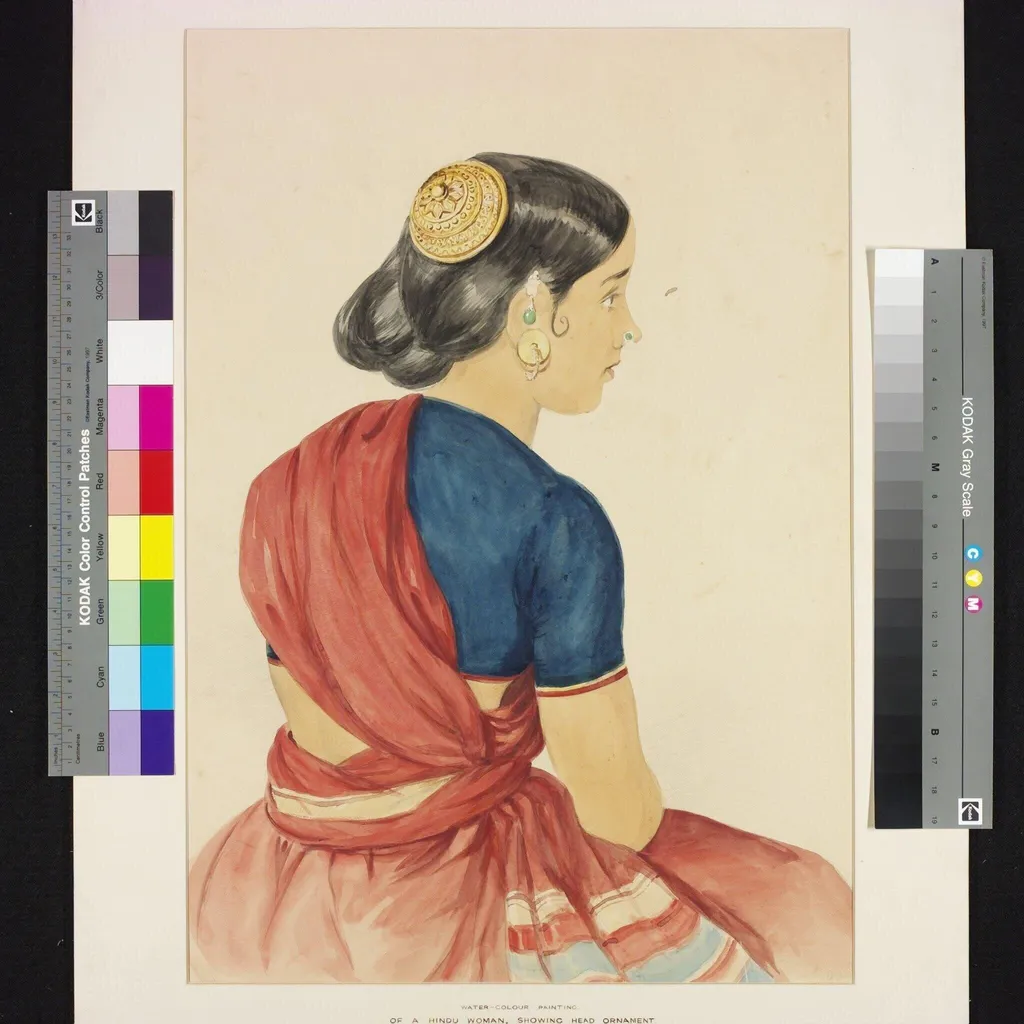
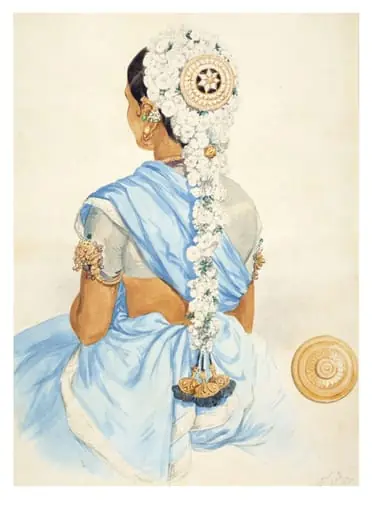
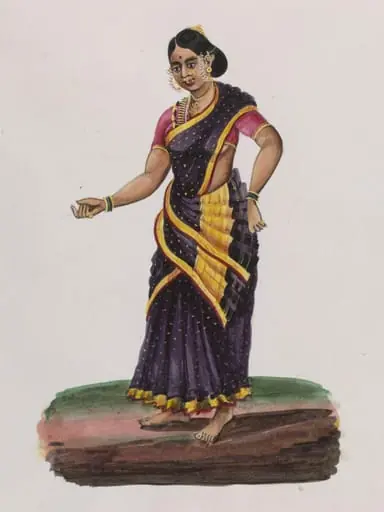
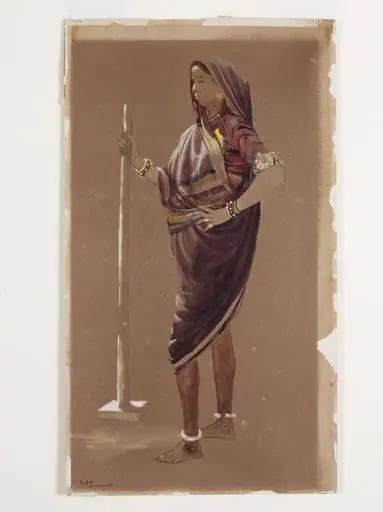
Portrait of a Hindu woman is a paint painting by the Impressionist artist John Joseph Fonçeca. It dates from 1872 and is held in the collection of the Victoria and Albert Museum. This painting by John Joseph Fonçseca portrays a Hindu woman viewed from behind, capturing her in a moment of quiet stillness.
About this work
Overview
The composition focuses on her posture and adornments rather than her face, emphasizing cultural identity through dress and jewelry.
This painting by John Joseph Fonçseca portrays a Hindu woman viewed from behind, capturing her in a moment of quiet stillness. The composition focuses on her posture and adornments rather than her face, emphasizing cultural identity through dress and jewelry. The background is a muted beige, allowing the colors of her attire to stand out without distraction. The work belongs to a tradition of 19th-century colonial-era portraiture that documented regional dress in British India.
Subject & Meaning
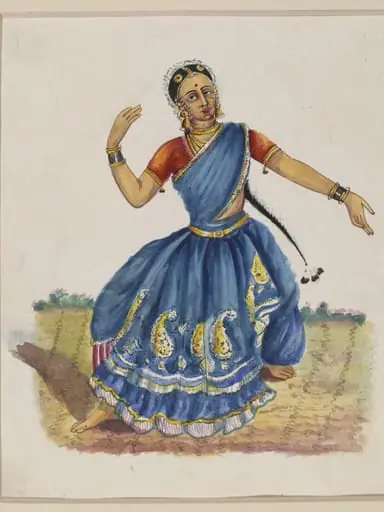
The subject is depicted wearing traditional Indian attire: a blue choli, a red skirt and sash, along with gold jewelry including a hair ornament, earrings, and a nose ring. Her identity is conveyed not through facial expression but through cultural markers, suggesting a deliberate representation of regional customs. The back-facing pose may reflect the artist’s intent to highlight attire and status rather than individual personality, common in ethnographic portraiture of the period.
Technique & Style
Fonçseca employs a detailed, realistic approach with careful attention to texture and color. The gold ornamentation is rendered with subtle highlights, while the fabric of the choli and sash shows distinct folds and sheen. The background is softly modeled, avoiding sharp contrasts. The brushwork is precise but not overly polished, suggesting a direct observation of the subject rather than idealized composition. The style aligns with academic realism, not Impressionism.
History & Provenance
Painted in the 19th century, the work originates from Fonçseca’s time in India, where he documented local life as a colonial-era artist. Its provenance traces to British colonial collections, likely commissioned or acquired during his stay. The painting remained in private or institutional hands in the UK before entering its current collection. No records indicate it was exhibited publicly during the artist’s lifetime.
Context
Fonçseca’s work emerged during a period when European artists in India produced visual records of local populations for colonial audiences. These portraits often served anthropological or exoticizing purposes, framing subjects through Western aesthetic frameworks. While the painting captures specific regional dress, it reflects the power dynamics of its time—documenting Indian identity through an outsider’s lens rather than from within the culture.
Legacy
The painting contributes to a broader archive of colonial-era Indian portraiture, offering insight into how local dress and adornment were recorded and interpreted by foreign artists. It is not widely known outside specialized collections, but it remains a quiet example of cross-cultural observation. Its value lies not in artistic innovation but in its documentation of material culture during a period of significant social and political change.
Artist & collection
Artist