Artwork
Untitled
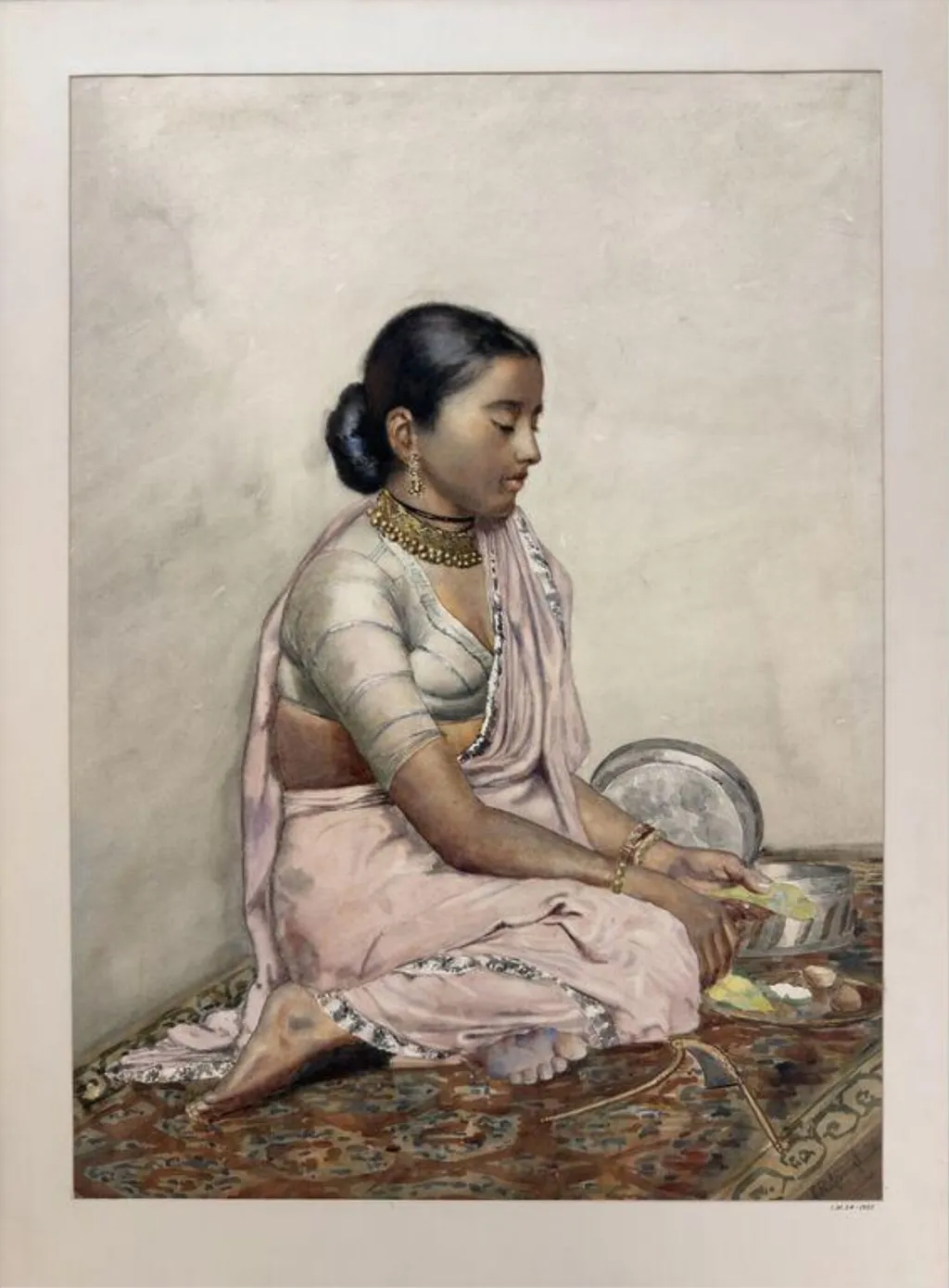
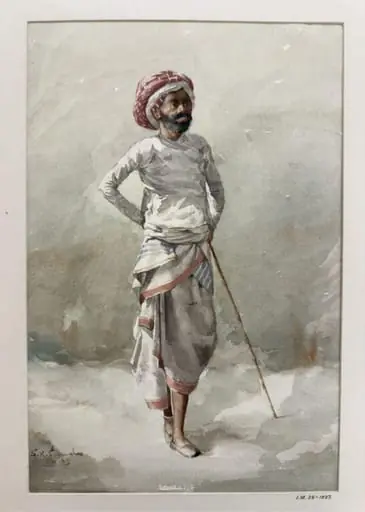
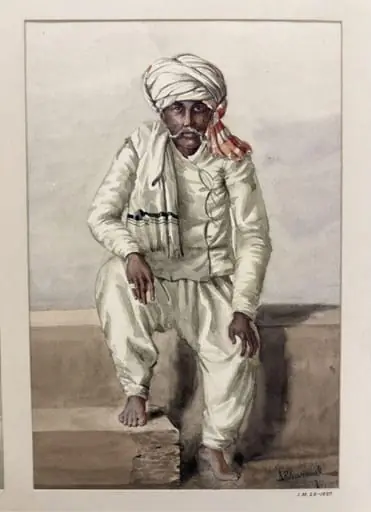
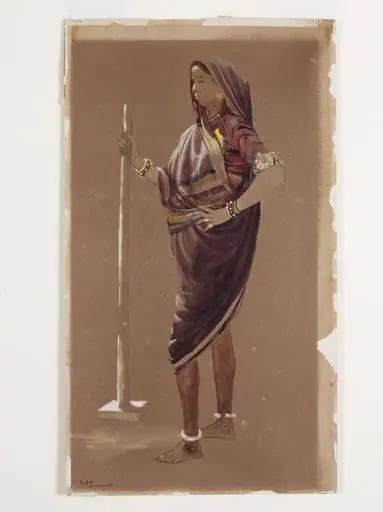
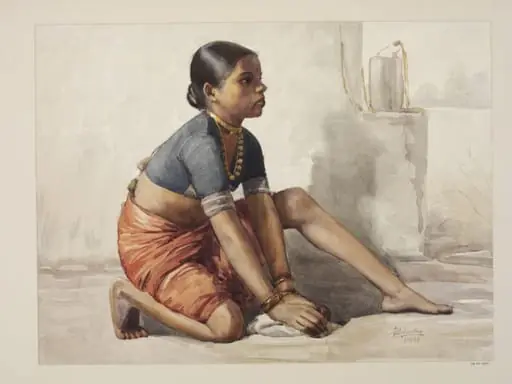
Untitled is a paint painting by the Impressionist artist S. R. Samuel. It dates from 6 and is held in the collection of the Victoria and Albert Museum. This watercolor painting, attributed to S.
About this work
Overview
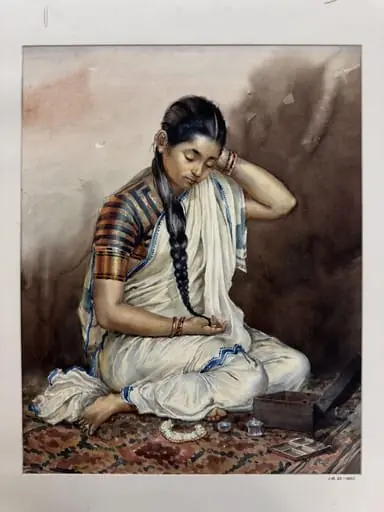
Created as a costume study, it portrays a Hindu woman engaged in the ritual preparation of betel nuts and leaves.
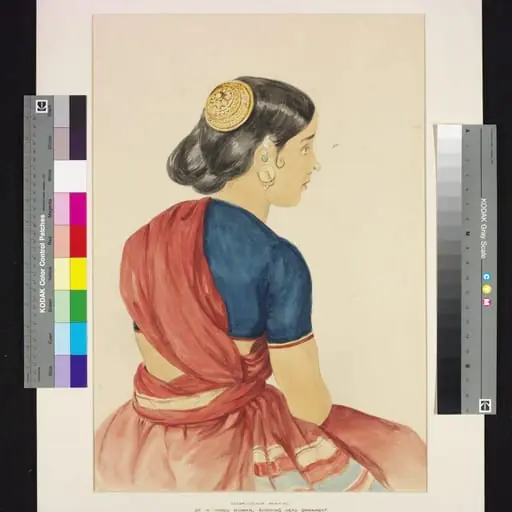
This watercolor painting, attributed to S. R. Samuel, a student at the Bombay School of Art, captures a quiet domestic moment. Created as a costume study, it portrays a Hindu woman engaged in the ritual preparation of betel nuts and leaves. The work is signed and numbered within a collection of seventeen similar studies acquired by a British collector between 1913 and 1927, reflecting an interest in documenting regional customs through detailed visual records.
Subject & Meaning
The subject is a woman seated on a patterned rug, methodically arranging betel nut and leaf preparations known as pansupari—a customary practice in South Asian households. Her focused posture and the simplicity of the setting suggest an emphasis on routine rather than ceremony. The act, though mundane, carries cultural weight as a daily ritual tied to social and spiritual life, rendered here without theatricality or symbolism.
Technique & Style
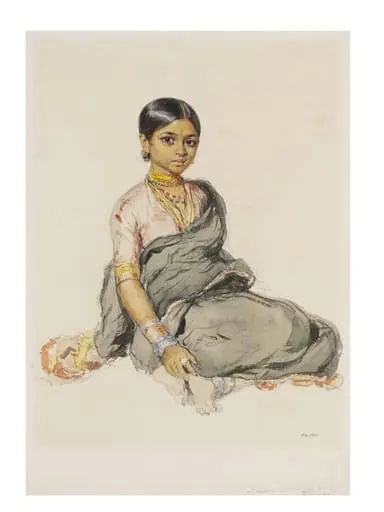
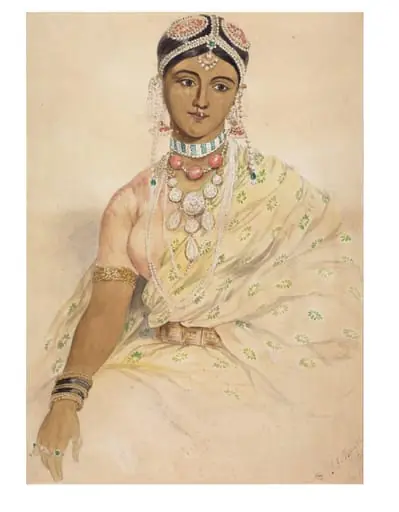
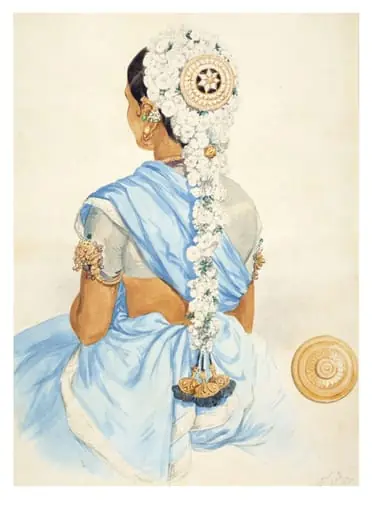
Executed in delicate watercolor, the painting employs soft washes and restrained brushwork to convey texture and light. The woman’s pink sari and gold jewelry are rendered with subtle highlights, catching ambient warmth without overt contrast. The background remains unadorned, directing attention to the figure’s gestures and the quiet intimacy of her task. The technique favors observation over embellishment, aligning with academic training focused on ethnographic detail.
History & Provenance
The painting was part of a group of seventeen works collected by R. Corrie Chapman between 1913 and 1927. It entered institutional holdings in 1927 with the accession number RP 1927:1843. These studies were likely assembled to document regional dress and customs, possibly for educational or anthropological purposes. The artist’s identity as a student of the Bombay School of Art situates the work within a colonial-era effort to record Indian life through local artistic training.
Context
Created during a period when British collectors and institutions sought to catalog Indian traditions, this study reflects the intersection of colonial documentation and indigenous artistic education. The Bombay School of Art, founded in the mid-19th century, trained local artists in Western techniques while encouraging depictions of native subjects. Such works served as visual archives, preserving everyday practices that were increasingly viewed as vanishing under modernization.
Legacy
Though not widely exhibited, this painting contributes to a broader archive of early 20th-century Indian costume studies. Its quiet realism offers insight into how local artists interpreted their own cultural practices under institutional frameworks. The work remains a quiet testament to the everyday rituals preserved through art, offering a counterpoint to more overtly ceremonial or exoticized representations of Indian life from the same era.
Artist & collection
Artist
S. R. Samuel left behind four small untitled paintings from 1897 to 1899. The works show quiet moments—brushstrokes soft, colors subdued—nothing labeled or dated with a story. Three were signed only with a date in the…