Artwork
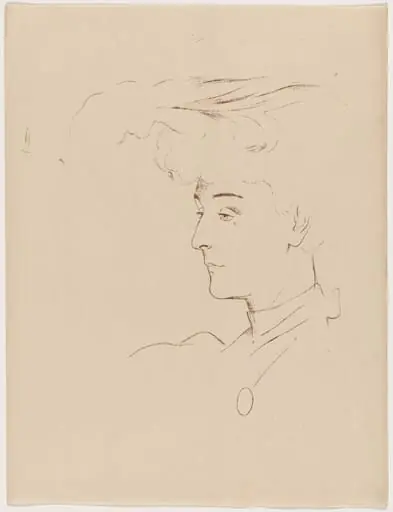
Etude de femme, en buste de face (Study of a Woman, Half-Length Facing Front)
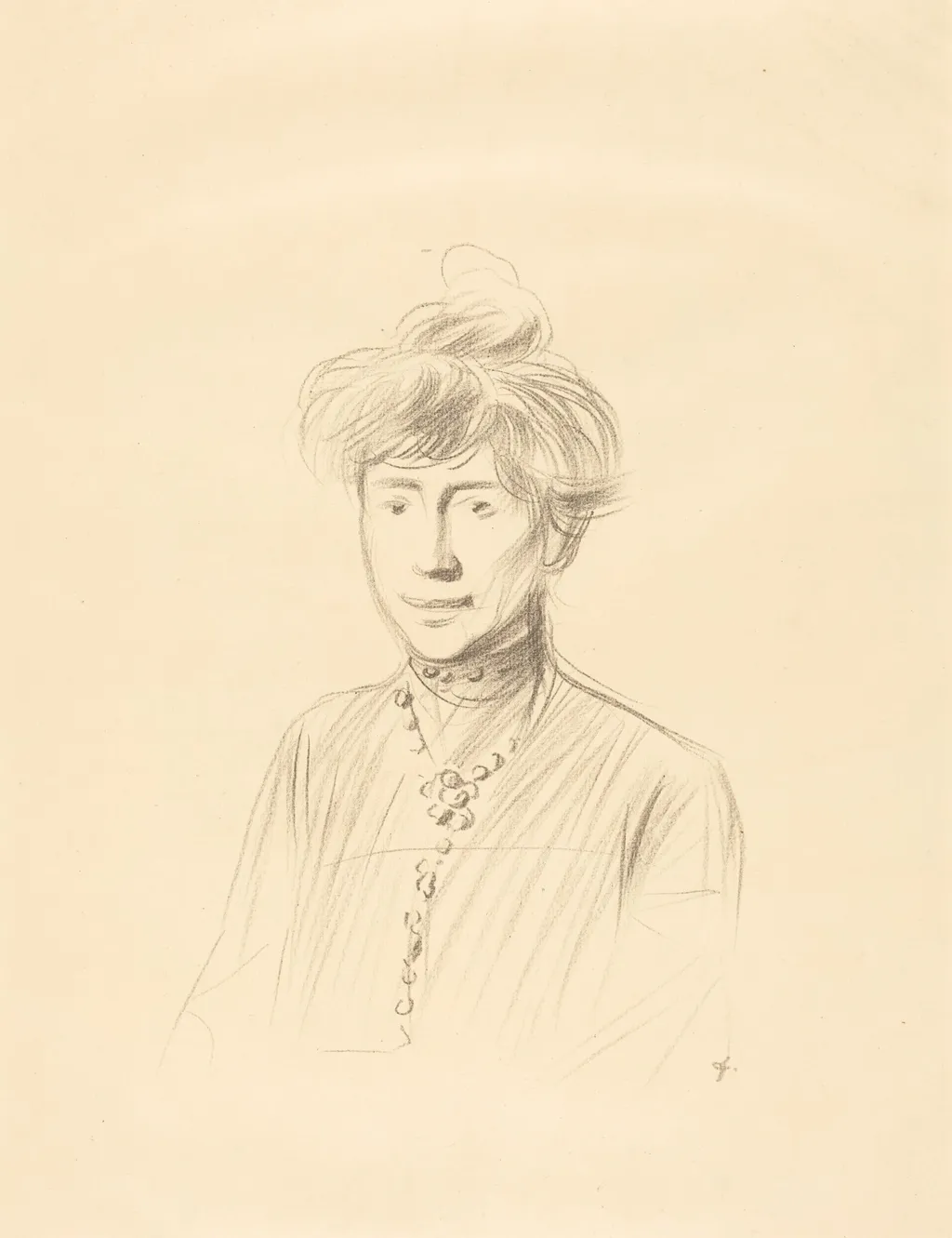
Etude de femme, en buste de face (Study of a Woman, Half-Length Facing Front) is an ink print by the Impressionist artist Jean-Louis Forain. It dates from 1903 and is held in the collection of the National Gallery of Art.
About this work
Overview
Created around 1903, this transfer lithograph by Jean-Louis Forain captures a woman’s bust in a straightforward frontal pose.
Created around 1903, this transfer lithograph by Jean-Louis Forain captures a woman’s bust in a straightforward frontal pose. Executed on laid paper with a softly textured surface, the work reflects Forain’s engagement with printmaking alongside his broader practice in painting and drawing. The medium allowed for rapid reproduction and subtle tonal variation, aligning with his interest in capturing fleeting, everyday subjects with minimal embellishment.
Subject & Meaning
The subject is a woman depicted from the shoulders up, facing directly toward the viewer. Her hair is gathered neatly, and her attire includes a high collar with a small brooch, suggesting modest, middle-class dress. There is no narrative or emotional flourish—only a quiet, unadorned presence. The image functions as a study, emphasizing observation over idealization, typical of Forain’s approach to portraiture in his graphic work.
Technique & Style
Forain employed transfer lithography, a method that allowed him to draw on paper with lithographic crayon before transferring the image to a stone for printing. The lines are loose and economical, suggesting spontaneity. The texture of the laid paper enhances the sketchlike quality, reinforcing the sense of immediacy. Details are suggested rather than defined, prioritizing form and posture over ornamentation.
History & Provenance
The work originates from a period when Forain was actively producing prints, often as preparatory studies or independent works for private circulation. While he enjoyed recognition during his lifetime, particularly for his satirical illustrations, this particular piece was likely not widely distributed. Its survival reflects its role as a personal or studio exercise, preserved within collections focused on late 19th- and early 20th-century French graphic art.
Context
In early 20th-century Paris, artists frequently turned to drawing and printmaking as tools for experimentation and daily practice. Forain, associated with Impressionist circles, shared this habit, using quick studies to refine his understanding of form and light. This print fits within a broader tradition of artist-led observational work, distinct from commissioned portraiture and more aligned with the private, iterative nature of studio practice.
Legacy
Though Forain’s reputation has waned compared to peers like Degas or Toulouse-Lautrec, his graphic works remain valued for their directness and technical fluency. This study exemplifies his commitment to capturing the human figure without theatricality. It stands as a quiet testament to the role of sketching in artistic development, appreciated today for its honesty and restraint rather than its novelty.
Artist & collection

Artist
Jean-Louis Forain (French pronunciation: ; 23 October 1852 – 11 July 1931) was a French Impressionist painter and printmaker, working in media including oils, watercolour, pastel, etching and lithograph.


 Etude
Etude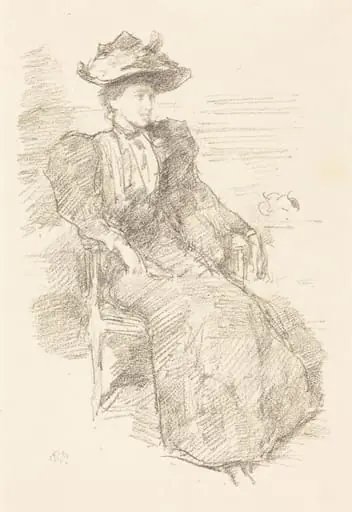 A Portrait: Mildred Howells
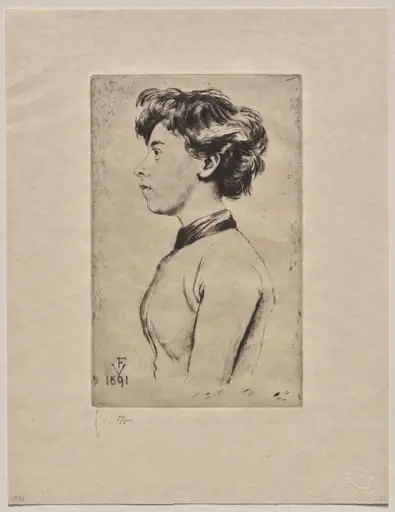 Young Girl in Profile
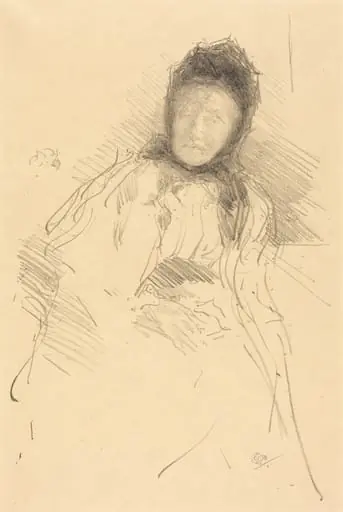 Unfinished Sketch of Lady Haden
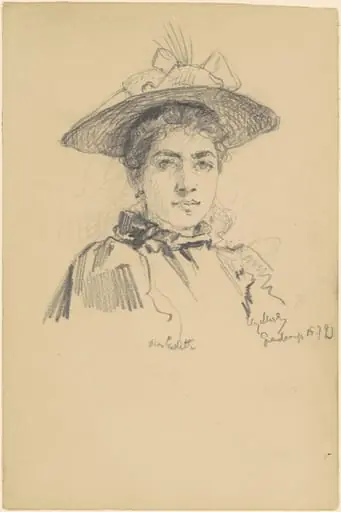 Dear Edith
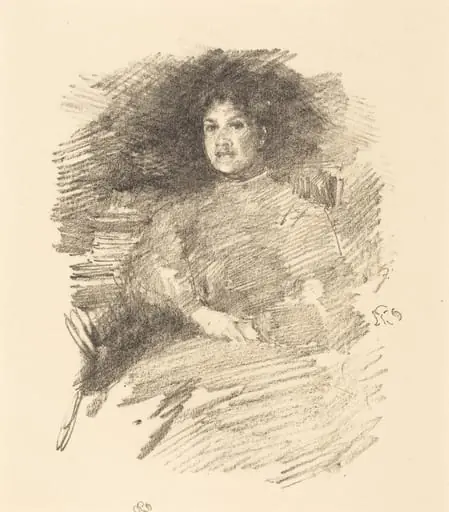 Firelight
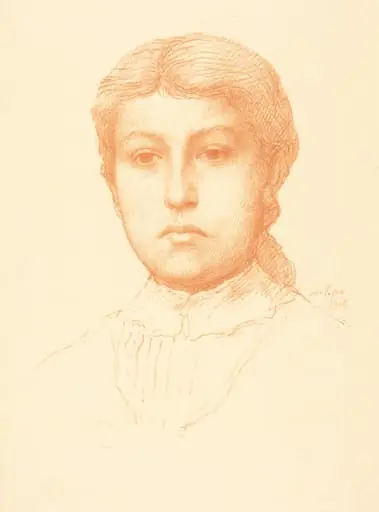 Head of a Young Girl (Tete de jeune fille)
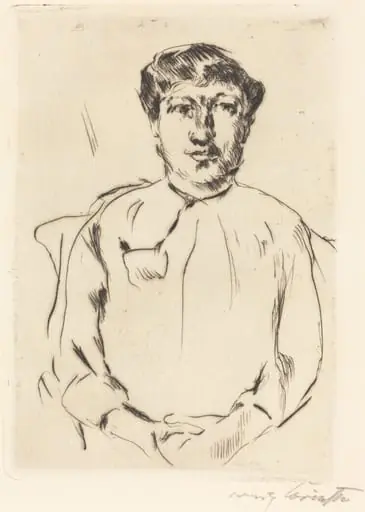 Frauenbildnis (Portrait of a Woman)
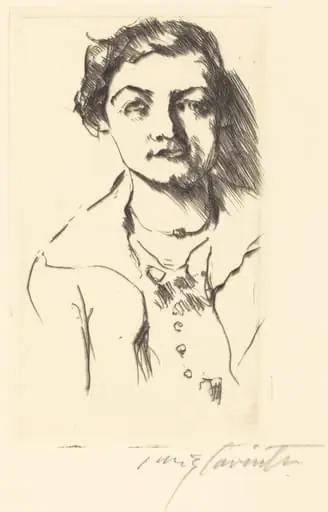 Bildnis einer Jungen Dame—Anneliese Halbe (Portrait of a Young Woman—Anneliese Halbe)
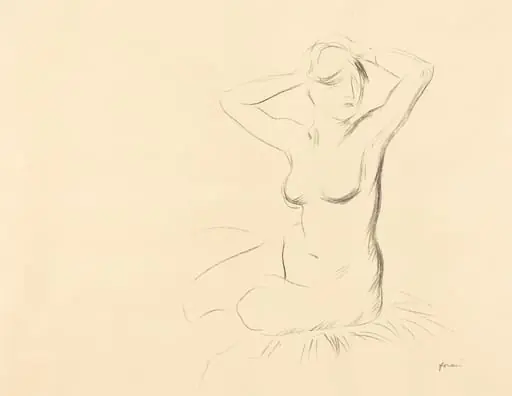 Etude de femme nue, les mains croisées au-dessous de la tête (Study of a Nude Woman, Her Hands Crossed behind Her Head)