Artwork
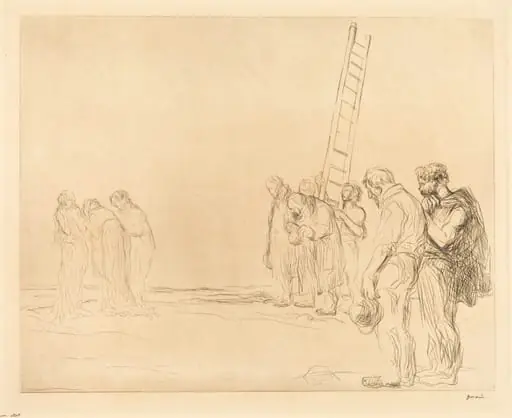
Le Christ dépouillé de se vêtements (Christ Stripped of His Clothes)
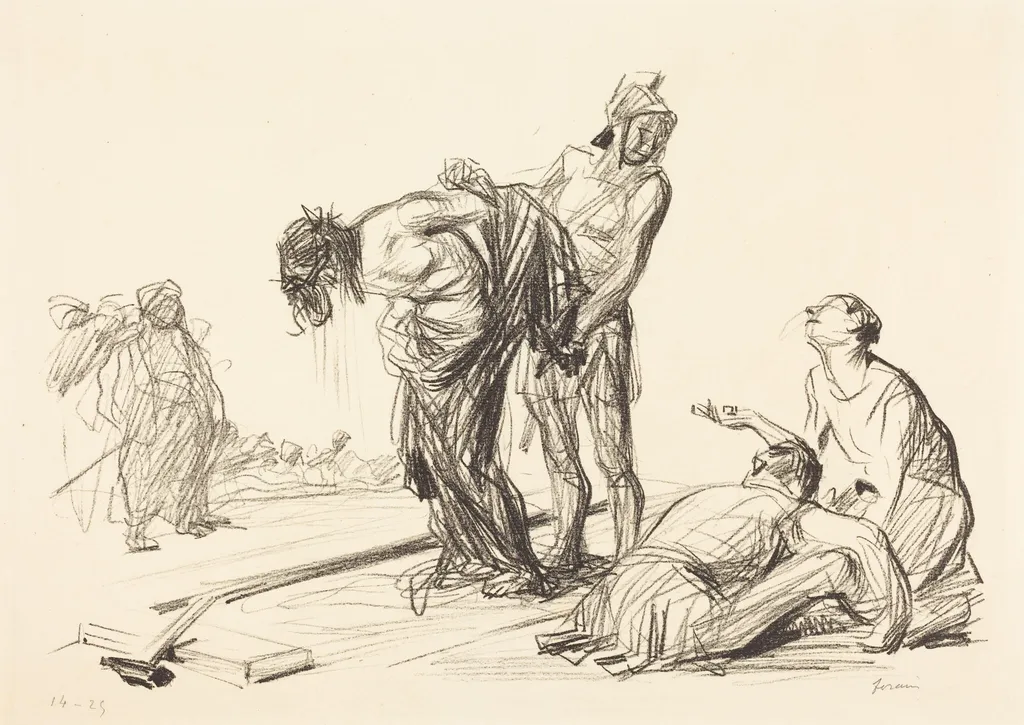
Le Christ dépouillé de se vêtements (Christ Stripped of His Clothes) is an ink print by Jean-Louis Forain. It dates from 1909 and is held in the collection of the National Gallery of Art.
About this work
Overview
This work stands as a rare religious subject in his oeuvre, diverging from his more common scenes of urban life and theater.
Created in 1909, Jean-Louis Forain’s *Le Christ dépouillé de ses vêtements* is a transfer lithograph on laid Van Gelder paper, part of his broader engagement with printmaking. Though primarily known as an Impressionist painter, Forain devoted significant attention to graphic media, using lithography to explore emotional intensity through simplified forms. This work stands as a rare religious subject in his oeuvre, diverging from his more common scenes of urban life and theater.
Subject & Meaning
The scene depicts the moment Christ is stripped of his garments before crucifixion, a moment of humiliation and vulnerability. Four figures surround him: one pulls at his clothing, another kneels in quiet observation, and two more stand passively in the background. The composition emphasizes physical tension and moral ambiguity, avoiding overt piety in favor of raw human interaction. The absence of divine light or symbolic elements grounds the moment in earthly suffering.
Technique & Style
Forain employed transfer lithography to achieve a spontaneous, sketch-like quality. The lines are rapid and uneven, capturing motion rather than detail, with figures rendered in loose contours and minimal shading. The texture of the laid paper enhances the tactile urgency of the scene. This technique allowed Forain to translate the immediacy of drawing into print, prioritizing emotional resonance over polished finish, aligning with his Impressionist sensibilities.
History & Provenance
The print was produced in 1909 during a period when Forain was actively experimenting with lithography, though religious themes were uncommon in his work. It was likely issued in a small edition, typical of artist-printmakers of the era. While it circulated among collectors and institutions during his lifetime, it received little critical attention afterward. Its current whereabouts are not widely documented, reflecting its marginal status in his broader legacy.
Context
In early 20th-century France, religious imagery in modern art was increasingly rare, especially among artists associated with secular movements like Impressionism. Forain’s choice to depict this biblical moment may reflect personal or cultural anxieties amid rising secularism. His approach—unadorned, emotionally charged—contrasts with academic religious painting, aligning instead with the psychological realism emerging in contemporary graphic art.
Legacy
Though Forain’s reputation has faded relative to his Impressionist peers, this print remains a compelling example of his ability to merge social observation with spiritual subject matter. It reveals a lesser-known dimension of his practice—his willingness to confront somber themes with unflinching economy of form. Today, it is studied more for its technical execution and emotional restraint than for its religious symbolism.
Artist & collection

Artist
Jean-Louis Forain (French pronunciation: ; 23 October 1852 – 11 July 1931) was a French Impressionist painter and printmaker, working in media including oils, watercolour, pastel, etching and lithograph.


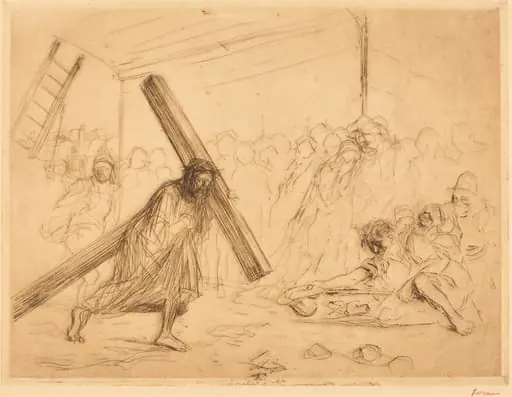 Le Christ portant sa croix (4e planche) (Christ Carrying the Cross) (fourth plate)
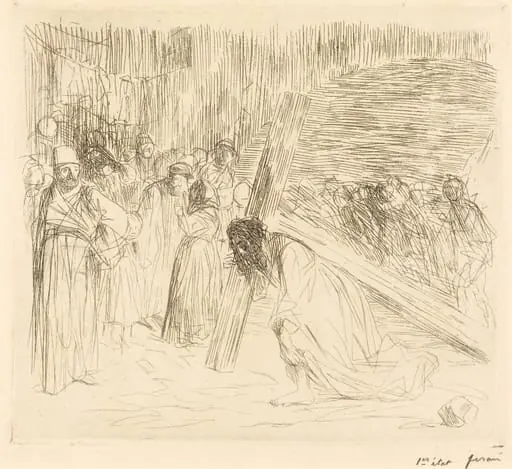 Le Christ portant sa croix (5e planche) (Christ Carrying the Cross) (fifth plate)
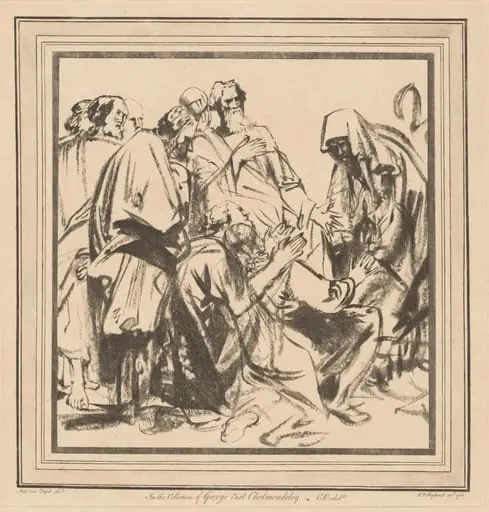 Jacob Persuaded to Send Benjamin with His Brethren into Egypt
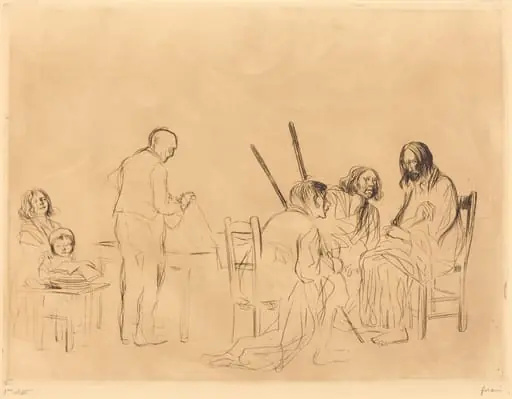 Avant le repas à Emmaus (1ère planche) (Before the Supper at Emmaus) (first plate)
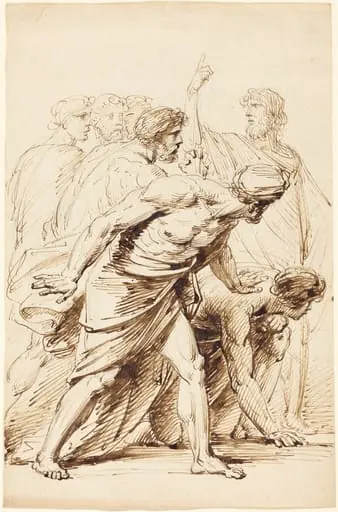 Seven Men in Antique Dress
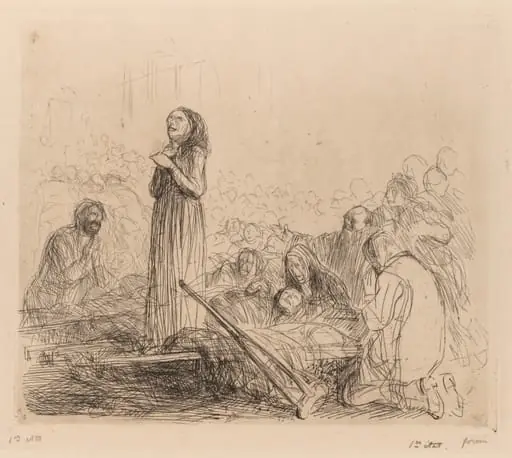 The Miracle before the Blessed Sacrament
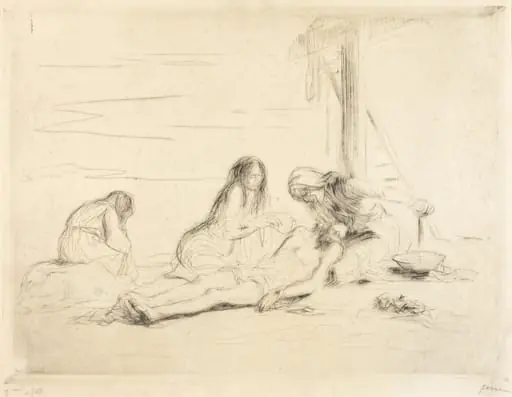 Pietà (1ère planche) (Pietà) (first plate)
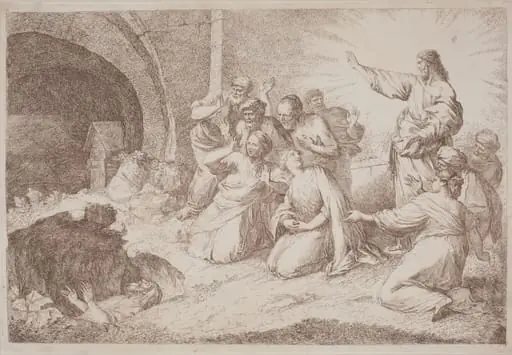 The Raising of Lazarus
 Le calvaire (2e planche) (Calvary) (second plate)