Artwork
Le Christ portant sa croix (4e planche) (Christ Carrying the Cross) (fourth plate)
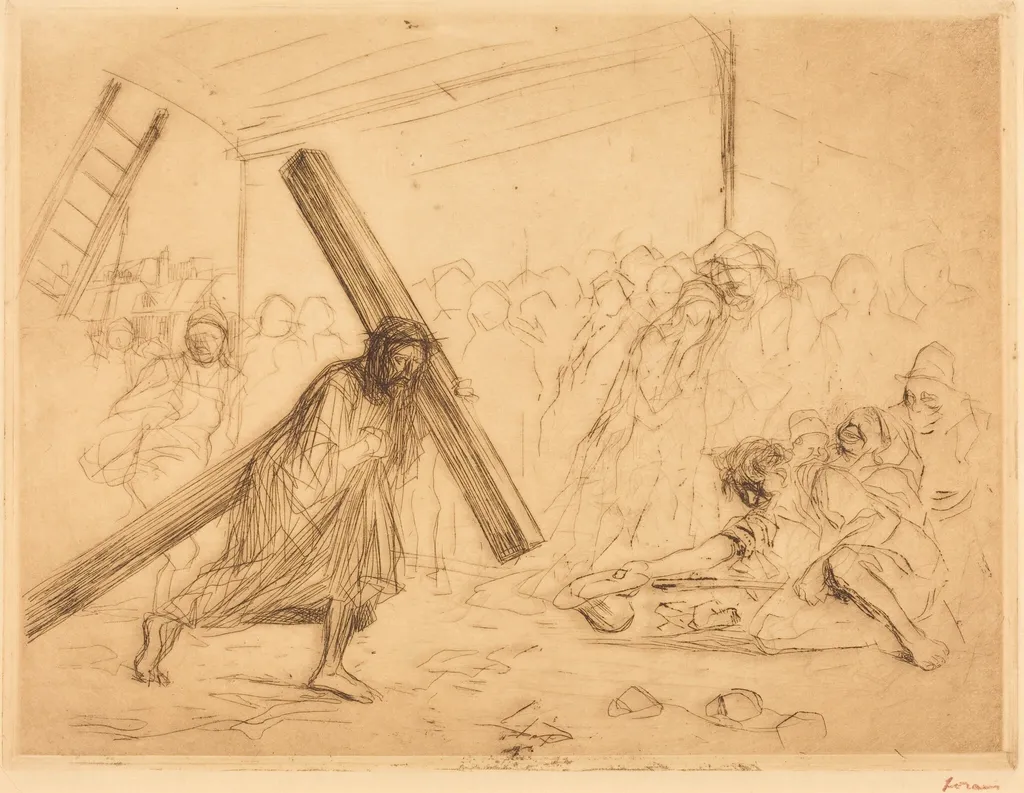
Le Christ portant sa croix (4e planche) (Christ Carrying the Cross) (fourth plate) is an ink print by Jean-Louis Forain. It dates from 1910 and is held in the collection of the National Gallery of Art.
About this work
Overview
Its rough, spontaneous quality distinguishes it from polished academic traditions, reflecting Forain’s interest in expressive draftsmanship over formal finish.
Created in 1910, *Le Christ portant sa croix (4e planche)* is a print by French artist Jean-Louis Forain, executed in etching and drypoint on laid Van Gelder paper. Unlike his more celebrated oil paintings, this work belongs to a series of religious subjects rendered in monochrome ink. Its rough, spontaneous quality distinguishes it from polished academic traditions, reflecting Forain’s interest in expressive draftsmanship over formal finish.
Subject & Meaning
The image depicts Christ burdened by the cross, surrounded by indistinct figures who kneel or stand at a distance. The composition avoids idealized piety, instead emphasizing physical strain and isolation. The sparse, unembellished treatment suggests a meditation on suffering rather than a devotional image, aligning with Forain’s tendency to strip religious narratives of ornamentation in favor of human vulnerability.
Technique & Style
Forain employed drypoint to scratch directly into the copper plate, creating rich, fuzzy lines that hold ink unevenly, and etching to define broader forms. The resulting texture is coarse and gestural, with smudged areas and abrupt strokes that convey motion and urgency. The lack of refinement mimics a rapid sketch, prioritizing emotional immediacy over technical polish, characteristic of his printmaking approach in later years.
History & Provenance
This print is the fourth in a series of religious scenes Forain produced around 1910, during a period when he increasingly turned to printmaking. Though widely exhibited in his lifetime, the series received less attention than his satirical works. The print survives in limited numbers, primarily in institutional collections, with no known private ownership history before the 20th century.
Context
In early 20th-century France, religious imagery was often sidelined in favor of modernist and secular themes. Forain’s engagement with biblical subjects was unusual among his Impressionist peers, yet his treatment avoided traditional iconography. His approach aligned with broader artistic trends favoring personal expression over institutional narratives, reflecting a quiet rebellion against academic religious art.
Legacy
Though Forain’s reputation faded after his death, this print remains a testament to his technical versatility and willingness to explore somber themes outside his usual social commentary. It stands as an example of how early modern printmakers reimagined sacred subjects through intimate, unvarnished techniques, influencing later generations interested in expressive line and emotional economy.
Artist & collection

Artist
Jean-Louis Forain (French pronunciation: ; 23 October 1852 – 11 July 1931) was a French Impressionist painter and printmaker, working in media including oils, watercolour, pastel, etching and lithograph.


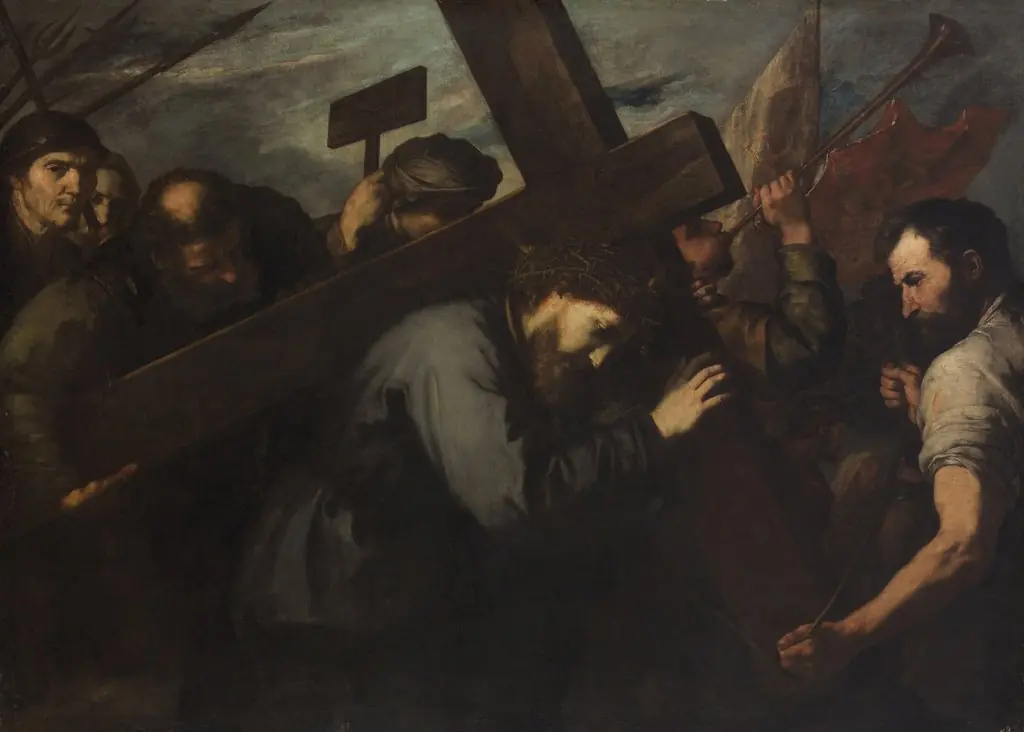 Christ Carrying the Cross
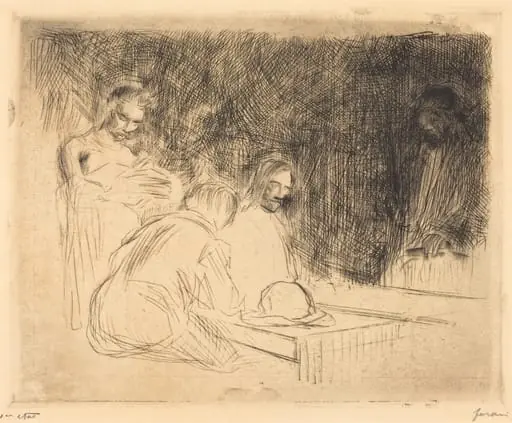 Le repas à Emmaus (3e planche) (The Supper at Emmaus) (third plate)
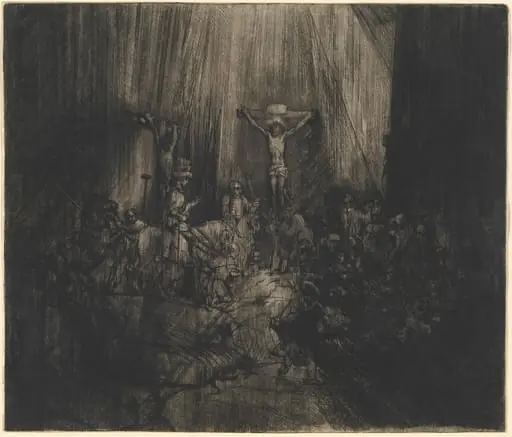 Christ Crucified between the Two Thieves (The Three Crosses)
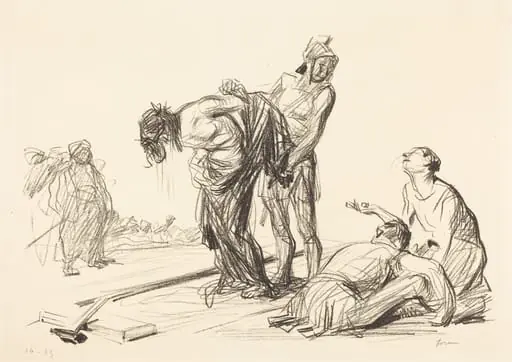 Le Christ dépouillé de se vêtements (Christ Stripped of His Clothes)
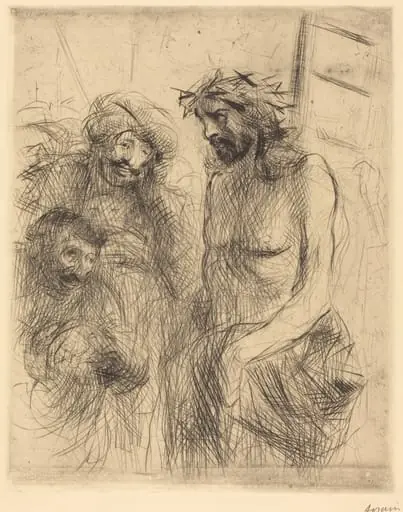 Le Christ aux outrages (The Mocking of Christ)
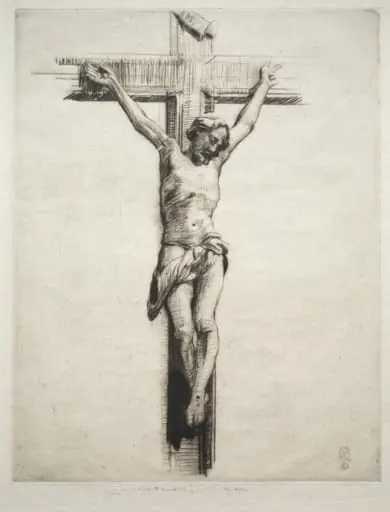 The Great Symbol
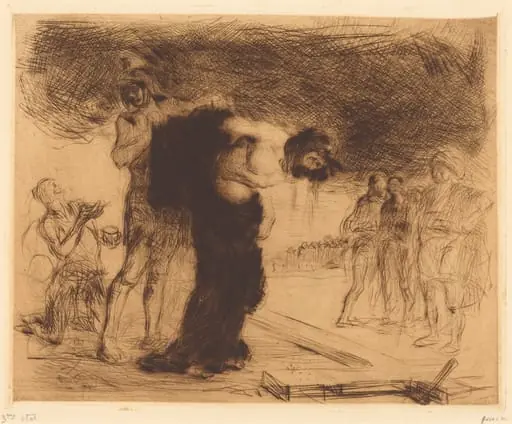 Le Christ dépouillé de ses vêtements (Christ Stripped of His Clothes)
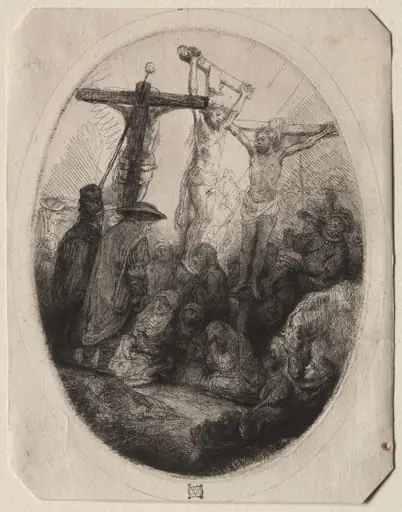 Christ Crucfied Between Two Thieves: An Oval Plate
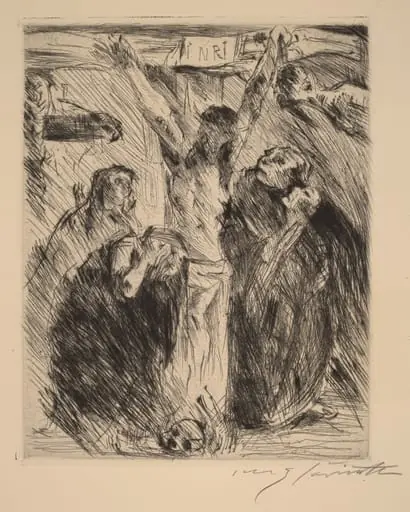 Kreuzigung, nach dem Altarbild in Tölz (Crucifixion, after the Altarpiece at Tölz)
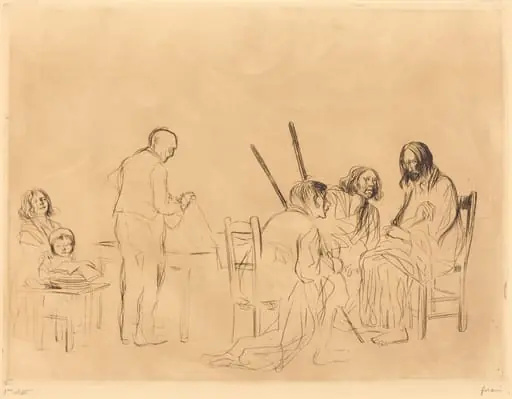 Avant le repas à Emmaus (1ère planche) (Before the Supper at Emmaus) (first plate)