Artwork
Le Christ portant sa croix (7e planche) (Christ Carrying the Cross) (seventh plate)
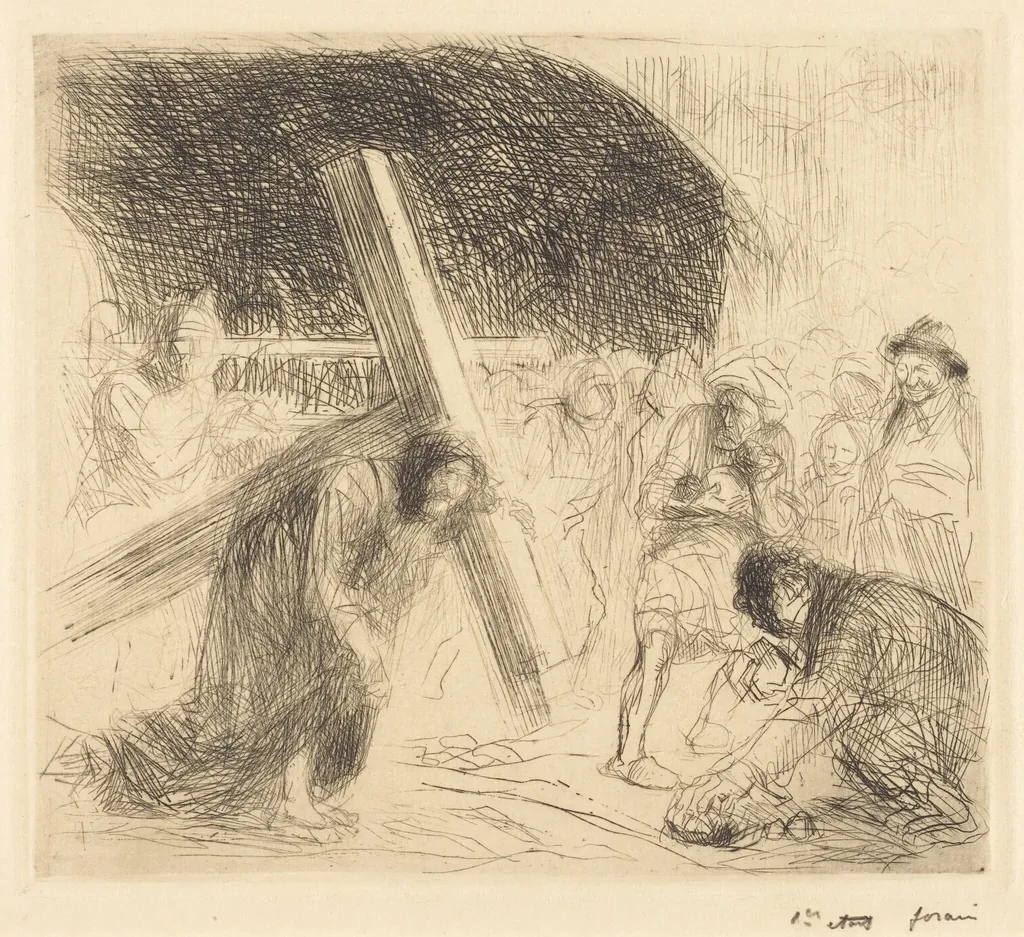
Le Christ portant sa croix (7e planche) (Christ Carrying the Cross) (seventh plate) is an ink print by Jean-Louis Forain. It dates from 1910 and is held in the collection of the National Gallery of Art.
About this work
Overview
Created around 1910, *Le Christ portant sa croix (7e planche)* is a print by French artist Jean-Louis Forain, executed in etching and drypoint on wove paper.
Created around 1910, *Le Christ portant sa croix (7e planche)* is a print by French artist Jean-Louis Forain, executed in etching and drypoint on wove paper. Part of a series, it reflects his deep engagement with printmaking as a medium distinct from his more widely known paintings. Unlike his colorful Impressionist canvases, this work embraces the raw, tactile qualities of incised lines, emphasizing emotional intensity over decorative finish.
Subject & Meaning
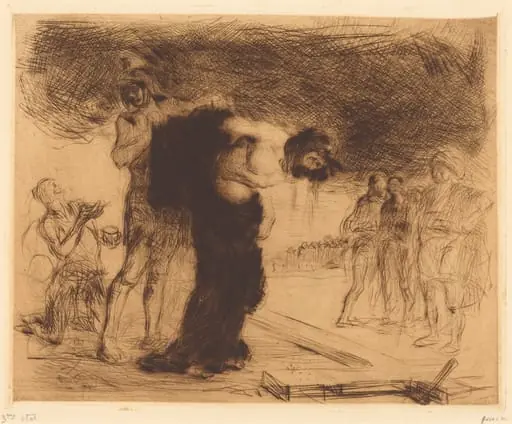
The scene depicts Christ burdened by the cross amid a chaotic crowd of onlookers and attendants. Rather than idealizing the moment, Forain presents it as a visceral, human ordeal. The figures are indistinct, their forms merging into a dense tangle of motion, suggesting collective indifference or exhaustion. The absence of clear narrative focus shifts attention from divine grandeur to the physical and emotional weight of the moment.
Technique & Style
Forain employed drypoint to scratch directly into the metal plate, creating thick, irregular lines that retain a sketchlike immediacy. Combined with etching, the result is a surface rich with burr—soft, fuzzy edges that blur forms and deepen the sense of turmoil. The lack of clean contours and the absence of background detail reinforce the impression of a fleeting, urgent moment, more akin to a rapid drawing than a finished composition.
History & Provenance
The print emerged during a period when Forain was actively producing series of religious and social scenes in print form. Though widely circulated and collected in his lifetime, particularly among European audiences, the work was never part of a major institutional collection until later acquisitions. Its provenance remains largely private, with few public records of early ownership, reflecting its status as a lesser-known facet of his oeuvre.
Context
In early 20th-century France, religious imagery in modern art was increasingly rare, especially among Impressionists focused on secular life. Forain’s series on the Passion stands as an outlier, possibly influenced by his interest in social realism and the human condition. His choice to render sacred subject matter with such rawness aligns with broader artistic trends questioning traditional iconography, even as he remained outside the avant-garde mainstream.
Legacy
While Forain’s reputation as a painter has waned, this print endures as a compelling example of his technical mastery in printmaking. It reveals an artist unafraid to confront solemn themes through unconventional means, prioritizing emotional resonance over aesthetic polish. Today, it is studied less for its religious symbolism and more for its expressive use of line and its place in the evolution of modern graphic art.
Own this work as a print
Artist & collection

Artist
Jean-Louis Forain (French pronunciation: ; 23 October 1852 – 11 July 1931) was a French Impressionist painter and printmaker, working in media including oils, watercolour, pastel, etching and lithograph.

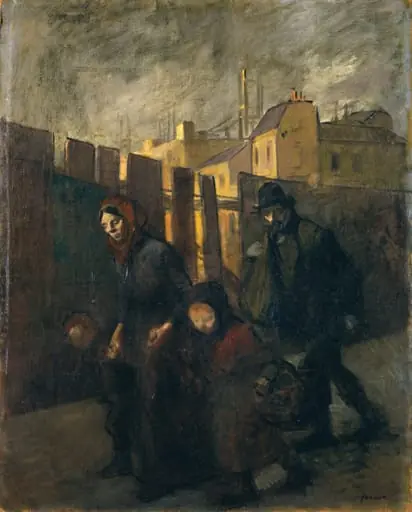
 Untitled
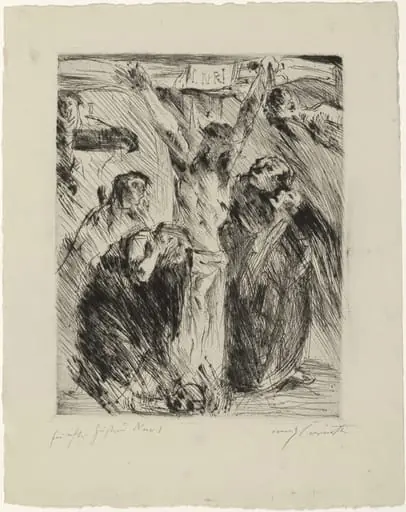
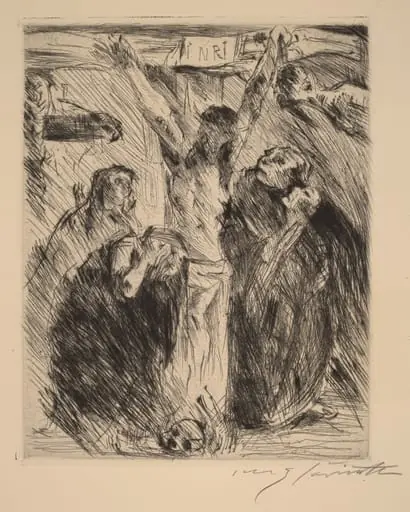 Kreuzigung, nach dem Altarbild in Tölz (Crucifixion, after the Altarpiece at Tölz)
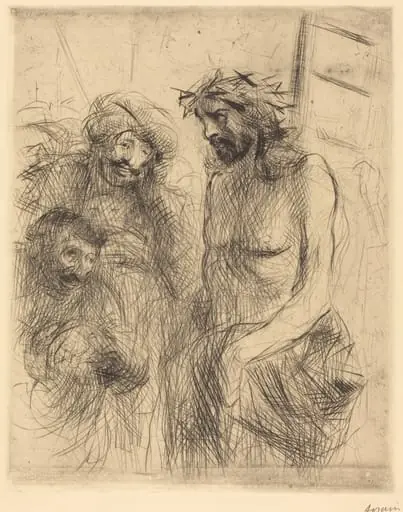 Le Christ aux outrages (The Mocking of Christ)
 Christ Crucified Between the Two Thieves: 'The Three Crosses'
 Le repas à Emmaus (3e planche) (The Supper at Emmaus) (third plate)
 Christ Crucified between the Two Thieves (The Three Crosses)
 La fraction du pain (The Breaking of the Bread)
 Le Christ dépouillé de ses vêtements (Christ Stripped of His Clothes)
 Christ Crucified between the Two Thieves: an Oval Plate
 Christ on the Cross