Artwork
Untitled
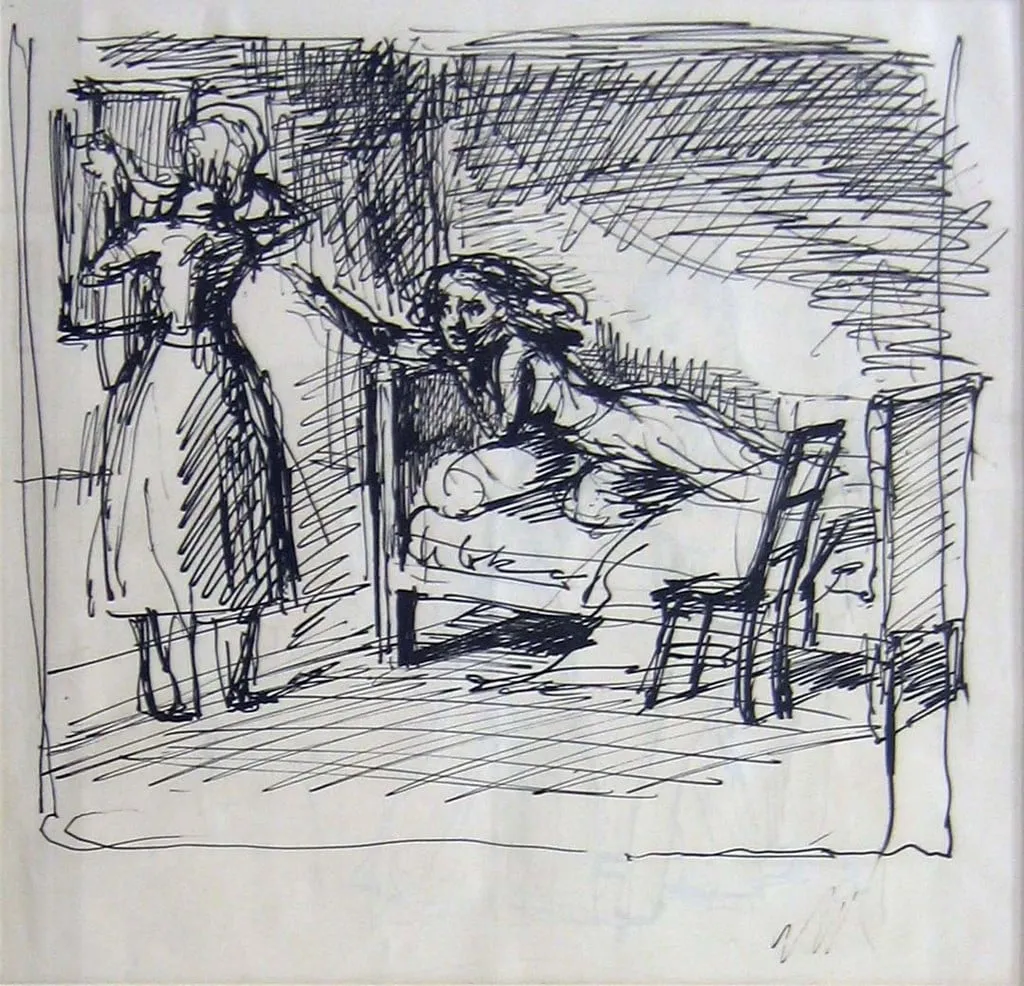
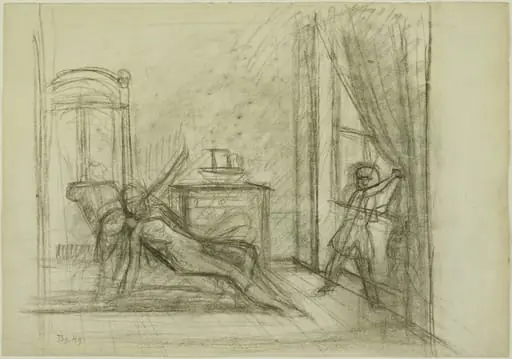
Untitled is an ink drawing by Balthus. It dates from 1933 and is held in the collection of the Museum of Modern Art.
About this work
Overview
Created in 1933, this ink drawing by Balthus is part of The Museum of Modern Art’s collection. Executed on paper, it captures a quiet interior scene with two figures in minimal spatial context. The work exemplifies Balthus’s early interest in psychological tension and subdued domestic environments, rendered without narrative clarity but with intense atmospheric focus.
Subject & Meaning
Two figures inhabit a sparse room: one stands near a window, arms lifted slightly, draped in a long garment; the other reclines in a chair, arm resting loosely on its back. Their stillness and lack of interaction suggest isolation or introspection. The absence of identifiable features or context invites ambiguity, reinforcing a mood of quiet unease rather than storytelling.
Technique & Style
Balthus employed dense cross-hatching to model form and shadow, building volume through layered, agitated lines. The technique imparts a tactile roughness to the floor and walls, while the figures emerge from the texture with a sense of fragility. The scratchy, repetitive strokes convey tension, contrasting with the figures’ passive postures and enhancing the drawing’s psychological weight.
History & Provenance
The drawing entered The Museum of Modern Art’s collection as part of its broader effort to document early 20th-century European drawing practices. Its provenance traces to Balthus’s formative years in Paris, when he was developing his distinctive visual language—rooted in observation yet detached from realism. It remains one of the few surviving works from this period in ink.
Context
While contemporaries explored abstraction or political themes, Balthus turned inward, focusing on private moments and ambiguous human presence.
Made during Balthus’s early career, the piece reflects influences from Renaissance draftsmanship and the introspective tone of Symbolist art. While contemporaries explored abstraction or political themes, Balthus turned inward, focusing on private moments and ambiguous human presence. This work aligns with his lifelong preoccupation with thresholds—between light and shadow, stillness and movement, presence and absence.
Legacy
The drawing exemplifies Balthus’s early mastery of mood through line alone, influencing later artists interested in psychological depth without explicit narrative. Its restrained technique and unresolved tension became hallmarks of his mature style. Though not widely exhibited, it remains a key reference in studies of modern drawing that prioritize atmosphere over clarity.
Artist & collection

Artist
Balthasar Klossowski, also known as Balthus, was a Polish-French modern artist. He is known for his erotically charged images of young girls, and the dreamlike quality of his imagery.

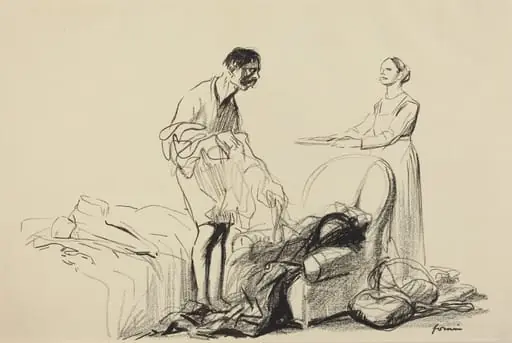 Le démobilisé
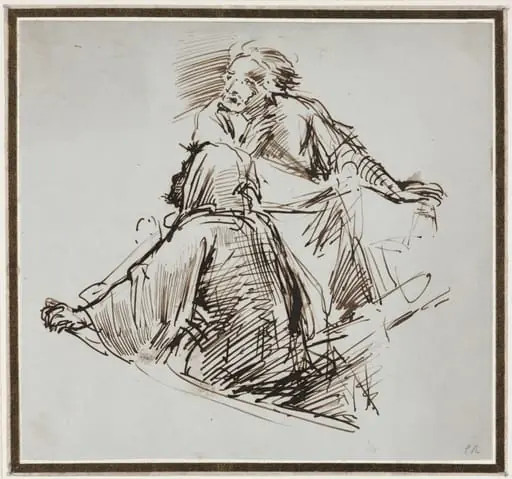 Two Male Figures
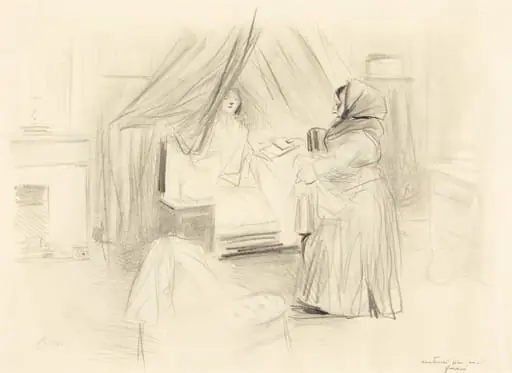 Le petit déjeuner (planche en largeur) (Breakfast) (horizontal plate)
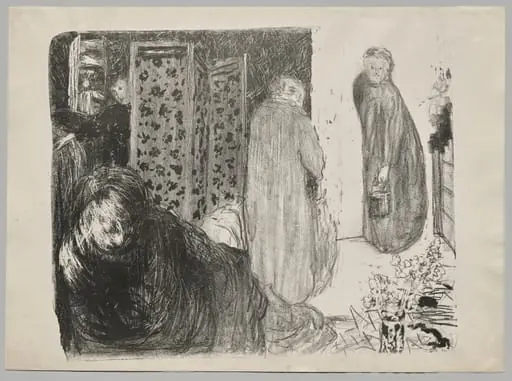 Interior with a Screen
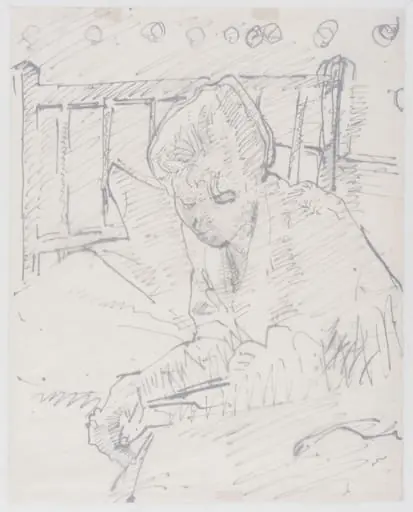 Meditation
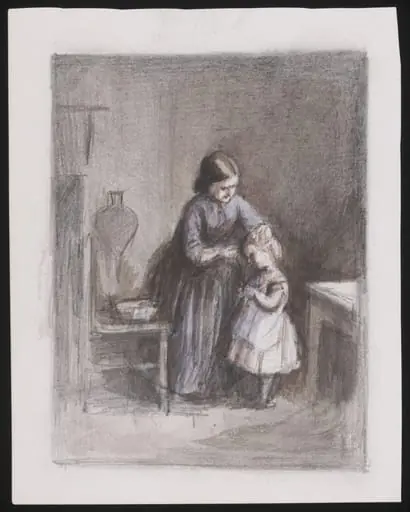 A mother washing a little girl
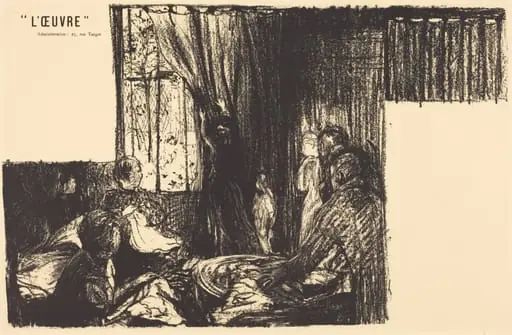 Les Soutiens de la société
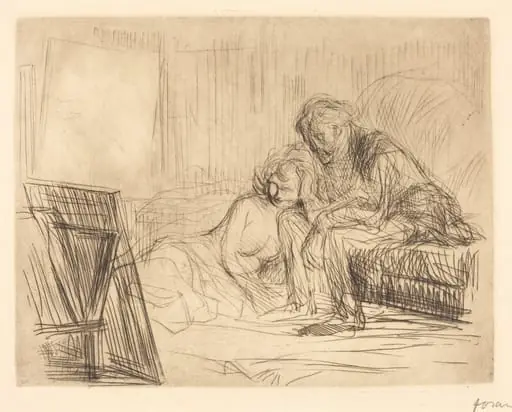 Le repos du modèle (1ère planche) (The Model's Rest) (first plate)
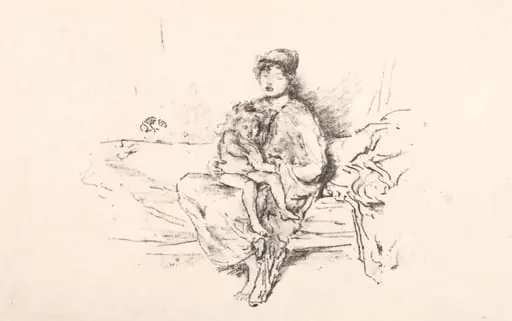 Mother and Child, No. 2
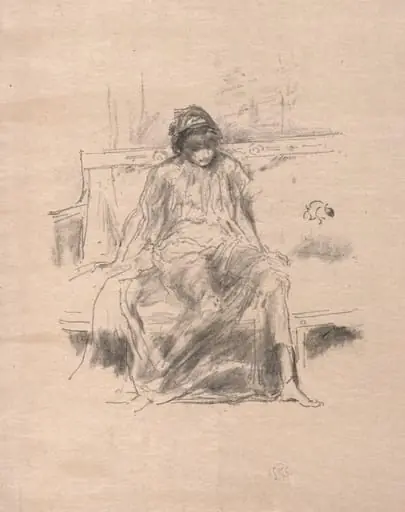 The Draped Figure Seated
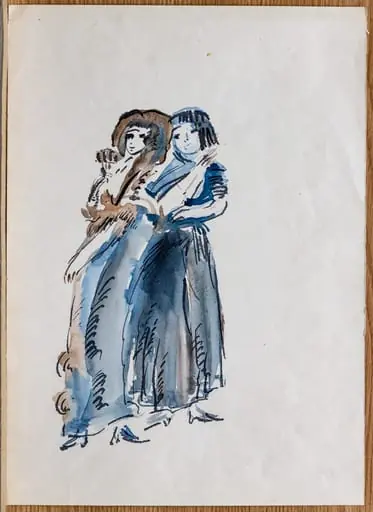 Duet
Duet