Artwork
Aguirre House (Santa Barbara)
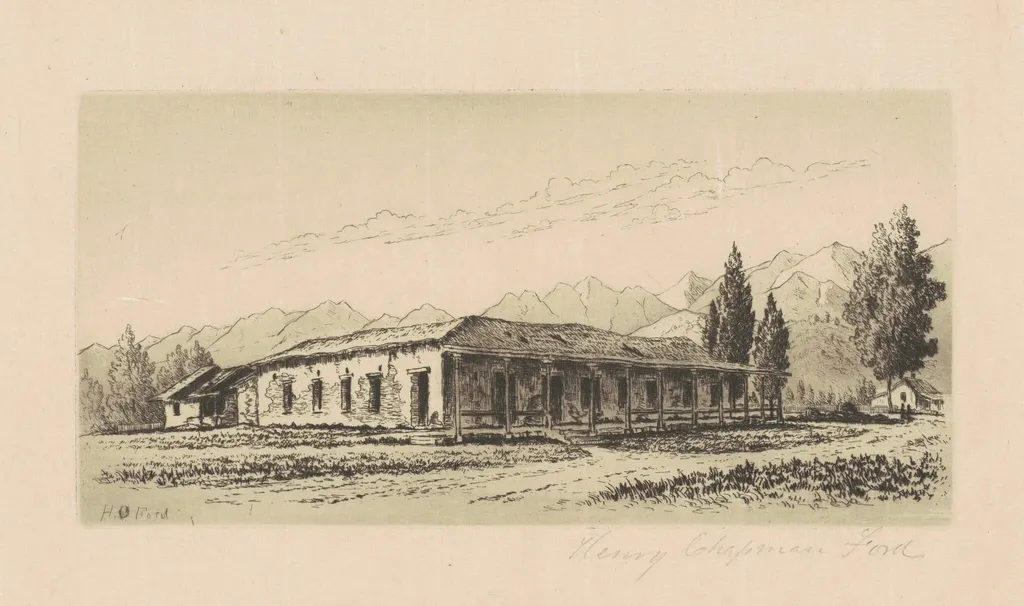
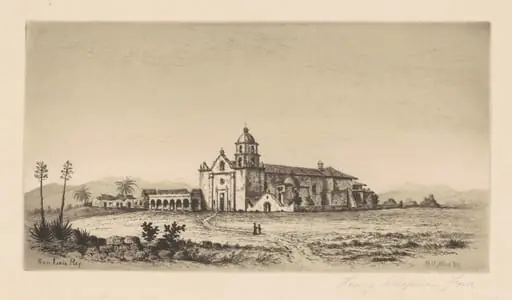
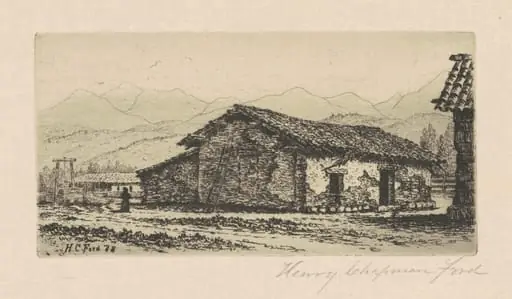
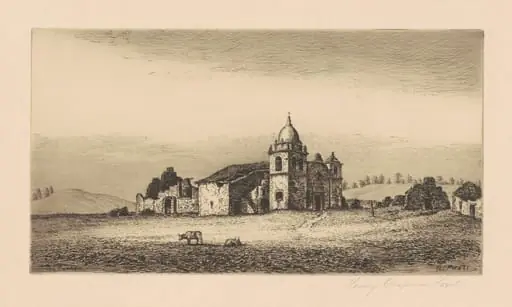
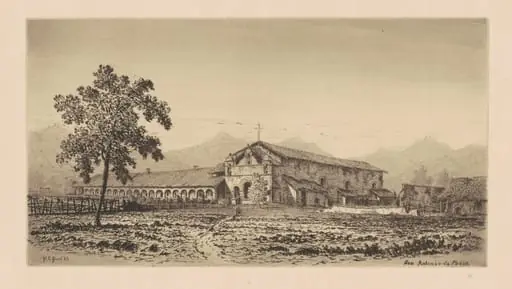
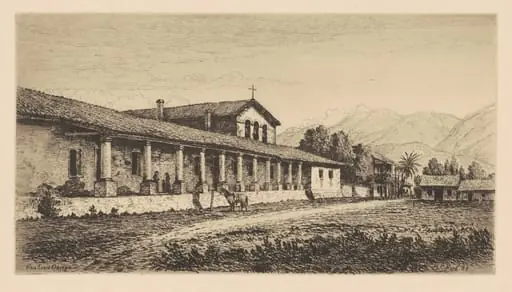
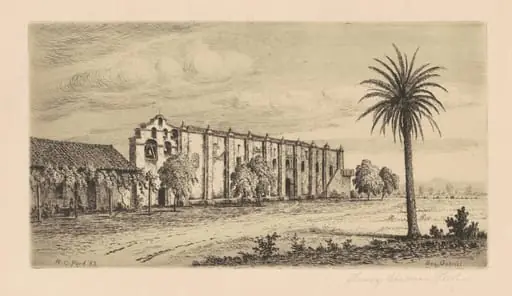
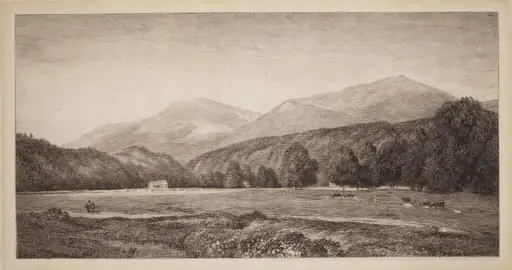
Aguirre House (Santa Barbara) is an ink print by the Impressionist artist Henry Chapman Ford. It dates from 1880 and is held in the collection of the National Gallery of Art.
About this work
Overview
Henry Chapman Ford’s print Aguirre House (Santa Barbara) is an early example of American etching, dated to around 1880. Executed in black on laid paper, the work measures a modest size and presents a quiet domestic scene set against a broad, open landscape. The composition balances the modest architecture with the surrounding natural features, creating a tranquil visual narrative.
Subject & Meaning
The image depicts a simple wooden dwelling with a porch, low-pitched roof, modest windows and a chimney, positioned in a grassy meadow.
The image depicts a simple wooden dwelling with a porch, low-pitched roof, modest windows and a chimney, positioned in a grassy meadow. Beyond the house, a line of mountains rises under a pale sky, punctuated by scattered trees. The tranquil setting suggests a rural lifestyle in late‑nineteenth‑century California, emphasizing the harmony between modest human habitation and the expansive western terrain.
Technique & Style
Ford employed the traditional etching process, incising the scene into a metal plate with fine lines that translate into delicate tonal variations on the paper. The use of laid paper, with its characteristic ribbed texture, enhances the subtle gradations of light and shadow. The overall effect is sketch‑like, with the line work conveying atmospheric softness rather than precise detail.
History & Provenance
Created circa 1880, the print belongs to the early period of Ford’s career, when he was exploring Western subjects. While specific ownership records are limited, the work has appeared in several collections of American prints, indicating its recognition among scholars of 19th‑century printmaking. Its survival in good condition attests to the durability of the etching medium.
Context
During the 1880s, American artists increasingly turned to the West for subject matter, documenting frontier settlements and natural scenery. Ford’s Aguirre House reflects this trend, offering a modest, everyday view rather than dramatic spectacle. The piece aligns with contemporary interests in regionalism and the visual recording of expanding American frontiers.
Artist & collection