Artwork
Käyrätorviorkesteri (Kansankorkeakoulun toverikunta)
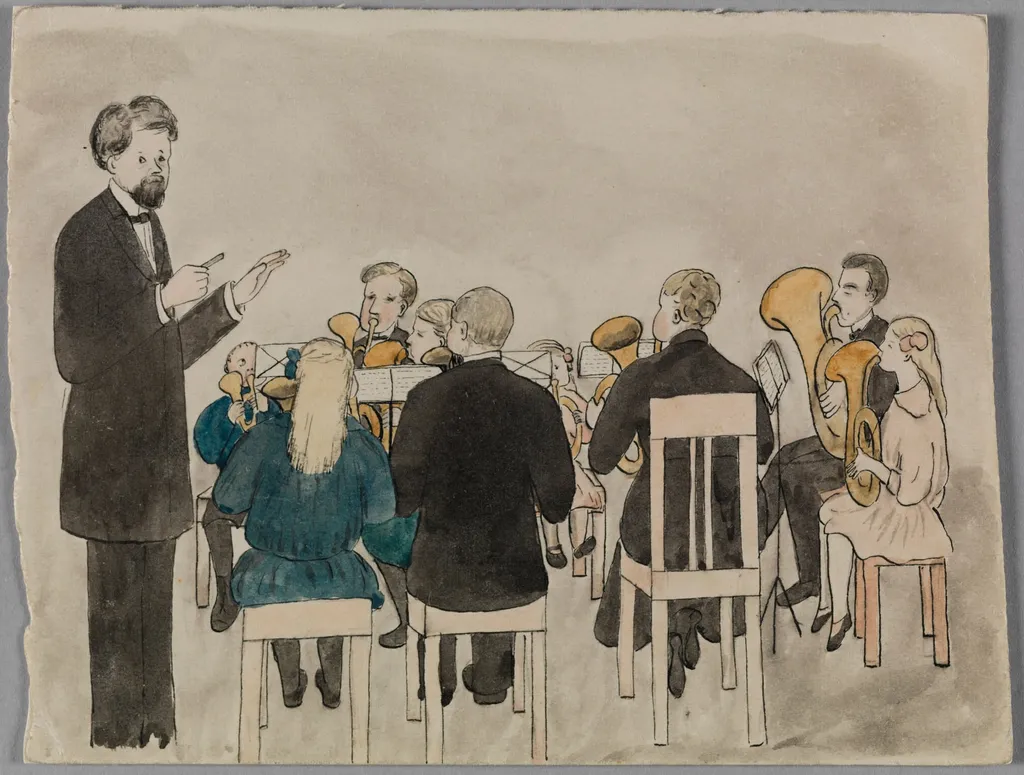
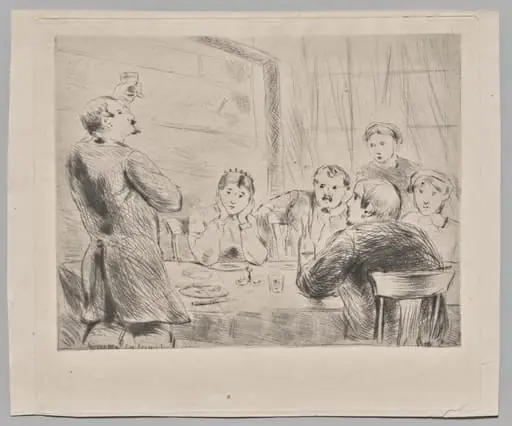
Käyrätorviorkesteri (Kansankorkeakoulun toverikunta) is a drawing by Olga Forslund. It is held in the collection of the Helsinki City Museum. This drawing depicts a small ensemble rehearsing under the guidance of a conductor.
About this work
Overview
The figures are arranged in a tight formation, all oriented toward the central figure, emphasizing collective attention and discipline.
This drawing depicts a small ensemble rehearsing under the guidance of a conductor. The scene is rendered with minimal detail, using flat areas of color and clear, unadorned lines. The figures are arranged in a tight formation, all oriented toward the central figure, emphasizing collective attention and discipline. The simplicity of the composition reflects a focus on the act of musical coordination rather than ornamental detail.
Subject & Meaning
The conductor, dressed in a dark suit, directs a modest group of wind and brass players seated on plain stools. Their focused expressions and unified posture suggest a moment of concentrated rehearsal. The image conveys the quiet intensity of communal music-making, where individual roles align under a single guiding presence. It captures the quiet discipline inherent in ensemble performance without theatrical flourish.
Technique & Style
The artist employs a restrained visual language: solid, unmodulated colors and sharp outlines define each figure and instrument. There is no shading or texture, and spatial depth is minimized. This graphic approach prioritizes clarity and rhythm over realism, aligning with early 20th-century tendencies to simplify form for expressive or didactic purposes. The style echoes folk or educational illustration, emphasizing structure over atmosphere.
History & Provenance
The drawing is associated with Kansankorkeakoulun toverikunta, a Finnish folk education initiative active in the early 20th century. It likely served as a visual aid or promotional image for community music programs aimed at broadening access to musical training. Its modest scale and direct imagery suggest it was intended for public distribution rather than private collection.
Context
Created during a period of cultural democratization in Finland, the image reflects efforts to integrate music into civic life through adult education. Folk orchestras and community ensembles were promoted as tools for social cohesion and national identity. This drawing visually supports that mission, portraying music not as elite performance but as accessible, collective practice.
Legacy
The drawing endures as a quiet testament to grassroots musical education in Finland. It documents a time when community-based ensembles played a role in shaping cultural participation beyond urban conservatories. Its unembellished style continues to resonate as a representation of music as a shared, disciplined, and inclusive activity.
Artist & collection
Artist
Olga Forslund left a small but vivid slice of early 20th-century life in her pencil drawings.

 H Beard Print Collection
 Untitled
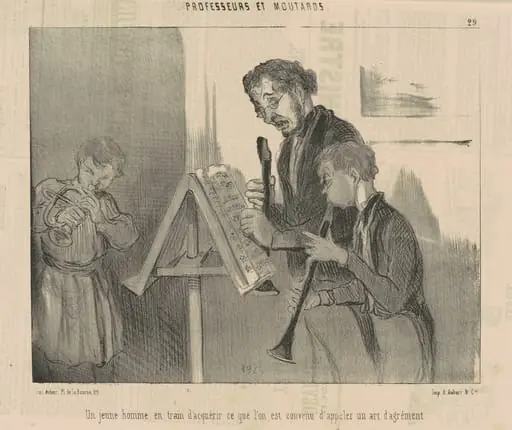 Un jeune homme en train d'acquérir ... un art d'agrément
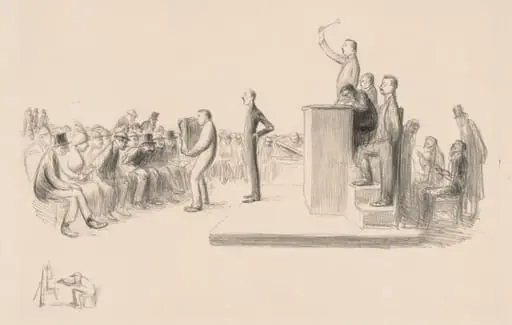 The Rouart Sale
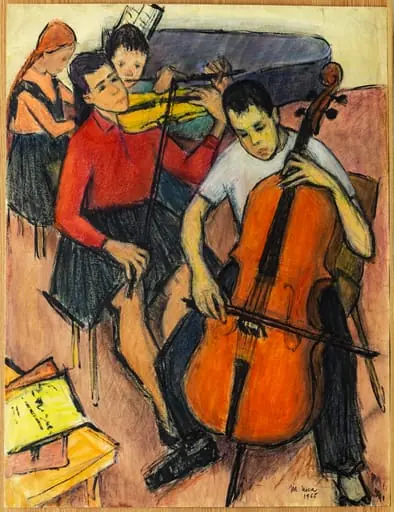 Muzicanți
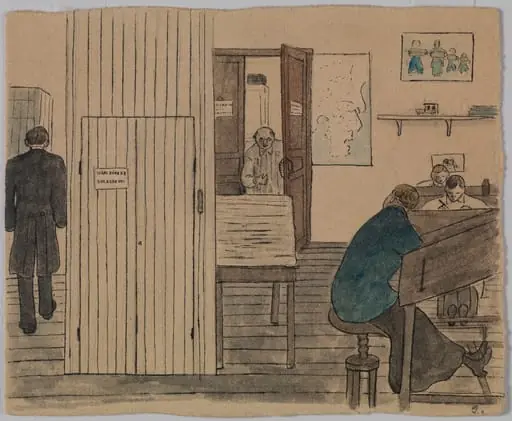 Arvidssonin litografinen ateljee
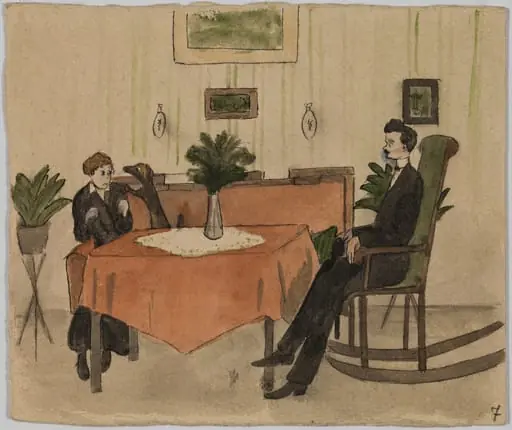 Sisarukset Forslund ja heidän kavaljeerinsa. Cyrus Florström vierailulla.
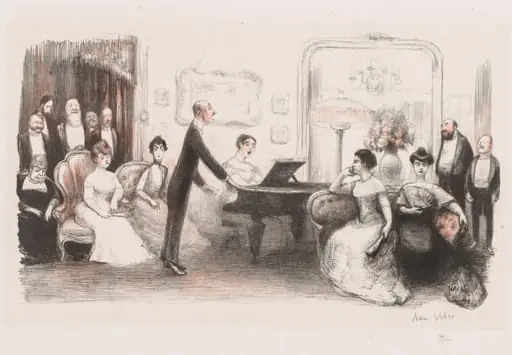 La Soirée Bourgeoise
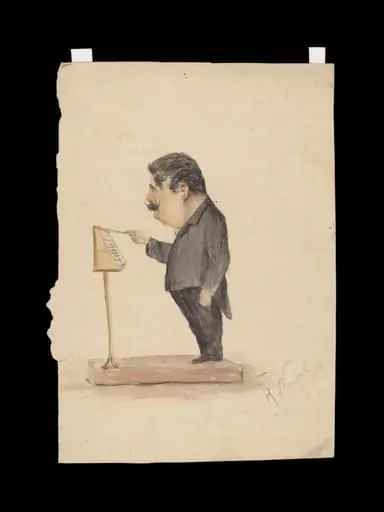 H Beard Print Collection
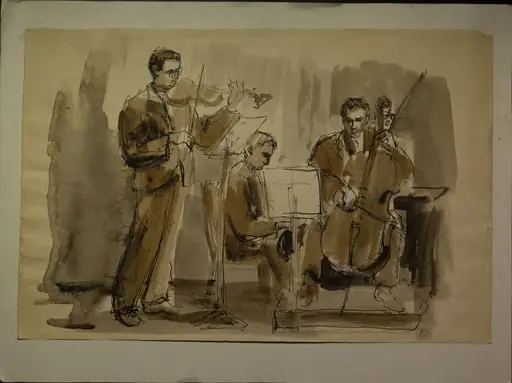 Desen în tuș și acuarelă redând o performanță muzicală a trioului compus din Valentin Gheorghiu (pian), Ștefan Gheorghiu (vioară) și Radu Aldulescu (violoncel). Lucia Cosmescu (1916-1969) a fost pictoriță și grafician român, Născută în Galați, a făcut studii de pictură la Academia de Arte Frumoase din București. A doua jumătate a sec. XX
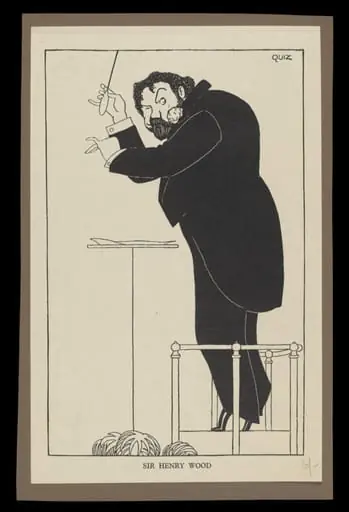 H Beard Print Collection
 Untitled