Artwork
Portret de ofițer (Colonel C. Budișteanu)
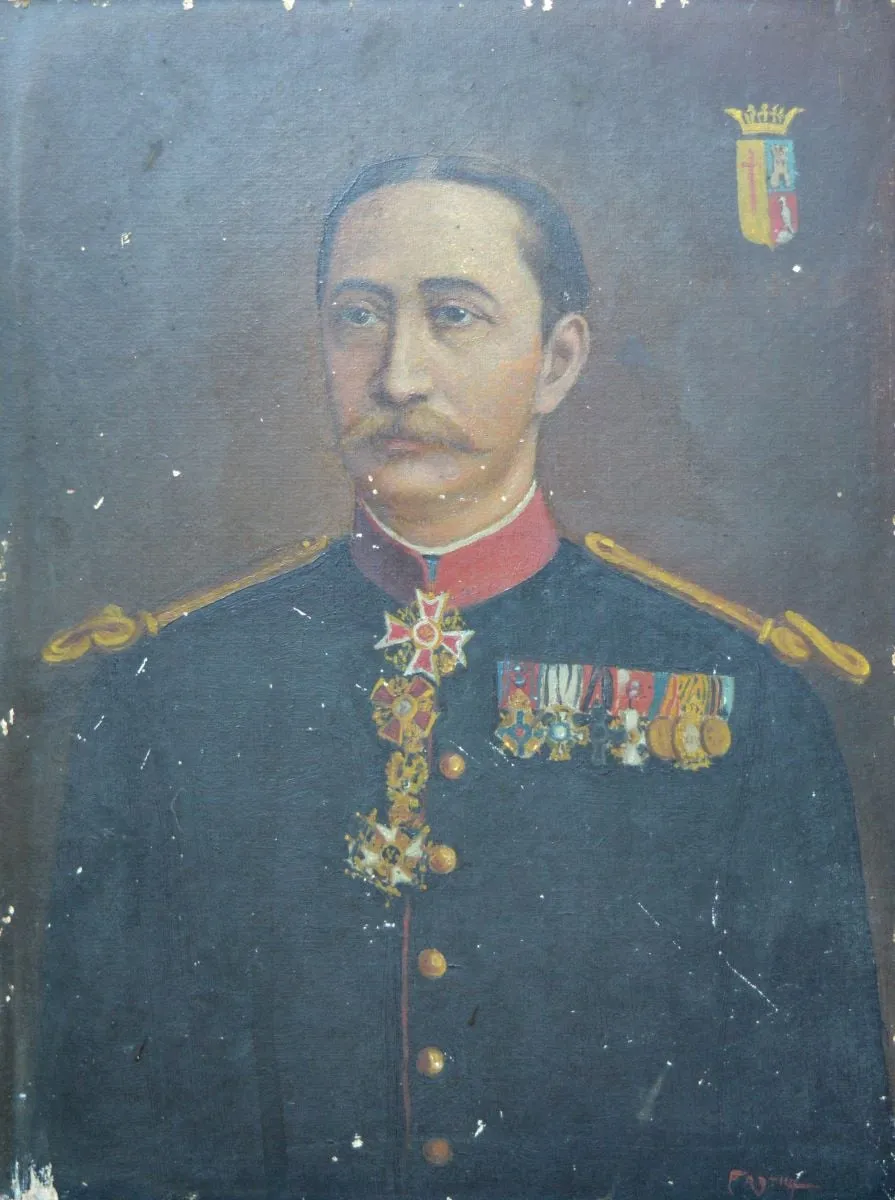
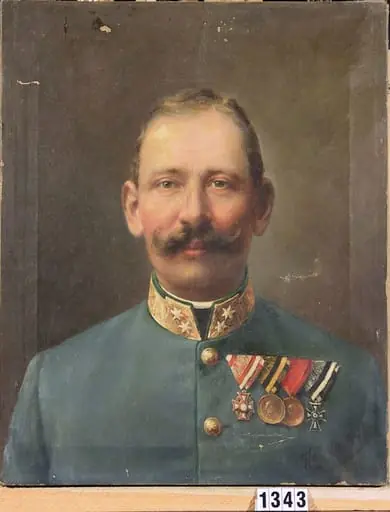
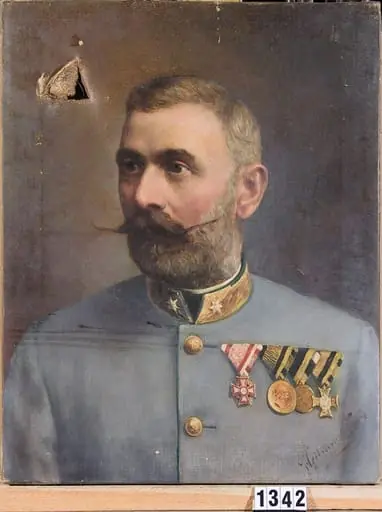
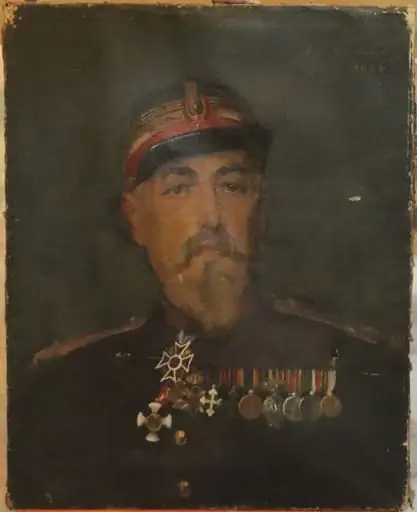
Portret de ofițer (Colonel C. Budișteanu) is a print by Frățilă. It is held in the collection of the Bucharest Municipality Museum. This portrait depicts Colonel C.
About this work
Overview
The composition isolates the figure against a dark, unadorned background, emphasizing the richness of his uniform and the array of honors pinned to his chest.
This portrait depicts Colonel C. Budișteanu in full military dress, rendered with precise attention to detail and atmospheric lighting. The composition isolates the figure against a dark, unadorned background, emphasizing the richness of his uniform and the array of honors pinned to his chest. The artist employs strong contrasts of light and shadow to model the face and metallic embellishments, creating a sense of physical presence and quiet authority.
Subject & Meaning
The subject, Colonel C. Budișteanu, is portrayed not as an individual in private life but as a symbol of military service and state recognition. The dense arrangement of medals—gold, red, and blue—signals distinguished service, while the crown emblem in the corner reinforces institutional allegiance. The stern, composed expression and upright posture convey discipline and duty, aligning the portrait with traditions of official military representation.
Technique & Style
The artist uses chiaroscuro to sculpt the colonel’s features, particularly around the mustache and the contours of the face, giving them a tactile, three-dimensional quality. The dark background enhances the luminosity of the uniform’s red trim and the gleam of the medals. Brushwork is controlled and deliberate, avoiding decorative flourish in favor of clarity and realism, with each medal rendered as a distinct object of weight and reflection.
History & Provenance
The portrait was likely commissioned to honor the colonel’s service, possibly by a military institution or state body. Its plain background and formal composition suggest it was intended for display in a government or military setting rather than a private residence. While specific details of its early ownership are not recorded, its preservation indicates enduring recognition of the subject’s rank and contributions.
Context
Created during a period when military portraiture served both personal commemoration and state propaganda, the painting reflects broader European conventions of depicting officers as embodiments of order and loyalty. The emphasis on medals and insignia aligns with 19th-century practices in which visual hierarchy communicated rank and valor. The absence of landscape or interior elements focuses attention solely on the individual’s official identity.
Legacy
The portrait endures as a quiet example of early 20th-century military representation, valued for its technical restraint and psychological gravity. It contributes to a visual archive of state officials whose public roles were defined by service and decorum. Though not widely exhibited, its careful execution and symbolic clarity ensure its place within regional traditions of official portraiture.
Artist & collection
Artist
Frățilă carved a niche in early-20th-century printmaking with a single surviving work: the 1916 lithograph Portret de ofițer (Colonel C.